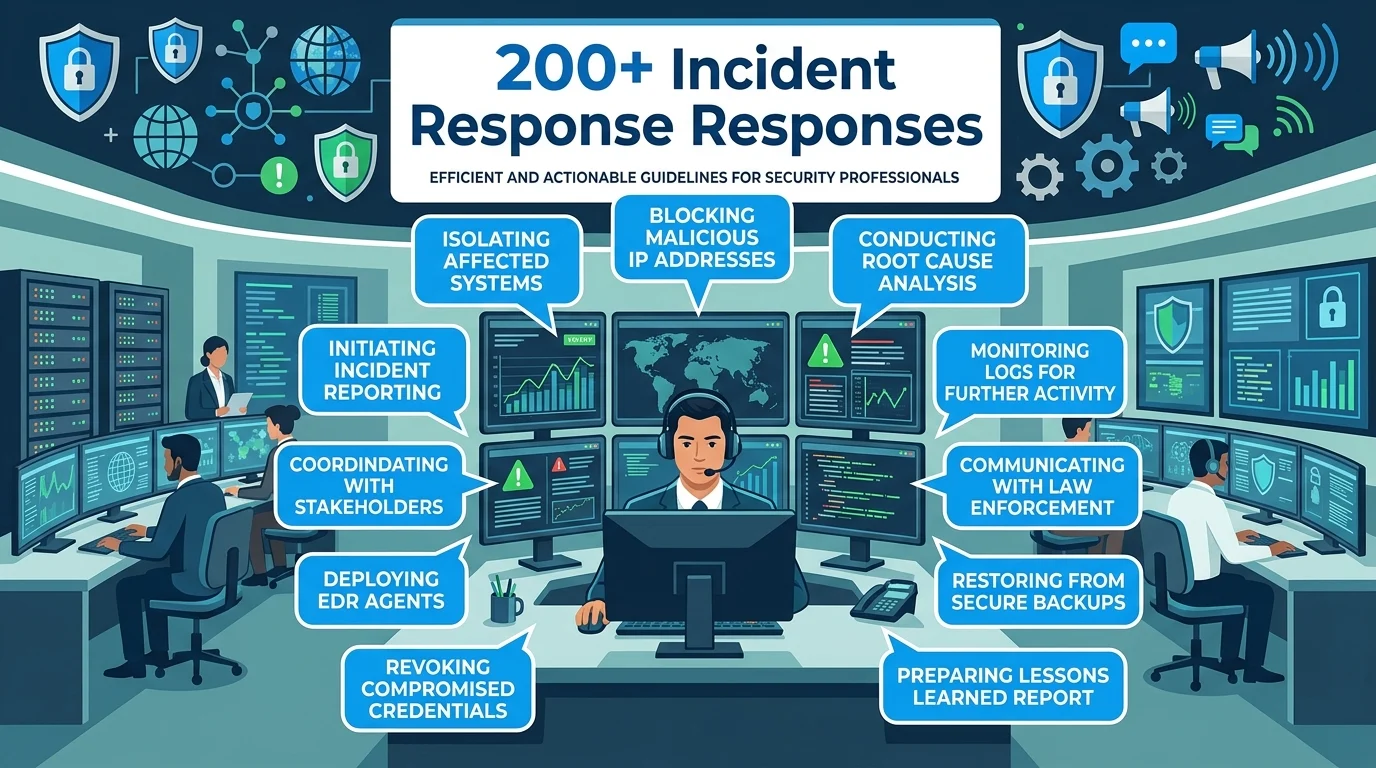
Working with an incident response analyst requires clear, timely communication during high-stress security events. Here are the most effective responses for coordinating with your incident response team when every second counts.Provide specific timestamps, share system logs, acknowledge receipt clearly, escalate with urgency indicators, or request technical clarification when needed.
When a security incident hits, every second matters and panic isn’t an option. You’re staring at your screen with alerts blinking everywhere, your incident response analyst is asking rapid-fire questions, and you need to respond with precision, not panic.
Whether you’re a junior team member reporting suspicious activity or a manager coordinating a company-wide response, how you communicate with your incident response analyst can make or break your organization’s security posture. The right response at the right moment can mean containing a threat in minutes instead of hours.
Here’s your ultimate guide to responding like a cybersecurity pro when your incident response analyst needs your help fast.
Professional Responses
“I’ve documented the exact timestamp and system details for your review”
Perfect when you need to provide precise information that helps the analyst track the incident timeline. This response shows you understand the importance of accurate data.
“I’m gathering the requested logs and will forward them within five minutes”
Great for when you need to acknowledge the request and set realistic expectations. This demonstrates efficiency and reliability under pressure.
“The affected systems are isolated and I’m awaiting your next directive”
Use this when you’ve taken immediate containment steps and need guidance. This response shows initiative and readiness to follow protocols.
“I’ve escalated this to the appropriate stakeholders as per our protocol”
Excellent for when you need to confirm that the incident response chain is activated. This shows you understand the communication hierarchy.
“I’m ready to assist with any technical analysis you need”
Perfect for when you want to position yourself as a valuable resource. This proactive approach speeds up the response.
“I’ve confirmed the alert is valid and requires immediate investigation”
Great for when you’ve done initial verification and need the analyst to take over. This saves valuable time in the response process.
“The incident timeline has been documented and shared with the team”
Use this when you need to coordinate multiple team members. This ensures everyone has the same information.
“I’ve initiated the backup and recovery procedures as discussed”
Excellent when you’re following through on established protocols. This shows you’re executing the response plan properly.
“I’m monitoring the situation and will update you every fifteen minutes”
Perfect for when you need to maintain communication during a prolonged incident. This sets clear expectations for updates.
“The affected users have been notified and remediation is underway”
Great for when you’re handling communication responsibilities. This shows you’re managing all aspects of the response.
“I’ve preserved all relevant data for forensic analysis”
Use this when you’re thinking ahead about evidence collection. This demonstrates you understand the investigation process.
“I’m available for any additional information you might need”
Excellent when you want to be proactive and supportive. This response ensures the analyst can get what they need quickly.
Urgent Responses
“We have a confirmed security incident requiring immediate attention”
Perfect for when you need to cut through the noise and escalate quickly. This direct language signals serious urgency.
“Systems are showing unusual activity and I need your expertise now”
Great for when something doesn’t look right and you need an expert opinion. This response gets immediate attention.
“I’m seeing indicators of compromise that match known threat patterns”
Use this when you’ve identified specific threats and need guidance. This technical language helps the analyst understand the severity.
“We’re experiencing a potential breach and need to activate the response plan”
Excellent for when you need to trigger the official incident response process. This leaves no room for ambiguity.
“Multiple systems are affected and I need immediate direction”
Perfect for when the incident is spreading. This communicates the scope and urgency effectively.
“I’ve confirmed unauthorized access and we need to contain it now”
Great for when you’ve verified malicious activity. This shows you’ve already begun the investigation.
“Critical data may be at risk and we need to act fast”
Use this when sensitive information is threatened. This communicates the severity of the situation.
“The alert has escalated to a critical status and I need your support”
Excellent for when the situation has worsened. This shows you’re monitoring and escalating appropriately.
“I’m seeing evidence of lateral movement across the network”
Perfect for when the attack is spreading. This technical detail helps the analyst understand the threat.
“We’ve lost access to several critical systems and need immediate assistance”
Great for when the incident is affecting operations. This communicates business impact clearly.
“I need you to review these logs immediately – something doesn’t add up”
Use this when you’ve found anomalies that need expert interpretation. This shows you’ve done initial investigation.
“This is a time-critical situation and every minute counts”
Excellent for when you need to emphasize urgency without panic. This professional urgency gets results.
Collaborative Responses
“I’ve identified the affected systems and I’m ready to work through this with you”
Perfect for when you want to show you’re a team player. This collaborative approach speeds up the response.
“Let me walk you through what I’m seeing on my end”
Great for when you need to share your perspective. This hands-on collaboration ensures nothing gets missed.
“I can help with that – just tell me what you need”
Use this when you want to be immediately useful. This supportive response shows you’re ready to contribute.
“Together we can figure out the source of this anomaly”
Excellent for when you want to build confidence. This team-oriented language reduces stress and improves coordination.
“I’ve been monitoring these systems and can provide context”
Perfect for when you have historical knowledge. This background information is invaluable for the analyst.
“Let me check that and get back to you with the details”
Great for when you need to verify information. This shows you’re thorough and reliable.
“I’ve got the logs you need and I’m ready to analyze them with you”
Use this when you want to collaborate on the investigation. This shows initiative and technical readiness.
“We should document this step-by-step so we don’t miss anything”
Excellent when you want to maintain organized processes. This methodical approach prevents oversight.
“I can take the lead on this while you coordinate the bigger picture”
Perfect for when you want to divide responsibilities effectively. This shows you understand team dynamics.
“Let me connect you with the team members who know this system best”
Great when you need to bring in additional expertise. This shows you know how to leverage resources.
“I’m here to support you however you need”
Use this when you want to be flexible and helpful. This open-ended support is always appreciated.
“We’ve got this – let’s tackle it methodically”
Excellent for when you need to boost team morale. This positive attitude keeps everyone focused.
Technical Responses
“I’ve collected the syslog entries from the affected time period”
Perfect for when you need to provide specific technical data. This shows you understand what the analyst needs.
“The firewall logs show connection attempts from these IP addresses”
Great for when you’ve already started your investigation. This technical detail helps narrow down the threat.
“I’ve run a full system scan and here are the results”
Use this when you’ve already begun your technical analysis. This proactive approach speeds up the process.
“The hash values match known malware signatures I’ve documented”
Excellent for when you’ve identified specific threats. This technical precision helps the analyst confirm the threat.
“I’m seeing unusual outbound traffic on port 443 from this server”
Perfect for when you need to report specific technical observations. This detail is crucial for the investigation.
“I’ve captured the network traffic for your analysis”
Great for when you’re preserving evidence. This shows you understand forensic requirements.
“The system logs show authentication failures from multiple sources”
Use this when you’re reporting patterns. This information helps the analyst identify attack vectors.
“I’ve identified the process that’s consuming unusual system resources”
Excellent for when you’ve done performance analysis. This technical observation often indicates malicious activity.
“The memory dump is ready for your analysis”
Perfect for when you’re thinking ahead about forensic needs. This shows you know the investigation process.
“I’ve correlated the alerts and found a pattern of suspicious activity”
Great for when you’re connecting the dots. This analytical work helps the analyst see the bigger picture.
“The registry entries show persistence mechanisms that concern me”
Use this when you’re looking for signs of established threats. This technical observation is highly valuable.
“I’ve verified the system integrity and found unauthorized changes”
Excellent for when you’ve conducted your own checks. This confirmation helps the analyst validate the incident.
Incident Reporting Responses
“I’ve prepared a detailed incident report with all relevant findings”
Perfect for when you need to document what happened. This shows you’re thorough and professional.
“Here’s the preliminary analysis of what we know so far”
Great for when you need to share early findings. This helps the team understand the scope quickly.
“I’ve updated the incident ticket with the latest information”
Use this when you want to maintain accurate records. This ensures everyone has access to the same information.
“The timeline of events has been reconstructed based on available data”
Excellent for when you need to understand the sequence of events. This helps identify how the incident happened.
“I’ve interviewed all witnesses and documented their statements”
Perfect for when you’re gathering human intelligence. This shows comprehensive investigation.
“Here’s my assessment of what systems were affected”
Great for when you need to define the impact. This helps prioritize the response.
“I’ve collected all relevant evidence and preserved it properly”
Use this when you’re handling forensic materials. This shows you understand proper procedures.
“The affected user accounts have been identified and secured”
Excellent for when you’re handling compromised credentials. This shows proactive security measures.
“I’ve categorized the incident by type and severity as requested”
Perfect for when you need to classify the incident properly. This helps determine the right response.
“Here’s my recommendation for containment based on what I’ve found”
Great for when you’re contributing to the response strategy. This shows critical thinking.
“I’ve documented the lessons learned from this incident”
Use this when you’re thinking about prevention. This forward-thinking approach is highly valued.
“The incident report is complete and ready for your review”
Excellent for when you want to show you’ve finished your assigned tasks. This demonstrates reliability.
Calm Under Pressure Responses
“I’m staying calm and working through this step by step”
Perfect for when you need to reassure your team. This composure is contagious and helps everyone stay focused.
“Let’s take a breath and approach this systematically”
Great for when you need to slow things down and prevent mistakes. This measured approach prevents errors.
“I’ve got this under control and I’m following the protocol”
Use this when you want to show confidence. This reassurance helps everyone feel more secure.
“We’ve trained for this and we know what to do”
Excellent for when you need to build team confidence. This reminds everyone of their capabilities.
“I’m focusing on one thing at a time to maintain clarity”
Perfect for when you need to avoid becoming overwhelmed. This focused approach ensures quality work.
“Let me verify each step before proceeding”
Great for when you need to maintain accuracy. This careful approach prevents mistakes under pressure.
“I’m keeping a clear head and working through the priorities”
Use this when you want to show you’re managing the situation. This leadership quality is invaluable.
“I trust our processes and I’m following them exactly”
Excellent for when you need to maintain procedural integrity. This discipline prevents errors.
“I’m not going to rush and potentially miss something important”
Perfect for when you need to balance speed with accuracy. This shows wisdom in high-pressure situations.
“I’ve handled incidents before and I’m ready for this one”
Great for when you want to draw on experience. This confidence is reassuring to the team.
“I’m taking a methodical approach to ensure nothing gets overlooked”
Use this when you want to show thoroughness. This systematic thinking prevents oversight.
“I’ve got this – we’ll work through it together”
Excellent for when you want to encourage collaboration. This team-oriented calmness reduces stress.
Respectful Responses
“I appreciate your expertise and guidance on this situation”
Perfect for when you want to acknowledge the analyst’s skills. This respect builds a positive working relationship.
“I value your input and I’m ready to implement your recommendations”
Great for when you’re open to direction. This shows you trust the analyst’s judgment.
“Thank you for taking the time to explain this to me”
Use this when the analyst is helping you understand the situation. This gratitude goes a long way.
“I respect your professional opinion and I’ll follow your lead”
Excellent for when you want to show deference. This respect makes the collaboration smoother.
“I appreciate how thorough you are in your investigation”
Perfect for when you want to acknowledge the analyst’s hard work. This validation motivates continued effort.
“Your expertise is exactly what we need in this situation”
Great for when you want to show confidence in the analyst. This positive reinforcement helps.
“I’m grateful for the support and guidance you’re providing”
Use this when you’re feeling supported. This appreciation strengthens the working relationship.
“You’re doing excellent work under difficult circumstances”
Excellent when you want to acknowledge the pressure the analyst is under. This recognition is meaningful.
“I trust your judgment on how to proceed with this”
Perfect for when you want to show confidence in the analyst’s decisions. This trust builds strong partnerships.
“Thank you for your patience as I work through my part”
Great for when you need a moment to process. This acknowledgment of their patience is appreciated.
“I appreciate how clear and helpful your communication is”
Use this when you want to reinforce good communication. This positive feedback encourages more of it.
“Your dedication to resolving this is truly impressive”
Excellent for when you want to acknowledge commitment. This recognition boosts morale.
Help-Seeking Responses
“I’m having trouble understanding this technical detail – can you explain?”
Perfect for when you need clarification. This humble approach ensures you get the information you need.
“I could use your guidance on what to do next”
Great for when you’re uncertain about the next steps. This shows you know when to ask for help.
“I’m not sure if this is relevant, but I thought you should know”
Use this when you’re uncertain about sharing information. This cautious approach ensures important details aren’t missed.
“Can you help me prioritize what I should focus on?”
Excellent for when you need direction. This shows you want to be productive and efficient.
“I’m not confident in my analysis – could you review it?”
Perfect for when you want a second opinion. This humility prevents mistakes and improves outcomes.
“I think I might have missed something – can you take a look?”
Great for when you want to be thorough. This self-awareness helps catch errors early.
“I could really use your perspective on this situation”
Use this when you need an expert opinion. This recognition of the analyst’s expertise is wise.
“I’m not sure what to make of this activity – what do you think?”
Excellent for when you need interpretation. This shows you value the analyst’s judgment.
“Can you guide me through the next steps in the protocol?”
Perfect for when you need procedural help. This shows you want to follow processes correctly.
“I’m stuck on this part – could you help me figure it out?”
Great for when you need problem-solving assistance. This collaborative approach gets results.
“I’d appreciate your thoughts on my findings so far”
Use this when you want validation. This shows you value collaboration.
“I might need some help understanding the full scope here”
Excellent for when the situation is complex. This honest request ensures you get the support you need.
Confident Responses
“I’ve identified the root cause and I’m ready to explain my findings”
Perfect for when you’ve done thorough investigation. This confidence in your work gets attention.
“I’ve confirmed the issue and I know exactly what needs to happen”
Great for when you want to show certainty. This decisive confidence helps move the response forward.
“I’m taking charge of this aspect of the response”
Use this when you’re owning your responsibility. This leadership quality is highly valued.
“I’ve got all the information we need – let’s proceed”
Excellent for when you want to move things forward. This confidence prevents delays.
“I’ve prepared three possible solutions and my recommendation is”
Perfect for when you want to show thorough preparation. This proactive approach is impressive.
“I’m confident in my analysis and I stand by my conclusions”
Great for when you need to defend your work. This conviction is necessary in high-stakes situations.
“I’ve reviewed the data and I’m certain about what we’re dealing with”
Use this when you’ve done comprehensive analysis. This certainty helps the response move forward.
“I can handle this – I know exactly what to do next”
Excellent for when you want to show competence. This confidence reassures the team.
“I’ve got this covered and I’ll keep you updated on progress”
Perfect for when you want to manage expectations. This confident autonomy is appreciated.
“I’m ready to execute the response plan exactly as we discussed”
Great for when you want to show you’re prepared. This readiness is invaluable during incidents.
“I’ve anticipated this scenario and I know how to respond”
Use this when you’ve prepared for this situation. This foresight is impressive.
“I’m confident we can resolve this with the right approach”
Excellent for when you want to inspire confidence. This positive certainty helps the team.
Feedback-Focused Responses
“Here’s what I think we could do better next time”
Perfect for when you’re thinking about improvement. This constructive feedback strengthens future responses.
“I noticed a gap in our process that we should address”
Great for when you want to improve procedures. This observation helps the team grow.
“I think we handled that well, but here’s how we could be even better”
Use this when you want balanced feedback. This positive constructive approach works well.
“Based on this experience, I’d recommend updating our protocols”
Excellent for when you want to drive improvement. This practical suggestion is valuable.
“I found a way we could streamline our response process”
Perfect for when you’ve identified efficiency improvements. This proactive suggestion helps the team.
“Here’s some feedback on what worked and what could improve”
Great for when you want structured communication. This clear feedback is easy to act on.
“I think we should document this learning for future reference”
Use this when you want to build knowledge. This forward-thinking approach is smart.
“This experience taught me something valuable that I’ll share with the team”
Excellent for when you want to spread knowledge. This sharing mentality strengthens the organization.
“I’ve identified some process improvements that I’d like to suggest”
Perfect for when you’re thoughtful about improvement. This suggestion is valued.
“Let me share what I learned from this incident”
Great for when you want to contribute to learning. This sharing builds team capabilities.
“I think we should review our protocols based on this experience”
Use this when you want to drive continuous improvement. This suggestion is always welcome.
“Here’s what I think we could improve for next time”
Excellent for when you want to be constructive. This positive approach to improvement works.
Reassuring Responses
“I’ve got this covered – you can focus on the bigger picture”
Perfect for when you want to ease the analyst’s workload. This reassurance allows them to delegate effectively.
“Everything is under control here – you focus on what you need to”
Great for when you want to show you’re handling your responsibilities. This trust-building is important.
“I’ll make sure this part of the response goes smoothly”
Use this when you want to take ownership. This commitment reassures the team.
“You can count on me to handle this professionally”
Excellent for when you want to build trust. This reliability is appreciated.
“I’ve got the necessary resources and support to get this done”
Perfect for when you want to show you’re prepared. This readiness reassures everyone.
“I’m confident we’re on the right track with this approach”
Great for when you want to build team confidence. This positive reassurance helps morale.
“I’ll keep you informed of any changes or developments”
Use this when you want to maintain good communication. This commitment keeps everyone in the loop.
“You can trust me to handle this aspect of the response”
Excellent for when you want to build credibility. This trustworthiness is essential.
“I’ve got the support I need to move forward effectively”
Perfect for when you want to show you’re well-positioned. This reassurance helps everyone.
“I’ll make sure we don’t miss any important details”
Great for when you want to show thoroughness. This attention to detail is appreciated.
“I’m fully committed to resolving this as quickly as possible”
Use this when you want to show dedication. This commitment is valuable.
“Everything is progressing according to plan”
Excellent for when you want to provide positive updates. This reassurance keeps everyone calm.
Quick Action Responses
“I’m on it – I’ll handle this right now”
Perfect for when you need to move quickly. This immediate response is exactly what’s needed.
“I’ll have that information for you in two minutes”
Great for when you want to set precise expectations. This speed builds trust.
“I’m already working on the containment steps you suggested”
Use this when you’re being proactive. This initiative is exactly what the analyst needs.
“I’ve started the investigation and I’ll share results ASAP”
Excellent for when you want to show you’re already moving. This proactivity speeds things up.
“I’m prioritizing this above everything else I’m working on”
Perfect for when you need to show commitment. This dedication shows you understand the urgency.
“I’ll complete that task immediately and report back”
Great for when you want to show reliability. This clear commitment is appreciated.
“I’m going to handle this personally to ensure it’s done right”
Use this when you want to show personal investment. This dedication builds trust.
“I’ll have the team coordinate on this right away”
Excellent for when you need to marshal resources. This quick action mobilizes the response.
“I’m treating this as my top priority”
Perfect for when you want to show urgency. This priority setting is critical.
“I’ll gather the team and start the analysis immediately”
Great for when you need to mobilize quickly. This action gets the response moving.
“Consider this task completed – it’s already handled”
Use this when you’ve been proactive. This confident response shows efficiency.
“I’ll implement that solution and test it before the hour is up”
Excellent for when you want to show fast follow-through. This speed is impressive.
Analytical Responses
“I’ve analyzed the patterns and identified several anomalies”
Perfect for when you’ve done deep investigation. This analytical work is crucial for understanding the incident.
“The data shows a clear trend that I’d like to discuss”
Great for when you’ve identified patterns. This trend analysis helps predict the threat.
“I’ve correlated the evidence and found some interesting connections”
Use this when you’re connecting the dots. This correlation helps build the full picture.
“My analysis suggests we’re looking at a sophisticated threat”
Excellent for when you’ve assessed the severity. This classification helps determine the appropriate response.
“I’ve broken down the incident into phases for better understanding”
Perfect for when you’re organizing complex information. This structure helps the team process the situation.
“The evidence points to the following likely scenario”
Great for when you want to share your hypothesis. This analytical thinking is valuable.
“I’ve identified several commonalities with previous incidents”
Use this when you’re seeing patterns. This recognition of recurring threats helps with prevention.
“My assessment of the risk level is high due to these factors”
Excellent for when you need to communicate risk. This quantified analysis helps with decision-making.
“I’ve mapped out the chain of events that led to this incident”
Perfect for when you’re tracing the cause. This root cause analysis is essential.
“The technical indicators suggest this threat actor is familiar”
Great for when you’re profiling the attacker. This intelligence helps with response.
“I’ve created a detailed matrix of affected systems and impact levels”
Use this when you need to visualize the scope. This organization helps prioritize.
“My analysis shows we need to respond in the following priority order”
Excellent for when you’re providing recommendations. This prioritized thinking helps the team act.
FAQs
What is an incident response analyst and what do they do?
An incident response analyst is a cybersecurity professional who investigates and responds to security incidents. They analyze threats, contain breaches, coordinate response efforts, and help organizations recover from cyberattacks. They’re the experts you call when things go wrong.
How should I communicate with an incident response analyst during a crisis?
Be clear, calm, and specific. Provide accurate information without speculation. If you don’t know something, say so. Time is critical, so keep communication direct and focused. Avoid using jargon you don’t understand and always ask for clarification when needed.
What information is most helpful for an incident response analyst?
Exact timestamps, affected system details, user reports, suspicious activity descriptions, and any actions you’ve already taken. They also need to know who else has been notified and what steps have been completed. Logs and technical data are always valuable.
Is it okay to ask questions during an incident?
Absolutely. Incident response analysts prefer that you ask clarifying questions rather than making assumptions. They need you to understand your role and responsibilities clearly. Asking questions prevents mistakes and ensures everyone is on the same page.
How can I support an incident response analyst effectively?
Follow their directions promptly, provide requested information without delay, document everything accurately, maintain calm communication, and escalate important information immediately. Your support role is critical to the success of the response.
Conclusion
Working with an incident response analyst requires precision, clarity, and confidence. The right response can mean the difference between containing a threat quickly and dealing with a full-blown breach. By using the responses in this guide, you’ll communicate like a cybersecurity professional and help your organization respond effectively to any security incident.
Remember that incident response is a team effort, and your contribution matters. Whether you’re providing technical details, following protocols, or coordinating communication, your role is essential. Stay calm, stay focused, and trust the process.
Save this guide for your next security incident. Share it with your team to improve your collective response capabilities. And most importantly, remember that effective communication is one of the most powerful tools in incident response.
