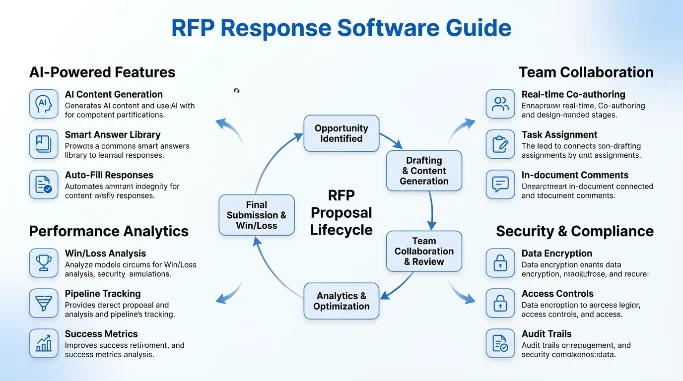
Quick Answer: RFP response software helps teams create winning proposals faster, collaborate seamlessly, and track every bid from start to finish. Top options include automated content libraries, AI-powered writing assistance, and real-time team collaboration tools that cut response time by up to 70%.
Let’s be honest. Nobody wakes up excited to write another RFP response. The endless formatting, the repetitive questions, the frantic last-minute searches for that one perfect case study. It’s the kind of work that makes even the most dedicated proposal writers question their career choices.
But here’s the thing. The right RFP response software can transform this chaotic process into something almost enjoyable. Imagine having every answer you’ve ever written organized in one place, ready to be customized in seconds. Picture your team collaborating without the nightmare of version control issues. The software you choose literally makes or breaks your win rate, and understanding your options is the first step toward proposal excellence.
Key Features to Look For
- Centralized Content Library
Example: Store every approved answer, case study, and company description in one searchable database.
Meaning: Never rewrite the same answer twice again. - AI-Powered Writing Assistance
Example: Get smart suggestions for improving your responses based on past winning proposals.
Meaning: Write faster while maintaining quality and consistency. - Real-Time Collaboration
Example: Multiple team members can work on the same document simultaneously.
Meaning: Eliminate the email ping-pong of file sharing. - Automated Formatting
Example: One-click formatting that matches any RFP template or requirement.
Meaning: Spend less time on formatting and more on content. - Question Answering Automation
Example: The software suggests relevant answers based on similar past questions.
Meaning: Cut response time dramatically with intelligent suggestions. - Integration Capabilities
Example: Connect with your CRM, project management, and communication tools.
Meaning: Work within your existing ecosystem without disruption. - Analytics and Reporting
Example: Track win rates, response times, and team performance metrics.
Meaning: Identify what works and continuously improve. - Version Control
Example: Every edit is tracked with clear history and rollback options.
Meaning: Never lose work or wonder which version is final. - Template Management
Example: Create and store custom templates for different RFP types.
Meaning: Start every proposal from a proven structure. - Review and Approval Workflows
Example: Set up automated review steps with deadlines and notifications.
Meaning: Keep projects moving with accountability. - Security and Compliance
Example: Enterprise-grade encryption with role-based access controls.
Meaning: Protect sensitive information and maintain compliance. - Mobile Accessibility
Example: Access and review proposals from anywhere on any device.
Meaning: Stay productive even when you’re away from your desk.
Benefits of Using RFP Response Software
- Save Hours on Every Proposal
Example: Reduce response time from days to hours with smart automation.
Meaning: Reallocate resources to higher-value activities. - Improve Win Rates
Example: Consistency and quality lead to more successful bids.
Meaning: Better responses directly impact your bottom line. - Reduce Team Stress
Example: Clear workflows and collaboration tools prevent last-minute scrambles.
Meaning: Happier teams produce better work. - Maintain Brand Consistency
Example: All responses use approved language and formatting.
Meaning: Present a unified, professional image every time. - Scale Your Efforts
Example: Handle more RFPs without needing to grow your team equally.
Meaning: Expand your business capabilities efficiently. - Track What Works
Example: Analytics show which approaches lead to wins.
Meaning: Data-driven decisions improve future proposals. - Never Miss a Deadline
Example: Automated reminders and task management keep everything on track.
Meaning: Submit every proposal on time, every time. - Standardize Processes
Example: Every proposal follows the same proven workflow.
Meaning: Reduce errors and improve predictability. - Enhance Team Collaboration
Example: Everyone works in one place with clear ownership.
Meaning: Eliminate confusion and duplicated efforts. - Improve Response Quality
Example: AI suggestions help refine and strengthen answers.
Meaning: Submit more compelling, tailored proposals. - Access Content Anywhere
Example: Cloud-based access means your team can work from anywhere.
Meaning: Support remote and distributed teams effectively. - Build a Knowledge Base
Example: Every proposal adds to your growing repository of expertise.
Meaning: Your institutional knowledge becomes an asset.
Best RFP Response Software Options
- Qorus
Example: Leading platform for comprehensive RFP management and automation.
Meaning: All-in-one solution for serious proposal teams. - Loopio
Example: Popular choice with excellent content library and collaboration tools.
Meaning: Great for teams wanting user-friendly, powerful features. - RFPIO
Example: Strong AI capabilities with seamless Salesforce integration.
Meaning: Ideal for sales-driven organizations. - XaitPorter
Example: Co-authoring platform with unique document management features.
Meaning: Perfect for complex, multi-author proposals. - PandaDoc
Example: Versatile solution for RFPs and general document creation.
Meaning: Good for teams needing broader document capabilities. - Proposify
Example: Visual and intuitive proposal creation for sales teams.
Meaning: Excellent for design-conscious proposal professionals. - BetterDocs
Example: Specialized in content management for RFP responses.
Meaning: Focused approach for content-heavy teams. - TenderSuite
Example: Comprehensive UK-focused RFP management system.
Meaning: Perfect for public sector and UK-based organizations. - Inproma
Example: AI-powered solution for accelerating proposal writing.
Meaning: Great for teams wanting cutting-edge automation. - AutogenAI
Example: Specialized in generative AI for proposal content creation.
Meaning: Best for teams embracing AI-powered writing. - Collaboris
Example: Cloud-based collaboration platform for business documents.
Meaning: Strong for distributed proposal teams. - Docsend
Example: Document sharing and tracking for final proposal delivery.
Meaning: Excellent for the final stages of proposal submission.
How to Choose the Right RFP Response Software
- Assess Your Team Size
Example: Smaller teams need simplicity; larger teams need robust features.
Meaning: Choose software that fits your organizational structure. - Evaluate Your Proposal Volume
Example: High volume demands automation; low volume might need basic features.
Meaning: Don’t overbuy or underbuy based on your needs. - Consider Integration Needs
Example: What tools does your team already use daily?
Meaning: Integration capability is key for seamless adoption. - Check User Experience
Example: How intuitive is the interface for daily users?
Meaning: Ease of use drives adoption and success. - Review Security Features
Example: What certifications and protections does the platform offer?
Meaning: Security is crucial for sensitive proposal data. - Look at Support and Training
Example: What onboarding and ongoing help is provided?
Meaning: Good support ensures you maximize your investment. - Test Collaboration Features
Example: Can multiple people work efficiently together in the platform?
Meaning: Collaboration is at the heart of proposal success. - Assess AI Capabilities
Example: How intelligent and helpful are the automation features?
Meaning: AI can significantly accelerate your response process. - Read Customer Reviews
Example: What do real users say about their experience?
Meaning: Learn from others’ successes and challenges. - Request Demos
Example: See the software in action before committing.
Meaning: Visual evidence helps make the right decision. - Consider Budget
Example: What’s the total cost of ownership and ROI potential?
Meaning: Balance features against what you can afford. - Think About Future Needs
Example: Will this software grow with your organization?
Meaning: Choose a solution that scales with your ambitions.
Common RFP Response Challenges Solved
- Disorganized Content
Example: Software centralizes everything in one searchable library.
Meaning: Find what you need in seconds, not hours. - Inconsistent Quality
Example: Templates and AI ensure every response meets standards.
Meaning: Consistent excellence becomes the norm. - Slow Response Times
Example: Automation reduces response time by 50-70%.
Meaning: Submit more proposals in less time. - Team Communication Gaps
Example: Real-time collaboration keeps everyone aligned.
Meaning: No more confusion about who’s doing what. - Version Control Nightmares
Example: Every edit is tracked with complete history.
Meaning: Always know which version is current. - Missed Deadlines
Example: Automated reminders and workflows prevent last-minute rushes.
Meaning: Submit every proposal on time. - Lost Expertise
Example: Every proposal builds your knowledge base.
Meaning: Benefit from lessons learned across every bid. - Inefficient Processes
Example: Standardized workflows eliminate wasted effort.
Meaning: Work smarter, not harder. - Scalability Issues
Example: Handle more proposals without proportionally increasing team size.
Meaning: Grow your business efficiently. - Poor Win Rates
Example: Better responses lead to more wins.
Meaning: Invest in tools that directly impact success. - Difficulty Tracking Success
Example: Analytics show what works and what doesn’t.
Meaning: Data-driven decisions improve over time. - Collaboration Bottlenecks
Example: Clear ownership and workflows keep things moving.
Meaning: Prevent delays from unclear responsibilities.
Implementation Tips
- Start with a Pilot
Example: Test the software with one team or type of proposal first.
Meaning: Learn and adjust before full rollout. - Migrate Content Carefully
Example: Clean and organize existing content before importing.
Meaning: A good foundation leads to better results. - Train Your Team
Example: Invest in proper training for all users.
Meaning: Confident users get the most value. - Create Standards
Example: Establish guidelines for how the software will be used.
Meaning: Consistency maximizes benefits. - Celebrate Small Wins
Example: Recognize when teams successfully use new features.
Meaning: Positive reinforcement drives adoption. - Gather Feedback
Example: Regularly ask users about their experience.
Meaning: Continuous improvement keeps everyone happy. - Assign Champions
Example: Designate power users to help others.
Meaning: Peer support accelerates learning. - Monitor Usage
Example: Track how often features are used.
Meaning: Identify training needs and underutilized features. - Document Processes
Example: Create guides for common tasks.
Meaning: Make it easy for new team members to learn. - Set Goals
Example: Define what success looks like with metrics.
Meaning: Measure progress and prove ROI. - Review Regularly
Example: Check in on effectiveness quarterly.
Meaning: Ensure the software continues to meet needs. - Scale Gradually
Example: Expand usage as comfort and confidence grows.
Meaning: Sustainable adoption leads to lasting success.
AI Features in RFP Response Software
- Intelligent Content Suggestions
Example: AI recommends relevant answers based on question similarity.
Meaning: Reduce research time dramatically. - Writing Enhancement
Example: Get real-time suggestions for clearer, more compelling language.
Meaning: Improve quality without extra effort. - Automated Summaries
Example: AI creates executive summaries from longer content.
Meaning: Save time while maintaining professionalism. - Smart Formatting
Example: AI detects and applies correct formatting automatically.
Meaning: Perfect formatting every time. - Translation Capabilities
Example: Automatically translate responses for international proposals.
Meaning: Expand your reach effortlessly. - Sentiment Analysis
Example: Check if your responses convey the right tone.
Meaning: Communicate more effectively. - Competitive Intelligence
Example: AI analyzes competitors’ proposals for insights.
Meaning: Stay ahead of the competition. - Predictive Analytics
Example: Forecast which proposals are likely to win.
Meaning: Prioritize efforts on high-potential bids. - Content Generation
Example: AI drafts initial responses for review.
Meaning: Start with something rather than a blank page. - Quality Assurance
Example: AI checks for consistency, completeness, and errors.
Meaning: Submit polished, professional proposals. - Personalization at Scale
Example: AI customizes generic answers for specific RFPs.
Meaning: Tailored responses without manual effort. - Continuous Learning
Example: AI improves based on past successes and feedback.
Meaning: Your software gets smarter over time.
ROI of RFP Response Software
- Time Savings
Example: Reduce response time by 50% or more per proposal.
Meaning: Submit more proposals with the same resources. - Increased Win Rates
Example: Higher quality responses lead to more wins.
Meaning: Direct revenue impact from better proposals. - Team Productivity
Example: Staff spend less time on administrative tasks.
Meaning: Focus energy on strategic, high-value work. - Reduced Errors
Example: Automation and templates minimize mistakes.
Meaning: Fewer corrections and revisions needed. - Better Collaboration
Example: Teams work more efficiently together.
Meaning: Less friction, more progress. - Knowledge Retention
Example: Institutional knowledge is captured and maintained.
Meaning: Benefit from every proposal’s lessons. - Scalability
Example: Handle increased volume without increasing team size.
Meaning: Grow revenue without proportional cost increases. - Competitive Advantage
Example: Faster, better responses beat competitors.
Meaning: Win more deals and grow market share. - Staff Satisfaction
Example: Happy teams produce better work and stay longer.
Meaning: Reduce turnover and maintain quality. - Improved Customer Experience
Example: Better proposals lead to better client relationships.
Meaning: Win trust and build partnerships. - Resource Optimization
Example: Allocate team time to the most valuable activities.
Meaning: Maximum impact from limited resources. - Long-Term Value
Example: The content library grows increasingly valuable over time.
Meaning: An appreciating asset for your organization.
Integration Possibilities
- CRM Integration
Example: Connect with Salesforce or HubSpot for seamless data flow.
Meaning: Access client data directly in your proposal workflow. - Project Management Tools
Example: Link with Asana or Trello to track proposal progress.
Meaning: Manage projects more efficiently. - Communication Platforms
Example: Integrate with Slack or Microsoft Teams for team updates.
Meaning: Stay connected without context switching. - Document Storage
Example: Connect with SharePoint or Google Drive.
Meaning: Access files wherever they live. - Email Systems
Example: Integrate with Outlook or Gmail for proposal delivery.
Meaning: Streamline the final submission step. - Calendar Tools
Example: Connect with Google Calendar for deadline management.
Meaning: Never miss an important date. - Analytics Platforms
Example: Connect with Tableau or Power BI for advanced reporting.
Meaning: Deeper insights into proposal performance. - Marketing Automation
Example: Connect with Marketo or Pardot for content alignment.
Meaning: Consistent messaging across all channels. - Contract Management
Example: Link with contract tools for smooth transitions.
Meaning: Seamless handoff after winning. - Customer Success Tools
Example: Connect with platforms for client management.
Meaning: Better understanding of client needs. - Financial Systems
Example: Integrate with accounting or ERP tools.
Meaning: Better financial tracking and forecasting. - Custom APIs
Example: Build custom connections to any system.
Meaning: Unlimited integration possibilities.
Overcoming Implementation Challenges
- Resistance to Change
Example: Communicate benefits clearly and involve teams in planning.
Meaning: People support what they help create. - Data Migration Issues
Example: Clean data before migration and test thoroughly.
Meaning: Good data in, good data out. - Training Gaps
Example: Provide comprehensive training and ongoing support.
Meaning: Confident users become power users. - Integration Problems
Example: Test integrations thoroughly before full rollout.
Meaning: Smooth integration leads to smooth adoption. - Budget Concerns
Example: Demonstrate ROI with clear metrics and benchmarks.
Meaning: Prove the investment is worthwhile. - Time Constraints
Example: Implement in phases to minimize disruption.
Meaning: Manage the transition effectively. - Changing Existing Processes
Example: Adapt workflows to leverage software capabilities.
Meaning: Embrace new, better ways of working. - Maintaining Content Quality
Example: Establish review processes for existing and new content.
Meaning: Keep your library fresh and accurate. - Ensuring Adoption
Example: Track usage and provide incentives for engagement.
Meaning: Widespread use drives maximum value. - Scaling Support
Example: Plan for support needs as usage grows.
Meaning: Ongoing success requires ongoing support. - Measuring Success
Example: Define and track key success metrics from day one.
Meaning: Know if you’re achieving your goals. - Continuous Improvement
Example: Regularly review and refine processes.
Meaning: Always get better.
Top Trends in RFP Response Software
- Generative AI
Example: AI that creates compelling content from simple prompts.
Meaning: Faster, higher quality responses. - Predictive Analytics
Example: Tools that predict win probability based on responses.
Meaning: Focus on proposals with the best chance. - Enhanced Personalization
Example: Tailored responses at scale for each RFP.
Meaning: More relevant, compelling proposals. - Voice and Video Integration
Example: Including multimedia content in proposals.
Meaning: More engaging, dynamic submissions. - Improved User Experience
Example: Intuitive interfaces that reduce training needs.
Meaning: Faster adoption and satisfaction. - Mobile-First Design
Example: Full functionality on phones and tablets.
Meaning: Work from anywhere. - Data-Driven Decision Making
Example: Analytics that guide strategy and resource allocation.
Meaning: Smarter, more effective proposal management. - Automated Compliance Checking
Example: Software that ensures all requirements are met.
Meaning: Reduce risk of disqualification. - Enhanced Security Features
Example: Advanced protections for sensitive data.
Meaning: Peace of mind and regulatory compliance. - Sustainability Features
Example: Tools that reduce paper and environmental impact.
Meaning: Better for business and the planet. - Real-Time Translation
Example: Instant translation for multilingual proposals.
Meaning: Compete in global markets. - Community and Sharing Features
Example: Shared libraries across multiple organizations.
Meaning: Learn from industry peers.
Questions to Ask Software Vendors
- What security certifications do you hold?
Example: Ask about SOC2, ISO, or other relevant certifications.
Meaning: Ensure your data is protected. - How does your AI work?
Example: Understand what data trains the AI and how it’s used.
Meaning: Make sure AI suggestions are reliable and safe. - What integrations are available?
Example: List of current and planned integrations.
Meaning: Ensure it works with your existing tools. - How is customer support provided?
Example: Hours, channels, and response times.
Meaning: Know you’ll get help when needed. - What’s your implementation process?
Example: Timeline, resources needed, and support provided.
Meaning: Understand what you’re signing up for. - How is data backed up and protected?
Example: Backup frequency, location, and security measures.
Meaning: Ensure data safety and recovery. - What training and resources are available?
Example: Documentation, videos, live training.
Meaning: Support your team’s learning. - How do you handle updates and new features?
Example: Release schedule and communication.
Meaning: Know what’s coming and plan accordingly. - What are the total costs involved?
Example: All fees, licenses, and potential additional costs.
Meaning: Accurate budgeting and planning. - Can we see customer references?
Example: Speak with current users about their experience.
Meaning: Real insights from real users. - How does pricing scale with our usage?
Example: Understand how costs change as you grow.
Meaning: Predictable financial planning. - What’s your roadmap for the next year?
Example: Future features and direction.
Meaning: Ensure the vendor’s vision aligns with your needs.
Success Stories from Real Teams
- Growth in Proposal Volume
Example: Teams handling 50% more RFPs with the same staff.
Meaning: Software expands capacity without expanding teams. - Improved Win Rates
Example: Winning 30% more bids after implementation.
Meaning: Direct ROI from better responses. - Time Savings
Example: Reducing average response time from 40 to 12 hours.
Meaning: Dramatic efficiency gains. - Team Satisfaction
Example: Staff reporting less stress and more enjoyment.
Meaning: Happier teams produce better work. - Better Collaboration
Example: Teams working seamlessly across departments.
Meaning: One unified proposal effort. - Knowledge Retention
Example: Capturing institutional knowledge that was previously lost.
Meaning: Learning from every proposal experience. - Quality Consistency
Example: Every proposal meeting the same high standard.
Meaning: Reliable excellence in every bid. - Competitive Advantage
Example: Faster responses giving an edge in tight deadlines.
Meaning: Win more by being quicker and better. - Staff Development
Example: Teams learning and growing with advanced tools.
Meaning: Individual and organizational growth. - Cultural Change
Example: From stress to confidence in proposal processes.
Meaning: A healthier, more effective work environment. - Customer Feedback
Example: Clients noting improved proposal quality and professionalism.
Meaning: Better proposals lead to better client relationships. - Business Growth
Example: More wins leading to significant revenue increases.
Meaning: Software as a growth driver.
FAQs
What is RFP response software?
RFP response software helps organizations manage the entire proposal creation process. It centralizes content, automates formatting, enables team collaboration, and often includes AI assistance to accelerate writing. Think of it as a command center for all your proposal-related activities.
How does RFP response software save time?
The software saves time through content reuse, automated formatting, intelligent question matching, and streamlined collaboration. Instead of starting from scratch each time, you build from existing content and focus on customization. Many teams reduce response time by 50% or more.
Is RFP response software expensive?
Costs vary widely based on team size, features, and provider. Entry-level options can be quite affordable, while enterprise solutions with advanced AI and integrations are more expensive. The ROI from time savings and increased wins typically justifies the investment for most organizations.
Can RFP response software help us win more bids?
Absolutely. By ensuring consistent quality, reducing errors, enabling faster responses, and providing data-driven insights, the software directly impacts win rates. Teams using these tools typically see measurable improvements in their success rates.
Do we need AI in RFP response software?
While not essential for everyone, AI capabilities are becoming increasingly valuable. AI can suggest responses, improve writing quality, provide analytics, and automate routine tasks. For organizations with high proposal volumes, AI features can significantly impact productivity and quality.
How long does implementation take?
Implementation timelines vary from weeks to months depending on complexity. Factors include team size, existing content, required integrations, and training needs. A phased approach often works best, starting with core features and expanding gradually.
Is our data secure with RFP response software?
Reputable providers have strong security measures including encryption, access controls, and regular security audits. Always review security certifications, data handling policies, and compliance with regulations before selecting a provider.
What happens to our content if we change providers?
Most software allows you to export your content in common formats. Before choosing any provider, confirm their data export capabilities. Building your content library in a way that’s transferable protects your investment.
Can we use RFP response software with remote teams?
Yes, cloud-based RFP software is designed for remote collaboration. Team members can work from anywhere, see real-time updates, and contribute to proposals regardless of location. This is especially valuable in today’s flexible work environment.
What’s the first step in choosing RFP response software?
Start by assessing your current needs and challenges. Define your must-have features, understand your budget, and involve your team in the decision. Then request demos from multiple vendors to compare options firsthand.
Conclusion
The right RFP response software is more than just a tool; it’s a strategic partner in your business growth. By streamlining your proposal process, improving content quality, and enabling your team to work smarter, you’re investing in your organization’s future success.
Remember, the best software is one that fits your specific needs, integrates with your existing workflows, and makes your team’s life better. Take the time to evaluate options, involve your team in the decision, and embrace the change as an opportunity for growth.
Ready to transform your RFP process? Start by assessing your current challenges and exploring the options that could make a difference. Your next winning proposal might be just a software investment away.
