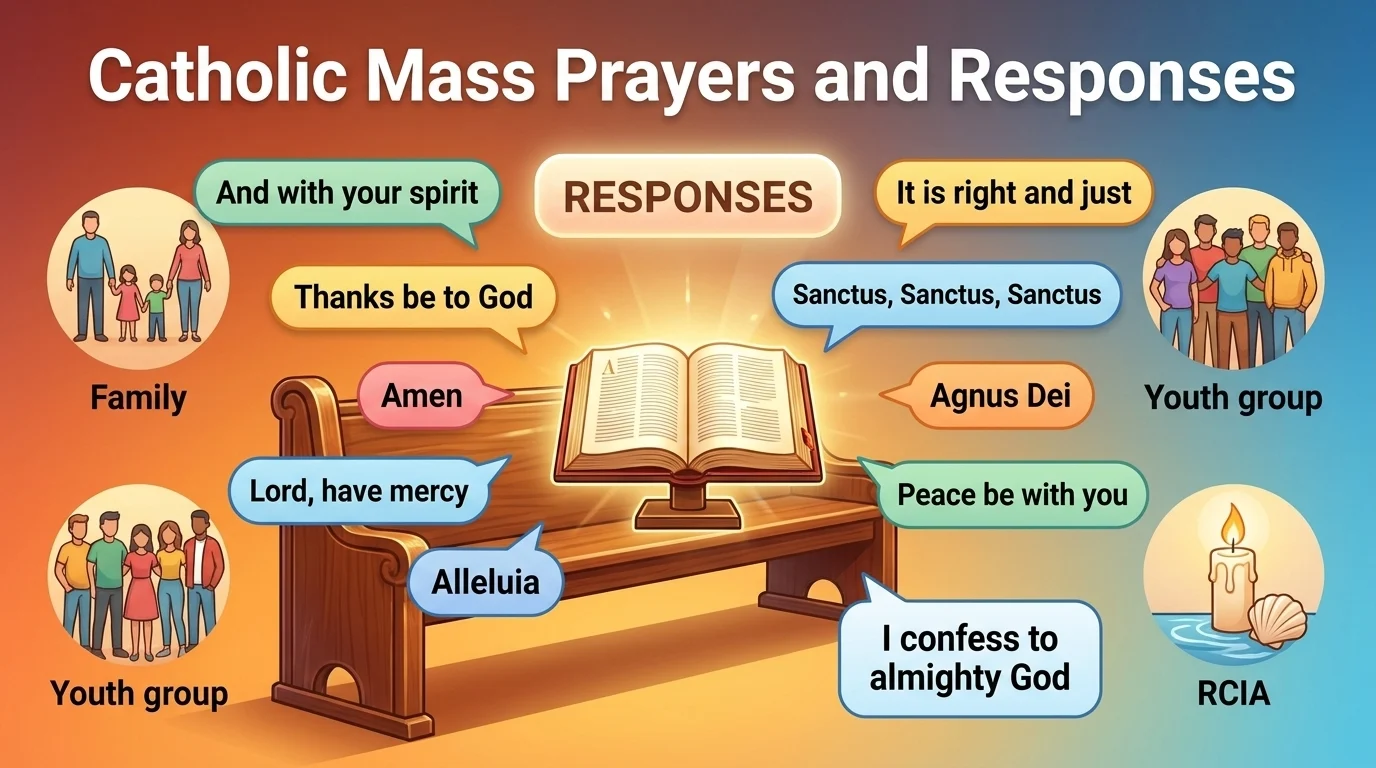
Follow the missal, listen for the priest’s cue, and practice the people’s parts before Sunday.
Top alternatives: pew card, missal app, parish handout, YouTube Mass, RCIA guide.
You’re sitting in the pew, the priest says something, and suddenly everyone around you responds like they’ve been rehearsing since birth. Meanwhile, you’re quietly mouthing “wait, what?” Learning Catholic Mass prayers and responses is not about being perfect. It’s about feeling at home in the liturgy.
Whether you’re a returning Catholic, a curious visitor, a parent wrangling kids, or a teen preparing for confirmation, knowing the words helps you pray with confidence. This guide breaks down the responses by tone and situation so you can follow along without the panic.
Funny Mass Responses
- And with your spirit. Example: You finally nail this response after years of saying “and also with you.” Meaning: It shows you’re engaged and ready for the liturgy.
- Lord, have mercy. Example: You realize you forgot the missal at home and whisper this under your breath. Meaning: It’s a humble plea for grace in a moment of confusion.
- Thanks be to God. Example: The homily ends and you say this a little too enthusiastically. Meaning: It expresses gratitude for the Word and the moment.
- Amen. Example: You say it before the deacon finishes the dismissal. Meaning: It’s a joyful agreement that sometimes arrives early.
- Holy, Holy, Holy. Example: You sing it while trying to find the right page. Meaning: It joins you to the angels even when your bookmark is lost.
- We lift them up to the Lord. Example: You say it while mentally lifting up your grocery list. Meaning: It redirects your heart back to God.
- It is right and just. Example: You respond while secretly thinking about brunch. Meaning: It affirms that worship is always the right priority.
- The Lord be with you. Example: You say it back to the priest with a tiny smile. Meaning: It’s a simple exchange of grace and connection.
- I confess. Example: You say it after accidentally scrolling your phone before Mass. Meaning: It’s a quick return to humility.
- Glory to God in the highest. Example: You sing it off-key but with full heart. Meaning: It’s joyful praise that doesn’t require perfect pitch.
- Praise to you, Lord Jesus Christ. Example: You say it after the Gospel and feel like a liturgical pro. Meaning: It honors the Word proclaimed.
- Go in peace. Example: You hear it and immediately look for the exit. Meaning: It’s a loving send-off into mission, not just a dismissal.
Direct Mass Responses
- And with your spirit. Example: The priest says “The Lord be with you” and you answer clearly. Meaning: It directly acknowledges his priestly service.
- Amen. Example: The Eucharistic Prayer concludes and you affirm it firmly. Meaning: It’s a strong yes to the mystery of faith.
- Thanks be to God. Example: The reading ends and you respond without hesitation. Meaning: It directly thanks God for the Scripture.
- Lord, have mercy. Example: You say it at the start of Mass with focus. Meaning: It asks for mercy without extra words.
- I believe in one God. Example: You profess the Creed with steady voice. Meaning: It states your faith clearly and publicly.
- Holy, Holy, Holy Lord God of hosts. Example: You join the Sanctus without mumbling. Meaning: It directly proclaims God’s holiness.
- We proclaim your Death, O Lord. Example: You say the Memorial Acclamation with confidence. Meaning: It announces the core of the faith.
- Lord, I am not worthy. Example: You say it before Communion with honest heart. Meaning: It directly admits your need for grace.
- The Lord be with you. Example: You respond to the greeting at the start. Meaning: It opens the liturgy with clear connection.
- Lift up your hearts. Example: You answer “We lift them up to the Lord” without delay. Meaning: It sets your focus upward.
- Let us give thanks to the Lord our God. Example: You reply “It is right and just” with purpose. Meaning: It directly enters the thanksgiving prayer.
- Go in peace. Example: You answer “Thanks be to God” and mean it. Meaning: It sends you out with direct gratitude.
Polite Mass Responses
- And with your spirit. Example: You say it gently when the priest greets the congregation. Meaning: It’s a respectful reply to his blessing.
- Thanks be to God. Example: You respond after the first reading with a quiet nod. Meaning: It shows polite gratitude for the Word.
- Amen. Example: You affirm the prayers with a calm voice. Meaning: It’s a courteous agreement in faith.
- Lord, have mercy. Example: You say it softly during the penitential act. Meaning: It’s a polite request for grace.
- Glory to God in the highest. Example: You sing along even if you don’t know every word. Meaning: It’s respectful praise offered with the community.
- The Lord be with you. Example: You answer the priest with a warm tone. Meaning: It’s a gracious exchange of peace.
- We lift them up to the Lord. Example: You respond after “Lift up your hearts” with attention. Meaning: It’s a courteous lifting of your heart.
- It is right and just. Example: You say it after the invitation to give thanks. Meaning: It politely agrees with the Church’s prayer.
- Holy, Holy, Holy. Example: You join the Sanctus without rushing. Meaning: It’s respectful participation in heavenly worship.
- Lord, I am not worthy. Example: You say it before Communion with humility. Meaning: It’s a polite acknowledgment of the gift.
- Praise to you, Lord Jesus Christ. Example: You respond after the Gospel with reverence. Meaning: It’s a courteous honor to Christ.
- Thanks be to God. Example: You say it at the dismissal with a smile. Meaning: It’s a polite goodbye to the liturgy.
Professional Mass Responses
- And with your spirit. Example: You’re a lector and you respond clearly after the priest’s greeting. Meaning: It shows liturgical professionalism and unity.
- Thanks be to God. Example: You finish the reading and the congregation responds while you step back. Meaning: It marks the end of your ministry with grace.
- The Lord be with you. Example: You’re an altar server and you follow the priest’s cues precisely. Meaning: It keeps the liturgy flowing with order.
- Lift up your hearts. Example: You help the congregation follow the missal at the right moment. Meaning: It supports full, active participation.
- Let us give thanks to the Lord our God. Example: You lead the response as a cantor with clear diction. Meaning: It keeps the assembly together.
- Holy, Holy, Holy. Example: You start the Sanctus on the right pitch. Meaning: It serves the prayer of the whole church.
- We proclaim your Death, O Lord. Example: You sing the Memorial Acclamation with steady rhythm. Meaning: It helps the community proclaim the mystery.
- Great Amen. Example: You lead the final affirmation of the Eucharistic Prayer. Meaning: It seals the prayer with a strong corporate yes.
- Lamb of God. Example: You sing the Agnus Dei during the breaking of bread. Meaning: It accompanies the Communion rite with care.
- Lord, I am not worthy. Example: You say it with the congregation before receiving Communion. Meaning: It prepares hearts with humility.
- Go in peace. Example: You respond “Thanks be to God” as the Mass ends. Meaning: It closes the liturgy with order and gratitude.
- Amen. Example: You affirm the final blessing with clarity. Meaning: It confirms your participation in the Church’s prayer.
Creative Mass Responses
- And with your spirit. Example: You imagine the response as a spiritual high-five with the priest. Meaning: It’s a creative way to feel connected to the liturgy.
- Lord, have mercy. Example: You picture mercy as a warm blanket over the congregation. Meaning: It helps you feel the prayer, not just say it.
- Glory to God in the highest. Example: You think of the Gloria as a song the angels started first. Meaning: It opens your imagination to heavenly worship.
- I believe in one God. Example: You see the Creed as a family photo of faith across generations. Meaning: It connects you to the whole Church.
- Holy, Holy, Holy. Example: You hear the Sanctus as a bridge between earth and heaven. Meaning: It makes the Mass feel cosmic.
- We proclaim your Death, O Lord. Example: You imagine the Memorial Acclamation as a bold headline of hope. Meaning: It turns doctrine into living praise.
- Lord, I am not worthy. Example: You picture the centurion from the Gospel standing beside you. Meaning: It makes humility feel personal and real.
- Lamb of God. Example: You see the Agnus Dei as a gentle invitation to trust. Meaning: It frames Communion with mercy.
- The Lord be with you. Example: You hear it as a spiritual hello from the priest to the whole room. Meaning: It makes the greeting feel warm.
- Lift up your hearts. Example: You imagine lifting your worries like a balloon release. Meaning: It gives the response emotional lift.
- Thanks be to God. Example: You hear it as the closing credits of a beautiful story. Meaning: It turns the dismissal into gratitude.
- Amen. Example: You think of it as a tiny yes to a huge mystery. Meaning: It makes the word feel powerful.
Warm Mass Responses
- And with your spirit. Example: You say it to the priest with a friendly nod. Meaning: It builds warmth between priest and people.
- The Lord be with you. Example: You respond with a gentle smile. Meaning: It turns a formal greeting into a family hello.
- Lift up your hearts. Example: You answer “We lift them up to the Lord” with peace. Meaning: It invites warmth into the liturgy.
- Lord, have mercy. Example: You say it with compassion for yourself and others. Meaning: It softens the heart.
- Glory to God in the highest. Example: You sing it even if your voice is quiet. Meaning: It adds warmth to praise.
- I confess. Example: You say it honestly and without shame. Meaning: It brings warmth through honesty.
- Holy, Holy, Holy. Example: You join the Sanctus with a sense of belonging. Meaning: It makes you feel part of the family of faith.
- Lord, I am not worthy. Example: You say it with trust, not fear. Meaning: It warms the heart with humility.
- Lamb of God. Example: You sing it slowly and prayerfully. Meaning: It invites tenderness before Communion.
- Praise to you, Lord Jesus Christ. Example: You say it after the Gospel with affection. Meaning: It warms your love for the Word.
- Thanks be to God. Example: You say it at the end with genuine gratitude. Meaning: It closes Mass with a warm heart.
- Amen. Example: You say it like a heartfelt “yes” to God. Meaning: It seals the prayer with warmth.
Traditional Mass Responses
- And with your spirit. Example: You use the exact wording in the Roman Missal. Meaning: It follows the Church’s official response.
- Lord, have mercy. Example: You say it during the Kyrie without skipping words. Meaning: It honors the ancient form of the prayer.
- Glory to God in the highest. Example: You sing the Gloria as printed in the missal. Meaning: It preserves the traditional hymn.
- I believe in one God. Example: You profess the Nicene Creed on Sundays and solemnities. Meaning: It follows the historic creed.
- Holy, Holy, Holy Lord God of hosts. Example: You say the Sanctus exactly as written. Meaning: It keeps the traditional wording.
- We proclaim your Death, O Lord. Example: You choose one Memorial Acclamation and stick with it. Meaning: It follows the approved options.
- Lord, I am not worthy. Example: You say the full Communion response. Meaning: It uses the traditional biblical wording.
- Lamb of God. Example: You sing the Agnus Dei three times as prescribed. Meaning: It follows the ancient pattern.
- The Lord be with you. Example: You respond “And with your spirit” without modernizing it. Meaning: It preserves the liturgical translation.
- Lift up your hearts. Example: You answer “We lift them up to the Lord” precisely. Meaning: It keeps the traditional dialogue.
- Thanks be to God. Example: You respond at the end of the readings as usual. Meaning: It follows the longstanding custom.
- Go in peace. Example: You answer “Thanks be to God” at the dismissal. Meaning: It completes the traditional sending.
Beginner-Friendly Mass Responses
- And with your spirit. Example: You’re new and you finally remember this one. Meaning: It’s your first win in liturgical participation.
- Amen. Example: You say it whenever you’re unsure because it fits almost everywhere. Meaning: It’s the safest and most useful response.
- Thanks be to God. Example: You hear the reading end and you join in. Meaning: It’s an easy response to learn first.
- Lord, have mercy. Example: You follow the pew card and say it with everyone. Meaning: It’s simple and repeated often.
- The Lord be with you. Example: You recognize the cue and answer right away. Meaning: It helps you feel included.
- Lift up your hearts. Example: You see the words on the screen and read them. Meaning: It builds confidence through repetition.
- Holy, Holy, Holy. Example: You hum along until you know the words. Meaning: It lets you participate even while learning.
- Our Father. Example: You pray it with the congregation and feel at home. Meaning: It’s the most familiar Mass prayer.
- Lamb of God. Example: You say it quietly while waiting for Communion. Meaning: It becomes a gentle anchor.
- Lord, I am not worthy. Example: You read it from the missal and mean it. Meaning: It teaches humility step by step.
- Praise to you, Lord Jesus Christ. Example: You respond after the Gospel with the crowd. Meaning: It’s a short phrase you can master quickly.
- Go in peace. Example: You hear the dismissal and answer with the rest. Meaning: It gives you a clear ending to follow.
Confident Mass Responses
- And with your spirit. Example: You say it loud enough for the pew behind you. Meaning: It shows confident participation.
- Amen. Example: You affirm the Eucharistic Prayer without hesitation. Meaning: It’s a bold yes to the faith.
- Thanks be to God. Example: You respond after the reading with clarity. Meaning: It expresses confident gratitude.
- Lord, have mercy. Example: You say it with assurance during the penitential act. Meaning: It shows trust in God’s mercy.
- I believe in one God. Example: You profess the Creed with steady voice. Meaning: It’s a public witness of faith.
- Holy, Holy, Holy. Example: You sing the Sanctus with full voice. Meaning: It joins you confidently to the Church’s praise.
- We proclaim your Death, O Lord. Example: You say the acclamation like you mean it. Meaning: It declares the mystery with conviction.
- Great Amen. Example: You sing the final Amen strongly. Meaning: It seals the prayer with confidence.
- Lamb of God. Example: You sing the Agnus Dei without looking down. Meaning: It shows you know the rhythm of the Mass.
- Lord, I am not worthy. Example: You say it with humble confidence. Meaning: It balances trust and humility.
- The Lord be with you. Example: You respond promptly and clearly. Meaning: It shows you’re locked into the liturgy.
- Go in peace. Example: You answer “Thanks be to God” with energy. Meaning: It sends you out with purpose.
Emotional Mass Responses
- Lord, have mercy. Example: You say it when your heart is heavy. Meaning: It gives words to your need for grace.
- I confess. Example: You say it after a hard week and feel relief. Meaning: It brings honesty before God.
- Holy, Holy, Holy. Example: You sing it through tears at a funeral Mass. Meaning: It lifts sorrow into worship.
- Lamb of God. Example: You hear it during a difficult season and feel held. Meaning: It speaks mercy to the heart.
- Lord, I am not worthy. Example: You say it with a quiet ache in your chest. Meaning: It turns vulnerability into trust.
- Amen. Example: You say it after a prayer that hit close to home. Meaning: It seals an emotional yes.
- Thanks be to God. Example: You say it after a reading that comforted you. Meaning: It turns gratitude into a response.
- We lift them up to the Lord. Example: You say it while carrying grief. Meaning: It offers your heart upward.
- Praise to you, Lord Jesus Christ. Example: You say it after a Gospel that moved you. Meaning: It turns emotion into praise.
- Glory to God in the highest. Example: You sing it at Christmas with joy and tears. Meaning: It gives emotion a holy shape.
- The Lord be with you. Example: You hear it as a reassurance. Meaning: It reminds you that you’re not alone.
- Go in peace. Example: You hear it after a long Mass and feel lighter. Meaning: It sends you out with calm.
Sweet Mass Responses
- And with your spirit .Meaning: It’s a gentle honor to his ministry.
- Amen. Example: You say it softly with your child beside you. Meaning: It teaches little hearts to say yes to God.
- Thanks be to God. Example: You say it as a quiet thank-you for the reading. Meaning: It’s a sweet act of gratitude.
- Lord, have mercy. Example: You say it while thinking of someone you love. Meaning: It offers mercy for others.
- The Lord be with you. Example: You respond warmly to the priest’s greeting. Meaning: It’s a sweet exchange of blessing.
- Lift up your hearts. Example: You say it while holding your baby. Meaning: It lifts your whole family to God.
- Holy, Holy, Holy. Example: You sing it gently with the congregation. Meaning: It’s sweet praise offered together.
- Lamb of God. Example: You sing it while preparing for Communion. Meaning: It invites tenderness and trust.
- Lord, I am not worthy. Example: You say it with a humble heart. Meaning: It’s a sweet admission of need.
- Praise to you, Lord Jesus Christ. Example: You say it after the Gospel with love. Meaning: It honors Christ sweetly.
- Go in peace. Example: You answer “Thanks be to God” with a smile. Meaning: It ends Mass on a gentle note.
- Amen. Example: You say it at the final blessing with your family. Meaning: It’s a sweet family yes to God.
Clever Mass Responses
- And with your spirit. Example: You remember it by thinking “spirit to spirit.” Meaning: It’s a clever memory hook for the response.
- Thanks be to God. Example: You connect it to the end of every reading. Meaning: It’s a smart cue to follow the liturgy.
- The Lord be with you. Example: You use the priest’s greeting as a signal to respond. Meaning: It’s a clever way to stay in sync.
- Lift up your hearts. Example: You remember the response because it mirrors the invitation. Meaning: It’s a built-in memory trick.
- Let us give thanks to the Lord our God. Example: You listen for “give thanks” and answer “It is right and just.” Meaning: It’s a clever liturgical pattern.
- Holy, Holy, Holy. Example: You know it comes right before the Eucharistic Prayer. Meaning: It’s a smart marker in the Mass.
- We proclaim your Death, O Lord. Example: You recognize it as the Memorial Acclamation. Meaning: It’s a clever way to know where you are.
- Great Amen. Example: You listen for the end of the Eucharistic Prayer. Meaning: It’s a smart cue for the big yes.
- Lamb of God. Example: You know Communion is coming next. Meaning: It’s a clever liturgical signpost.
- Lord, I am not worthy. Example: You remember it from the centurion’s words. Meaning: It’s a biblical memory aid.
- Praise to you, Lord Jesus Christ. Example: You say it right after the Gospel. Meaning: It’s a clever Gospel marker.
- Go in peace. Example: You know Mass is ending and answer with gratitude. Meaning: It’s a smart closing cue.
Chill and Casual Mass Responses
- And with your spirit. Example: You say it calmly without overthinking. Meaning: It keeps you relaxed and engaged.
- Amen. Example: You say it naturally whenever the prayer ends. Meaning: It’s an easy yes in the flow.
- Thanks be to God. Example: You respond after the reading like it’s second nature. Meaning: It keeps you in the rhythm.
- Lord, have mercy. Example: You say it without stress during the penitential act. Meaning: It’s a simple prayer of trust.
- The Lord be with you. Example: You answer the priest with a casual nod. Meaning: It keeps the exchange friendly.
- Lift up your hearts. Example: You say the response without rushing. Meaning: It keeps your focus gentle.
- Holy, Holy, Holy. Example: You sing along at your own volume. Meaning: It lets you participate without pressure.
- Lamb of God. Example: You say it while waiting in line for Communion. Meaning: It keeps the moment peaceful.
- Lord, I am not worthy. Example: You say it quietly and honestly. Meaning: It keeps humility simple.
- Praise to you, Lord Jesus Christ. Example: You respond after the Gospel with ease. Meaning: It keeps you connected.
- Go in peace. Example: You answer “Thanks be to God” on your way out. Meaning: It ends Mass without fuss.
- Amen. Example: You say it at the final blessing with a relaxed heart. Meaning: It seals the Mass calmly.
Youth Group Mass Responses
- And with your spirit. Example: You say it with your friends at youth Mass. Meaning: It builds shared participation.
- Lord, have mercy. Example: You say it together as a group. Meaning: It teaches mercy in community.
- Glory to God in the highest. Example: You sing it louder than usual at a youth night. Meaning: It brings energy to praise.
- I believe in one God. Example: You profess the Creed with your peers. Meaning: It strengthens faith together.
- Holy, Holy, Holy. Example: You join the Sanctus with the whole church. Meaning: It connects you to something bigger.
- We proclaim your Death, O Lord. Example: You say it with conviction at a retreat Mass. Meaning: It makes faith feel real.
- Great Amen. Example: You sing it with full voice at the end of the Eucharistic Prayer. Meaning: It’s a group yes to God.
- Lamb of God. Example: You sing it while preparing for Communion together. Meaning: It builds a sense of community.
- Lord, I am not worthy. Example: You say it with humility before receiving. Meaning: It keeps the group grounded.
- Praise to you, Lord Jesus Christ. Example: You respond after the Gospel at a youth event. Meaning: It honors the Word together.
- The Lord be with you. Example: You answer the priest with your friends. Meaning: It makes the Mass feel like family.
- Go in peace. Example: You answer “Thanks be to God” and head to fellowship. Meaning: It sends you out together.
Family-Friendly Mass Responses
- And with your spirit. Example: You help your child say it after the priest’s greeting. Meaning: It teaches participation from a young age.
- Amen. Example: Your toddler says it loudly and everyone smiles. Meaning: It makes faith feel like home.
- Thanks be to God. Example: Your family says it together after the reading. Meaning: It builds a habit of gratitude.
- Lord, have mercy. Example: You whisper it with your kids during the penitential act. Meaning: It teaches mercy as a family.
- The Lord be with you. Example: You model the response for your children. Meaning: It shows them how to join in.
- Lift up your hearts. Example: You say it while holding a child’s hand. Meaning: It lifts the whole family to God.
- Holy, Holy, Holy. Example: Your family sings it together softly. Meaning: It creates a shared moment of praise.
- Lamb of God. Example: You explain it to your child before Communion. Meaning: It helps little hearts understand mercy.
- Lord, I am not worthy. Example: You say it with your family before receiving. Meaning: It teaches humility together.
- Praise to you, Lord Jesus Christ. Example: Your kids say it after the Gospel. Meaning: It honors the Word as a family.
- Go in peace. Example: You answer “Thanks be to God” with your children. Meaning: It ends Mass with a family yes.
- Amen. Example: You say it at the final blessing with everyone. Meaning: It seals the family’s participation.
Frequently Asked Questions
What does “Catholic Mass prayers and responses” mean?
It means the prayers said by the priest and the short replies said by the congregation during Mass. Think “And with your spirit” and “Thanks be to God.”
Are any of these responses flirty or emotional?
They are not flirty. They are reverent and prayerful. Some can feel deeply emotional because they express faith, sorrow, gratitude, or hope.
Can I use these responses in a professional or formal setting?
They are for the liturgy. Outside Mass, you can use phrases like “Thanks be to God” as a respectful expression of faith, but the Mass responses belong in worship.
What if I say a response but don’t mean it?
God sees the heart. Start where you are. Saying the words can slowly shape your intention, especially if you stay present and ask for help.
Is humor appropriate with Mass responses?
Light humor about learning them is fine. Avoid jokes that mock the liturgy or the faith. Respect keeps the humor warm and safe.
Conclusion
Learning Catholic Mass prayers and responses is a journey, not a test. You do not need to know every word on day one. You just need to show up, listen, and try.
Every response you say connects you to the whole Church, from the person beside you to the saints in heaven. It shapes how you pray, how you participate, and how you feel at Mass. Try one new response each week. Soon the words will feel like home.
