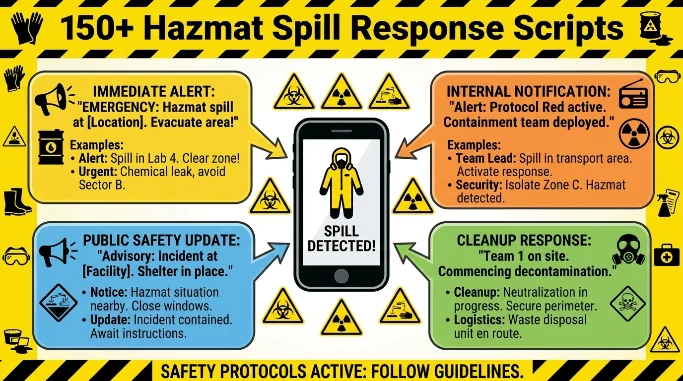
Quick Answer: When a hazmat spill occurs, stay calm and follow your training. Key responses include: “Evacuate the area immediately” or “I’m initiating the emergency response plan” or “Contact the National Response Center at 1-800-424-8802” or “Secure the source if safe to do so” or “I’ve activated the emergency alarm system.”
Imagine this: you’re working your normal shift when suddenly you hear the alarm. A chemical spill. Your heart races, adrenaline kicks in, and everyone looks to you for direction. What do you say? The right hazmat spill response can mean the difference between a contained incident and a full-blown environmental disaster that puts lives at risk.
This is exactly why hazmat spill response communication matters so much. Every second counts when hazardous materials are involved, and the words you choose can help people stay safe, protect the environment, and prevent panic. Whether you’re a safety manager, a first responder, or an employee who just discovered a leak, having the right phrases ready can save precious time and potentially save lives.
Immediate Emergency Responses
- “Evacuate the area immediately and proceed to the nearest assembly point.”
Example: Use this when you need people to leave a hazardous zone quickly and efficiently.
Meaning: This direct order prioritizes human safety above all else and gives clear directions. - “I’m activating the emergency response plan right now.”
Example: Perfect for when you need to signal that official procedures are starting.
Meaning: This professional response confirms that proper protocols are being followed. - “Everyone, stop what you’re doing and follow the evacuation route.”
Example: Use this to halt operations and get people moving toward safety.
Meaning: This clear command prevents confusion during the critical first moments. - “This is not a drill. Please move to the designated safe zone.”
Example: When you need to make sure people understand the seriousness of the situation.
Meaning: This eliminates any doubt about the urgency of the situation. - “I’m calling emergency services right now. Stay on the line.”
Example: Use this when coordinating with dispatchers during a spill event.
Meaning: This assures others that professional help is being summoned. - “Secure the source of the spill if it’s safe to do so.”
Example: When trained personnel are present and can safely stop the leak.
Meaning: This instructs trained staff to take containment action when possible. - “Everyone, stay upwind of the spill area.”
Example: Critical instruction for protecting people from airborne hazards.
Meaning: This life-saving direction helps people avoid toxic fumes. - “I’m sounding the emergency alarm now.”
Example: Use this to communicate that you’re triggering the building-wide alert system.
Meaning: This lets everyone know that alarms are about to sound. - “All non-essential personnel must leave the area immediately.”
Example: When you need to reduce the number of people in danger.
Meaning: This helps emergency teams work without extra people in the way. - “I need everyone to remain calm and listen carefully.”
Example: Use this to prevent panic from spreading.
Meaning: This authoritative but calm statement helps maintain order. - “The spill has been contained. We’re now in recovery mode.”
Example: When the immediate danger is under control.
Meaning: This signals the transition from emergency to cleanup phase. - “I’m designating this as a hazardous materials incident.”
Example: Official declaration that triggers specific response protocols.
Meaning: This formal statement ensures proper procedures and resources are activated.
Notifying Authorities Responses
- “I’m contacting the National Response Center at 1-800-424-8802.”
Example: Use this when federal reporting is required for the spill.
Meaning: This professional response shows you’re following legal reporting requirements. - “I’ve already notified the local fire department.”
Example: When you want to reassure others that help is on the way.
Meaning: This shows immediate action has been taken. - “The EPA has been contacted about this hazmat spill response.”
Example: For incidents that require federal agency involvement.
Meaning: This communicates that all necessary government bodies are being notified. - “I’m establishing communication with the incident command center.”
Example: When coordinating with official emergency management structures.
Meaning: This shows you’re plugging into the organized response system. - “I need to report this to our corporate safety department.”
Example: For company-internal reporting protocols.
Meaning: This ensures internal stakeholders are informed promptly. - “The environmental agency is on their way.”
Example: When regulatory bodies are being dispatched.
Meaning: This shows external oversight is being engaged. - “I’m gathering information for the spill report.”
Example: When you’re documenting the incident for compliance purposes.
Meaning: This shows you’re taking proper documentation seriously. - “I’ve placed the call to the hazmat response team.”
Example: When specialized emergency personnel are being deployed.
Meaning: This confirms the right experts are being brought in. - “The 24-hour emergency number has been called.”
Example: For after-hours or emergency-only contacts.
Meaning: This shows you’re using all available emergency contacts. - “I’m filling out the mandatory incident notification form.”
Example: When you need to document the spill for official records.
Meaning: This ensures proper paperwork is completed. - “I’ve made the required notifications to state authorities.”
Example: For spills that require state-level reporting.
Meaning: This covers all levels of governmental notification. - “I’m coordinating with the on-site emergency coordinator.”
Example: When you’re working with designated response leaders.
Meaning: This shows you’re following the chain of command.
Command and Control Responses
- “I’m taking charge of the hazmat spill response.”
Example: When you need to establish clear leadership during an incident.
Meaning: This confident declaration prevents confusion about who is in charge. - “I need the Material Safety Data Sheets for all affected substances.”
Example: When you need to understand the hazards present in the spill.
Meaning: This shows you’re gathering critical information for safe response. - “I’m designating a staging area for emergency personnel.”
Example: When organizing incoming response teams.
Meaning: This ensures resources are organized and accessible. - “I need a perimeter established around the spill zone.”
Example: To keep people out of the danger area.
Meaning: This creates a safe boundary around the incident. - “I’m assigning teams to specific response roles.”
Example: When you need to coordinate multiple responders.
Meaning: This ensures everyone knows their responsibilities. - “I need a head count of all personnel in the affected area.”
Example: To ensure everyone has been accounted for during evacuation.
Meaning: This confirms all people are safe. - “I’m coordinating with the hospital for any casualties.”
Example: When injuries have occurred or may have occurred.
Meaning: This ensures medical resources are prepared. - “I’m establishing a decontamination zone.”
Example: When people or equipment need to be cleaned of hazardous materials.
Meaning: This prevents cross-contamination and protects health. - “I need regular updates on air quality monitoring.”
Example: When hazardous vapors or gases might be present.
Meaning: This ensures continuous safety assessment. - “I’m prioritizing containment over cleanup at this stage.”
Example: When the immediate danger needs to be controlled first.
Meaning: This sets the right priorities for the response. - “I’m declaring this incident under control.”
Example: When the immediate emergency has been resolved.
Meaning: This signals a shift to recovery and cleanup phases. - “I’m implementing the emergency shutdown procedure.”
Example: When you need to stop operations to prevent further incidents.
Meaning: This ensures all equipment is safely powered down.
Safety-Focused Responses
- “Everyone needs to put on appropriate personal protective equipment.”
Example: When responders and personnel need to gear up.
Meaning: This prevents exposure to hazardous materials. - “No one enters the spill area without proper hazmat gear.”
Example: To enforce safety protocols strictly.
Meaning: This rule protects everyone from harm. - “I’m checking the wind direction to establish safe zones.”
Example: When toxic fumes are a concern.
Meaning: This ensures people are positioned safely. - “I need the spill kit and absorbent materials now.”
Example: When you need physical resources to contain the spill.
Meaning: This gets the right equipment to the scene quickly. - “Make sure all fire suppression systems are ready.”
Example: When flammable materials are involved.
Meaning: This prepares for potential fire risks. - “I’m isolating the area from the rest of the facility.”
Example: To stop the spill from spreading further.
Meaning: This contains the problem to one area. - “I’m checking all valves and shut-off points.”
Example: When stopping the source of the spill is the priority.
Meaning: This helps stop the leak at its source. - “I need the spill response manual for this specific chemical.”
Example: When you need detailed information about the substance.
Meaning: This ensures you’re following the right procedures. - “I’m setting up an exclusion zone around the incident.”
Example: To keep unauthorized personnel away from danger.
Meaning: This protects people from the hazardous area. - “I’m ensuring proper ventilation in the affected area.”
Example: When toxic vapors need to be cleared.
Meaning: This helps make the area safe again. - “Everyone report to the muster point for roll call.”
Example: To ensure all personnel have been accounted for safely.
Meaning: This confirms everyone got out safely. - “I’m verifying that all emergency equipment is functional.”
Example: When you need to confirm response tools are ready.
Meaning: This ensures nothing fails during the response.
Coordinating with Responders Responses
- “I’ll brief the incoming hazmat team on the situation.”
Example: When specialized responders arrive on scene.
Meaning: This ensures they have all necessary information. - “I’m sharing the incident action plan with all teams.”
Example: When you need to coordinate multiple response groups.
Meaning: This ensures everyone is working from the same plan. - “I’m establishing a unified command structure.”
Example: When multiple agencies need to coordinate together.
Meaning: This prevents confusion and improves efficiency. - “We need to work together on this hazmat spill response.”
Example: When encouraging collaboration among teams.
Meaning: This promotes teamwork during a challenging situation. - “I’m documenting everything for the after-action report.”
Example: When you need to record what happened for future reference.
Meaning: This helps improve future response efforts. - “I’m setting up communication channels with all teams.”
Example: To ensure everyone can talk to each other.
Meaning: This prevents miscommunication during the emergency. - “I need a liaison assigned to each responding agency.”
Example: When multiple organizations are involved.
Meaning: This ensures smooth communication between groups. - “I’m sharing the hazard assessment with all personnel.”
Example: When you need everyone to understand the risks.
Meaning: This ensures informed decision-making. - “I’m coordinating resource allocation for the response.”
Example: When you need to prioritize equipment and personnel.
Meaning: This ensures resources go where they’re needed most. - “I’m establishing a timeline for the response phases.”
Example: When you need to manage the operation efficiently.
Meaning: This provides structure to the response effort. - “I’m updating all teams on the current situation.”
Example: When information changes or evolves.
Meaning: This ensures everyone has the latest information. - “I’m requesting additional resources for the cleanup phase.”
Example: When you need more help for the next stage.
Meaning: This ensures preparedness for the full response.
Internal Communication Responses
- “I’m sending a mass notification to all staff.”
Example: When you need to inform the entire workforce.
Meaning: This ensures everyone is aware of the situation. - “I’m updating the emergency contact list.”
Example: When you need to reach key personnel.
Meaning: This helps with communication coordination. - “I’m sending out a building-wide safety announcement.”
Example: For general communication to all occupants.
Meaning: This keeps everyone informed of safe procedures. - “I’m initiating the company’s spill response protocol.”
Example: When you’re activating official internal procedures.
Meaning: This ensures the company’s plan is implemented. - “I’m notifying the safety committee about the incident.”
Example: For internal safety governance reporting.
Meaning: This keeps oversight bodies informed. - “I’m preparing a statement for internal distribution.”
Example: When you need controlled communication to employees.
Meaning: This prevents misinformation from spreading. - “I’m coordinating with HR regarding employee safety.”
Example: When personnel concerns need to be addressed.
Meaning: This ensures employee welfare is considered. - “I’m updating the incident log for company records.”
Example: For maintaining accurate documentation.
Meaning: This ensures the company has a complete record. - “I’m sending a safety alert to all department heads.”
Example: When leadership needs to be informed immediately.
Meaning: This ensures managers can support their teams. - “I’m confirming that all employees have received the alert.”
Example: When you need to verify communication was successful.
Meaning: This ensures no one missed critical information. - “I’m arranging for counseling services for affected employees.”
Example: When employees might need emotional support.
Meaning: This shows care for employee well-being. - “I’m documenting all communication for legal purposes.”
Example: When you need to maintain records for compliance.
Meaning: This protects the company legally.
Media and Public Relations Responses
- “I’m preparing the initial public statement.”
Example: When you need to inform the public about the incident.
Meaning: This ensures a controlled and accurate message. - “I’m designating a single spokesperson for media inquiries.”
Example: To prevent conflicting information from being released.
Meaning: This ensures consistent messaging. - “I’m confirming that we’re cooperating with all regulatory agencies.”
Example: When you need to reassure the public and authorities.
Meaning: This shows transparency and responsibility. - “I’m gathering facts before releasing any public information.”
Example: To ensure all statements are accurate.
Meaning: This prevents misinformation and panic. - “I’m monitoring social media for any misinformation.”
Example: When you need to correct false claims.
Meaning: This prevents rumors from spreading. - “I’m ensuring transparency in all external communications.”
Example: When you want to maintain public trust.
Meaning: This shows commitment to honesty and openness. - “I’m preparing the community notification message.”
Example: When nearby residents need to be informed.
Meaning: This ensures the community is aware of the situation. - “I’m coordinating with the public relations team.”
Example: For professional communication management.
Meaning: This ensures professional handling of external messaging. - “I’m responding to media inquiries with approved statements.”
Example: To maintain control over what information is released.
Meaning: This ensures consistent and accurate public information. - “I’m issuing a statement to local news outlets.”
Example: For broad public notification.
Meaning: This keeps the community informed. - “I’m confirming that we’re following all legal reporting requirements.”
Example: To reassure the public about compliance.
Meaning: This shows the organization is acting responsibly. - “I’m preparing the post-incident press conference.”
Example: For detailed communication after the event.
Meaning: This ensures thorough public communication.
Environmental Protection Responses
- “I’m taking steps to prevent contamination of water sources.”
Example: When the spill threatens rivers, lakes, or groundwater.
Meaning: This protects drinking water and ecosystems. - “I’m deploying absorbent booms to contain the spill.”
Example: When the spill is on water or near drainage systems.
Meaning: This physically contains and controls the spill. - “I’m assessing the environmental impact of the hazmat spill response.”
Example: When you need to understand ecological damage.
Meaning: This helps plan the environmental recovery. - “I’m implementing soil remediation procedures.”
Example: When the spill has contaminated ground soil.
Meaning: This ensures the land is properly cleaned. - “I’m taking samples for environmental testing.”
Example: When you need to measure contamination levels.
Meaning: This helps determine the extent of environmental damage. - “I’m working with environmental consultants on restoration.”
Example: When specialized expertise is needed.
Meaning: This ensures environmentally sound cleanup. - “I’m establishing wildlife protection protocols.”
Example: When animals are at risk from the spill.
Meaning: This protects local wildlife populations. - “I’m coordinating with wildlife rehabilitation services.”
Example: When animals have been affected by the spill.
Meaning: This provides care for impacted wildlife. - “I’m implementing groundwater monitoring procedures.”
Example: To check if the spill has reached water sources.
Meaning: This helps protect drinking water supplies. - “I’m ensuring proper disposal of contaminated waste.”
Example: When you need to safely dispose of hazardous materials.
Meaning: This prevents further environmental contamination. - “I’m documenting environmental damage for regulatory reports.”
Example: When compliance reporting is required.
Meaning: This maintains accurate environmental records. - “I’m implementing long-term environmental monitoring.”
Example: After the immediate cleanup is complete.
Meaning: This ensures the environment fully recovers.
Customer and Client Communication Responses
- “I’m informing customers about potential service disruptions.”
Example: When the spill affects your business operations.
Meaning: This manages customer expectations honestly. - “I’m ensuring client safety during this incident.”
Example: When clients or customers are on-site.
Meaning: This prioritizes client well-being. - “I’m communicating with suppliers about delivery delays.”
Example: When the spill affects supply chain operations.
Meaning: This prevents supply chain issues. - “I’m preparing customer notifications about the hazmat spill response.”
Example: To keep customers informed professionally.
Meaning: This maintains customer trust and confidence. - “I’m confirming all products are safe before shipping.”
Example: When the spill might affect product quality.
Meaning: This ensures product safety and quality. - “I’m providing updates to our client account managers.”
Example: For professional client communication.
Meaning: This keeps client relationships intact. - “I’m being transparent with customers about the incident.”
Example: When honesty is the best policy.
Meaning: This builds and maintains customer trust. - “I’m addressing customer concerns about safety.”
Example: When customers might be worried.
Meaning: This provides reassurance and answers questions. - “I’m coordinating with sales teams regarding client communications.”
Example: For coordinated customer messaging.
Meaning: This ensures consistent client communication. - “I’m explaining how operations will be restored.”
Example: To reassure customers about business continuity.
Meaning: This provides clarity and confidence. - “I’m providing alternate solutions for affected services.”
Example: When normal operations are disrupted.
Meaning: This minimizes customer inconvenience. - “I’m thanking customers for their patience and understanding.”
Example: When customers have been impacted.
Meaning: This shows gratitude and builds goodwill.
Training and Preparedness Responses
- “I’m reviewing our hazmat spill response training procedures.”
Example: When you want to ensure proper response.
Meaning: This confirms you’re following training protocols. - “I’m documenting lessons learned for future training.”
Example: To improve the organization’s preparedness.
Meaning: This helps prevent future incidents. - “I’m scheduling additional training for all staff.”
Example: After an incident shows gaps in knowledge.
Meaning: This ensures staff are better prepared. - “I’m updating our emergency response plan.”
Example: To incorporate improvements from this incident.
Meaning: This strengthens future responses. - “I’m conducting a debriefing with the response team.”
Example: To discuss what went well and what didn’t.
Meaning: This promotes continuous improvement. - “I’m sharing best practices from this incident.”
Example: To help others learn from the experience.
Meaning: This spreads knowledge and improves industry safety. - “I’m reviewing our equipment and supply needs.”
Example: To ensure we have what we need for next time.
Meaning: This prevents supply shortages in future incidents. - “I’m evaluating the effectiveness of our emergency drills.”
Example: To see if training is adequate.
Meaning: This identifies areas for improvement. - “I’m creating a case study from this hazmat spill response.”
Example: For professional development and learning.
Meaning: This shares valuable industry lessons. - “I’m developing a refresher training module.”
Example: To reinforce important procedures.
Meaning: This keeps skills sharp and current. - “I’m conducting after-action reviews with all departments.”
Example: For comprehensive organizational learning.
Meaning: This ensures all areas learn from the incident. - “I’m updating our emergency contact lists.”
Example: To ensure we can reach the right people.
Meaning: This improves communication during future emergencies.
Legal and Compliance Responses
- “I’m ensuring compliance with all EPA regulations.”
Example: When you need to demonstrate legal compliance.
Meaning: This shows commitment to following the law. - “I’m documenting everything for legal protection.”
Example: To protect the organization legally.
Meaning: This ensures we have proper records. - “I’m cooperating fully with regulatory investigators.”
Example: When authorities are conducting inquiries.
Meaning: This shows transparency and cooperation. - “I’m following all required reporting timelines.”
Example: To ensure timely notification.
Meaning: This prevents legal penalties and shows responsibility. - “I’m preserving all evidence related to the spill.”
Example: For potential legal proceedings.
Meaning: This protects legal interests. - “I’m working with our legal team on compliance issues.”
Example: For specialized legal guidance.
Meaning: This ensures legal requirements are met. - “I’m confirming all necessary permits are in place.”
Example: Before starting cleanup operations.
Meaning: This ensures legal permission to proceed. - “I’m maintaining confidential records as required by law.”
Example: To protect sensitive information.
Meaning: This ensures privacy and legal protection. - “I’m responding to all regulatory inquiries promptly.”
Example: When agencies ask for information.
Meaning: This shows good faith and cooperation. - “I’m ensuring employee rights are protected.”
Example: When legal protections apply to staff.
Meaning: This protects employee interests and follows labor laws. - “I’m documenting all cleanup and disposal activities.”
Example: For regulatory verification.
Meaning: This provides proof of proper handling. - “I’m consulting with compliance officers before making decisions.”
Example: When legal implications need consideration.
Meaning: This ensures decisions are legally sound.
Cleanup and Recovery Responses
- “I’m initiating the spill cleanup and decontamination process.”
Example: When the immediate emergency is over.
Meaning: This signals the start of recovery operations. - “I’m deploying cleanup crews to the affected area.”
Example: When you’re ready to start physical cleanup.
Meaning: This gets people working on the site. - “I’m ensuring proper disposal of hazardous waste.”
Example: When contaminated materials need removal.
Meaning: This ensures safe and legal waste handling. - “I’m monitoring the effectiveness of the hazmat spill response cleanup.”
Example: To check if removal is working.
Meaning: This evaluates the success of cleanup efforts. - “I’m coordinating with waste disposal facilities.”
Example: For safe removal of hazardous materials.
Meaning: This ensures proper disposal channels are used. - “I’m cleaning and testing all affected equipment.”
Example: To ensure safety before restarting operations.
Meaning: This ensures equipment is safe to use again. - “I’m verifying that all contamination has been removed.”
Example: For final clearance of the area.
Meaning: This confirms the area is completely safe. - “I’m restoring the area to its original condition.”
Example: After all cleanup is complete.
Meaning: This returns the space to normal operations. - “I’m scheduling follow-up environmental testing.”
Example: To ensure no hidden contamination remains.
Meaning: This provides additional safety verification. - “I’m confirming that all personnel are accounted for.”
Example: After the cleanup is complete.
Meaning: This ensures everyone remains safe. - “I’m preparing the final cleanup and recovery report.”
Example: For official documentation.
Meaning: This provides a complete record of the operation. - “I’m declaring the site safe for normal operations.”
Example: When all cleanup and testing is complete.
Meaning: This officially ends the hazmat spill response.
FAQs
What should I say first during a hazmat spill response?
The first thing you should say is to alert others and initiate safety protocols. “Evacuate immediately” or “I’m activating the emergency response plan” are your top priorities. Getting people to safety is always the first step in any hazmat spill response.
Who should I notify during a hazmat spill response?
You should notify emergency services immediately, then your internal safety team, and then regulatory bodies like the EPA or state environmental agencies. The National Response Center (1-800-424-8802) is crucial for many spills. Your organization’s emergency procedures will specify the exact notification chain.
What if I’m not trained in hazmat spill response?
If you’re not trained, your priority is personal safety. Say “I need to evacuate the area” and “I’m calling for help.” Never attempt to handle a hazardous materials spill without proper training and equipment. Your responsibility is to stay safe and alert the experts.
How do I communicate with panicked people during a hazmat spill response?
Stay calm and use clear, direct language. Say “Please stay calm and listen carefully” followed by simple instructions. Avoid technical jargon and give clear direction. People respond better to calm, authoritative voices during emergencies.
What’s the most important thing to remember during a hazmat spill response?
Safety comes first. Always prioritize human life and health over property or operations. A successful hazmat spill response is measured by keeping people safe, not by how quickly you resume operations.
How can I prepare for a hazmat spill response?
Regular training, clear communication protocols, and having the right equipment are essential. You can also practice with drills and ensure everyone knows their role. The more prepared you are, the smoother your hazmat spill response will be.
What if I don’t know what chemical is involved in the spill?
Say “We need to identify the substance immediately” and look for labels, containers, or other identifying information. Use your facility’s chemical inventory system. If you can’t identify it, call emergency services and follow universal hazmat safety protocols.
Conclusion
A hazmat spill response is one of the most challenging situations anyone can face in the workplace. The words you choose during those critical moments can save lives, protect the environment, and minimize damage. But remember, you don’t have to be a hero alone the best response is a coordinated response.
The key is to stay calm, use clear language, and follow your training. Whether you’re giving evacuation orders, coordinating with authorities, or leading a cleanup effort, the right words at the right time make all the difference. Practice these responses, share them with your team, and keep them ready for when they’re needed.
Remember, every incident is a learning opportunity. After any hazmat spill response, take time to review what worked and what could be improved. Stay safe, stay prepared, and keep practicing your communication skills. You’ve got this.
