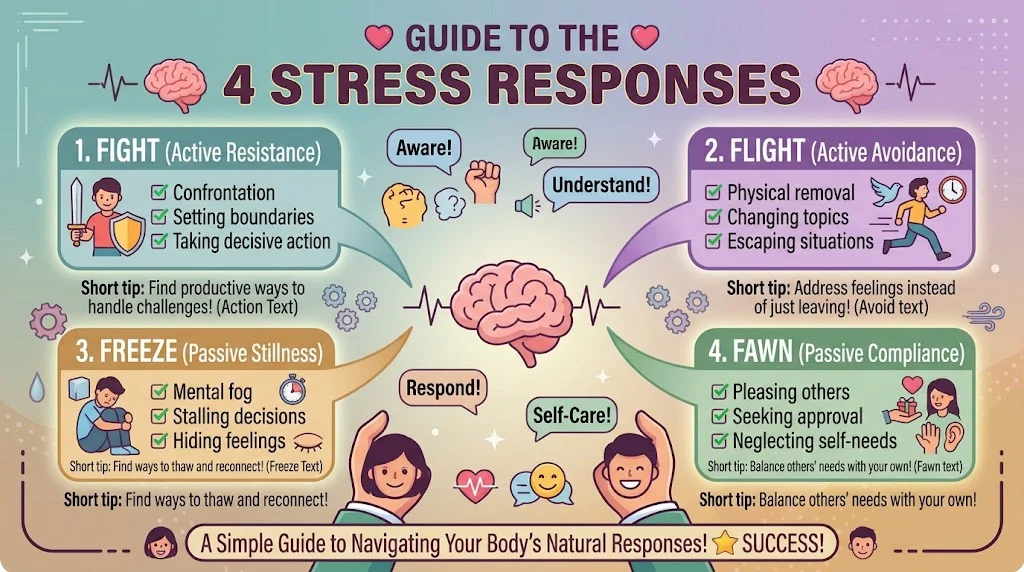
Trauma responses are automatic survival reactions your brain and body switch on after overwhelming experiences. The main four are fight, flight, freeze, and fawn, and they often show up long after the danger has passed.
You flinch at a raised voice, go quiet in an argument, or say yes to things you hate just to keep the peace. Later you wonder why you reacted that way. That is exactly what trauma responses are, and they are far more common than most people realize.
These reactions are not flaws in your personality. They are your nervous system doing overtime to keep you safe, often long after the threat is gone. Understanding them helps you spot the pattern, stop blaming yourself, and start responding with compassion instead of criticism.
This guide breaks down trauma responses in plain language, organized by type and situation. It is educational, not a diagnosis, so if anything here feels familiar in a heavy way, please talk to a qualified professional. Now let’s get into it.
The Main Types Of Trauma Responses
- Fight shows up as anger, arguing, or sudden intensity.
Example: You snap at a partner for a small comment and feel confused by your own reaction.
Meaning: The body mobilizes energy to confront a perceived threat. - Flight shows up as restlessness, escaping, or staying busy.
Example: You suddenly need to leave a party or find any excuse to be elsewhere.
Meaning: The system chooses distance as protection. - Freeze shows up as going blank, numb, or unable to speak.
Example: Someone confronts you and your mind empties completely.
Meaning: The body pauses to avoid attracting danger. - Fawn shows up as over pleasing, apologizing, or agreeing.
Example: You say yes to plans you dread because saying no feels unsafe.
Meaning: The system tries to prevent conflict by keeping others happy. - Some people cycle through all four in one week.
Example: You argue, then isolate, then go numb, then over apologize.
Meaning: Trauma responses are not fixed traits and can shift with stress. - Collapse or shutdown is a fifth pattern many people recognize.
Example: You sleep far more than usual after a stressful conversation.
Meaning: The body powers down when neither fighting nor fleeing feels possible. - Tend and befriend appears in people who care for others first.
Example: You drop everything to help a friend while ignoring your own needs.
Meaning: Connection becomes the strategy for safety. - Most responses are invisible to the people around you.
Example: You look calm on a video call while your heart is racing.
Meaning: Trauma responses are often internal and easy to miss. - They are automatic, not chosen.
Example: You regret a reaction immediately after it happens.
Meaning: These patterns run below conscious decision making. - Triggers are often sensory rather than logical.
Example: A certain tone, smell, or door slam changes your whole mood.
Meaning: The body remembers what the mind has filed away. - The same event can produce different responses in different people.
Example: Two siblings raised in the same home react in opposite ways.
Meaning: Temperament, history, and support all shape the outcome. - Understanding the type is the first step toward changing it.
Example: You notice you always fawn around one specific person.
Meaning: Awareness creates room for a different choice.
Fight Response Signs
- A sudden urge to argue or correct people.
Example: You feel a flash of irritation when someone gives feedback.
Meaning: Anger is protecting something vulnerable underneath. - Jaw clenching or fists tightening in tense moments.
Example: You notice your body bracing during a difficult meeting.
Meaning: Physical readiness to defend yourself. - Raising your voice before you realize you are doing it.
Example: A small disagreement escalates faster than expected.
Meaning: The system is trying to regain control quickly. - Feeling attacked by neutral comments.
Example: A casual remark lands like criticism.
Meaning: The threat detection system is running on high alert. - Difficulty letting an argument go.
Example: You replay a conversation for hours afterward.
Meaning: The body has not received a signal that it is safe yet. - Wanting to win rather than understand.
Example: You keep pushing a point long after it matters.
Meaning: Winning feels like safety in the moment. - Intense reactions to being ignored or dismissed.
Example: Someone talks over you and you feel unusually furious.
Meaning: Being unheard echoes an older wound. - Physical tension that lingers after conflict ends.
Example: Your shoulders stay tight for the rest of the day.
Meaning: The body is still bracing for round two. - Impatience with slow or unclear communication.
Example: You feel angry when someone takes hours to reply.
Meaning: Uncertainty registers as threat. - Defensiveness when someone points out a mistake.
Example: You immediately explain why you were right.
Meaning: Admitting fault feels dangerous rather than normal. - Feeling exhausted after anger passes.
Example: You crash after a heated exchange.
Meaning: Fight mode burns significant energy. - Wanting to fix problems immediately rather than process them.
Example: You try to solve a conflict before anyone has calmed down.
Meaning: Action feels safer than sitting with discomfort.
Flight Response Signs
- An urge to leave situations that feel intense.
Example: You suddenly need air during a family dinner.
Meaning: Escape restores a sense of control. - Overbooking your calendar to avoid quiet time.
Example: You say yes to every invitation for a whole month.
Meaning: Busyness keeps difficult feelings at a distance. - Scrolling or working to numb uncomfortable emotions.
Example: You open your phone the moment a conversation gets real.
Meaning: Distraction is a softer form of running. - Avoiding places, people, or topics that trigger you.
Example: You take the long route to avoid a specific street.
Meaning: Avoidance reduces immediate distress, though it tends to grow. - Feeling trapped in stillness or silence.
Example: A quiet room makes you restless and uneasy.
Meaning: Stillness lets suppressed material surface. - Canceling plans at the last minute.
Example: You feel relieved the moment you back out.
Meaning: Relief reveals how unsafe the plan felt. - Restlessness that does not match your actual energy.
Example: You pace the kitchen for no clear reason.
Meaning: The body is preparing to move away from danger. - Difficulty finishing projects you care about.
Example: You get close to done and then lose interest.
Meaning: Completion can feel like exposure. - Sleeping as an escape rather than for rest.
Example: You nap whenever emotions get heavy.
Meaning: Sleep becomes a shutdown shortcut. - Feeling relief when plans fall through.
Example: A canceled event leaves you lighter than expected.
Meaning: The relief is information worth noticing. - Preferring text over calls, or calls over in person.
Example: You avoid face to face conversations when possible.
Meaning: Distance feels safer than presence. - A habit of moving cities, jobs, or friend groups often.
Example: You start over whenever things get complicated.
Meaning: Leaving solves the moment, not the pattern.
Freeze Response Signs
- Going blank when put on the spot.
Example: Someone asks your opinion and your mind empties.
Meaning: The thinking brain steps back when overwhelmed. - Feeling unable to speak during conflict.
Example: You have the perfect reply hours too late.
Meaning: The body prioritizes stillness over expression. - A sense of watching yourself from outside.
Example: You feel detached during a stressful conversation.
Meaning: Dissociation creates distance from intensity. - Slow reactions when something sudden happens.
Example: You freeze when a car horn blares.
Meaning: The system pauses to assess before acting. - Feeling stuck between options and choosing nothing.
Example: You cannot decide and the deadline passes.
Meaning: Decision making feels unsafe under pressure. - Numbness instead of emotion in heavy moments.
Example: You feel nothing at a funeral and worry about it.
Meaning: Numbness is protection, not indifference. - A blank stare that others misinterpret as rudeness.
Example: People ask if you are even listening.
Meaning: You are processing internally and cannot respond outwardly. - Losing track of time during stressful periods.
Example: Hours pass while you sit in one spot.
Meaning: The system has powered down to cope. - Difficulty starting tasks even when you want to.
Example: You stare at a form for twenty minutes.
Meaning: Initiation stalls when the nervous system is overwhelmed. - Forgetting parts of difficult conversations.
Example: You cannot recall what was said during an argument.
Meaning: Memory narrows under stress. - Feeling physically heavy or slow.
Example: Your limbs feel weighted after a hard day.
Meaning: The body is conserving energy for safety. - Struggling to make small choices later in the day.
Example: Deciding what to eat feels impossible.
Meaning: Decision fatigue stacks on top of stress.
Fawn Response Signs
- Apologizing for things that are not your fault.
Example: You say sorry when someone else bumps into you.
Meaning: Apology is used to prevent tension. - Agreeing with opinions you do not hold.
Example: You nod along in a group and regret it later.
Meaning: Belonging feels safer than honesty. - Reading everyone’s mood before your own.
Example: You can tell a room is tense the second you walk in.
Meaning: Hypervigilance is running quietly in the background. - Struggling to say no without a long explanation.
Example: You over justify why you cannot attend something.
Meaning: Boundaries feel like they need defending. - Feeling responsible for other people’s emotions.
Example: You feel guilty when a friend is in a bad mood.
Meaning: You have learned to manage the room to feel safe. - Changing your personality depending on who you are with.
Example: You are loud with one group and quiet with another.
Meaning: Adapting has become a survival skill. - Avoiding conflict even when it costs you.
Example: You let a wrong charge go because complaining feels risky.
Meaning: Peace is prioritized over fairness. - Feeling anxious after stating a preference.
Example: You choose a restaurant and immediately second guess it.
Meaning: Self expression triggers a fear response. - Being overly agreeable in work settings.
Example: You accept extra tasks you have no capacity for.
Meaning: Being useful feels like being safe. - Staying in situations past their expiration.
Example: You remain in a friendship that drains you.
Meaning: Leaving feels more dangerous than staying. - Complimenting others to defuse tension.
Example: You praise someone who just upset you.
Meaning: Warmth is used as a shield. - Feeling lost when no one needs anything from you.
Example: A quiet weekend feels unsettling rather than restful.
Meaning: Identity has been tied to being needed.
Emotional Signs
- Shame that arrives faster than the actual event.
Example: You feel embarrassed about something small for days.
Meaning: Shame is often a companion to unresolved trauma. - Guilt about reactions you could not control.
Example: You feel bad for going quiet during a fight.
Meaning: Self blame hides the survival logic underneath. - Mood swings that surprise even you.
Example: You go from calm to tearful in minutes.
Meaning: The nervous system is cycling between states. - Anxiety in situations that look safe on paper.
Example: A routine meeting makes your chest tight.
Meaning: The body is responding to patterns, not facts. - Irritability that builds without a clear cause.
Example: Small inconveniences feel enormous by afternoon.
Meaning: Emotional bandwidth is already stretched. - Feeling detached from people you love.
Example: You want connection but cannot fully feel it.
Meaning: Emotional numbing protects against overwhelm. - Sudden sadness tied to specific memories.
Example: A song brings back a whole chapter.
Meaning: Sensory cues reopen stored material. - Fear of being seen or noticed.
Example: You dread being called on in a group.
Meaning: Visibility once came with risk. - Relief when plans get canceled, then loneliness later.
Example: You feel free at first and isolated by evening.
Meaning: Avoidance and connection are in conflict. - Difficulty feeling proud of yourself.
Example: You finish something big and feel nothing.
Meaning: Achievement can feel unsafe if attention follows. - Tearfulness at small kindnesses.
Example: A stranger’s compliment makes you cry.
Meaning: Care lands hard when it has been scarce. - Feeling older than your age in some moments.
Example: You have been the responsible one since childhood.
Meaning: Early survival roles leave long shadows.
Physical Signs
- Racing heart in non threatening moments.
Example: Your pulse spikes while reading an ordinary email.
Meaning: The body is responding to perceived rather than real danger. - Tight chest or shallow breathing.
Example: You realize you have been holding your breath.
Meaning: The stress response restricts breathing under tension. - Digestive issues that flare with stress.
Example: Your stomach turns before difficult conversations.
Meaning: The gut and nervous system are closely linked. - Chronic muscle tension in the shoulders or neck.
Example: You carry stiffness that never fully releases.
Meaning: The body stays braced for impact. - Headaches after emotionally heavy days.
Example: A tense afternoon turns into an evening migraine.
Meaning: Stress shows up in the body first. - Feeling cold or shaky after a trigger.
Example: You shiver after an uncomfortable exchange.
Meaning: Blood flow shifts during the stress response. - Fatigue that sleep does not fix.
Example: You sleep eight hours and still feel drained.
Meaning: The system is spending energy on vigilance. - Changes in appetite during stress.
Example: You forget to eat or eat far more than usual.
Meaning: Appetite is regulated by the same stress systems. - Difficulty falling asleep or staying asleep.
Example: Your mind races the moment the lights go off.
Meaning: Quiet allows the nervous system to notice what it suppressed. - Startle response that is quicker than others.
Example: You jump when someone walks in behind you.
Meaning: Threat detection has a shorter fuse. - Feeling physically unsafe without a clear reason.
Example: You cannot relax in a perfectly safe room.
Meaning: The body is acting on old information. - Sensitivity to noise, light, or crowded spaces.
Example: A busy store feels overwhelming within minutes.
Meaning: Sensory load triggers protective responses.
Social And Relationship Signs
- Testing people without meaning to.
Example: You push someone away to see if they will stay.
Meaning: The system seeks proof of safety. - Difficulty trusting consistent kindness.
Example: You assume there must be a hidden motive.
Meaning: Past inconsistency shapes expectations. - Over explaining simple decisions.
Example: You write three paragraphs about why you cannot attend.
Meaning: Boundaries feel like they need justification. - Feeling responsible for keeping the peace.
Example: You step between people before an argument starts.
Meaning: Harmony feels like your job. - Shutting down during serious conversations.
Example: Your partner says you seem distant when things get real.
Meaning: Emotional intensity triggers protective shutdown. - Attracting or staying with unavailable people.
Example: You feel safest with people who cannot fully show up.
Meaning: Familiar distance feels less risky than closeness. - Feeling drained after socializing even when it went well.
Example: You need a full day to recover from a dinner.
Meaning: Social vigilance costs energy. - Rushing to fix other people’s problems.
Example: You take over someone’s task before they ask.
Meaning: Being needed provides a sense of safety. - Jealousy or fear of abandonment with little warning.
Example: A delayed reply triggers spiraling thoughts.
Meaning: Uncertainty reads as potential loss. - Struggling to receive help.
Example: You refuse support even when you are struggling.
Meaning: Independence was once a necessity. - Overreacting to tone changes in messages.
Example: A short reply feels like anger.
Meaning: Ambiguity gets filled in by fear. - Apologizing for having needs.
Example: You preface every request with sorry.
Meaning: Self worth has been tied to being low maintenance.
Workplace Signs
- Saying yes to every request regardless of capacity.
Example: You take on extra work and burn out quietly.
Meaning: Approval feels tied to usefulness. - Staying silent in meetings even with good ideas.
Example: You think of a solution and keep it to yourself.
Meaning: Speaking up once carried risk. - Panic when a manager asks to talk.
Example: A vague calendar invite ruins your morning.
Meaning: Ambiguity triggers the threat response. - Perfectionism that makes finishing difficult.
Example: You rewrite the same email six times.
Meaning: Mistakes feel like exposure rather than learning. - Avoiding feedback at all costs.
Example: You dread performance reviews for weeks.
Meaning: Criticism registers as personal danger. - Feeling physically tense during team conflicts.
Example: A tense meeting leaves you shaky afterward.
Meaning: Conflict activates old survival patterns. - Difficulty delegating or trusting others.
Example: You redo tasks rather than hand them off.
Meaning: Control feels like protection. - Overworking to avoid being questioned.
Example: You stay late so no one can criticize your effort.
Meaning: Effort is used to buy safety. - Reading into every message from leadership.
Example: A one line email feels like a warning.
Meaning: Tone ambiguity is filled in by past experience. - Feeling unable to disconnect after work hours.
Example: You check email at midnight and cannot stop.
Meaning: Vigilance does not switch off on a schedule. - Avoiding asking for help even when overwhelmed.
Example: You struggle silently rather than raise a hand.
Meaning: Vulnerability feels unsafe. - Crashing hard after big projects finish.
Example: You get sick the moment the deadline passes.
Meaning: The body lets go once the threat of failure lifts.
Childhood And Family Signs
- Feeling like the parent in the family dynamic.
Example: You manage your own parents’ emotions.
Meaning: Early roles taught you to prioritize others’ stability. - Difficulty relaxing in your childhood home.
Example: You feel on edge within minutes of visiting.
Meaning: The environment holds stored memory. - Walking on eggshells around one person.
Example: You monitor someone’s mood before speaking.
Meaning: Anticipating reactions became automatic. - Over explaining yourself to family members.
Example: You rehearse conversations before visits.
Meaning: Being understood was never guaranteed. - Feeling responsible for siblings’ wellbeing.
Example: You worry about your younger sibling constantly.
Meaning: Caretaking became a survival strategy. - Difficulty accepting affection from parents.
Example: A hug feels uncomfortable rather than warm.
Meaning: Intimacy did not always feel safe. - Minimizing your own childhood experiences.
Example: You say it was not that bad compared to others.
Meaning: Comparison is often used to avoid pain. - Feeling guilty for setting family boundaries.
Example: Saying no to a holiday dinner feels like betrayal.
Meaning: Loyalty was tied to self sacrifice. - Noticing you always play the peacemaker role.
Example: You mediate every family disagreement.
Meaning: Stability felt like your responsibility. - Difficulty recognizing your own preferences.
Example: You genuinely do not know what you want for dinner.
Meaning: Self knowledge was never the focus. - Feeling numb during family conflict.
Example: Arguments happen around you and you feel nothing.
Meaning: Dissociation is an old protective habit. - Recognizing these patterns later in adulthood.
Example: You notice them for the first time in therapy.
Meaning: Awareness often arrives long after the events.
Everyday And Subtle Signs
- Overthinking a two word text.
Example: You read “we need to talk” six times.
Meaning: Ambiguity triggers threat detection. - Needing a plan for everything.
Example: Spontaneity makes you anxious rather than excited.
Meaning: Predictability feels like safety. - Difficulty sitting still without a task.
Example: You cannot watch a show without also being on your phone.
Meaning: Stillness allows uncomfortable feelings in. - Feeling exhausted after ordinary tasks.
Example: Grocery shopping wipes you out completely.
Meaning: Background vigilance uses significant energy. - Avoiding mirrors or photos of yourself.
Example: You dodge being in group pictures.
Meaning: Visibility feels unsafe. - Feeling relief when someone else takes charge.
Example: Someone else picks the restaurant and you exhale.
Meaning: Decision responsibility feels heavy. - Sleeping with the door locked and checked twice.
Example: You cannot settle until you have verified it.
Meaning: Safety rituals help the nervous system calm down. - Difficulty making phone calls.
Example: You email instead of calling even when calling is easier.
Meaning: Unpredictable interaction feels risky. - Feeling guilty for resting.
Example: You explain your day off like it needs defending.
Meaning: Productivity has been tied to worth. - Strong reactions to being yelled at, even in jest.
Example: A raised voice in a movie makes you tense up.
Meaning: Tone registers before context. - Preferring to sit near exits.
Example: You scan a room before choosing a seat.
Meaning: Escape route planning is automatic. - Feeling a wave of calm when you finally leave somewhere.
Example: Stepping outside a party brings instant relief.
Meaning: Relief reveals how much stress was present.
Healing And Coping Responses
- Name the response out loud when you notice it.
Example: You say I am freezing right now, and it loosens slightly.
Meaning: Naming shifts activity from survival to awareness. - Slow the exhale during stressful moments.
Example: You breathe out longer than you breathe in before a call.
Meaning: Long exhales signal safety to the nervous system. - Ground yourself using five senses.
Example: You name five things you can see in a tense room.
Meaning: Sensory focus pulls attention into the present. - Give yourself permission to pause before replying.
Example: You type I need a minute before answering.
Meaning: Space interrupts the automatic response. - Notice triggers without judging them.
Example: You write down what happened right before a reaction.
Meaning: Curiosity replaces self criticism. - Practice small, low stakes boundaries.
Example: You say no to one small request this week.
Meaning: Boundaries get easier with repetition. - Move your body to complete the stress cycle.
Example: A short walk after conflict helps you settle.
Meaning: Physical movement releases stored stress energy. - Keep a short list of what genuinely calms you.
Example: You reference it when your mind goes blank.
Meaning: Pre planning bypasses decision paralysis. - Reach out to one safe person.
Example: You send a simple message saying today is hard.
Meaning: Connection regulates the nervous system. - Be patient with slow progress.
Example: You notice the same pattern but recover faster.
Meaning: Recovery speed matters more than perfection. - Celebrate small shifts in awareness.
Example: You catch yourself fawning mid sentence.
Meaning: Recognition is real progress. - Replace self criticism with observation.
Example: You say that is my freeze response instead of I am broken.
Meaning: Language shapes how you relate to yourself.
Supportive Responses To Others
- That reaction makes sense. Something in you was trying to keep you safe.
Example: Use when a friend is embarrassed about snapping.
Meaning: Reframes the behavior with compassion. - You do not have to explain it. I am here.
Example: Use when someone shuts down mid conversation.
Meaning: Removes pressure to perform in the moment. - Take your time. There is no rush to feel better.
Example: Use when someone is struggling to calm down.
Meaning: Slows the timeline and reduces shame. - Thank you for telling me. That took courage.
Example: Use when someone shares a hard memory.
Meaning: Rewards vulnerability instead of questioning it. - Do you want comfort, advice, or space right now?
Example: Use when you are unsure how to help.
Meaning: Respects autonomy and avoids guessing wrong. - You are allowed to feel how you feel.
Example: Use when someone apologizes for crying.
Meaning: Validates emotion without conditions. - I am not going anywhere because of this.
Example: Use when someone fears being too much.
Meaning: Directly counters abandonment fear. - Let us slow this down together.
Example: Use when a conversation is escalating.
Meaning: Offers co regulation instead of debate. - That pattern kept you safe once. You get to choose differently now.
Example: Use when discussing a coping habit.
Meaning: Honors the past while opening room for change. - I will follow your lead on what you need.
Example: Use when supporting someone through a trigger.
Meaning: Hands control back to them. - You do not have to be fine right now.
Example: Use when someone keeps apologizing for struggling.
Meaning: Removes the pressure to mask. - I am proud of you for noticing that.
Example: Use when someone recognizes their own pattern.
Meaning: Reinforces self awareness as progress.
When To Seek Professional Help
- You notice the same pattern across every relationship.
Example: Every conflict ends with you shutting down.
Meaning: Repetition suggests deeper support could help. - Reactions are affecting your work or daily life.
Example: You miss deadlines because of anxiety spirals.
Meaning: Functional impact is a strong signal to reach out. - Sleep, appetite, or energy stay disrupted for weeks.
Example: You have not slept well in a month.
Meaning: Persistent physical symptoms deserve attention. - You avoid more and more of your life.
Example: Your world has narrowed to fewer people and places.
Meaning: Avoidance tends to grow without support. - Memories intrude or feel intrusive.
Example: A memory arrives uninvited during an ordinary moment.
Meaning: Trauma reminders can be worked through with help. - You feel numb most of the time.
Example: You cannot remember the last time you felt joy.
Meaning: Persistent numbness is worth professional attention. - Substances or habits are used to manage feelings.
Example: You need a drink before every social event.
Meaning: Coping that escalates often needs extra support. - You have thoughts of harming yourself.
Example: The thought appears and scares you.
Meaning: Please reach out to a professional or crisis line right away. - You are unsure whether your experiences count as trauma.
Example: You minimize your history and still feel the effects.
Meaning: Professional assessment removes the guesswork. - A therapist can help you build regulation skills.
Example: You learn grounding tools that work for your body.
Meaning: Support is practical, not just conversation. - Trauma informed approaches exist and are effective.
Example: You look for a practitioner who specializes in trauma.
Meaning: The right fit matters more than the label. - Asking for help is a response too, and a strong one.
Example: You book a first appointment and feel lighter.
Meaning: Reaching out is a protective choice in your favor.
FAQs
What are trauma responses in simple terms?
They are automatic reactions your brain and body use to protect you after overwhelming experiences. They usually show up as fight, flight, freeze, or fawn, often long after the danger has passed.
Is it possible to have trauma responses without a big trauma?
Yes. What overwhelms one person may not overwhelm another. The response depends on your history, temperament, and support, not on how dramatic the event looks from outside.
Can trauma responses look like personality traits?
Often, yes. Being very agreeable, super independent, or constantly busy can be a protective pattern rather than a fixed personality.
Is it flirty or manipulative when someone fawns?
Fawning is a survival response, not manipulation. It usually comes from a fear of conflict, and it often shows up as over apologizing or going along with things to stay safe.
Does everyone experience trauma responses the same way?
No. People cycle between responses, and the same situation can produce very different reactions depending on the person and the day.
Can humor help when talking about trauma responses?
Gentle humor can ease shame and make the topic less intimidating. Never make jokes at the expense of someone’s pain, and always follow the other person’s tone.
What if I recognize myself in this list?
That is common and not a diagnosis. Use this as a starting point for self awareness, and consider talking to a qualified professional who can support you properly.
Conclusion
Trauma responses are not character flaws. They are your system’s best attempt at keeping you safe, often long after the danger has passed. Once you can name them, they stop feeling so random and start feeling understandable.
That shift from blame to curiosity changes everything. You get to choose a different response, a slower breath, a softer boundary, a small moment of honesty. Progress is rarely dramatic and almost always worth it.
