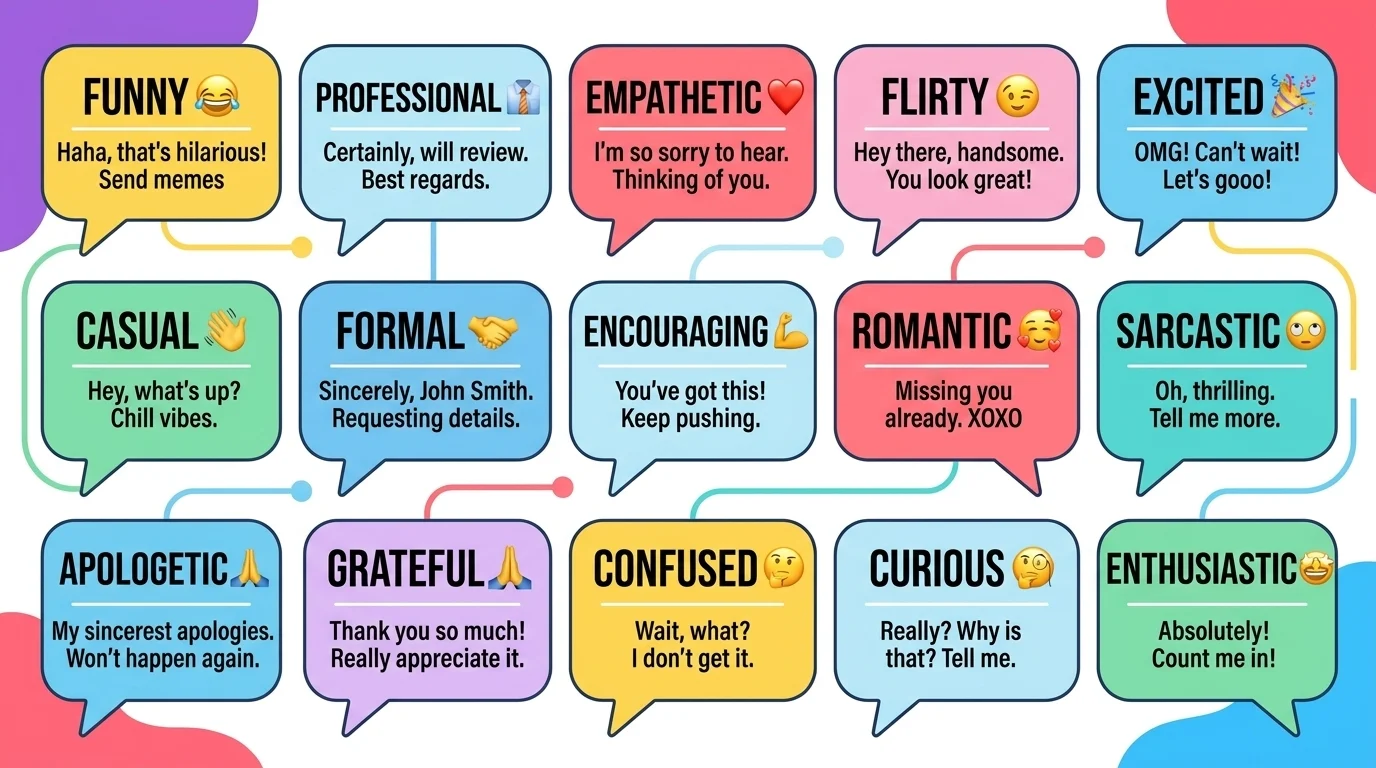
Looking for live chat responses examples that actually work? These ready-to-use replies help you sound human, helpful, and memorable in any chat situation. Try these: “Hey there! How can I help you today?”, “Great question! Let me check that for you”, “I totally get your frustration”, “You’re in the right place”, “Give me one sec while I find that for you”.
Ever typed “Hello?” into a live chat box and waited ten minutes for a response that sounded like it came from a robot? Yeah, we’ve all been there. Whether you’re handling customer support, managing social media DMs, or just trying to keep an online conversation alive, the words you choose make or break the vibe.
Live chat responses examples are everywhere online, but most of them sound stiff and lifeless. The truth is, people want to feel heard, not handled. A great chat reply can turn an annoyed customer into a loyal fan or a boring conversation into something actually fun.
The right response builds trust, shows personality, and keeps the chat flowing naturally. That’s why having a solid list of go-to replies matters, especially when you’re juggling multiple conversations at once.
Funny Responses
- “BRB, consulting my crystal ball for that answer”
Example: Use this when someone asks a question you need to look up during a casual chat.
Meaning: Adds humor while buying you time to find the actual answer. - “Plot twist: I actually know this one!”
Example: Perfect for when you surprise yourself by knowing an obscure answer.
Meaning: Creates a playful moment that makes you seem relatable. - “Hold on, let me ask my pet goldfish for advice”
Example: Use during lighthearted chats when someone asks something silly.
Meaning: Signals you’re being playful without being dismissive. - “You just unlocked the bonus round of this conversation”
Example: Great when a customer asks something unexpected but interesting.
Meaning: Makes the interaction feel like a game rather than a task. - “My keyboard is warming up as we speak”
Example: Use when someone sends a long message and you need a moment.
Meaning: Keeps things light while you prepare a proper response. - “I’m not saying I’m a genius, but I did stay at a hotel once”
Example: Drop this when you successfully solve a tricky issue.
Meaning: Self-deprecating humor that makes you instantly likable. - “Plot twist: the answer was inside you all along”
Example: Use when the customer actually knew the solution but needed confirmation.
Meaning: Playful way to boost their confidence while wrapping up. - “Give me a sec, my brain is buffering”
Example: Perfect when you need to pause and think before responding.
Meaning: Humanizes the pause and makes waiting feel natural. - “You had me at hello, now let’s solve this mystery”
Example: Use at the start of a fun problem-solving chat.
Meaning: Sets an adventurous tone that makes the conversation engaging. - “Warning: excessive helpfulness incoming”
Example: Great before you send a detailed response to a complex question.
Meaning: Prepares them for a long answer while keeping it fun. - “I’m basically Google with better jokes”
Example: Use when someone asks a factual question you can easily answer.
Meaning: Confident but cheeky way to show you know your stuff. - “Achievement unlocked: helpful human detected”
Example: Playful reply when someone thanks you for great service.
Meaning: Makes the interaction feel rewarding and memorable.
Professional Responses
- “Thank you for reaching out. I’d be happy to assist you.”
Example: Use as an opening line when a customer initiates a business chat.
Meaning: Sets a warm but professional tone immediately. - “I completely understand your concern. Let me look into this.”
Example: Perfect when a customer expresses frustration or confusion.
Meaning: Validates their feelings while showing you’re taking action. - “Great question! Let me pull up that information for you.”
Example: Use when someone asks something requiring research or verification.
Meaning: Acknowledges their query while buying time professionally. - “I appreciate your patience while I resolve this for you.”
Example: Use during longer wait times or complex problem-solving.
Meaning: Shows respect for their time and keeps them calm. - “Is there anything else I can help you with today?”
Example: Standard closing line after resolving an issue.
Meaning: Ensures all their needs are met before ending the chat. - “I’ve escalated this to the right team. You’ll hear back shortly.”
Example: Use when an issue requires specialist attention.
Meaning: Communicates clear next steps without leaving them hanging. - “Your feedback is incredibly valuable to us.”
Example: Use when a customer shares concerns or suggestions.
Meaning: Shows you take their input seriously and appreciate honesty. - “Let me confirm a few details to make sure I get this right.”
Example: Use before processing requests that need accuracy.
Meaning: Demonstrates diligence and prevents future mistakes. - “I’ll send you a follow-up once this is resolved.”
Example: Use when the solution requires time beyond the current chat.
Meaning: Reassures them you won’t forget about their issue. - “Thank you for your understanding. Here’s what I can do for you.”
Example: Use after explaining a limitation or policy.
Meaning: Pivots smoothly from bad news to a helpful solution. - “You’re in good hands. I’ll personally make sure this gets sorted.”
Example: Perfect when a customer is worried about their problem.
Meaning: Builds trust and shows personal accountability. - “I hope I’ve been able to help you today. Have a wonderful rest of your day!”
Example: Friendly closing line for any support interaction.
Meaning: Leaves a positive final impression that sticks.
Empathetic Responses
- “I hear you, and I’m really sorry you’re dealing with this.”
Example: Use when a customer shares a frustrating experience.
Meaning: Shows genuine compassion without being overly formal. - “That sounds really tough. Let’s figure this out together.”
Example: Great for customers dealing with stressful situations.
Meaning: Positions you as an ally rather than just a support agent. - “I totally understand why you’d feel that way.”
Example: Use when acknowledging a customer’s emotional reaction.
Meaning: Validates their feelings and builds emotional connection. - “Thank you for trusting me with this. I’ll do my best to help.”
Example: Use when someone shares a personal or sensitive issue.
Meaning: Acknowledges vulnerability and commits to helping. - “I can only imagine how frustrating that must be.”
Example: Perfect when a customer describes a difficult experience.
Meaning: Shows you’re actively listening and relating to their situation. - “Please know that your feelings are completely valid.”
Example: Use when a customer feels dismissed or unheard.
Meaning: Reassures them that their emotions matter. - “I wish I could fix this instantly, but I’m here until we do.”
Example: Use when a problem can’t be solved immediately.
Meaning: Shows commitment while managing expectations honestly. - “You’ve been incredibly patient. I really appreciate that.”
Example: Use after a customer waits through a longer process.
Meaning: Recognizes their patience and makes them feel valued. - “Let’s take this one step at a time. I’m not going anywhere.”
Example: Use when a customer feels overwhelmed by a complex issue.
Meaning: Provides calm reassurance during stressful moments. - “I’m genuinely sorry for the inconvenience this caused.”
Example: Use when a mistake or delay has affected the customer.
Meaning: Takes responsibility without being defensive. - “You deserve better than this experience, and I’ll make it right.”
Example: Use when a customer has had an unusually bad experience.
Meaning: Shows accountability and a commitment to resolution. - “I’m glad you reached out. You don’t have to deal with this alone.”
Example: Use when a customer seems hesitant to ask for help.
Meaning: Encourages openness and reassures them support is available.
Flirty Responses
- “Well hello there, you just made my chat way more interesting.”
Example: Use during casual chats when the conversation feels playful.
Meaning: Adds charm without crossing professional boundaries. - “I was having a boring day until you showed up in my inbox.”
Example: Perfect for lighthearted social media DMs with good vibes.
Meaning: Makes the other person feel special and noticed. - “You’re honestly making my job way too easy right now.”
Example: Use when the other person is being charming or funny.
Meaning: Flirty compliment disguised as a casual comment. - “Are you always this good at making conversations fun?”
Example: Great for building rapport during a lively chat.
Meaning: Shows interest in them as a person, not just the topic. - “I have to say, your messages are the highlight of my shift.”
Example: Use when someone is consistently engaging and fun.
Meaning: A subtle way to show you’re enjoying the conversation. - “You’ve got main character energy, I can tell already.”
Example: Playful compliment for someone with a strong personality.
Meaning: Flattering and trendy way to acknowledge their vibe. - “If this chat had a soundtrack, it’d be a romantic comedy.”
Example: Use when the conversation naturally turns playful.
Meaning: Sets a fun, flirty tone without being too forward. - “Okay but why are you actually so easy to talk to?”
Example: Use after a smooth and enjoyable exchange.
Meaning: Genuine compliment that also hints at attraction. - “I’m supposed to be professional, but you’re making it difficult.”
Example: Perfect for social media or casual brand chats.
Meaning: Playful boundary-pushing that keeps things flirty but safe. - “I don’t usually say this, but I hope this chat doesn’t end too soon.”
Example: Use when you genuinely enjoy the conversation.
Meaning: Signals you want to keep talking without being explicit. - “Your energy is something else. I’m kind of obsessed.”
Example: Great for TikTok or Instagram live chat responses.
Meaning: Expresses admiration in a fun, internet-friendly way. - “You’re trouble, but the fun kind.”
Example: Use when someone is being cheeky or playful.
Meaning: Flirty tease that invites more banter.
Chill And Casual Responses
- “Hey! What’s up? How can I help?”
Example: Standard opener for a relaxed support or social chat.
Meaning: Friendly and approachable without being overly formal. - “No worries at all, take your time.”
Example: Use when someone apologizes for slow replies.
Meaning: Removes pressure and keeps the conversation comfortable. - “Sure thing! Give me a quick sec.”
Example: Use when you need a moment to grab information.
Meaning: Casual way to buy time without sounding robotic. - “Gotcha! Let me check that for you.”
Example: Quick acknowledgment when someone sends a request.
Meaning: Shows you’re on it while keeping things light. - “All good on my end. What about you?”
Example: Use during check-ins or follow-up conversations.
Meaning: Keeps the vibe friendly and reciprocal. - “Happy to help! Just let me know what you need.”
Example: Perfect for opening a chat with a relaxed tone.
Meaning: Invites them to share without pressure. - “Sounds good! I’m on it.”
Example: Use when confirming you’ll handle a request.
Meaning: Brief but reassuring acknowledgment. - “Hey, no stress. We’ll sort this out.”
Example: Use when a customer feels anxious about an issue.
Meaning: Calms nerves while maintaining a chill vibe. - “For sure! Just give me a minute.”
Example: Use when you need a brief pause during a chat.
Meaning: Casual way to ask for patience. - “That’s totally fair. Let me see what I can do.”
Example: Use when acknowledging a reasonable request.
Meaning: Shows willingness to help without overpromising. - “Cool, I’ll get back to you in a bit.”
Example: Use when you need time to investigate or follow up.
Meaning: Simple and clear without sounding dismissive. - “Thanks for waiting! Here’s what I found.”
Example: Use when returning to a chat after a short delay.
Meaning: Polite acknowledgment that keeps the tone relaxed.
Creative Responses
- “Consider me your personal detective for this one.”
Example: Use when solving a complex or puzzling issue.
Meaning: Makes problem-solving feel fun and engaging. - “Plot twist: the solution is easier than you think.”
Example: Use when the fix turns out to be surprisingly simple.
Meaning: Adds excitement and relieves tension. - “Let’s call this mission: Help You Succeed.”
Example: Great for starting an energetic support session.
Meaning: Frames the interaction as a collaborative adventure. - “You’ve just entered the help zone. Buckle up!”
Example: Use with customers who appreciate playful energy.
Meaning: Sets a fun tone while signaling you’re ready to assist. - “Here’s the secret sauce you’ve been looking for.”
Example: Use when delivering a solution or insider tip.
Meaning: Makes your answer feel valuable and exclusive. - “I’ve got a few tricks up my sleeve for this.”
Example: Use when offering creative solutions to a problem.
Meaning: Shows resourcefulness and builds anticipation. - “Imagine this: problem solved, you relaxed, everyone happy.”
Example: Use when explaining the outcome of your solution.
Meaning: Paints a positive picture that reassures the customer. - “This is where the magic happens.”
Example: Use when guiding someone through a process.
Meaning: Adds excitement to routine steps. - “Your wish is basically my command right now.”
Example: Use when you can quickly fulfill a request.
Meaning: Playful way to show eagerness to help. - “Let’s turn this problem into a success story.”
Example: Use when a customer is frustrated and needs encouragement.
Meaning: Reframes the situation positively. - “Plot twist: you’re about to be very happy with this answer.”
Example: Use before delivering good news or a solution.
Meaning: Builds anticipation and excitement. - “I’ve got just the thing. Trust me on this one.”
Example: Use when you’re confident about a solution.
Meaning: Inspires confidence and curiosity.
Sarcastic Responses
- “Oh, absolutely. Because I definitely have a magic wand under my desk.”
Example: Use when someone asks for something unrealistic during a casual chat.
Meaning: Playful sarcasm that keeps things light. - “Sure, let me just summon the answer from thin air.”
Example: Use when you need a moment to look something up.
Meaning: Humorous way to acknowledge a brief delay. - “Wow, what a plot twist. Nobody saw that coming.”
Example: Use when a customer shares something predictable.
Meaning: Light teasing that works best with friendly regulars. - “Well, aren’t you just full of surprises today?”
Example: Use when someone asks an unexpected or funny question.
Meaning: Sarcastic but warm acknowledgment of their unpredictability. - “Clearly, you’ve been saving the easy questions for me.”
Example: Use when someone asks a genuinely tricky question.
Meaning: Self-deprecating humor that lightens the mood. - “I’ll add that to my list of superpowers.”
Example: Use when someone asks you to do something unusual.
Meaning: Playful way to say “that’s not really my job.” - “Oh great, another mystery to solve. I love a challenge.”
Example: Use when a problem seems complex at first glance.
Meaning: Sarcastic optimism that shows you’re up for it. - “Let me just consult my extensive training on this very specific thing.”
Example: Use when someone asks something niche or obscure.
Meaning: Dry humor that acknowledges the difficulty. - “Because clearly, I have nothing better to do than wait for your message.”
Example: Use only with friendly regulars who appreciate banter.
Meaning: Teasing that shows you’re paying attention. - “Oh, you want the impossible? Let me check my schedule.”
Example: Use when a request is clearly unrealistic.
Meaning: Humorous way to set expectations without being rude. - “Well, that’s a new one. Congrats on keeping me on my toes.”
Example: Use when you encounter a unique question.
Meaning: Sarcastic praise that still feels friendly. - “Sure, let me just work my magic like always.”
Example: Use when you’re about to solve yet another issue.
Meaning: Confident sass that shows you know your stuff.
Confident Responses
- “I’ve got this. You’re in good hands.”
Example: Use when a customer seems worried about their issue.
Meaning: Instantly reassures them that you’re capable. - “Consider it done. Anything else I can handle?”
Example: Use after quickly resolving a request.
Meaning: Shows efficiency while offering more help. - “I know exactly what to do here.”
Example: Use when you recognize the problem immediately.
Meaning: Communicates expertise and builds trust. - “Trust me, I’ve handled way tougher situations.”
Example: Use when a customer is anxious about an unusual issue.
Meaning: Calms nerves by showing experience. - “You came to the right place. Let’s fix this.”
Example: Use as an opening line for a support chat.
Meaning: Sets a strong, solution-focused tone. - “I’ll take care of it personally.”
Example: Use when a customer needs extra reassurance.
Meaning: Shows accountability and personal investment. - “This is what I do best. Watch and learn.”
Example: Use when navigating a tricky process.
Meaning: Playful confidence that builds anticipation. - “No problem is too big for me to help with.”
Example: Use when a customer seems overwhelmed.
Meaning: Instills confidence and reduces anxiety. - “I’ve already got a plan for this.”
Example: Use when you know the next steps immediately.
Meaning: Demonstrates quick thinking and preparedness. - “Relax, I’ve got a few tricks for this exact situation.”
Example: Use when a customer is stressed about a common issue.
Meaning: Shows expertise while keeping things calm. - “Solving this is basically my favorite part of the job.”
Example: Use when tackling a challenging problem.
Meaning: Shows enthusiasm and makes the customer feel valued. - “You’re talking to the right person. Let’s get started.”
Example: Use when confirming you’re the best help available.
Meaning: Builds immediate trust and momentum.
Emotional Responses
- “I’m really glad you felt comfortable sharing that with me.”
Example: Use when a customer opens up about a personal issue.
Meaning: Acknowledges vulnerability with warmth and respect. - “That sounds like a lot to carry. I’m here to help lighten it.”
Example: Use when a customer seems emotionally drained.
Meaning: Offers support with genuine compassion. - “Your feelings make complete sense. I’d feel the same way.”
Example: Use when validating an emotional reaction.
Meaning: Shows deep empathy and understanding. - “Thank you for being so honest with me.”
Example: Use when a customer shares frustration or disappointment.
Meaning: Encourages openness and shows appreciation. - “I want to make sure you feel supported every step of the way.”
Example: Use during a sensitive or emotional conversation.
Meaning: Reassures them they’re not alone in the process. - “This must be really overwhelming. Let’s slow down together.”
Example: Use when a customer feels stressed by a complex issue.
Meaning: Offers comfort by pacing the conversation. - “I’m truly sorry you had to go through that.”
Example: Use when a customer describes a negative experience.
Meaning: Shows genuine remorse and empathy. - “Please know that you’re being heard, and I care about getting this right.”
Example: Use when a customer feels ignored or dismissed.
Meaning: Reinforces that their concerns matter. - “You’re being so strong about this. Let me do my part to help.”
Example: Use when a customer shows resilience during a hard time.
Meaning: Recognizes their strength while offering support. - “I can’t imagine how frustrating that must have been.”
Example: Use when a customer recounts a difficult situation.
Meaning: Shows you’re actively trying to understand their experience. - “I’m here for you, and we’ll get through this together.”
Example: Use during a particularly emotional support chat.
Meaning: Provides comfort and solidarity. - “Thank you for trusting me with your concerns. I don’t take that lightly.”
Example: Use when a customer shares something deeply personal.
Meaning: Shows respect and appreciation for their openness.
Sweet Responses
- “You’re doing great, and I’m happy to help however I can.”
Example: Use when a customer seems unsure or anxious.
Meaning: Offers gentle encouragement and support. - “Thank you for being so patient. You’ve been wonderful.”
Example: Use after a customer waits through a longer process.
Meaning: Shows appreciation with genuine warmth. - “It’s always a pleasure chatting with you.”
Example: Use with friendly regulars or kind customers.
Meaning: Leaves a warm impression that builds loyalty. - “I hope your day gets even better from here.”
Example: Use when closing a positive or neutral chat.
Meaning: Ends the conversation on a sweet note. - “You’re the kind of customer that makes this job worthwhile.”
Example: Use when someone has been especially pleasant.
Meaning: Genuine compliment that makes them feel special. - “Take care of yourself. You deserve it.”
Example: Use when a customer mentions stress or being busy.
Meaning: Shows care beyond the transaction. - “I’m so glad I could help you today.”
Example: Use when wrapping up a successful interaction.
Meaning: Genuine expression of satisfaction in helping. - “Sending good vibes your way.”
Example: Use as a warm closing line for any chat.
Meaning: Friendly sign-off that feels personal and kind. - “You made my day just by being so lovely to talk to.”
Example: Use when a customer has been especially kind.
Meaning: Reciprocates their kindness with warmth. - “I hope everything works out perfectly for you.”
Example: Use when a customer shares personal plans or goals.
Meaning: Shows genuine interest in their wellbeing. - “Thanks for making this chat so enjoyable.”
Example: Use when a conversation has been genuinely pleasant.
Meaning: Acknowledges their positive contribution to the interaction. - “Wishing you all the best. You’ve been amazing.”
Example: Use as a final message after resolving an issue.
Meaning: Leaves a lasting positive impression.
Clever Responses
- “Ah, the classic tricky question. I love these.”
Example: Use when someone asks something complex or unusual.
Meaning: Shows enthusiasm for challenges while buying thinking time. - “Let me connect the dots for you.”
Example: Use when explaining something that requires clarity.
Meaning: Frames your answer as insightful and helpful. - “I see what you did there. Nicely played.”
Example: Use when someone makes a clever point or joke.
Meaning: Acknowledges their wit while keeping the banter going. - “There’s a method to this madness, I promise.”
Example: Use when walking someone through a multi-step process.
Meaning: Keeps things light while explaining complexity. - “Plot twist: the answer is simpler than we thought.”
Example: Use when the solution turns out to be straightforward.
Meaning: Relieves tension while sounding insightful. - “Let’s flip the script on this problem.”
Example: Use when suggesting a different approach.
Meaning: Frames problem-solving as a creative challenge. - “You’ve given me a riddle. I accept the challenge.”
Example: Use when a customer asks something puzzling.
Meaning: Turns a difficult question into a fun game. - “Here’s a pro tip you’ll want to remember.”
Example: Use when sharing advice that adds extra value.
Meaning: Makes your response feel like insider knowledge. - “Fun fact: this actually happens more than you’d think.”
Example: Use when normalizing a customer’s concern.
Meaning: Reassures them while sharing useful context. - “Let me connect you to the answer you didn’t know you needed.”
Example: Use when offering additional helpful information.
Meaning: Shows thoughtfulness and attention to detail. - “Sometimes the best solution is the one nobody expects.”
Example: Use before proposing a creative fix.
Meaning: Builds curiosity and openness to your suggestion. - “I’ve got a solution that’s about to make your day.”
Example: Use before delivering good news.
Meaning: Creates anticipation and positivity.
FAQs
What does “live chat responses examples” mean?
It refers to ready-made reply templates you can use in online conversations. These examples help customer support agents, social media managers, and anyone chatting online respond quickly and effectively.
Can these responses work in romantic or flirty chats?
Yes, absolutely. The flirty and sweet sections are perfect for social media DMs, dating apps, or any playful conversation where you want to build connection and chemistry.
Are these responses suitable for professional settings?
Definitely. The professional and empathetic sections are designed specifically for business chats, customer support, and formal online interactions that still need a human touch.
What if I don’t actually mean what I’m saying?
It’s important to stay authentic. Use templates as inspiration but adapt them to sound like you. Customers and chat partners can tell when a response feels forced or insincere.
Is humor appropriate in live chat responses?
Humor works great when the situation is light and the person seems open to it. Just read the room. If someone is frustrated or upset, stick with empathetic and professional responses instead.
Conclusion
Great conversations don’t happen by accident. The right live chat responses examples can transform a boring exchange into a memorable one, whether you’re helping a customer or just vibing with someone in your DMs. Confidence is key, but so is choosing the right tone for the moment.
Save this list, share it with your team, or steal your favorites for your next chat. Try mixing and matching different styles until you find what feels natural. The more you practice, the easier it gets to sound human, helpful, and genuinely awesome in any conversation.
