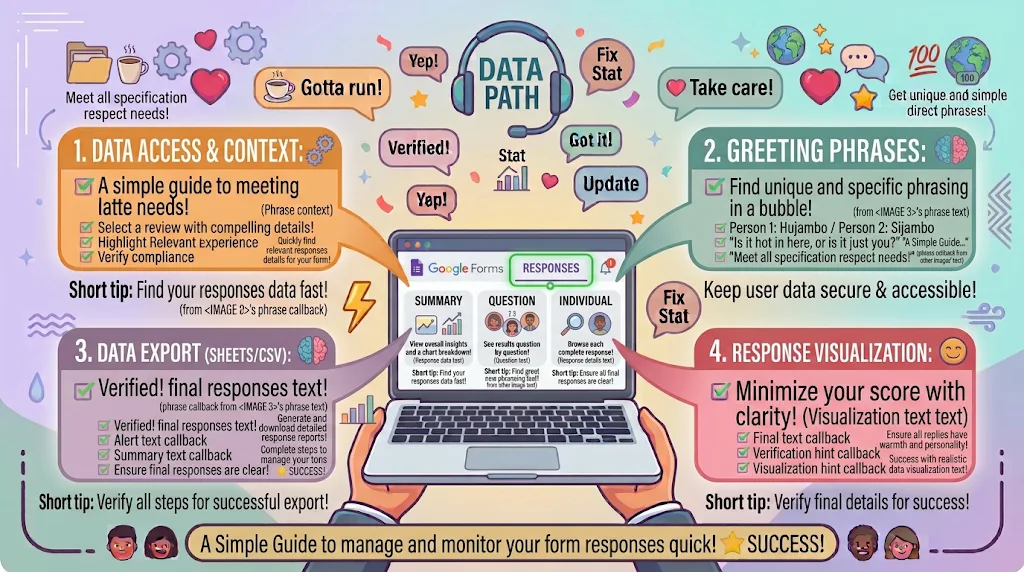
To check responses on Google Forms, open your form and click the Responses tab at the top, where you will see a summary, individual answers, and a link to the connected spreadsheet. Top alternatives: Open the Responses tab, View summary, Check individual responses, Open in Sheets, Export as CSV.
How to check responses on Google Forms is one of those simple questions that somehow turns into a twenty minute search through menus. Maybe you just sent out a survey and want to see if anyone actually replied. Maybe you are a teacher checking quiz submissions or a coordinator tracking RSVPs. Either way, the answers are already sitting there, you just need to know where to look.
Whether you are replying to a coworker in a team chat, walking a client through it on a call, or answering a friend’s late night text, the right words save everyone time. A clear answer stops the follow-up questions before they start. This guide gives you 180+ ready-to-use lines for every tone and situation, from quick instructions to patient walkthroughs.
Step-By-Step Instructional Responses
- “Open your form, then click the Responses tab at the top. Everything is there.”
- Example: Use when someone asks where to find their answers.
- Meaning: It gives the exact first step.
- “In the Responses tab, you will see Summary, Question, and Individual views. Start with Summary.”
- Example: Use when someone feels lost in the dashboard.
- Meaning: It explains the layout clearly.
- “Click the green Sheets icon to send all responses to a spreadsheet.”
- Example: Use when someone wants to analyze data.
- Meaning: It points to the most useful tool.
- “Use the Individual tab to click through each submission one by one.”
- Example: Use when someone needs to read full answers.
- Meaning: It explains the detail view.
- “Hit the three-dot menu in Responses to download a CSV or copy the link.”
- Example: Use when someone needs a file.
- Meaning: It covers the export options.
- “Switch to the Question tab to see how people answered each specific question.”
- Example: Use when someone wants per-question data.
- Meaning: It names the right view.
- “The Summary view shows charts automatically. No setup needed.”
- Example: Use when someone wants a quick overview.
- Meaning: It reassures that graphs are built in.
- “Open the linked Google Sheet and you can sort, filter, and share the data.”
- Example: Use when someone needs more control.
- Meaning: It connects Forms to Sheets.
- “Check the Responses tab on your phone app too. It works the same way.”
- Example: Use when someone is away from a laptop.
- Meaning: It gives a mobile route.
- “Click any response in the Individual view to see the full answer set.”
- Example: Use when someone only sees partial answers.
- Meaning: It prevents confusion.
- “Make sure you are signed in as the form owner or an editor. Otherwise you cannot see responses.”
- Example: Use when the tab looks empty.
- Meaning: It rules out a permission issue.
- “Test it with one submission so you can see exactly how the data appears.”
- Example: Use before sharing the form widely.
- Meaning: It builds confidence.
Polite And Professional Responses
- “You can view all responses by opening the form and selecting the Responses tab.”
- Example: Use in a work email reply.
- Meaning: It is clear and courteous.
- “Thank you for asking. The responses are stored in the Responses tab and also in the linked spreadsheet.”
- Example: Use when a colleague needs access.
- Meaning: It answers fully and respectfully.
- “I have shared the response sheet with you so you can review the data directly.”
- Example: Use when granting access.
- Meaning: It is helpful and prompt.
- “Please let me know if you need help finding the Responses tab. Happy to walk you through it.”
- Example: Use as a closing line in an email.
- Meaning: It offers support.
- “Only the form owner and editors can view responses. I can add you as an editor if needed.”
- Example: Use when someone cannot see the data.
- Meaning: It explains permissions politely.
- “The Responses tab shows a summary by default. You can switch views at any time.”
- Example: Use in a training message.
- Meaning: It sets expectations.
- “I would recommend exporting to Google Sheets so the team can review together.”
- Example: Use in a project update.
- Meaning: It is a practical suggestion.
- “You will find individual answers by clicking the Individual tab within Responses.”
- Example: Use when someone needs specifics.
- Meaning: It is precise and calm.
- “Please do not share the response link publicly. It contains private answers.”
- Example: Use when handling sensitive data.
- Meaning: It is responsible.
- “I have attached a CSV export of the responses for your records.”
- Example: Use when sending data to a client.
- Meaning: It is professional and complete.
- “If the tab appears empty, confirm the form has received at least one submission.”
- Example: Use in troubleshooting.
- Meaning: It is helpful and clear.
- “Let me know which format works best and I will send the responses over.”
- Example: Use when offering options.
- Meaning: It is flexible and polite.
Beginner-Friendly Responses
- “Think of the Responses tab as your inbox for the form. That is where every answer lands.”
- Example: Use when explaining to a first-time user.
- Meaning: It makes the concept simple.
- “You do not need any code. Just open the form and click Responses.”
- Example: Use when someone expects it to be hard.
- Meaning: It removes fear.
- “Start with the Summary view. It shows charts so you can see the big picture fast.”
- Example: Use as a first pointer.
- Meaning: It narrows the focus.
- “The Individual tab is for reading full answers. The Summary tab is for the overview.”
- Example: Use when someone is confused by the views.
- Meaning: It explains the difference simply.
- “It is okay if you cannot find it. The tabs are small and easy to miss.”
- Example: Use when someone feels silly.
- Meaning: It offers reassurance.
- “You only need to click once. The Responses tab stays there for the life of the form.”
- Example: Use when someone worries about repeating steps.
- Meaning: It simplifies expectations.
- “If you want a spreadsheet, click the green Sheets icon. It creates one for you.”
- Example: Use when someone needs data in rows.
- Meaning: It is easy to follow.
- “You can check responses on your phone too. Just open the app and tap Responses.”
- Example: Use when someone is mobile only.
- Meaning: It is accessible.
- “Try it with a test submission first. No pressure, no audience.”
- Example: Use when teaching a beginner.
- Meaning: It creates a safe test.
- “Free Google accounts can see responses. No paid plan needed.”
- Example: Use when someone asks about cost.
- Meaning: It removes a barrier.
- “The download button gives you a CSV. That opens in Excel or Sheets.”
- Example: Use when someone wants a file.
- Meaning: It explains the format.
- “Once you find the tab once, you will never forget it. Promise.”
- Example: Use as encouragement.
- Meaning: It builds confidence.
Quick And Short Responses
- “Click the Responses tab.”
- Example: Use in a quick text reply.
- Meaning: It is clear and fast.
- “It is at the top of the form.”
- Example: Use when someone cannot find it.
- Meaning: It points directly.
- “Responses tab, then Summary.”
- Example: Use in a group chat.
- Meaning: It gives the path.
- “Open in Sheets.”
- Example: Use when someone wants data.
- Meaning: It is brief.
- “Check the Individual view.”
- Example: Use when someone needs details.
- Meaning: It is direct.
- “Three dots, then download CSV.”
- Example: Use for exporting.
- Meaning: It is simple.
- “Sign in as the owner.”
- Example: Use when the tab is empty.
- Meaning: It points to permissions.
- “Test with one entry.”
- Example: Use when advising setup.
- Meaning: It is practical.
- “It is already there.”
- Example: Use when someone thinks data is lost.
- Meaning: It is reassuring.
- “No code needed.”
- Example: Use when someone expects a technical fix.
- Meaning: It removes fear.
- “Mobile app works too.”
- Example: Use when someone is away from a laptop.
- Meaning: It is helpful.
- “You are all set.”
- Example: Use after confirming access.
- Meaning: It closes the loop.
Troubleshooting Responses
- “If the Responses tab is empty, check that you are signed in with the account that owns the form.”
- Example: Use when someone sees no data.
- Meaning: It rules out the most common cause.
- “Confirm the form is accepting responses. A closed form may show nothing new.”
- Example: Use when submissions seem missing.
- Meaning: It catches a simple issue.
- “Make sure you are looking at the right form. Duplicates are easy to confuse.”
- Example: Use when the data looks wrong.
- Meaning: It prevents mix-ups.
- “If the sheet will not open, try creating a fresh one from the Responses tab.”
- Example: Use when the linked sheet breaks.
Meaning: It offers a clean reset.
- Example: Use when the linked sheet breaks.
- “Check your spam folder if response notification emails are missing.”
- Example: Use when alerts do not arrive.
- Meaning: It solves delivery issues.
- “If answers look incomplete, switch to the Individual view to see everything.”
- Example: Use when the summary cuts off text.
- Meaning: It explains the view difference.
- “Clear your browser cache and reload the form if the tab will not load.”
- Example: Use when the interface freezes.
- Meaning: It fixes a stuck page.
- “If you moved the form to a shared drive, recheck your access level.”
- Example: Use after a folder change.
- Meaning: It points to a permission slip.
- “Some answers may be blank if questions were optional. That is normal.”
- Example: Use when data looks patchy.
- Meaning: It prevents panic.
- “If a co-editor cannot see responses, add them as an editor, not a viewer.”
- Example: Use in a team setup.
- Meaning: It fixes access roles.
- “Check that no filter is hiding rows in the linked spreadsheet.”
- Example: Use when rows seem missing.
- Meaning: It catches hidden data.
- “If nothing works, duplicate the form and test a fresh response flow.”
- Example: Use as a last resort.
- Meaning: It gives a clean restart.
Mobile And App Responses
- “Open the Google Forms app, pick your form, and tap Responses at the bottom.”
- Example: Use when someone is on their phone.
- Meaning: It gives the exact mobile path.
- “The mobile summary view shows charts too. Swipe through to see each question.”
- Example: Use when someone checks on the go.
- Meaning: It explains the layout.
- “Tap any response card in the app to open the full answer.”
- Example: Use when details are cut off.
- Meaning: It gives a quick fix.
- “Downloading a CSV works better on desktop. Save that step for later.”
- Example: Use when someone is mobile only.
Meaning: It sets realistic expectations.
- Example: Use when someone is mobile only.
- “If the app hides the tabs, rotate your screen or update the app.”
- Example: Use when the layout looks broken.
- Meaning: It solves a display issue.
- “You can view responses on a tablet with the same steps as the phone app.”
- Example: Use when someone uses a tablet.
- Meaning: It is helpful.
- “Sign in with the same Google account you used to create the form.”
- Example: Use when the app shows nothing.
- Meaning: It prevents account mix-ups.
- “Turn on notifications in the Responses menu so you do not have to keep checking.”
- Example: Use when someone checks constantly.
- Meaning: It saves time.
- “The app shows counts per question, which is handy for quick reviews.”
- Example: Use when someone wants a fast read.
- Meaning: It highlights a feature.
- “If the app will not load responses, switch to a browser and open the form link.”
- Example: Use when the app misbehaves.
- Meaning: It offers a workaround.
- “Screenshot the summary if you need to share quickly. It works fine for most updates.”
- Example: Use when sending a fast update.
- Meaning: It is practical.
- “Keep the app updated so the Responses tab stays reliable.”
- Example: Use as general advice.
- Meaning: It prevents future issues.
Confident And Expert Responses
- “The Responses tab gives you three views: Summary, Question, and Individual. Use each for a different job.”
- Example: Use when advising a project lead.
- Meaning: It shows real expertise.
- “Link the form to Sheets from day one. It saves you a step later.”
- Example: Use when setting up a new form.
- Meaning: It is a strong habit.
- “Responses are stored in the form, not in your email. The email alert is just a notification.”
- Example: Use when someone expects data in their inbox.
- Meaning: It clears a common confusion.
- “If you need clean data, export a CSV instead of copying from the summary view.”
- Example: Use when analysis matters.
- Meaning: It is a practical tip.
- “Add co-editors early so response access does not depend on one person.”
- Example: Use in team planning.
- Meaning: It builds redundancy.
- “The timestamp column in Sheets is your best friend for tracking response patterns.”
- Example: Use when reviewing trends.
- Meaning: It points to useful data.
- “Turn on email notifications so you are not refreshing the tab all day.”
- Example: Use for busy campaigns.
- Meaning: It is efficient.
- “Archive the response sheet once a campaign ends so future forms stay clean.”
- Example: Use when wrapping a project.
- Meaning: It keeps records tidy.
- “Check the Question view when you want per-question totals instead of full submissions.”
- Example: Use for reporting.
- Meaning: It saves time.
- “If the form is embedded on a site, responses still land in the same tab. Nothing changes.”
- Example: Use when someone worries about embeds.
- Meaning: It reassures.
- “Use filters in Sheets to segment responses by date, score, or answer type.”
- Example: Use when analyzing surveys.
- Meaning: It unlocks deeper insight.
- “Document the form link and response sheet in one place so the team can find both.”
- Example: Use in a handover.
- Meaning: It prevents confusion later.
Funny And Relatable Responses
- “The Responses tab is like the fridge. Everything you want is already in there.”
- Example: Use when a friend cannot find their data.
- Meaning: It makes the search feel normal.
- “I refreshed the page ten times before I realized I was on the wrong form.”
- Example: Use when sharing your own mistake.
- Meaning: It builds relatability.
- “Google put your answers behind one tab and called it a day. Rude but efficient.”
- Example: Use in a light team chat.
- Meaning: It is honest with humor.
- “Your responses are not lost. They are just hiding in the place with the big label.”
- Example: Use when someone panics.
- Meaning: It calms them down.
- “Click the tab. Trust me. I have been where you are.”
- Example: Use with a friend.
- Meaning: It is warm and funny.
- “The data is there. Google is just making you work for it.”
- Example: Use in a casual reply.
- Meaning: It keeps things light.
- “You will find the answers faster than your group chat replies to plans.”
- Example: Use with friends.
- Meaning: It lands a familiar joke.
- “I once spent an hour looking for a response I was staring at. So, no judgment.”
- Example: Use when someone feels silly.
- Meaning: It is kind and relatable.
- “The Summary tab does the math for you. Sit back and enjoy.”
- Example: Use when someone hates numbers.
- Meaning: It is reassuring.
- “Your form has been collecting answers this whole time. It is very proud of itself.”
- Example: Use in a fun update.
- Meaning: It adds personality.
- “Pro tip: the Responses tab is not in Settings. I learned the hard way.”
- Example: Use when someone searches the wrong place.
- Meaning: It is funny and helpful.
- “You are one click away from feeling very organized.”
- Example: Use as encouragement.
- Meaning: It is motivating and light.
Casual And Chill Responses
- “Yeah, just hit the Responses tab and you are good.”
- Example: Use in a relaxed Slack reply.
- Meaning: It is friendly and simple.
- “It is all in there. Click Responses and take a look.”
- Example: Use with a coworker.
- Meaning: It is easygoing.
- “I usually check mine through the linked Sheet. Less clicking.”
- Example: Use when sharing your habit.
- Meaning: It is casual advice.
- “No big deal, it is just one tab. You cannot break anything.”
- Example: Use when someone hesitates.
- Meaning: It removes pressure.
- “If it looks empty, refresh once. That usually does it.”
- Example: Use in a quick reply.
- Meaning: It is low effort and helpful.
- “You can also just open the Sheet. Same data, different view.”
- Example: Use when someone prefers spreadsheets.
- Meaning: It is flexible.
- “I check mine at the end of the day. Keeps it simple.”
- Example: Use when discussing workflow.
- Meaning: It is relaxed.
- “The app version is easy if you are on the go.”
- Example: Use with a traveling colleague.
- Meaning: It is helpful.
- “Just test it once and you are set.”
- Example: Use when wrapping up a chat.
- Meaning: It is simple closure.
- “Yeah, only owners and editors see responses. That part trips people up.”
- Example: Use in a team thread.
- Meaning: It clarifies casually.
- “You do not need to install anything. It is built in.”
- Example: Use when someone asks about tools.
- Meaning: It is reassuring.
- “Once you find it, it is the easiest part of the whole form.”
- Example: Use as a friendly sign-off.
- Meaning: It builds trust.
Team And Workplace Responses
- “I have added you as an editor so you can open the Responses tab yourself.”
- Example: Use when granting access.
- Meaning: It is collaborative.
- “Let us review the responses together on Thursday and split the follow-ups.”
- Example: Use in a project meeting invite.
- Meaning: It builds teamwork.
- “The response sheet is in the shared drive. Sort by date to see the newest entries.”
- Example: Use in a handover note.
- Meaning: It is practical.
- “Only two people have access to the responses. That was intentional.”
- Example: Use when privacy matters.
- Meaning: It protects trust.
- “Please do not export the data to personal devices. Use the shared drive.”
- Example: Use in a data policy reminder.
- Meaning: It is responsible.
- “I will pull the response summary before the client call so we are aligned.”
- Example: Use in a status update.
- Meaning: It shows preparation.
- “Loop me in once the responses are in so I can draft the report.”
- Example: Use in a team chat.
- Meaning: It keeps momentum.
- “We are checking responses every morning at 9 so nothing gets missed.”
- Example: Use in a workflow plan.
- Meaning: It creates routine.
- “Assign one owner for the response sheet so edits do not conflict.”
- Example: Use in a process doc.
- Meaning: It prevents chaos.
- “The survey closes Friday. Let us review responses Monday and plan next steps.”
- Example: Use in a scheduling message.
- Meaning: It sets a clear timeline.
- “I exported the CSV and dropped it in the shared folder for the team.”
- Example: Use when sharing data.
- Meaning: It is efficient.
- “If you need the raw answers for the audit, they are in the Individual view.”
- Example: Use for compliance.
- Meaning: It points to the right place.
Teacher And Classroom Responses
- “Open the Responses tab, then click Individual to review each student’s quiz answers.”
- Example: Use when a teacher asks where to grade.
- Meaning: It gives the exact path.
- “For quiz scores, the Question tab shows a per-question breakdown. Very handy.”
- Example: Use when reviewing results.
- Meaning: It highlights a useful view.
- “Link the form to Sheets so you can sort students alphabetically.”
- Example: Use when organizing grades.
- Meaning: It is a practical tip.
- “Check that the quiz is set to release scores manually if you want to review first.”
- Example: Use before students see results.
- Meaning: It protects fairness.
- “You can download a CSV and upload it to your gradebook in minutes.”
- Example: Use when saving time.
- Meaning: It is efficient.
- “The timestamp column helps you spot late submissions quickly.”
- Example: Use when tracking deadlines.
- Meaning: It is useful detail.
- “If a student says they submitted, check the Individual view for their email or name.”
- Example: Use when resolving disputes.
- Meaning: It provides evidence.
- “Use the Summary charts to spot questions most students struggled with.”
- Example: Use when planning review lessons.
- Meaning: It connects data to teaching.
- “Remove the name question only if you want anonymous feedback. For grading, keep it.”
- Example: Use when designing a quiz.
- Meaning: It clarifies the tradeoff.
- “Turn on email notifications so you get quiz submissions as they come in.”
- Example: Use during exam weeks.
- Meaning: It saves checking time.
- “Share the response summary with co-teachers through the shared drive.”
- Example: Use when collaborating.
- Meaning: It supports teamwork.
- “Test the form before students do so grading is smooth on day one.”
- Example: Use before launching a quiz.
- Meaning: It prevents surprises.
Advanced And Data-Savvy Responses
- “Open the form in Sheets, then use filters to segment responses by answer or date.”
- Example: Use when analyzing large datasets.
- Meaning: It unlocks deeper insight.
- “Build a pivot table in Sheets to summarize scores by group or question.”
- Example: Use for reporting.
- Meaning: It is efficient analysis.
- “Use the formRanger add-on if you want dynamic questions tied to the responses.”
- Example: Use for advanced workflows.
- Meaning: It names a useful tool.
- “Connect the Sheet to Looker Studio for a live dashboard.”
- Example: Use when presenting to stakeholders.
Meaning: It upgrades reporting.
- Example: Use when presenting to stakeholders.
- “Set data validation in the sheet so exports stay clean.”
- Example: Use when merging with other data.
- Meaning: It prevents errors.
- “Use Apps Script if you need responses pushed to another system automatically.”
- Example: Use in a technical setup.
- Meaning: It explains automation.
- “Keep a raw copy of the export before editing so the original stays intact.”
- Example: Use in data handling.
- Meaning: It protects integrity.
- “The response ID is unique per submission. Use it to match records.”
- Example: Use when deduplicating.
- Meaning: It is precise.
- “Check the form’s question order in the Question view. It mirrors the form layout.”
- Example: Use when mapping data.
- Meaning: It helps with clarity.
- “Use conditional formatting in Sheets to flag low scores or missing answers.”
- Example: Use when reviewing quality.
- Meaning: It is practical.
- “Embed the summary chart in a slide deck if you need a quick visual.”
- Example: Use in presentations.
- Meaning: It saves design time.
- “Document your response workflow so future forms reuse the same structure.”
- Example: Use when building templates.
- Meaning: It builds efficiency.
Empathetic And Patient Responses
- “I know it feels like the responses disappeared. Let us check the tab together.”
- Example: Use when someone is anxious about lost data.
- Meaning: It offers partnership.
- “Take your time. The data is not going anywhere.”
- Example: Use when someone is rushed.
- Meaning: It calms them.
- “It is completely fair to ask where the responses live. It is not obvious at first.”
- Example: Use when someone apologizes for asking.
- Meaning: It validates the question.
- “If you are worried about missing entries, turn on notifications and let the form do the work.”
- Example: Use when someone keeps checking.
- Meaning: It offers relief.
- “You are doing better than you think. This part is just a few clicks.”
- Example: Use when someone doubts themselves.
- Meaning: It builds confidence.
- “If the view looks confusing, start with the Summary. It is the friendliest one.”
- Example: Use when someone is overwhelmed.
- Meaning: It simplifies.
- “No question is too basic. Ask me anything about the responses.”
- Example: Use as a supportive offer.
- Meaning: It is welcoming.
- “You can always come back to this later. Nothing disappears.”
- Example: Use when someone feels rushed.
- Meaning: It removes pressure.
- “I am happy to stay on the call until you see the data on your screen.”
- Example: Use in live support.
- Meaning: It shows commitment.
- “You do not have to figure out every view today. Just find the tab first.”
- Example: Use when someone is tired.
- Meaning: It is patient.
- “If you need a printed copy, the download option makes it easy.”
- Example: Use when someone prefers paper.
- Meaning: It offers an option.
- “You will get the hang of it quickly. And I am here if you do not.”
- Example: Use as a closing reassurance.
- Meaning: It is kind.
Clever And Creative Responses
- “The Responses tab is where your form keeps its diary. Go read it.”
- Example: Use when explaining to a visual thinker.
- Meaning: It is memorable.
- “Think of the Summary view as the trailer and the Individual view as the full movie.”
- Example: Use in a training post.
- Meaning: It clarifies the views.
- “Your form has been taking notes this whole time. The Responses tab is the notebook.”
- Example: Use in a casual explanation.
- Meaning: It is clear and creative.
- “The spreadsheet is the backstage pass. The form is the front door.”
- Example: Use when explaining Sheets.
- Meaning: It is vivid.
- “Each response card is a little envelope. Click it and the letter opens.”
- Example: Use for beginners.
- Meaning: It makes the interface friendly.
- “The Question view is a leaderboard for your answers.”
- Example: Use when explaining per-question data.
- Meaning: It is playful.
- “Charts in the Summary view are the form doing the math so you do not have to.”
- Example: Use in a how-to post.
- Meaning: It shows value.
- “Exporting a CSV is like packing your data in a suitcase for a trip to Excel.”
- Example: Use when explaining downloads.
- Meaning: It is a clear metaphor.
- “The timestamp is a receipt for every submission.”
- Example: Use when discussing tracking.
- Meaning: It is clever and true.
- “Your response sheet is a command center. Everything you need lives there.”
- Example: Use in a process guide.
- Meaning: It is strong and simple.
- “Switch views like channels until you find the one you like.”
- Example: Use when someone feels stuck.
- Meaning: It encourages exploration.
- “The green Sheets icon is a shortcut to the grown-up version of responses.”
- Example: Use with a beginner.
- Meaning: It is funny and helpful.
Sarcastic And Witty Responses
- “Oh, the responses are not in Settings. Of course they are not.”
- Example: Use when someone complains about the layout.
- Meaning: It acknowledges the irony.
- “Google hid the answers behind a tab called Responses. Sneaky.”
- Example: Use in a relatable post.
- Meaning: It is dry and funny.
- “You mean you do not enjoy clicking around for ten minutes? Wild.”
- Example: Use when someone finally asks for help.
- Meaning: It teases gently.
- “The tab has been there the whole time. It was just waiting for you.”
- Example: Use in a support thread.
- Meaning: It is playful.
- “Sure, keep refreshing the page. The tab will not find itself.”
- Example: Use when someone resists help.
- Meaning: It is dryly helpful.
- “Your responses are fine. Your navigation is the only thing in crisis.”
- Example: Use with a friend.
- Meaning: It is witty and true.
- “Yes, the feature exists. It just refuses to introduce itself.”
- Example: Use when someone doubts it.
- Meaning: It is playful.
- “You clicked every tab except the one that mattered. Impressive.”
- Example: Use in a lighthearted reply.
- Meaning: It is teasing.
- “The data is not hiding. It is just labeled correctly.”
- Example: Use in a team chat.
- Meaning: It is honest with a smirk.
- “Google will not email you the answers unless you ask. It is polite like that.”
- Example: Use when someone expects alerts.
- Meaning: It is funny and informative.
- “You are one click away from peace of mind. Very dramatic of you.”
- Example: Use with a friend.
- Meaning: It is light and warm.
- “The Responses tab is the plot twist you have been waiting for.”
- Example: Use in a fun update.
- Meaning: It is clever and current.
FAQs
How do I check responses on Google Forms?
Open your form and click the Responses tab at the top. From there you can view the Summary, switch to Individual answers, or open the linked Google Sheet.
Where are Google Forms responses stored?
They are stored in the form itself and, if you link it, in a Google Sheets spreadsheet. You can also export them as a CSV.
Why can I not see the Responses tab?
You are likely not signed in as the form owner or an editor. Check your account and ask the owner to grant access if needed.
Can I check responses on my phone?
Yes. Open the Google Forms app, select your form, and tap Responses. The Summary and Individual views both work on mobile.
How do I download all responses at once?
Click the three-dot menu in the Responses tab and choose Download responses as CSV, or open the linked Sheet and export from there.
Can I see who submitted a response?
Only if the form collects emails or includes a name question. Anonymous forms do not attach names to responses.
Conclusion
How to check responses on Google Forms comes down to one tab and three views. Once you know where to look, the data is easy to read, sort, and share. Whether you are a teacher grading quizzes or a business owner tracking feedback, the Responses tab is your command center.
Save this guide, share it with the teammate who keeps asking, and bookmark the steps for your next form. Your answers have been waiting patiently. Now go find them.
