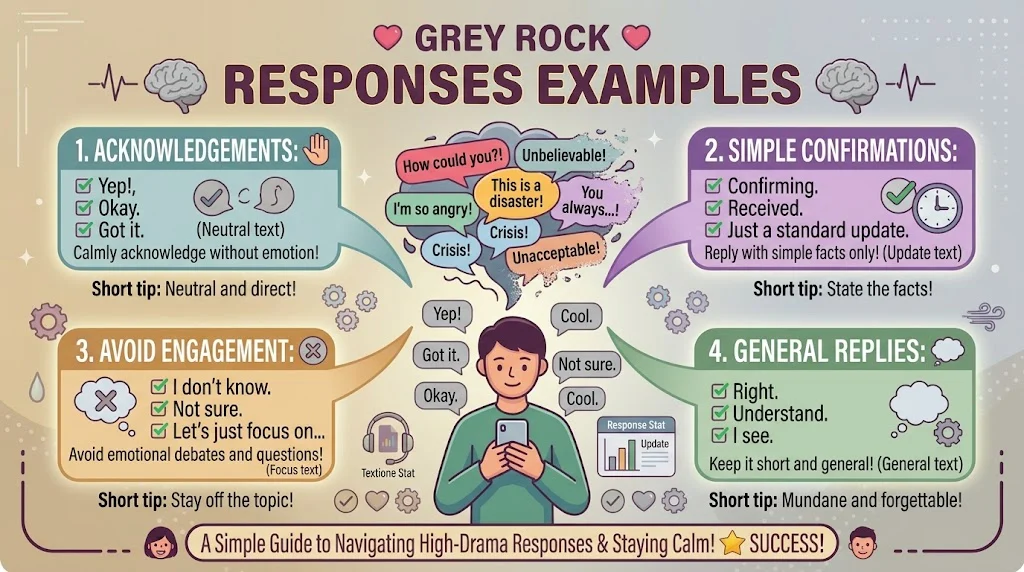
Grey rock responses examples are short, flat, and boring on purpose. Try “Okay,” “That’s fine,” “Noted,” “I’ll think about it,” or “Thanks for letting me know.”
Dealing with someone who thrives on drama can drain you fast. That is where grey rock responses examples come in: short, neutral replies that give them nothing to push against. You are not being rude, you are being boring on purpose, and that is the whole point.
This method works because toxic people feed on reactions. When you reply with flat, predictable lines, the conversation loses its spark for them. The right grey rock responses examples keep you calm, protect your energy, and help you exit the chat without a showdown.
Neutral Responses
- Okay.
Example: Use when someone sends a long dramatic message and expects a fight.
Meaning: Gives them nothing to react to. - That’s fine.
Example: Use when they try to pick a debate about small plans.
Meaning: Accepts the situation without adding fuel. - Noted.
Example: Use when they share an opinion you did not ask for.
Meaning: Acknowledges the message and closes the loop. - I hear you.
Example: Use when they rant and want you to argue back.
Meaning: Shows you listened without engaging. - Alright.
Example: Use when they make a demand you do not want to discuss.
Meaning: Keeps your reply short and calm. - Okay, thanks for letting me know.
Example: Use when they send an update designed to provoke.
Meaning: Polite and completely uninteresting. - That works.
Example: Use when they offer a plan you can live with.
Meaning: Ends the thread without extra commentary. - Understood.
Example: Use when they explain something for the fifth time.
Meaning: Signals you got it and nothing more. - Fine by me.
Example: Use when they try to make a simple choice feel heavy.
Meaning: Keeps the mood flat and neutral. - Got it.
Example: Use when they send a message that needs no real reply.
Meaning: Confirms receipt and stops the spiral. - No problem.
Example: Use when they apologize in a way that invites drama.
Meaning: Shuts down the emotional hook. - Okay then.
Example: Use when they pause waiting for you to escalate.
Meaning: A calm full stop to the exchange.
Boring Responses
- That’s interesting.
Example: Use when they share gossip you do not want to feed.
Meaning: Sounds polite but gives zero energy. - I see.
Example: Use when they try to shock you with a story.
Meaning: Neutral and forgettable on purpose. - Makes sense.
Example: Use when they over explain something simple.
Meaning: Closes the topic without curiosity. - Fair enough.
Example: Use when they push an opinion you disagree with.
Meaning: Avoids a debate and stays flat. - Good to know.
Example: Use when they drop information meant to bait you.
Meaning: Acknowledges without inviting more. - Thanks for the update.
Example: Use when they send a dramatic progress report.
Meaning: Treats it like ordinary information. - I’ll keep that in mind.
Example: Use when they give unsolicited advice.
Meaning: Ends the advice loop politely. - That’s one way to look at it.
Example: Use when they state a strong opinion.
Meaning: Neutral and non committal. - Okay, noted.
Example: Use when they repeat themselves for effect.
Meaning: Signals the message landed and nothing more. - I hadn’t thought about that.
Example: Use when they expect praise for a basic point.
Meaning: Flat and unexciting. - Sure.
Example: Use when they ask for a reaction.
Meaning: Gives them almost nothing to work with. - Alright, sounds good.
Example: Use when they try to turn a small plan into a saga.
Meaning: Keeps the reply boring and final.
Brief Responses
- K.
Example: Use when they send a wall of text and want engagement.
Meaning: The shortest possible acknowledgment. - No.
Example: Use when they push a request you will not discuss.
Meaning: Clear, calm, and impossible to debate. - Yes.
Example: Use when they ask a question that needs a simple answer.
Meaning: Ends the conversation with zero extra energy. - Maybe.
Example: Use when they want a firm commitment you are not giving.
Meaning: Keeps things vague and uninteresting. - Later.
Example: Use when they demand an immediate response.
Meaning: Delays without feeding the drama. - Can’t.
Example: Use when they invite you into a conflict.
Meaning: Short and final. - Busy.
Example: Use when they text repeatedly for attention.
Meaning: Ends the thread without explanation. - Okay.
Example: Use when they send a message designed to provoke.
Meaning: A single word that gives nothing away. - Sure.
Example: Use when they ask for a favor you will not argue about.
Meaning: Brief and neutral. - Fine.
Example: Use when they try to make you explain yourself.
Meaning: Closes the topic fast. - Noted.
Example: Use when they send a complaint.
Meaning: Acknowledges and moves on. - Thanks.
Example: Use when they do something that needs basic manners.
Meaning: Polite and completely flat.
Deflecting Responses
- I’ll have to check my schedule.
Example: Use when they push for an immediate yes.
Meaning: Buys time without giving a reaction. - I’m not sure yet.
Example: Use when they want a decision right now.
Meaning: Keeps you uncommitted and calm. - Let me get back to you.
Example: Use when they demand an answer on the spot.
Meaning: Ends the pressure politely. - I’ll think about it.
Example: Use when they ask for something you may refuse.
Meaning: A classic grey rock delay line. - That’s something to consider.
Example: Use when they present a dramatic proposal.
Meaning: Neutral and non committal. - I’d have to look into that.
Example: Use when they ask a question meant to trap you.
Meaning: Avoids engagement without being rude. - I’m not the right person for that.
Example: Use when they try to pull you into their problem.
Meaning: Redirects without emotion. - You’d have to ask someone else.
Example: Use when they want information you will not share.
Meaning: Politely closes the door. - I don’t have an answer for that right now.
Example: Use when they pressure you for an opinion.
Meaning: Keeps you neutral and unreadable. - I’ll let you know if anything changes.
Example: Use when they keep checking in for updates.
Meaning: Ends the loop without feeding it. - That’s not something I can help with.
Example: Use when they ask for involvement in drama.
Meaning: Clear boundary with zero heat. - I’m just focused on other things right now.
Example: Use when they try to pull you back in.
Meaning: Signals distance without a fight.
Polite But Distant Responses
- Thanks for sharing that with me.
Example: Use when they send personal drama you did not ask for.
Meaning: Polite and emotionally uninvolved. - I appreciate the update.
Example: Use when they report news meant to get a reaction.
Meaning: Treats it like routine information. - That’s good to hear.
Example: Use when they share something you cannot engage with.
Meaning: Warm on the surface and empty underneath. - I hope that works out for you.
Example: Use when they describe a dramatic plan.
Meaning: Kind but keeps you out of it. - Thanks for thinking of me.
Example: Use when they invite you into a conflict.
Meaning: Polite decline energy without saying no. - I’m glad you told me.
Example: Use when they expect you to get upset.
Meaning: Calm and non reactive. - That sounds like a lot to handle.
Example: Use when they dump problems on you.
Meaning: Acknowledges without taking it on. - I’m sure you’ll figure it out.
Example: Use when they want you to solve everything.
Meaning: Supportive sounding and distant. - No worries at all.
Example: Use when they apologize in a dramatic way.
Meaning: Shuts down the emotional hook. - I understand.
Example: Use when they try to explain their behavior.
Meaning: Neutral and final. - Thanks for letting me know.
Example: Use when they send information meant to provoke.
Meaning: A polite full stop. - I’ll leave that with you.
Example: Use when they try to hand you responsibility.
Meaning: Hands it back calmly.
Professional Responses
- Thank you for the update. I will review it and follow up if needed.
Example: Use when a dramatic coworker sends a long email.
Meaning: Professional and completely unengaging. - Noted. I will proceed accordingly.
Example: Use when someone tries to escalate a small issue.
Meaning: Calm and process focused. - I have received your message and will respond in due course.
Example: Use when they demand an immediate reaction.
Meaning: Formal and flat. - That falls outside my current priorities.
Example: Use when they try to pull you into extra drama.
Meaning: A clean professional boundary. - Please direct that to the appropriate channel.
Example: Use when they message you about things outside your role.
Meaning: Redirects without emotion. - I will take that under advisement.
Example: Use when they give feedback designed to sting.
Meaning: Neutral and impossible to argue with. - Thanks for flagging this. I will look into it if necessary.
Example: Use when they report a minor issue dramatically.
Meaning: Professional and non committal. - I am not able to assist with that request.
Example: Use when they ask for something you will not do.
Meaning: Clear and calm refusal. - Let’s keep this conversation focused on the task.
Example: Use when they steer a work chat into personal drama.
Meaning: Redirects professionally. - I will circle back if there is anything further needed.
Example: Use when they expect ongoing engagement.
Meaning: Closes the thread politely. - Understood. I have no further questions.
Example: Use when they over explain a simple matter.
Meaning: Ends the exchange cleanly. - Please put that in writing and I will review it.
Example: Use when they try to create verbal conflict.
Meaning: Adds a calm professional buffer.
Chill And Casual Responses
- Cool.
Example: Use when they send a dramatic update.
Meaning: Low energy and completely unbothered. - All good.
Example: Use when they try to make a small issue big.
Meaning: Calm and final. - No stress.
Example: Use when they expect you to panic with them.
Meaning: Signals you are not joining the chaos. - Sounds fine.
Example: Use when they ask for your reaction.
Meaning: Easygoing and uninteresting. - Yeah, no worries.
Example: Use when they apologize dramatically.
Meaning: Shuts down the emotional hook. - It is what it is.
Example: Use when they want you to fight reality.
Meaning: Calm acceptance with zero fuel. - That’s okay.
Example: Use when they try to guilt you.
Meaning: Neutral and forgiving on the surface. - Whatever works.
Example: Use when they push for a strong opinion.
Meaning: Flexible and completely flat. - I’m easy.
Example: Use when they want you to pick a side.
Meaning: Avoids engagement without conflict. - Not a big deal.
Example: Use when they inflate a minor problem.
Meaning: Keeps the situation in perspective. - We’re good.
Example: Use when they try to create tension.
Meaning: Closes the issue calmly. - Alright, cool.
Example: Use when they send a message that needs no follow up.
Meaning: A relaxed full stop.
Confident Responses
- That doesn’t work for me.
Example: Use when they push a plan you will not accept.
Meaning: Calm, clear, and non negotiable. - I’m not going to discuss that.
Example: Use when they try to pull you into an argument.
Meaning: A firm boundary with no heat. - I’ve made my decision.
Example: Use when they keep pushing for a different answer.
Meaning: Ends the debate calmly. - That’s not up for debate.
Example: Use when they try to reopen a closed topic.
Meaning: Confident and final. - I’m comfortable with my choice.
Example: Use when they question your decisions.
Meaning: Shows self assurance without engagement. - I’ll handle it my way.
Example: Use when they try to control your actions.
Meaning: Takes back control quietly. - I don’t need to explain that.
Example: Use when they demand justification.
Meaning: A calm refusal to over share. - I’m good with where things are.
Example: Use when they want you to escalate.
Meaning: Signals you are not moving. - That’s my final answer.
Example: Use when they keep asking the same question.
Meaning: Closes the loop with confidence. - I’m not available for that.
Example: Use when they try to schedule drama.
Meaning: Clear and unemotional. - I’ll pass on that.
Example: Use when they invite you into a conflict.
Meaning: Polite and final. - I’ve said what I needed to say.
Example: Use when they try to drag out the conversation.
Meaning: Ends the exchange with calm authority.
Clever Responses
- I’ll add that to the list of things I’m not reacting to.
Example: Use when they send bait designed to provoke.
Meaning: Smart and completely unreactive. - That’s a thought.
Example: Use when they expect a strong opinion.
Meaning: Sounds engaged but gives nothing. - Interesting perspective.
Example: Use when they state something dramatic.
Meaning: Neutral and forgettable. - I’ll take that under consideration.
Example: Use when they demand an immediate answer.
Meaning: Buys time without engagement. - Noted for future reference.
Example: Use when they give unsolicited feedback.
Meaning: Polite and empty. - That’s one way to see it.
Example: Use when they push their version of events.
Meaning: Avoids agreement and argument. - I’ll let that sit with me.
Example: Use when they want a reaction right now.
Meaning: Delays and deflects calmly. - I don’t have anything to add.
Example: Use when they try to keep the thread alive.
Meaning: A clever way to end the chat. - That’s beyond my pay grade.
Example: Use when they ask you to solve their problems.
Meaning: Light and non committal. - I’ll leave that one to the experts.
Example: Use when they want your involvement in drama.
Meaning: Polite deflection with a smile. - I’m not the best person to ask.
Example: Use when they want your opinion on conflict.
Meaning: Steps away without conflict. - I’ll trust your judgment on that.
Example: Use when they try to make you responsible.
Meaning: Hands it back calmly.
Sarcastic Responses
- Cool story.
Example: Use when they send a dramatic tale you did not ask for.
Meaning: Flat sarcasm that gives no energy. - Neat.
Example: Use when they expect excitement.
Meaning: A single word that says almost nothing. - Wow.
Example: Use when they try to shock you.
Meaning: Sounds like a reaction but is actually empty. - Good for you.
Example: Use when they share news meant to impress.
Meaning: Polite on the surface and flat underneath. - That’s wild.
Example: Use when they describe drama you will not engage with.
Meaning: Acknowledges without inviting more. - Fair.
Example: Use when they push an opinion.
Meaning: Neutral and slightly dismissive. - If you say so.
Example: Use when they insist they are right.
Meaning: Avoids the argument completely. - Sure thing.
Example: Use when they make a demand.
Meaning: Sounds agreeable and completely unbothered. - Sounds like a plan.
Example: Use when they propose something dramatic.
Meaning: Flat and non committal. - Okay, buddy.
Example: Use when they try to provoke you.
Meaning: Light sarcasm that keeps you calm. - Good luck with that.
Example: Use when they share a chaotic plan.
Meaning: Distant and unengaged. - You do you.
Example: Use when they try to drag you into their choices.
Meaning: Calm detachment with a hint of dryness.
Dramatic Responses
- Okay, that happened.
Example: Use when they describe a dramatic event.
Meaning: Acknowledges without adding drama. - Well, there it is.
Example: Use when they finally reveal the real issue.
Meaning: Calm observation with zero heat. - And yet here we are.
Example: Use when they complain about the same thing again.
Meaning: Flat and slightly philosophical. - That’s a lot.
Example: Use when they dump a huge story on you.
Meaning: Acknowledges the size without engaging. - Noted for the record.
Example: Use when they make a big declaration.
Meaning: Treats it like paperwork. - I’ll let that be.
Example: Use when they expect you to react strongly.
Meaning: Calm and final. - That’s one for the books.
Example: Use when they share something over the top.
Meaning: Sounds interested but stays flat. - Okay, moving on.
Example: Use when they try to keep the drama going.
Meaning: Changes the subject calmly. - That’s enough for today.
Example: Use when the conversation gets heavy.
Meaning: A gentle but firm exit. - I’ll leave it there.
Example: Use when they want a back and forth.
Meaning: Ends the exchange without emotion. - That’s the whole story then.
Example: Use when they over explain.
Meaning: Signals the topic is closed. - Right, then.
Example: Use when they pause for a reaction.
Meaning: A calm full stop.
Emotional Responses
- I understand.
Example: Use when they try to make you feel guilty.
Meaning: Flat empathy that gives nothing away. - That sounds difficult.
Example: Use when they share a personal problem.
Meaning: Acknowledges without taking it on. - I hope things improve for you.
Example: Use when they want you to get emotional.
Meaning: Polite care with clear distance. - I can see why you’d feel that way.
Example: Use when they vent dramatically.
Meaning: Validates without engaging. - That must be hard.
Example: Use when they try to pull you into their mood.
Meaning: Calm and supportive sounding. - I’m sorry you’re dealing with that.
Example: Use when they share a problem you will not fix.
Meaning: Kind and emotionally flat. - I hear what you’re saying.
Example: Use when they want a strong reaction.
Meaning: Neutral listening without involvement. - That’s a lot to carry.
Example: Use when they dump emotions on you.
Meaning: Acknowledges without absorbing. - I hope you find a way through it.
Example: Use when they expect you to solve things.
Meaning: Supportive and distant. - I understand this matters to you.
Example: Use when they try to make you argue.
Meaning: Respectful and non reactive. - I’m not sure I can help with that.
Example: Use when they want emotional labor.
Meaning: A calm boundary. - I wish you the best with it.
Example: Use when they want ongoing involvement.
Meaning: Polite and final.
Sweet Responses
- Thanks for sharing.
Example: Use when they send personal news.
Meaning: Warm on the surface and empty underneath. - I appreciate you telling me.
Example: Use when they expect a big reaction.
Meaning: Polite and emotionally distant. - That’s good to know.
Example: Use when they drop information to bait you.
Meaning: Sweet sounding and completely flat. - I’m glad you have support.
Example: Use when they describe their drama network.
Meaning: Kind and non engaged. - I hope it all works out.
Example: Use when they share a dramatic plan.
Meaning: Warm and non committal. - Thanks for keeping me posted.
Example: Use when they send updates you did not ask for.
Meaning: Polite and distant. - That sounds nice.
Example: Use when they describe something you will not join.
Meaning: Pleasant and forgettable. - I’m happy for you.
Example: Use when they share news meant to impress.
Meaning: Kind and flat. - Take care of yourself.
Example: Use when they try to pull you into their stress.
Meaning: Warm and final. - I hope you have a good day.
Example: Use when they send a message that needs no follow up.
Meaning: Sweet and completely neutral. - Thanks for thinking of me.
Example: Use when they invite you into drama.
Meaning: Polite and non engaging. - All the best with that.
Example: Use when they want your involvement.
Meaning: Warm and final.
Funny Responses
- Noted.
Example: Use when they send a dramatic essay.
Meaning: Deadpan and impossible to argue with. - Cool beans.
Example: Use when they expect excitement.
Meaning: Light and completely uninteresting. - Well, alrighty then.
Example: Use when they say something absurd.
Meaning: Dry humor that gives no fuel. - That’s a choice.
Example: Use when they describe a dramatic decision.
Meaning: Playful and non committal. - Good talk.
Example: Use when they try to keep the chat going.
Meaning: A funny way to end the thread. - I’ll be sure to file that away.
Example: Use when they give unsolicited advice.
Meaning: Dry and polite. - Neat-o.
Example: Use when they share something meant to shock.
Meaning: Sounds like a reaction and is actually nothing. - Wild.
Example: Use when they describe drama you will not touch.
Meaning: One word that says almost nothing. - If you say so.
Example: Use when they insist they are right.
Meaning: Dry and unbothered. - Okay, superstar.
Example: Use when they try to provoke you.
Meaning: Light humor that keeps you calm. - That’s a fun fact.
Example: Use when they share useless drama.
Meaning: Playful and completely flat. - Thanks for the TED talk.
Example: Use when they over explain something simple.
Meaning: Funny and final.
Brutal Responses
- No.
Example: Use when they push a request you will not discuss.
Meaning: Clear and impossible to debate. - That doesn’t work for me.
Example: Use when they try to force a plan.
Meaning: Blunt and calm. - I’m not doing that.
Example: Use when they ask for something unreasonable.
Meaning: Direct and final. - Not interested.
Example: Use when they try to pull you into drama.
Meaning: Clear and unemotional. - I don’t have anything to say about that.
Example: Use when they want your opinion.
Meaning: Blunt and non engaging. - That’s not my problem.
Example: Use when they dump their issues on you.
Meaning: A firm boundary with no heat. - I’m not going to argue about this.
Example: Use when they try to start a fight.
Meaning: Calm and final. - I’ve already answered that.
Example: Use when they keep asking the same question.
Meaning: Closes the loop bluntly. - That’s not up to me.
Example: Use when they want you to take responsibility.
Meaning: Steps away without emotion. - I’m not available for this conversation.
Example: Use when they try to drag things out.
Meaning: Clear and unemotional. - I’ll pass.
Example: Use when they invite you into conflict.
Meaning: Simple and final. - That’s the end of it.
Example: Use when they try to reopen a closed topic.
Meaning: Blunt and calm.
FAQs
What are grey rock responses examples?
They are short, flat replies used to avoid feeding drama. The goal is to be so boring that the other person loses interest in engaging with you.
Is the grey rock method emotional or flirty?
It is neither. It is a protective strategy for dealing with toxic or draining people. It is not meant to be flirty, and it is not about showing emotion.
Can I use grey rock responses at work?
Yes, in a professional way. Use neutral phrases like “Noted,” “I will review it,” or “Please put that in writing.” They keep things calm and boundary focused.
What if I don’t actually feel calm inside?
That is normal. Grey rock responses are about what you say, not what you feel. You can be upset and still reply with a flat, boring line.
Is humor okay with grey rock responses?
Dry, low energy humor can work. Avoid sarcasm that invites a reaction. The point is to give nothing away, not to win a joke contest.
Conclusion
Grey rock responses examples are not about being cold. They are about protecting your peace when someone keeps trying to pull you into chaos. A short, flat reply can save you hours of unnecessary stress.
Try a few from this list the next time a conversation starts to spiral. Keep your tone calm, your words brief, and your energy yours. You are allowed to be boring on purpose.
