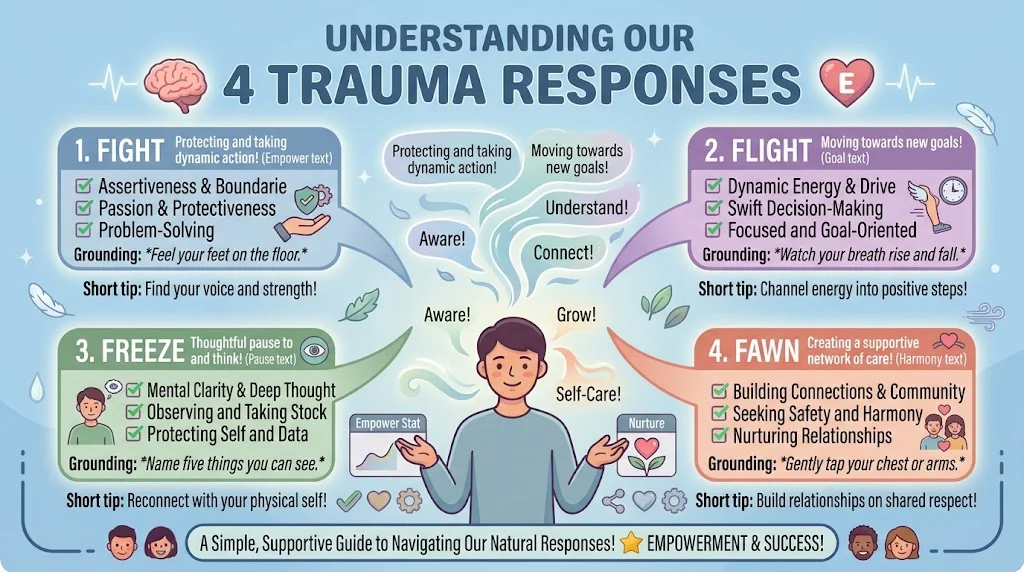
Trauma responses fight flight freeze fawn are your body’s automatic survival modes, not proof that something is wrong with you. When one shows up, try: I notice this, I can pause, I am safe right now, I can choose my next step, This will pass. I need a minute, I am noticing my body, I can slow this down, I am here, I get to choose my response.
Trauma responses fight flight freeze fawn show up in real life more than most people admit. Maybe you go silent in a meeting, overshare to keep the peace, or suddenly need to leave a text thread. Your body is trying to protect you, even when the moment is not actually dangerous. The right reply can help you name what is happening without shame. Whether you are texting a friend, replying to a coworker, or talking to yourself, the words you use can bring you back to the present. This list gives you 180+ ready-to-use lines for every mood.
Calm And Grounding Responses
- “I notice my body is reacting. I can pause here.”
- Example: Use when you feel your heart rate jump during a tense chat.
- Meaning: It names the response without judgment.
- “I am safe in this moment, even if my body disagrees.”
- Example: Use when anxiety makes the room feel unsafe.
- Meaning: It reassures your nervous system.
- “I can feel this without acting on it.”
- Example: Use when the urge to flee or fix hits.
- Meaning: It creates space between feeling and action.
- “One breath at a time is enough.”
- Example: Use when everything feels like too much.
- Meaning: It brings you back to the present.
- “I do not need to solve this right now.”
- Example: Use when your mind races for answers.
- Meaning: It releases pressure to fix everything.
- “My feet are on the floor. I am here.”
- Example: Use when you dissociate or freeze.
- Meaning: It grounds you in your body.
- “This wave will pass.”
- Example: Use when emotions spike.
- Meaning: It reminds you that feelings are temporary.
- “I can slow this down.”
- Example: Use when a conversation moves too fast.
- Meaning: It gives you control over the pace.
- “I am allowed to take up space while I regulate.”
- Example: Use when you need a moment before replying.
- Meaning: It removes guilt from pausing.
- “I can choose my next step.”
- Example: Use when you feel powerless.
- Meaning: It restores a sense of agency.
- “I am observing, not absorbing.”
- Example: Use when someone else’s stress spills onto you.
- Meaning: It creates healthy distance.
- “I will respond when I am steady.”
- Example: Use when you are too activated to answer.
- Meaning: It protects you from reactive replies.
Funny And Relatable Responses
- “My survival brain just ordered a pizza. I am not even hungry.”
- Example: Use when a stress response shows up at a random time.
- Meaning: It uses humor to normalize the moment.
- “Fight, flight, freeze, fawn, and apparently overthink.”
- Example: Use when you spiral after a small comment.
- Meaning: It names the chaos with light humor.
- “My body said danger. The danger was an email.”
- Example: Use when a message triggers a full alarm.
- Meaning: It shrinks the threat with honesty.
- “I am not dramatic. My nervous system is just extra.”
- Example: Use when someone calls you sensitive.
- Meaning: It reframes the response as biology.
- “I would love to relax, but my brain is currently in a thriller movie.”
- Example: Use when you cannot calm down.
- Meaning: It makes the experience relatable.
- “My fawn response just tried to apologize to a wall.”
- Example: Use when you over-apologize.
- Meaning: It points out the pattern playfully.
- “Freeze mode activated. Please allow three to five business days.”
- Example: Use when you go quiet under pressure.
- Meaning: It adds humor to shutdown.
- “I am not ignoring you. My brain left for a snack.”
- Example: Use when you dissociate mid-conversation.
- Meaning: It explains the pause gently.
- “My fight response chose violence against my own to-do list.”
- Example: Use when stress makes you want to clean everything.
- Meaning: It makes a stress habit funny.
- “Flight mode says run. My legs say nap.”
- Example: Use when you want to escape but feel tired.
- Meaning: It captures the contradiction.
- “I am one deep breath away from being a functional human.”
- Example: Use when you are barely holding it together.
- Meaning: It keeps the mood light.
- “My trauma response has better plot twists than my favorite show.”
- Example: Use when you react unexpectedly.
- Meaning: It uses humor to cope.
Brutal And Direct Responses
- “I am not doing this pattern again.”
- Example: Use when you notice yourself fawning to keep peace.
- Meaning: It sets a firm inner boundary.
- “You cannot use my past to control me.”
- Example: Use when someone weaponizes your triggers.
- Meaning: It reclaims your power.
- “I am not responsible for managing your emotions.”
- Example: Use when a person expects you to fawn.
- Meaning: It ends people-pleasing.
- “That is a trigger, not a command.”
- Example: Use when an old fear tells you to run.
- Meaning: It separates feeling from fact.
- “I am done apologizing for surviving.”
- Example: Use when you feel shame for your response.
- Meaning: It validates your coping.
- “I will not shrink myself to make you comfortable.”
- Example: Use when someone shames your reactions.
- Meaning: It protects your dignity.
- “My body kept me alive. I am not going to insult it.”
- Example: Use when you feel angry at yourself.
- Meaning: It builds self-respect.
- “You do not get access to my nervous system.”
- Example: Use when someone keeps pushing buttons.
- Meaning: It sets a hard line.
- “I am not asking for permission to protect myself.”
- Example: Use when you need to leave a situation.
- Meaning: It removes guilt from boundaries.
- “This conversation is over.”
- Example: Use when someone refuses to respect a limit.
- Meaning: It ends the interaction clearly.
- “I will not be your emotional punching bag.”
- Example: Use when someone takes their stress out on you.
- Meaning: It draws a firm boundary.
- “I am choosing peace over proving myself.”
- Example: Use when you want to argue back.
- Meaning: It prioritizes your well-being.
Professional And Safe Responses
- “I need a moment to collect my thoughts. I will follow up shortly.”
- Example: Use when a meeting triggers a freeze response.
- Meaning: It buys time in a professional way.
- “I want to make sure I respond thoughtfully. Can we revisit this?”
- Example: Use when you feel activated at work.
- Meaning: It keeps the tone professional.
- “I am not comfortable with this direction. Can we discuss alternatives?”
- Example: Use when a request feels unsafe.
- Meaning: It sets a boundary without conflict.
- “I will put my response in writing after I review.”
- Example: Use when you need to avoid reacting in the moment.
- Meaning: It creates a paper trail and space.
- “That comment landed poorly. I would like to keep this respectful.”
- Example: Use when a coworker crosses a line.
- Meaning: It addresses harm calmly.
- “I need clarity before I can agree to that.”
- Example: Use when pressure makes you want to fawn.
- Meaning: It stops automatic people-pleasing.
- “I am stepping away for a few minutes. I will return.”
- Example: Use when you need to regulate during work.
- Meaning: It gives a professional pause.
- “I would prefer to keep this conversation on task.”
- Example: Use when someone gets personal.
- Meaning: It redirects safely.
- “I am not available for that request right now.”
- Example: Use when you are at capacity.
- Meaning: It is a clear and simple no.
- “Let us align on expectations so we are both clear.”
- Example: Use when a situation feels unpredictable.
- Meaning: It creates structure.
- “I will escalate this if the behavior continues.”
- Example: Use when boundary violations repeat.
- Meaning: It signals serious intent.
- “I am documenting this for my records.”
- Example: Use when a conversation feels unsafe.
- Meaning: It protects you professionally.
Flirty And Playful Responses
- “My nervous system is being dramatic. You can stay.”
- Example: Use with a partner when you feel triggered but safe.
- Meaning: It lightens the moment with honesty.
- “I am in freeze mode, but I still think you are cute.”
- Example: Use when you go quiet on a date.
- Meaning: It keeps warmth while explaining.
- “My fawn response wants to agree with everything you say. Ignore it.”
- Example: Use with someone you trust.
- Meaning: It adds humor and self-awareness.
- “I might need a minute. Not because of you. My brain is just buffering.”
- Example: Use when you pause mid-conversation.
- Meaning: It reassures them gently.
- “Fight or flight? I choose flirt.”
- Example: Use when you want to defuse tension.
- Meaning: It is playful and safe.
- “You are safe. My body is just extra protective.”
- Example: Use with a close friend or partner.
- Meaning: It explains the response with care.
- “I am not running away. I am just regulating in style.”
- Example: Use when you step out for air.
- Meaning: It keeps things light.
- “My trauma response is loud. My feelings for you are louder.”
- Example: Use when you feel vulnerable.
- Meaning: It balances honesty and warmth.
- “If I go quiet, just hold my hand. No big speech needed.”
- Example: Use with someone who knows you well.
- Meaning: It asks for simple support.
- “I am a work in progress. A cute one, though.”
- Example: Use when explaining your reactions.
- Meaning: It adds charm to self-disclosure.
- “My body said danger. You said hello. Let us go with hello.”
- Example: Use when meeting someone new.
- Meaning: It is playful and grounding.
- “I promise I am listening. My survival brain is just loud today.”
- Example: Use when you seem distracted.
- Meaning: It keeps connection open.
Sarcastic And Witty Responses
- “Oh great, my nervous system decided to host a fire drill.”
- Example: Use when a small thing triggers a big response.
- Meaning: It uses sarcasm to cope.
- “Fight, flight, freeze, fawn, and sarcasm. A full set.”
- Example: Use when someone notices your tone.
- Meaning: It names the pattern with wit.
- “My brain loves reruns of worst-case scenarios.”
- Example: Use when you catastrophize.
- Meaning: It points out the habit lightly.
- “I would love to be chill, but my body missed that memo.”
- Example: Use when you feel tense.
- Meaning: It makes light of the contrast.
- “This thought is not paying rent, so why is it living here?”
- Example: Use when an intrusive thought loops.
- Meaning: It dismisses the thought with humor.
- “My fawn response is currently accepting applications for a backbone.”
- Example: Use when you catch yourself people-pleasing.
- Meaning: It uses self-aware sarcasm.
- “Freeze mode has entered the chat.”
- Example: Use when you go blank.
- Meaning: It is a quick and funny check-in.
- “My anxiety is writing fan fiction again.”
- Example: Use when you imagine worst-case outcomes.
Meaning: It calls out the overthinking.
- Example: Use when you imagine worst-case outcomes.
- “I am not avoiding you. I am avoiding my own thoughts.”
- Example: Use when you need space.
- Meaning: It is honest with a sharp edge.
- “My trauma response has a better schedule than I do.”
- Example: Use when it shows up at the worst time.
- Meaning: It keeps things light.
- “Fight or flight? Apparently, overexplain and then nap.”
- Example: Use when you overshare and crash.
- Meaning: It names the cycle with humor.
- “My nervous system is not dramatic. It is just committed to the bit.”
- Example: Use when someone calls you intense.
- Meaning: It reframes with wit.
Gentle And Compassionate Responses
- “It is okay to feel this. I am not in trouble.”
- Example: Use when shame shows up after a reaction.
- Meaning: It offers self-kindness.
- “My body did what it needed to do. I can thank it later.”
- Example: Use after a freeze or fawn response.
- Meaning: It builds self-compassion.
- “I do not have to be perfect at healing.”
- Example: Use when you judge your progress.
- Meaning: It releases pressure.
- “This is hard because I am human, not because I am failing.”
- Example: Use on a tough day.
- Meaning: It normalizes struggle.
- “I am learning to feel safe in small moments.”
- Example: Use when you practice grounding.
- Meaning: It honors baby steps.
- “I can be gentle with the part of me that panicked.”
- Example: Use after a triggered reaction.
- Meaning: It nurtures your inner experience.
- “I forgive myself for surviving in the best way I knew.”
- Example: Use when reflecting on old patterns.
- Meaning: It releases shame.
- “My feelings are valid, even when they are loud.”
- Example: Use when emotions feel big.
- Meaning: It validates your experience.
- “I am allowed to rest without earning it.”
- Example: Use after a stress response.
- Meaning: It treats rest as necessary.
- “I do not need to punish myself for having a nervous system.”
- Example: Use when self-criticism starts.
- Meaning: It stops the shame spiral.
- “I am proud of me for noticing the pattern.”
- Example: Use when you catch a response early.
- Meaning: It celebrates awareness.
- “I deserve the same care I give everyone else.”
- Example: Use when you put yourself last.
- Meaning: It builds self-worth.
Confident And Bold Responses
- “I know what my body is doing. I am still in charge.”
- Example: Use when a trauma response starts.
- Meaning: It reclaims control.
- “I am not broken. I am responding.”
- Example: Use when someone labels you.
- Meaning: It reframes the experience.
- “My past does not get to make my decisions today.”
- Example: Use when old fear shows up.
- Meaning: It separates past from present.
- “I can handle this feeling.”
- Example: Use when discomfort rises.
- Meaning: It builds self-trust.
- “I am choosing my values over my fear.”
- Example: Use when anxiety gives orders.
- Meaning: It keeps you purpose-driven.
- “I do not need certainty to move forward.”
- Example: Use when uncertainty spikes.
- Meaning: It builds tolerance.
- “My response is information, not identity.”
- Example: Use when you feel defined by trauma.
- Meaning: It creates distance.
- “I am the one who decides what happens next.”
- Example: Use when you feel powerless.
- Meaning: It restores agency.
- “I will not let one moment define my whole story.”
- Example: Use after a setback.
- Meaning: It keeps perspective.
- “I am stronger than the pattern.”
- Example: Use when a habit resurfaces.
- Meaning: It builds confidence.
- “I can do hard things, including this conversation.”
- Example: Use before a tough talk.
- Meaning: It gives courage.
- “I am not backing down from my own healing.”
- Example: Use when progress feels slow.
- Meaning: It shows commitment.
Chill And Casual Responses
- “It is fine. My body is just being extra protective.”
- Example: Use when someone asks why you went quiet.
- Meaning: It keeps the mood calm.
- “No big deal. I am just regulating.”
- Example: Use when you need a pause.
- Meaning: It normalizes the response.
- “I am good. Just riding out a wave.”
- Example: Use when anxiety rises.
- Meaning: It stays casual.
- “All good. I will answer when my brain catches up.”
- Example: Use when you freeze mid-text.
- Meaning: It explains the delay.
- “I am taking a breather. Nothing dramatic.”
- Example: Use when you step away.
- Meaning: It reassures others.
- “It is just a stress response. I am okay.”
- Example: Use when someone worries.
- Meaning: It offers calm reassurance.
- “I will deal with it in a minute.”
- Example: Use when you need to reset.
- Meaning: It buys time.
- “No worries. I am just checking in with myself.”
- Example: Use when you pause to ground.
- Meaning: It models self-care.
- “I am here. My mind just wandered off.”
- Example: Use when you dissociate.
- Meaning: It keeps things light.
- “It is whatever. I am still showing up.”
- Example: Use on a hard day.
- Meaning: It practices acceptance.
- “I am going with the flow today.”
- Example: Use when plans change.
- Meaning: It builds flexibility.
- “We are good. I am just breathing.”
- Example: Use when overwhelmed.
- Meaning: It grounds you.
Emotional And Honest Responses
- “This is really hard, and I am still trying.”
- Example: Use after a tough reaction.
- Meaning: It honors effort.
- “I am scared, but I am not giving up.”
- Example: Use before a triggering situation.
- Meaning: It shows courage.
- “I miss feeling safe in my own body.”
- Example: Use when reflecting on trauma.
- Meaning: It validates grief.
- “I am tired of fighting my own nervous system.”
- Example: Use on a draining day.
- Meaning: It is honest.
- “I need support, not judgment.”
- Example: Use when asking for help.
- Meaning: It states a clear need.
- “I am proud of myself for noticing the pattern.”
- Example: Use when you catch a response early.
- Meaning: It builds self-recognition.
- “Some days I win. Some days I learn.”
- Example: Use when progress varies.
- Meaning: It keeps perspective.
- “I am allowed to be a work in progress.”
- Example: Use when impatient with yourself.
- Meaning: It gives grace.
- “This journey can feel lonely sometimes.”
- Example: Use when feeling isolated.
- Meaning: It shows vulnerability.
- “I am not my trauma response.”
- Example: Use when you feel defined by it.
- Meaning: It creates separation.
- “I am doing this for a freer life.”
- Example: Use when motivation dips.
- Meaning: It connects to purpose.
- “I am worth the hard work.”
- Example: Use when self-doubt hits.
- Meaning: It builds self-worth.
Clever And Insightful Responses
- “My body is trying to protect me from a memory, not a moment.”
- Example: Use when a trigger feels out of proportion.
- Meaning: It connects response to context.
- “This is an old alarm, not a new fire.”
- Example: Use when fear feels urgent.
- Meaning: It separates past from present.
- “I can thank my brain and still choose differently.”
- Example: Use when a coping pattern appears.
- Meaning: It honors survival and growth.
- “The response is automatic. The next step is mine.”
- Example: Use when you feel powerless.
- Meaning: It restores agency.
- “I am not overreacting. I am under-supported.”
- Example: Use when someone minimizes your feelings.
- Meaning: It reframes the problem.
- “My nervous system is not trying to ruin my life. It is trying to save it.”
- Example: Use when you feel frustrated with yourself.
- Meaning: It builds compassion.
- “I can be curious about this instead of ashamed.”
- Example: Use when you notice a pattern.
- Meaning: It shifts the lens.
- “This feeling is a messenger, not a manager.”
- Example: Use when emotions demand action.
- Meaning: It creates distance.
- “I do not need to fix the feeling to move forward.”
- Example: Use when you want to escape discomfort.
- Meaning: It builds tolerance.
- “I can hold two truths: it was hard, and I am okay now.”
- Example: Use when reflecting on the past.
- Meaning: It integrates experience.
- “My past wrote the script. I am editing it now.”
- Example: Use when old patterns show up.
- Meaning: It builds empowerment.
- “I am not stuck. I am practicing a new response.”
- Example: Use when progress feels slow.
- Meaning: It reframes the journey.
Cute And Soft Responses
- “My brain is being a little protective. Give me a second.”
- Example: Use with a close friend.
- Meaning: It explains gently.
- “I am okay. My body just needs a tiny reset.”
- Example: Use when you pause.
- Meaning: It reassures softly.
- “You are safe. I am just checking in with myself.”
- Example: Use with a partner.
- Meaning: It keeps connection warm.
- “I am not mad. I am just regulating.”
- Example: Use when you go quiet.
- Meaning: It prevents misunderstanding.
- “Can we slow down for a minute? My brain is buffering.”
- Example: Use during a fast conversation.
- Meaning: It asks for space kindly.
- “I like you. My nervous system is just loud today.”
- Example: Use on a date.
- Meaning: It adds warmth.
- “I am here. I just needed a breath.”
- Example: Use after a pause.
- Meaning: It reconnects gently.
- “No pressure. I am just being honest about my capacity.”
- Example: Use when declining plans.
- Meaning: It sets a soft boundary.
- “I am proud of us for talking about this.”
- Example: Use after a vulnerable chat.
- Meaning: It builds closeness.
- “You do not have to fix me. Just stay.”
- Example: Use with someone you trust.
- Meaning: It asks for presence.
- “I am a little tender today. Be nice to me.”
- Example: Use when you feel raw.
- Meaning: It asks for care.
- “We are okay. I just need a minute to feel it.”
- Example: Use when emotions rise.
- Meaning: It reassures and sets a pause.
Boundary-Setting Responses
- “I am not available for that conversation.”
- Example: Use when someone pushes a trigger.
- Meaning: It is a clear no.
- “I need space before I respond.”
- Example: Use when you feel activated.
- Meaning: It protects your peace.
- “That topic is off limits for me.”
- Example: Use when someone brings up a trigger.
- Meaning: It sets a firm limit.
- “I will not be explaining my trauma to earn respect.”
- Example: Use when someone demands details.
- Meaning: It protects your privacy.
- “I am not responsible for making you comfortable with my boundaries.”
- Example: Use when someone guilt-trips you.
- Meaning: It removes guilt.
- “I am leaving this conversation now.”
- Example: Use when someone keeps crossing lines.
- Meaning: It ends the interaction.
- “Please do not touch me right now.”
- Example: Use when you need physical space.
- Meaning: It is a direct boundary.
- “I need you to lower your voice.”
- Example: Use when someone is escalating.
- Meaning: It asks for safety.
- “I will only continue if we can be respectful.”
- Example: Use when a talk turns hostile.
- Meaning: It sets a condition.
- “That is not okay with me.”
- Example: Use when someone violates a limit.
- Meaning: It is simple and firm.
- “I am not asking for advice right now.”
- Example: Use when someone tries to fix you.
- Meaning: It states your need.
- “My boundaries are not up for debate.”
- Example: Use when someone argues with your limits.
- Meaning: It closes the negotiation.
Short And Simple Responses
- “I need a minute.”
- Example: Use when you feel overwhelmed.
- Meaning: It buys time.
- “I am okay.”
- Example: Use when fear lies.
- Meaning: It offers reassurance.
- “Just breathing.”
- Example: Use when grounding.
- Meaning: It explains the pause.
- “Not now.”
- Example: Use when a trigger hits.
- Meaning: It sets a quick boundary.
- “I can wait.”
- Example: Use when pressure rises.
- Meaning: It practices patience.
- “This will pass.”
- Example: Use when feelings peak.
- Meaning: It is a reminder.
- “I am safe.”
- Example: Use when panic starts.
- Meaning: It calms you.
- “One step.”
- Example: Use when everything feels big.
- Meaning: It focuses you.
- “I can sit.”
- Example: Use when discomfort comes.
- Meaning: It builds tolerance.
- “I am here.”
- Example: Use when you dissociate.
- Meaning: It grounds you.
- “No thanks.”
- Example: Use when offered a trigger.
- Meaning: It is a clean boundary.
- “I choose peace.”
- Example: Use when conflict tempts you.
- Meaning: It keeps you aligned.
Hopeful And Motivating Responses
- “Every time I pause, I am building a new pattern.”
- Example: Use after a small win.
- Meaning: It reinforces progress.
- “I am getting better at noticing.”
- Example: Use when awareness grows.
- Meaning: It celebrates growth.
- “Small steps still move me forward.”
- Example: Use when progress feels slow.
- Meaning: It keeps momentum.
- “I am not where I was yesterday.”
- Example: Use when comparing yourself.
- Meaning: It shows change.
- “Healing is possible for me.”
- Example: Use on a hard day.
- Meaning: It builds hope.
- “I can do hard things.”
- Example: Use before a challenge.
- Meaning: It builds courage.
- “This work is worth it.”
- Example: Use when tired.
- Meaning: It connects to purpose.
- “I am creating a life beyond survival mode.”
- Example: Use when motivation dips.
- Meaning: It creates a vision.
- “One healthier response is a victory.”
- Example: Use after choosing differently.
- Meaning: It marks progress.
- “My future self will thank me.”
- Example: Use when it feels hard.
- Meaning: It takes the long view.
- “I am stronger than I think.”
- Example: Use when doubt appears.
Meaning: It builds confidence.
- Example: Use when doubt appears.
- “I am worth the effort.”
- Example: Use when self-care feels hard.
- Meaning: It builds self-worth.
FAQs
What are trauma responses fight flight freeze fawn?
They are automatic survival reactions. Fight means confront, flight means escape, freeze means shut down, and fawn means people-please to stay safe.
Is fawning a real trauma response?
Yes. Fawning is a common response, especially for people who learned to keep the peace to avoid harm.
Can I switch between responses?
Yes. It is normal to move between fight, flight, freeze, and fawn depending on the situation and your nervous system.
How do I respond when I notice a trauma response?
Pause, breathe, and name it. Try: I notice my body is reacting, I can slow this down, and I am safe right now.
Is humor okay when talking about trauma responses?
Yes, when it feels safe for you. Humor can help you cope, but avoid using it to dismiss real pain.
What if someone uses my trauma response against me?
Set a boundary and seek support. You do not owe anyone access to your nervous system or an explanation of your survival patterns.
Conclusion
Trauma responses fight flight freeze fawn are not flaws. They are your body’s best attempt to keep you safe. The more you notice them, the more choice you create. You do not have to react perfectly.
You just have to practice. Try a few lines from this list, save the ones that help, and share them with someone who needs them. You are allowed to take up space, set boundaries, and heal at your own pace. Keep going, one brave response at a time.
