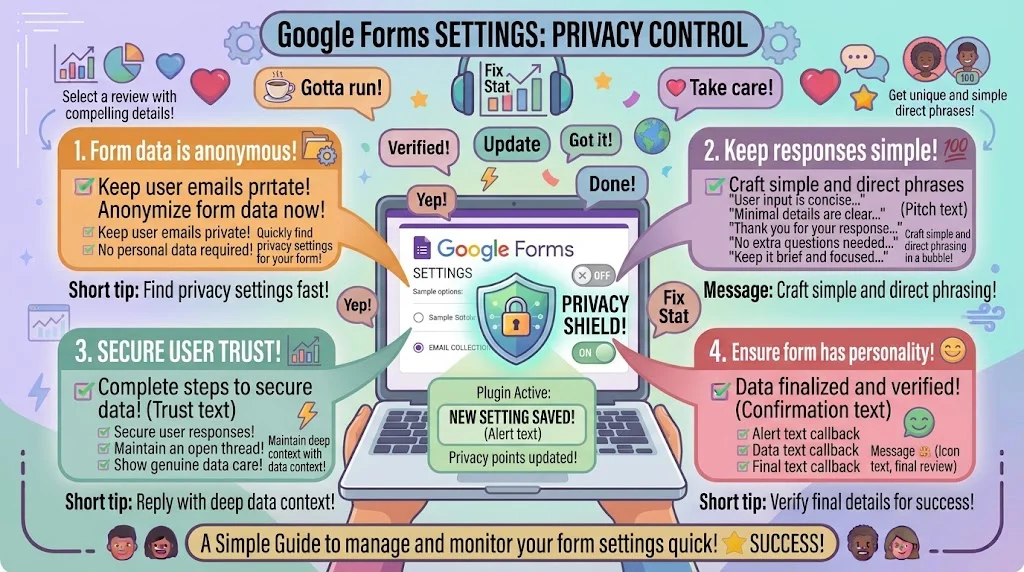
Google Forms anonymous responses are possible only if you turn off email collection and avoid questions that identify people, because Forms is not truly anonymous by default. Top alternatives: turn off email collection, remove name questions, share a fresh link, avoid sign in, use a separate account.
Google Forms anonymous responses is the question that pops up the moment you want honest feedback without anyone worrying about being named. Maybe you are running a class survey, a team pulse check, or a feedback form for an event, and you need people to feel safe enough to tell the truth. The confusing part is that Forms does not have a big anonymous switch, so you have to set it up carefully.
The right reply when someone asks “is this really anonymous?” matters more than you think. A clear answer builds trust. A vague one kills honest feedback before it starts. This guide gives you 180+ ready-to-use lines for every tone and situation, from patient tutorials to quick fixes and privacy-friendly explanations.
Helpful And Instructional Responses
- “To make responses anonymous, open Settings and turn off Collect email addresses.”
- Example: Use when someone asks how to set up an anonymous form.
- Meaning: It gives the exact step that matters most.
- “Remove any name, email, or ID question from the form if you want true anonymity.”
- Example: Use when reviewing a draft survey.
- Meaning: It stops identity leaks before launch.
- “Go to Settings, then Responses, and make sure sign in is not required.”
- Example: Use when a form asks people to log in.
- Meaning: It removes the account trail.
- “Share the form link publicly instead of sending it to named recipients.”
- Example: Use when planning distribution.
- Meaning: It prevents email tracking.
- “Check that no question asks for a phone number or employee ID.”
- Example: Use in a final review checklist.
- Meaning: It catches indirect identifiers.
- “Use a separate Google account for the form if you want to keep it apart from your main workspace.”
- Example: Use when privacy matters to the team.
- Meaning: It adds separation.
- “Test the form yourself and submit a response to see what data is stored.”
- Example: Use before sharing with a group.
Meaning: It confirms what is actually collected.
- Example: Use before sharing with a group.
- “Turn off the option to edit responses after submission if you want clean, one-time entries.”
- Example: Use in Settings during setup.
- Meaning: It reduces confusion and overlap.
- “Avoid asking for job titles in small teams because they can identify people.”
- Example: Use when designing a team survey.
- Meaning: It prevents accidental exposure.
- “Keep the question list short so people do not add identifying details in open text boxes.”
- Example: Use when writing feedback questions.
- Meaning: It lowers the risk of oversharing.
- “Add a short intro line telling people the form does not collect emails.”
- Example: Use at the top of the form description.
- Meaning: It builds trust upfront.
- “Review your form in preview mode before sending it out.”
- Example: Use as the last step before launch.
- Meaning: It catches mistakes early.
Polite And Professional Responses
- “This form does not collect email addresses, so responses are submitted without names attached.”
- Example: Use in a workplace email about a feedback form.
- Meaning: It states the setup clearly.
- “Thank you for asking. The form is set to not require sign in, so no account details are recorded.”
- Example: Use when replying to a cautious participant.
- Meaning: It is respectful and precise.
- “We have removed all identifying questions to protect everyone’s privacy.”
- Example: Use in an announcement to a team.
- Meaning: It reassures without overpromising.
- “Please note that open text answers can still reveal identity, so keep comments general if you prefer.”
- Example: Use in the form description.
Meaning: It is honest about limits.
- Example: Use in the form description.
- “You are welcome to skip any question that feels uncomfortable.”
- Example: Use when collecting sensitive feedback.
- Meaning: It gives people control.
- “I would recommend using a personal device if you want extra privacy.”
- Example: Use when advising participants.
Meaning: It offers a practical tip.
- Example: Use when advising participants.
- “The results will be reviewed by the coordinators only and not shared individually.”
- Example: Use in a survey intro.
- Meaning: It sets expectations.
- “We appreciate your honesty and will handle all responses with care.”
- Example: Use at the end of the form.
- Meaning: It thanks people and builds trust.
- “If you have concerns about anonymity, please reach out before submitting.”
- Example: Use in a formal feedback request.
- Meaning: It opens a safe channel.
- “The form is configured so that no email notifications are tied to individual responses.”
- Example: Use in a privacy note.
- Meaning: It explains the setup in plain terms.
- “We are not tracking IP addresses, device details, or submission times beyond the default.”
- Example: Use when someone asks about tracking.
- Meaning: It answers the real worry.
- “Please let us know if you need an alternative way to share feedback.”
- Example: Use in an inclusive message.
- Meaning: It offers options.
Funny And Relatable Responses
- “Anonymous means your name is not invited to the party. Your opinion still is.”
- Example: Use in a lighthearted survey intro.
- Meaning: It makes the concept friendly.
- “Yes, it is anonymous. No, I will not be checking who said what. I do not have the energy.”
- Example: Use in a team chat.
- Meaning: It is honest with humor.
- “The form does not know who you are. It barely knows who I am.”
- Example: Use in a casual post.
- Meaning: It keeps the tone playful.
- “We turned off email collection. Your secrets are safe with the spreadsheet.”
- Example: Use in a fun announcement.
- Meaning: It reassures with a joke.
- “If you type your name in the comment box, that is on you. The form tried its best.”
- Example: Use in the form description.
- Meaning: It warns people playfully.
- “Anonymous mode: activated. Judgment mode: also off, hopefully.”
- Example: Use in a feedback survey.
- Meaning: It sets a light tone.
- “No names, no emails, no awkward eye contact later. You are welcome.”
- Example: Use in a friend group survey.
- Meaning: It is funny and reassuring.
- “This form is like Vegas. What happens in the responses stays in the responses.”
- Example: Use in a casual workplace note.
- Meaning: It uses a familiar joke.
- “I cannot see who submitted what. I can only see the chaos in the answers.”
- Example: Use when someone asks about anonymity.
- Meaning: It is playful and truthful.
- “Your identity is safe. Your grammar will be judged silently.”
- Example: Use in a fun survey intro.
- Meaning: It adds humor to a serious topic.
- “We removed the name field. Please do not add it back out of habit.”
- Example: Use in a group chat.
- Meaning: It points out a common mistake.
- “Anonymous responses mean you can be honest and I can pretend I did not read that one comment.”
- Example: Use with a close team.
- Meaning: It is warm and funny.
Short And Snappy Responses
- “Turn off email collection.”
- Example: Use in a quick text reply.
- Meaning: It gives the key step.
- “Do not ask for names.”
- Example: Use in a checklist.
- Meaning: It is direct.
- “Yes, it can be anonymous.”
- Example: Use when answering a yes or no question.
- Meaning: It is clear.
- “No sign in required.”
- Example: Use in a setup note.
- Meaning: It is brief.
- “Check the Settings tab.”
- Example: Use when someone searches the wrong place.
- Meaning: It redirects fast.
- “Remove ID questions.”
- Example: Use in a review comment.
- Meaning: It is practical.
- “Share a public link.”
- Example: Use in a quick guide.
- Meaning: It is simple.
- “It is not fully anonymous by default.”
- Example: Use when setting expectations.
- Meaning: It is honest and short.
- “Test it first.”
- Example: Use before launch.
- Meaning: It prevents mistakes.
- “Keep it simple.”
- Example: Use when the form is overloaded.
- Meaning: It is good advice.
- “No emails collected.”
- Example: Use in a form description.
- Meaning: It is clear.
- “You are all set.”
- Example: Use after confirming the setup.
- Meaning: It closes the loop.
Confident And Expert Responses
- “Google Forms is anonymous only if you turn off email collection and sign in requirements. There is no magic toggle.”
- Example: Use when advising a project lead.
- Meaning: It sets the record straight.
- “The response spreadsheet still records a timestamp. If timing could identify someone, mention it upfront.”
- Example: Use in a privacy review.
- Meaning: It shows real expertise.
- “For sensitive feedback, use a separate account and a fresh form link with no prefilled fields.”
- Example: Use in a confidential survey plan.
- Meaning: It gives a solid method.
- “Open text fields are the biggest risk. People identify themselves without realizing it.”
- Example: Use when training a team.
- Meaning: It highlights the real issue.
- “If you need verified anonymity, Forms alone is not enough. You need a dedicated survey tool.”
- Example: Use in a technical discussion.
- Meaning: It is honest about limits.
- “Always tell participants what the form collects. Trust is built in the description, not the settings.”
- Example: Use when writing a survey intro.
- Meaning: It focuses on transparency.
- “Disable response editing if you want one clean submission per person without tracking.”
- Example: Use in a setup checklist.
- Meaning: It is a practical tip.
- “A public link is the simplest privacy upgrade you can make.”
- Example: Use when planning distribution.
- Meaning: It is clear advice.
- “Small groups are never truly anonymous. Design questions with that in mind.”
- Example: Use when surveying a team of five.
- Meaning: It prevents false comfort.
- “Use ranges instead of exact numbers for questions like salary or tenure.”
- Example: Use in survey design.
- Meaning: It reduces identifying details.
- “Store the response sheet in a restricted folder so only the right people can open it.”
- Example: Use in a data handling plan.
- Meaning: It protects the results.
- “If anonymity is critical, collect nothing you do not absolutely need.”
- Example: Use in a final review.
- Meaning: It is a strong principle.
Troubleshooting Responses
- “If names are showing up, check whether the email collection setting is still on.”
- Example: Use when a survey leaks identities.
- Meaning: It points to the likely cause.
- “If people cannot submit without signing in, open Settings and turn off the sign in requirement.”
- Example: Use when a form blocks access.
- Meaning: It fixes a common barrier.
- “If responses are missing, confirm the form is still accepting entries.”
- Example: Use when the count looks low.
- Meaning: It rules out a simple issue.
- “If someone can see previous answers, turn off the summary and response viewing options.”
- Example: Use when participants feel exposed.
- Meaning: It protects the experience.
- “If the link includes prefilled details, regenerate a clean share link.”
- Example: Use when privacy is a concern.
- Meaning: It removes hidden data.
- “If you use a work account, your admin may log access. Mention that in the form description.”
- Example: Use in a corporate setting.
- Meaning: It is honest about policy.
- “If responses look duplicated, check whether editing after submission is allowed.”
- Example: Use when data looks messy.
- Meaning: It explains the overlap.
- “If the form is embedded on a site, confirm the embed does not add tracking parameters.”
- Example: Use when sharing on a website.
- Meaning: It catches a hidden issue.
- “If a respondent is worried, ask them to submit from a personal device and a private browser.”
- Example: Use when someone is hesitant.
- Meaning: It gives a practical option.
- “If the spreadsheet is shared too widely, restrict access immediately.”
- Example: Use when a privacy slip happens.
- Meaning: It is a fast fix.
- “If the form was copied from an old template, recheck every privacy setting.”
- Example: Use when reusing a form.
- Meaning: It prevents inherited mistakes.
- “If nothing works, build a fresh form from scratch with privacy first.”
- Example: Use as a last resort.
- Meaning: It offers a clean restart.
Beginner-Friendly Responses
- “Think of it like this. If the form never asks who you are, it cannot tell anyone who you are.”
- Example: Use when explaining to a first-time user.
- Meaning: It makes the concept simple.
- “Start with two settings. Turn off email collection and turn off sign in.”
- Example: Use as a first step guide.
- Meaning: It keeps it manageable.
- “You do not need any code to make a form anonymous. Just change a few toggles.”
- Example: Use when someone expects it to be hard.
- Meaning: It removes fear.
- “It is okay if you miss a setting. That is why we test before sharing.”
- Example: Use when someone feels nervous.
- Meaning: It is reassuring.
- “The form does not hide answers from you. It just does not collect names.”
- Example: Use when clarifying a misunderstanding.
- Meaning: It explains the real meaning.
- “You can still see all the answers. You just will not see who wrote them.”
- Example: Use in a quick tutorial.
- Meaning: It sets the right expectation.
- “Start with a small test group. It builds confidence fast.”
- Example: Use when launching for the first time.
- Meaning: It lowers risk.
- “Free Google accounts can do this. No paid plan needed.”
- Example: Use when someone asks about cost.
- Meaning: It removes a barrier.
- “If a question feels too personal, delete it. Anonymous does not mean comfortable.”
- Example: Use when designing questions.
- Meaning: It puts people first.
- “Use plain language in your intro. Tell people exactly what is collected.”
- Example: Use when writing the form description.
- Meaning: It builds trust simply.
- “You are doing better than you think. This part is just a few clicks.”
- Example: Use when someone doubts themselves.
- Meaning: It is encouraging.
- “Once it is set, you can reuse the same form layout for future surveys.”
- Example: Use when wrapping up.
- Meaning: It saves time later.
Privacy And Trust Responses
- “The form does not collect emails, but open comments can still reveal who you are. Please keep them general if that matters to you.”
- Example: Use in a sensitive survey intro.
- Meaning: It is honest about the limits.
- “We only report grouped results. Individual answers are not attributed to anyone.”
- Example: Use in a workplace feedback note.
- Meaning: It explains how data is used.
- “Your response is stored in a private spreadsheet that only two people can open.”
- Example: Use when participants ask who sees results.
- Meaning: It names the access level.
- “We are not tracking IP addresses or device information beyond what Google records by default.”
- Example: Use in a privacy statement.
- Meaning: It answers the real question.
- “If a question feels identifying, you can skip it without losing your submission.”
- Example: Use in the form instructions.
- Meaning: It gives people control.
- “We will delete raw responses after the report is written.”
- Example: Use in a data policy note.
- Meaning: It shows a clear end date.
- “Please do not include names of other people in your answers.”
- Example: Use when collecting team feedback.
- Meaning: It protects third parties.
- “Small teams cannot promise true anonymity. We can promise we will not attach names.”
- Example: Use in a five-person survey.
- Meaning: It is honest and fair.
- “If you are uncomfortable, reach out directly instead of using the form.”
- Example: Use when trust is fragile.
- Meaning: It offers a safe alternative.
- “We are collecting only what we need to make a decision. Nothing extra.”
- Example: Use in a survey intro.
- Meaning: It shows restraint.
- “You can close the form at any time. Nothing is saved until you hit submit.”
- Example: Use when someone hesitates.
- Meaning: It gives them control.
- “Thank you for trusting us with honest feedback. We do not take that lightly.”
- Example: Use at the end of a form.
- Meaning: It ends on respect.
Firm And Direct Responses
- “Google Forms is not anonymous by default. You have to configure it.”
- Example: Use when someone assumes it is automatic.
- Meaning: It corrects a false belief.
- “If you collect emails, the responses are not anonymous. That is the whole rule.”
- Example: Use in a setup discussion.
- Meaning: It is blunt and clear.
- “Do not promise full anonymity in a team of four. It is not realistic.”
- Example: Use when planning a small survey.
- Meaning: It prevents overpromising.
- “Remove the name field before you share the form. Not after.”
- Example: Use in a launch checklist.
- Meaning: It is direct.
- “If you need verified anonymity, use a different tool. Forms has limits.”
- Example: Use in a technical conversation.
- Meaning: It sets a hard boundary.
- “Never share the response spreadsheet with the whole team if you promised privacy.”
- Example: Use when handling results.
- Meaning: It enforces the promise.
- “Tell people what the form collects. Hiding it is not a privacy strategy.”
- Example: Use when writing an intro.
- Meaning: It demands transparency.
- “A timestamp can identify people in small groups. Mention it.”
- Example: Use in a privacy review.
- Meaning: It points out a real risk.
- “If anonymity matters, collect nothing beyond what you will actually use.”
- Example: Use in a design meeting.
- Meaning: It is a firm principle.
- “Do not add optional email fields unless you truly need follow-ups.”
- Example: Use when reviewing a draft.
Meaning: It prevents mixed signals.
- Example: Use when reviewing a draft.
- “If someone asks for proof, show them the settings. Do not just say trust me.”
- Example: Use when confidence is low.
- Meaning: It builds credibility.
- “Privacy is part of the design, not an afterthought.”
- Example: Use as a closing rule.
- Meaning: It is clear and memorable.
Casual And Chill Responses
- “Yeah, just turn off email collection and you are good.”
- Example: Use in a relaxed Slack reply.
- Meaning: It is friendly and simple.
- “No names needed. Keep it easy.”
- Example: Use with a friend building a form.
- Meaning: It is laid back.
- “It is anonymous enough as long as you do not ask who they are.”
- Example: Use in a casual chat.
- Meaning: It is honest and relaxed.
- “People will still guess in small groups. That is just how it goes.”
- Example: Use when setting realistic expectations.
- Meaning: It is calm and true.
- “I usually test it once and then forget about it.”
- Example: Use when sharing your habit.
- Meaning: It is low-key advice.
- “Just do not add a name question and you are fine.”
- Example: Use in a quick reply.
- Meaning: It is easy to follow.
- “Anonymous forms are great for honest feedback. Mostly chaotic, but great.”
- Example: Use in a team chat.
- Meaning: It is warm and funny.
- “No big deal. It is just a few settings.”
- Example: Use when someone hesitates.
- Meaning: It removes pressure.
- “Keep the link public and you are set.”
- Example: Use in a short message.
- Meaning: It is simple.
- “You will get more honest answers if people feel safe. That is the whole point.”
- Example: Use in a casual discussion.
- Meaning: It is friendly and clear.
- “It works. Just do not promise more than it can do.”
- Example: Use when advising a friend.
- Meaning: It is balanced.
- “Once it is set up, you can reuse it for the next survey.”
- Example: Use when wrapping up.
- Meaning: It is practical.
Clever And Creative Responses
- “An anonymous form is like a suggestion box with no return address.”
- Example: Use when explaining to a visual thinker.
- Meaning: It makes the idea memorable.
- “Think of it as a mask for your data. The answers show up. The face does not.”
- Example: Use in a tutorial post.
- Meaning: It is vivid and simple.
- “Forms does not read minds. If you do not ask for a name, it will not know one.”
- Example: Use when someone is suspicious.
- Meaning: It is clever and calming.
- “The settings are the bouncer. They decide what gets in.”
- Example: Use in a training session.
- Meaning: It is a strong metaphor.
- “Anonymity is a promise you keep in the question design, not just the settings.”
- Example: Use in a privacy workshop.
- Meaning: It is insightful.
- “A public link is a form with no name tag.”
- Example: Use in a quick explanation.
- Meaning: It is clear and creative.
- “Your spreadsheet is the vault. Share the key carefully.”
- Example: Use when discussing access.
- Meaning: It is memorable.
- “If the form asks nothing personal, the form knows nothing personal.”
- Example: Use in a beginner guide.
- Meaning: It is simple and smart.
- “Anonymity is not a feature you switch on. It is a choice you design.”
- Example: Use in a thoughtful post.
- Meaning: It reframes the idea.
- “Open text boxes are tiny confession booths. People will overshare.”
- Example: Use when designing questions.
- Meaning: It is funny and true.
- “Small groups are echo chambers. Everyone recognizes the voice, not the name.”
- Example: Use when warning a team lead.
- Meaning: It is honest and clever.
- “Build the form like the answers will be read aloud. That keeps it kind.”
- Example: Use in a survey design meeting.
- Meaning: It is thoughtful advice.
Sarcastic And Witty Responses
- “Oh, Google Forms has a big anonymous button? It does not. You have to set it up.”
- Example: Use when someone expects a one-click fix.
- Meaning: It is dry and clear.
- “Yes, it is anonymous. Until someone writes their name in the comment box.”
- Example: Use in a team chat.
- Meaning: It is funny and true.
- “You can promise anonymity. You just cannot promise people will read the instructions.”
- Example: Use when reviewing survey results.
- Meaning: It is witty.
- “Nothing says trust like a survey that asks for your email and your manager’s name.”
- Example: Use when fixing a bad form.
- Meaning: It is sharp and useful.
- “Sure, it is anonymous. In a team of three. Good luck with that.”
- Example: Use when warning a small group.
- Meaning: It is honest with humor.
- “Google will not tell anyone who answered. Your writing style might.”
- Example: Use in a form description.
- Meaning: It is funny and real.
- “We removed the name field. Please stop trying to put it back.”
- Example: Use in a group chat.
- Meaning: It is playful.
- “The settings are easy. Remembering to turn them on is the hard part.”
- Example: Use when sharing tips.
- Meaning: It is relatable.
- “You want honest feedback and full names? Pick one.”
- Example: Use in a design discussion.
- Meaning: It is blunt and funny.
- “Anonymity is not a vibe. It is a checklist.”
- Example: Use in a training slide.
- Meaning: It is clever and clear.
- “Your participants read the privacy note. All two of them.”
- Example: Use in a lighthearted review.
- Meaning: It is funny but makes a point.
- “The form is anonymous. The group chat afterward is not.”
- Example: Use with a close team.
- Meaning: It is witty and true.
Empathetic And Patient Responses
- “I understand the worry. Let us check the settings together so you feel confident.”
- Example: Use when a participant is anxious.
- Meaning: It offers partnership.
- “It is completely fair to ask. Privacy should never be assumed.”
- Example: Use in a reply to a concerned person.
- Meaning: It validates the question.
- “You can skip any question that feels uncomfortable. Your response still counts.”
- Example: Use in the form instructions.
- Meaning: It gives real control.
- “Take your time with the form. There is no rush and no pressure.”
- Example: Use in a sensitive survey intro.
- Meaning: It is calm and kind.
- “If this feels too personal, we can find another way to hear your feedback.”
- Example: Use in a one-on-one follow-up.
- Meaning: It offers an alternative.
- “I know small teams make anonymity tricky. We will report results in groups only.”
- Example: Use when explaining to a team.
- Meaning: It is honest and caring.
- “You are not being difficult by asking. You are being careful, and that is smart.”
- Example: Use when someone apologizes.
- Meaning: It is supportive.
- “If you need help filling it out, I am happy to walk you through it.”
- Example: Use in an inclusive message.
- Meaning: It offers support.
- “Thank you for trusting us with honest feedback. It is not easy.”
- Example: Use at the end of a form.
- Meaning: It is grateful and warm.
- “It is okay to close the form and come back later if you need to.”
- Example: Use when someone feels rushed.
- Meaning: It lowers pressure.
- “No question here is mandatory unless it is clearly marked. You are in control.”
- Example: Use in a form description.
- Meaning: It clarifies without stress.
- “You will not be judged for anything you write. That is the point of this form.”
- Example: Use in a feedback intro.
- Meaning: It builds safety.
Team And Workplace Responses
- “We have turned off email collection so no one’s name is attached to a response.”
- Example: Use in a team announcement.
- Meaning: It sets the tone for honest feedback.
- “For a team this size, we will report results in themes rather than individual answers.”
- Example: Use in a small department survey.
- Meaning: It is realistic and protective.
- “Please avoid naming colleagues in your answers. Keep the focus on the process.”
- Example: Use in a workplace feedback form.
- Meaning: It protects people and keeps it useful.
- “Only the project leads will see raw responses. The summary will be shared with everyone.”
- Example: Use in a survey intro.
- Meaning: It clarifies access.
- “You can submit from your phone if that feels more private.”
- Example: Use in a sensitive workplace survey.
- Meaning: It offers a practical option.
- “We are collecting feedback to fix issues, not to find out who complained.”
- Example: Use in a trust-building note.
- Meaning: It addresses the real fear.
- “Responses will be grouped by department only if the group is large enough.”
- Example: Use in a company-wide survey.
- Meaning: It prevents identification.
- “If you want to share something sensitive, reply to this email instead of using the form.”
- Example: Use in a workplace rollout.
- Meaning: It gives a private channel.
- “The form closes on Friday. Please share your honest thoughts before then.”
- Example: Use in a reminder email.
- Meaning: It sets a clear deadline.
- “We are keeping the question list short on purpose. Fewer details, more honesty.”
- Example: Use in a manager update.
- Meaning: It explains the design choice.
- “Thank you for helping us build a better process. Your feedback shapes what happens next.”
- Example: Use at the end of a survey.
- Meaning: It shows impact.
- “If you spot a privacy issue in the form, tell us immediately and we will fix it.”
- Example: Use in a launch message.
- Meaning: It invites accountability.
Mobile And On-The-Go Responses
- “You can set up anonymous responses from the Google Forms app too. Check the Settings tab.”
- Example: Use when someone is away from a laptop.
- Meaning: It gives a mobile route.
- “The mobile view hides some settings. Switch to desktop view if you cannot find the toggle.”
- Example: Use when someone is stuck on a phone.
- Meaning: It solves a common issue.
- “Submitting from your phone is fine. Just make sure you are not signed into a shared account.”
- Example: Use when advising participants.
- Meaning: It prevents account mix-ups.
- “If you share the link in a group chat, copy it fresh so no extra details are attached.”
- Example: Use when sending on WhatsApp.
- Meaning: It keeps the link clean.
- “Turn off autofill before you submit if you are worried about your details.”
- Example: Use in a privacy tip.
- Meaning: It is practical advice.
- “The form works offline if you have it open, but submit once you have a connection.”
- Example: Use when someone has spotty service.
- Meaning: It prevents lost answers.
- “Use a private browser window on your phone if you want extra separation.”
- Example: Use when someone feels unsure.
- Meaning: It adds a layer of comfort.
- “You can save the form link to your home screen and fill it out later.”
- Example: Use when someone is busy.
- Meaning: It is convenient.
- “If the mobile layout cuts off a question, rotate your screen or scroll slowly.”
- Example: Use in a quick fix guide.
- Meaning: It prevents skipped answers.
- “Test the form on your phone before you share it with a group.”
- Example: Use before launch.
- Meaning: It catches layout issues.
- “If you use a work phone, remember the device may be managed by your company.”
- Example: Use in a corporate setting.
- Meaning: It is honest about policy.
- “You can always fill it out on a personal device later. The link will still work.”
- Example: Use when someone is cautious.
- Meaning: It offers flexibility.
FAQs
Are Google Forms anonymous by default?
No. If email collection or sign in is enabled, responses can be linked to a person. You have to turn those off to make it anonymous.
How do I make a Google Form truly anonymous?
Turn off email collection, do not require sign in, remove name and ID questions, share a public link, and avoid small-group questions that identify people.
Can I see who submitted an anonymous Google Form?
No, not through the form itself. But keep in mind that open text answers or timestamps in small groups can still hint at identity.
Does Google Forms track IP addresses?
Google Forms does not show IP addresses in the response spreadsheet, but your Google account and admin settings may still record access.
Is it safe to promise full anonymity with Google Forms?
Only if the group is large and the questions are carefully designed. For small teams or sensitive topics, be honest about the limits.
What is the best alternative if I need verified anonymity?
A dedicated survey tool with anonymous response settings, or a third-party form service that does not collect account data.
Conclusion
Google Forms anonymous responses are absolutely possible, but they require a little care and honesty. Turn off email collection, skip the sign in requirement, remove identifying questions, and tell people exactly what the form collects. Do that and you will get feedback that is actually worth reading.
Save this guide, share it with the teammate who keeps asking if the form is private, and check your settings before every launch. Trust is built in the details. Now go build a form people feel safe answering.
