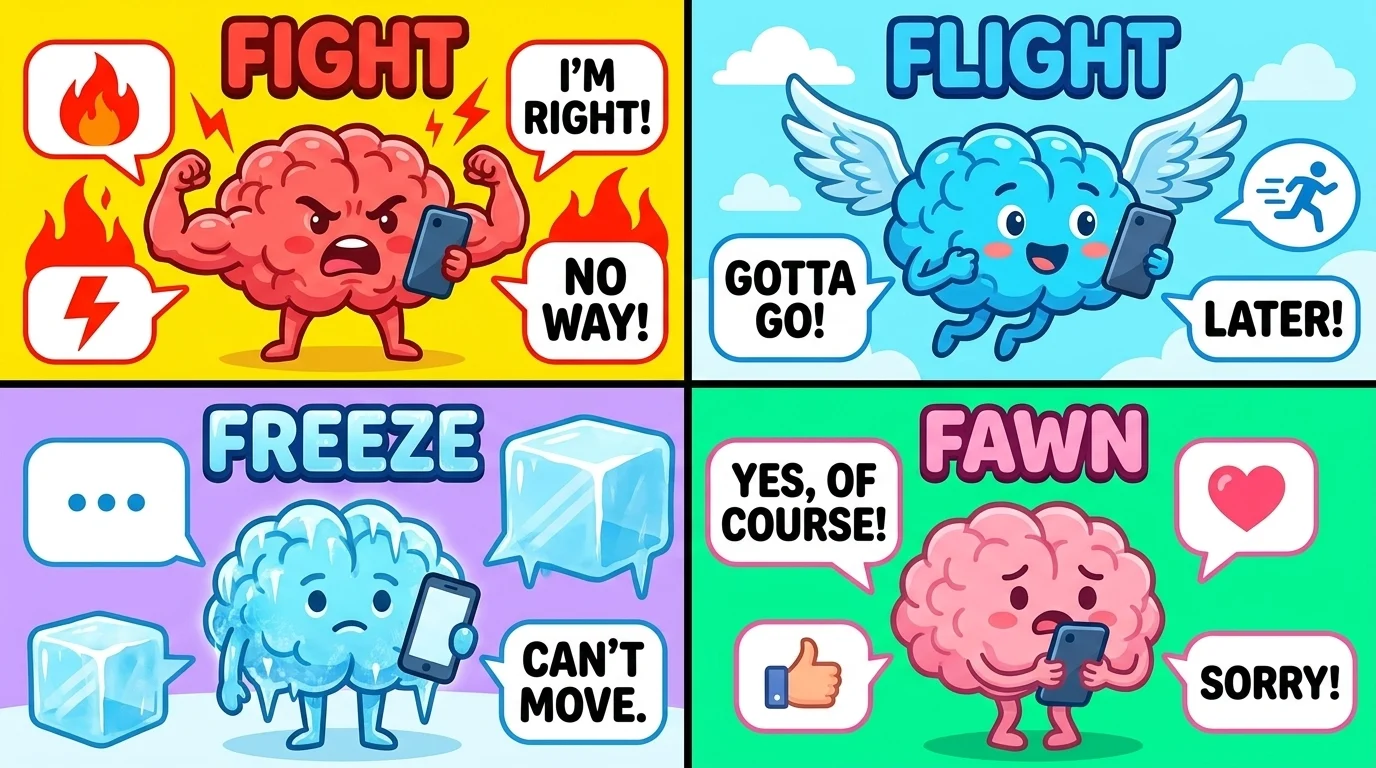
Trauma responses are automatic reactions your brain uses to protect you, like fight, flight, freeze, or fawn. Here are 5 top alternatives to say instead: “I need a minute,” “That caught me off guard,” “I’m not okay right now,” “Can we talk later,” or “I’m processing something.”
Ever been in a conversation and suddenly your brain just… logs out? Maybe you freeze mid-text, overshare in a DM, or laugh at the worst possible moment. That’s not you being weird. That’s your nervous system doing overtime.
Trauma responses show up everywhere: in group chats, job interviews, awkward dates, even when your mom asks a simple question. They’re your brain’s way of saying “we’ve been here before, and it wasn’t safe.”
Knowing how to name and respond to these moments changes everything. It helps you communicate, set boundaries, and maybe even laugh through the chaos. This guide gives you 150+ ready-to-use replies for every vibe, from funny to heartfelt.
Funny Responses to Trauma Responses
- “My brain said ‘nope’ before I could even respond.”
- Example: When you completely blank during a serious conversation.
- Meaning: A lighthearted way to explain dissociation without getting too heavy.
- “Sorry, my survival mode has terrible WiFi.”
- Example: When someone asks why you went quiet mid-chat.
- Meaning: Uses humor to describe emotional disconnection.
- “I was today years old when I realized I was fawning again.”
- Example: After agreeing to something you absolutely didn’t want to do.
- Meaning: Acknowledges people-pleasing patterns with self-awareness.
- “My fight or flight response chose ‘freeze’ and now I’m stuck.”
- Example: When you can’t make a simple decision under pressure.
- Meaning: Normalizes the freeze response in a funny way.
- “Plot twist: I’m not okay, but I’m hilarious about it.”
- Example: After crying and then making a joke immediately.
- Meaning: Shows you can hold both pain and humor at once.
- “My therapist is gonna hear about this one.”
- Example: When you realize you reacted in a very predictable pattern.
- Meaning: Acknowledges self-growth while keeping it real.
- “I overshared again, didn’t I? Classic me.”
- Example: After telling your Uber driver your entire life story.
- Meaning: Self-aware humor about fawn and oversharing tendencies.
- “That wasn’t a vibe check, that was a trauma check.”
- Example: When a casual question triggers a big reaction.
- Meaning: Playfully names how trauma shows up unexpectedly.
- “My red flag detector is beeping and I don’t know why.”
- Example: When you feel anxious around someone safe.
- Meaning: Describes hypervigilance with a funny twist.
- “I’m not ignoring you, I’m just buffering.”
- Example: When you go silent because your brain froze.
- Meaning: Makes the freeze response relatable and meme-worthy.
- “Trauma said ‘hey bestie’ and I said ‘not now.'”
- Example: When old patterns pop up at the worst time.
- Meaning: Personifies trauma to make it less intimidating.
- “I’m fine. My nervous system? Absolutely not.”
- Example: When you’re calm on the outside but spiraling inside.
- Meaning: Highlights the gap between appearance and internal experience.
Brutal (But Honest) Responses to Trauma Responses
- “I’m not okay, and that’s not up for debate.”
- Example: When someone keeps pushing you to “just get over it.”
- Meaning: Sets a firm boundary about your emotional reality.
- “Stop asking me why I’m quiet. I’m surviving.”
- Example: When someone demands an explanation for your withdrawal.
- Meaning: Reminds others that silence is sometimes self-preservation.
- “I don’t owe you a breakdown of my trauma.”
- Example: When someone gets nosy about your past.
- Meaning: Protects your privacy without guilt.
- “I’m not rude. I’m triggered and tired.”
- Example: When you snap and someone calls you mean.
- Meaning: Names the real reason behind your reaction.
- “You don’t get to decide what’s a big deal for me.”
- Example: When someone dismisses your feelings.
- Meaning: Validates your experience without apology.
- “I’m not distant. I’m protecting my peace.”
- Example: When you pull back from a draining situation.
- Meaning: Reframes withdrawal as a healthy choice.
- “I said I’m fine. Stop digging.”
- Example: When you’re not ready to talk and someone keeps pressing.
- Meaning: Reinforces your right to process privately.
- “My reaction isn’t the problem. The trigger is.”
- Example: When blamed for how you responded to something hurtful.
- Meaning: Redirects focus to the actual cause.
- “I don’t need fixing. I need space.”
- Example: When someone tries to “save” you.
- Meaning: Clarifies that support looks different than control.
- “I’m allowed to feel this. Even if it’s inconvenient for you.”
- Example: When your emotions make someone uncomfortable.
- Meaning: Centers your right to feel without shame.
- “That’s not overreacting. That’s my body keeping score.”
- Example: When someone says you’re being dramatic.
- Meaning: Explains trauma responses as biological, not dramatic.
- “I’m not broken. I’m rebuilding.”
- Example: When you’re in the messy middle of healing.
- Meaning: Reframes trauma recovery as strength, not weakness.
Flirty Responses to Trauma Responses
- “You make my nervous system feel safe. That’s rare.”
- Example: When you notice you’re calm around someone new.
- Meaning: A sweet way to show trust is building.
- “Usually I freeze, but you make me want to stay.”
- Example: When you’d normally pull away but don’t want to.
- Meaning: Shows vulnerability and attraction at once.
- “You’re the first person who didn’t make me want to run.”
- Example: After a date where you felt unexpectedly comfortable.
- Meaning: Highlights how special the connection feels.
- “I don’t fawn for just anyone, you know.”
- Example: When you catch yourself people-pleasing and want to joke about it.
- Meaning: Flirty way to acknowledge your patterns.
- “My guard is up, but you’re making a compelling case.”
- Example: When someone is breaking down your walls.
- Meaning: Playfully admits you’re starting to trust them.
- “You’re the plot twist my trauma didn’t see coming.”
- Example: When someone kind enters your life unexpectedly.
- Meaning: Romantic spin on healing through connection.
- “I’m not easy to get close to, but you’re doing something right.”
- Example: When you feel yourself opening up.
- Meaning: Acknowledges progress while staying honest.
- “You make me want to try. That’s terrifying and hot.”
- Example: When vulnerability feels exciting and scary.
- Meaning: Blends fear and attraction in a relatable way.
- “If I go quiet, it’s not you. It’s my brain being dramatic.”
- Example: When you need to explain a trauma response on a date.
- Meaning: Keeps things light while being honest.
- “You’re the safe space I didn’t know I needed.”
- Example: When someone consistently shows up for you.
- Meaning: Expresses deep appreciation in a flirty way.
- “I don’t let people in easily. Consider yourself special.”
- Example: When you’re actually letting someone close.
- Meaning: Confident and vulnerable at the same time.
- “My heart has trust issues, but you’re making it curious.”
- Example: When you’re cautiously hopeful about someone.
- Meaning: Shows you’re open despite past hurt.
Polite Responses to Trauma Responses
- “I appreciate you asking. I just need a moment.”
- Example: When someone checks in and you’re not ready to talk.
- Meaning: Politely sets a boundary while acknowledging their care.
- “Thank you for understanding. I’m still processing.”
- Example: When someone gives you space without judgment.
- Meaning: Shows gratitude while explaining your state.
- “I’m sorry if I seemed distant. I was regulating.”
- Example: After going quiet in a conversation.
- Meaning: Politely explains your behavior without oversharing.
- “I’d rather not get into it right now, but I’m okay.”
- Example: When someone asks about your well-being.
- Meaning: Respectfully declines while reassuring them.
- “I need some time to myself. I’ll reach out soon.”
- Example: When you’re overwhelmed and need to step back.
- Meaning: Communicates your needs clearly and kindly.
- “That caught me off guard. Can we pause?”
- Example: When a topic hits harder than expected.
- Meaning: Politely asks for a break without blame.
- “I’m not upset with you. I’m just having a moment.”
- Example: When your reaction worries someone.
- Meaning: Reassures them while honoring your feelings.
- “I’m working through something. Thanks for your patience.”
- Example: When you’re healing and it shows.
- Meaning: Acknowledges your process and appreciates support.
- “I’d love to talk, but I’m not in the right headspace.”
- Example: When someone wants to have a deep conversation.
- Meaning: Politely postpones without shutting them out.
- “I hear you. I just need to sit with this for a bit.”
- Example: When someone shares something that triggers you.
- Meaning: Shows you’re listening while protecting your energy.
- “Can we revisit this later? I want to be present.”
- Example: When you’re too drained to engage fully.
- Meaning: Prioritizes quality over pushing through.
- “I’m okay. Just navigating some old stuff.”
- Example: When you don’t want to explain but want to be honest.
- Meaning: Keeps it vague but truthful.
Professional Responses to Trauma Responses
- “I need a brief break. I’ll be back shortly.”
- Example: When you’re triggered at work and need to reset.
- Meaning: Professional way to excuse yourself without explanation.
- “I’m managing something personal. My work won’t be affected.”
- Example: When a colleague notices you’re off.
- Meaning: Reassures professionalism while protecting privacy.
- “I’d prefer to keep that private, but I appreciate your concern.”
- Example: When a coworker gets too personal.
- Meaning: Sets a boundary politely in a work setting.
- “Let’s focus on the task. I’m here to contribute.”
- Example: When you want to redirect from personal questions.
- Meaning: Keeps things professional and on track.
- “I’m taking a mental health day. I’ll catch up tomorrow.”
- Example: When you need to prioritize your well-being.
- Meaning: Normalizes mental health in professional spaces.
- “I work better with clear expectations. Can we clarify?”
- Example: When ambiguity triggers anxiety.
- Meaning: Advocates for your needs in a productive way.
- “I need to step away for a few minutes. Please continue without me.”
- Example: When you feel a panic response coming on.
- Meaning: Handles the situation with grace and professionalism.
- “I’m not comfortable discussing that. Let’s move on.”
- Example: When someone crosses a line at work.
- Meaning: Firm but professional boundary-setting.
- “I’ll follow up when I’ve had time to think.”
- Example: When you need to process before responding.
- Meaning: Buys time without seeming uncooperative.
- “I’m prioritizing my well-being today. Thanks for understanding.”
- Example: When you need to put yourself first.
- Meaning: Confident and professional self-care.
- “Can we schedule this for another time? I want to give it full attention.”
- Example: When you’re not in the right headspace for a meeting.
- Meaning: Shows respect for the task and yourself.
- “I’m okay. Just being mindful of my capacity.”
- Example: When you’re managing triggers at work.
- Meaning: Professional way to say you’re pacing yourself.
Creative Responses to Trauma Responses
- “My brain has a mind of its own. Literally.”
- Example: When you react in a way you didn’t expect.
- Meaning: Playful way to describe automatic responses.
- “Plot twist: my nervous system wrote this script.”
- Example: When you realize you’re repeating an old pattern.
- Meaning: Creative spin on trauma responses feeling scripted.
- “I’m not ignoring you. I’m time-traveling to 2015.”
- Example: When a trigger sends you back mentally.
- Meaning: Describes flashbacks with humor and imagery.
- “My emotions have a mind of their own and they’re not listening.”
- Example: When feelings hit harder than expected.
- Meaning: Personifies emotions for a creative take.
- “I’m in my healing era. It’s messy but aesthetic.”
- Example: When you’re growing through trauma.
- Meaning: Reframes recovery as a trendy, relatable journey.
- “My comfort zone is a fortress. You’re lucky I opened the gate.”
- Example: When you let someone in.
- Meaning: Creative way to show trust is earned.
- “I’m not quiet. I’m writing a novel in my head.”
- Example: When you’re dissociating and someone notices.
- Meaning: Turns zoning out into something imaginative.
- “Trauma gave me trust issues. Therapy gave me sarcasm.”
- Example: When you joke about your healing journey.
- Meaning: Blends pain and humor creatively.
- “My body keeps receipts I never asked for.”
- Example: When physical symptoms show up from trauma.
- Meaning: Creative way to describe how the body remembers.
- “I’m not overthinking. I’m just thinking in 4D.”
- Example: When your mind spirals.
- Meaning: Playful spin on anxious thoughts.
- “My inner child is driving today. Buckle up.”
- Example: When you’re reacting from a younger part of you.
- Meaning: Creative framing of emotional regression.
- “I’m not a mess. I’m a masterpiece in progress.”
- Example: When you’re healing and it shows.
- Meaning: Empowering creative reframe.
Sarcastic Responses to Trauma Responses
- “Oh, I’m sorry. Did my trauma make you uncomfortable?”
- Example: When someone complains about your reactions.
- Meaning: Sarcastically calls out their lack of empathy.
- “Wow, thanks. I’ll add that to my collection of unsolicited advice.”
- Example: When someone tells you to “just move on.”
- Meaning: Uses sarcasm to reject dismissive comments.
- “Yes, because I chose to be like this. Totally.”
- Example: When someone implies you’re faking.
- Meaning: Sarcastic defense against invalidation.
- “Thanks for the diagnosis. Do you take insurance?”
- Example: When someone plays therapist without credentials.
- Meaning: Humorous way to shut down armchair psychology.
- “Oh, I’m sorry my survival instincts inconvenienced you.”
- Example: When your reactions bother someone.
- Meaning: Sarcastically points out their selfishness.
- “Right, because I woke up and chose chaos.”
- Example: When blamed for emotional reactions.
- Meaning: Sarcastic way to say it’s not a choice.
- “I’ll just add that to the list of things I’m not doing right.”
- Example: When criticized for your healing process.
- Meaning: Sarcasm highlighting unfair expectations.
- “Cool. I’ll just stop having trauma. Thanks for the tip.”
- Example: When given obvious advice.
- Meaning: Sarcastic response to oversimplified solutions.
- “Oh, you’re right. Let me just flip the switch.”
- Example: When someone thinks you can turn off symptoms.
- Meaning: Points out how unrealistic that is.
- “Yes, I’m dramatic. My trauma loves an audience.”
- Example: When accused of exaggerating.
- Meaning: Sarcastic defense against gaslighting.
- “Fantastic. Another thing to unpack in therapy.”
- Example: When a new trigger appears.
- Meaning: Sarcasm mixed with self-awareness.
- “I’d love to be normal, but the plot had other plans.”
- Example: When life feels like a dramatic movie.
- Meaning: Sarcastic but relatable take on trauma.
Cute Responses to Trauma Responses
- “My heart is soft, but it’s learning to trust again.”
- Example: When you’re opening up after being hurt.
- Meaning: Sweet way to show growth and hope.
- “I’m a little fragile, but I’m also really brave.”
- Example: When you’re facing something scary.
- Meaning: Balances vulnerability with strength.
- “Thanks for being patient with my healing heart.”
- Example: When someone supports you through triggers.
- Meaning: Shows gratitude in a warm way.
- “I’m not perfect, but I’m trying. That counts, right?”
- Example: When you’re doing your best.
- Meaning: Sweet and encouraging self-talk.
- “My trauma made me soft. And I think that’s beautiful.”
- Example: When you embrace your sensitive side.
- Meaning: Reframes sensitivity as a gift.
- “You’re the safe place I’ve been looking for.”
- Example: When someone makes you feel secure.
- Meaning: Cute way to express trust.
- “I’m learning to let people in. You’re one of them.”
- Example: When you’re building closeness.
- Meaning: Shows progress in a sweet way.
- “My inner child says thank you for being kind.”
- Example: When someone shows you gentleness.
- Meaning: Acknowledges your younger self with warmth.
- “I’m a work in progress, but I’m a pretty cute one.”
- Example: When you’re healing and want to own it.
- Meaning: Playful and self-loving.
- “You make my heart feel less heavy.”
- Example: When someone lightens your load.
- Meaning: Sweet way to show appreciation.
- “I’m not always okay, but I’m always trying.”
- Example: When you want to be honest but positive.
- Meaning: Encouraging and real.
- “Thanks for loving the parts of me I’m still learning to love.”
- Example: When someone accepts all of you.
- Meaning: Deep gratitude in a cute package.
Dramatic Responses to Trauma Responses
- “My entire nervous system just screamed. Thanks for that.”
- Example: When a small thing triggers a big reaction.
- Meaning: Dramatic way to explain the intensity.
- “I’m not fine. I’m a Shakespearean tragedy in sweatpants.”
- Example: When you’re overwhelmed but still self-aware.
- Meaning: Humorous and dramatic self-description.
- “Everything is fine. I’m just internally combusting.”
- Example: When you’re masking a meltdown.
- Meaning: Dramatic irony at its finest.
- “This is my villain origin story, and I’m okay with it.”
- Example: When you’re embracing your healing journey.
- Meaning: Turns pain into power dramatically.
- “I survived, but at what cost? Everything.”
- Example: When you’re exhausted from coping.
- Meaning: Over-the-top but relatable.
- “My soul just left the chat. Please leave a message.”
- Example: When you’re completely checked out.
- Meaning: Dramatic way to say you’re dissociating.
- “I’m not crying. I’m releasing emotional toxins.”
- Example: When you’re crying and want to joke about it.
- Meaning: Dramatic reframe of a normal release.
- “The audacity of my trauma to show up today.”
- Example: When triggers appear at the worst time.
- Meaning: Dramatic frustration with a funny twist.
- “I’m fine. The tears are just my soul detoxing.”
- Example: When you’re emotional but don’t want to explain.
- Meaning: Poetic and playful.
- “My brain is a horror movie and I forgot the remote.”
- Example: When intrusive thoughts take over.
- Meaning: Dramatic way to describe anxiety.
- “I’m not dramatic. I’m just passionate about my feelings.”
- Example: When someone calls you too much.
- Meaning: Owns your emotional intensity.
- “This isn’t a crisis. It’s a character development arc.”
- Example: When you’re going through it but growing.
- Meaning: Dramatic but empowering.
Chill and Casual Responses to Trauma Responses
- “Yeah, I’m good. Just needed a sec.”
- Example: When you regroup after a trigger.
- Meaning: Low-key way to explain without detail.
- “All good. Just vibing in my own world.”
- Example: When you’re a little checked out.
- Meaning: Casual and non-alarming.
- “I’m fine. Just had a moment. We’re cool.”
- Example: When someone notices you spacing out.
- Meaning: Reassures without overexplaining.
- “No worries. I just needed to reset.”
- Example: When you take a breather.
- Meaning: Chill way to say you’re managing.
- “I’m good, just operating on low battery.”
- Example: When you’re emotionally drained.
- Meaning: Relatable and casual.
- “Yeah, I get like that sometimes. It passes.”
- Example: When someone asks about your quietness.
- Meaning: Normalizes your experience casually.
- “I’m here. Just taking it easy today.”
- Example: When you’re managing your energy.
- Meaning: Low-pressure and honest.
- “It’s all good. I just need some chill time.”
- Example: When you step back to recharge.
- Meaning: Simple and clear.
- “I’m okay. Just rolling with it.”
- Example: When you’re handling a trigger in stride.
- Meaning: Laid-back and confident.
- “Not a big deal. Just my brain being extra.”
- Example: When you have a small reaction.
- Meaning: Casual humor about mental stuff.
- “I’m fine. Just needed a brain break.”
- Example: When you pause to process.
- Meaning: Relatable and easy to say.
- “We’re good. I’m just doing my thing.”
- Example: When you want to avoid a deep conversation.
- Meaning: Chill way to set a boundary.
Confident Responses to Trauma Responses
- “I’ve been through worse. I’ve got this.”
- Example: When facing a new challenge.
- Meaning: Shows resilience and self-belief.
- “My past doesn’t define me. My choices do.”
- Example: When someone tries to label you by your trauma.
- Meaning: Empowering and assertive.
- “I’m not damaged. I’m experienced.”
- Example: When you reframe your history.
- Meaning: Confident and self-affirming.
- “I know my triggers, and I know how to handle them.”
- Example: When you’re self-aware and prepared.
- Meaning: Shows growth and control.
- “I’m not afraid to feel. That’s my superpower.”
- Example: When you embrace emotional depth.
- Meaning: Owns vulnerability as strength.
- “I’ve survived 100% of my worst days. I’ll survive this too.”
- Example: When facing a tough moment.
- Meaning: Confident and motivational.
- “I don’t need saving. I need support.”
- Example: When someone tries to rescue you.
- Meaning: Clear about what you actually need.
- “I’m not broken. I’m built different.”
- Example: When you own your unique journey.
- Meaning: Confident and modern.
- “My healing is my responsibility. And I’m handling it.”
- Example: When you take ownership of your growth.
- Meaning: Shows maturity and strength.
- “I can handle this. I’ve handled worse.”
- Example: When a trigger shows up.
- Meaning: Reassuring and powerful.
- “I’m proud of how far I’ve come.”
- Example: When reflecting on your progress.
- Meaning: Confident self-recognition.
- “I’m not perfect, but I’m powerful.”
- Example: When you accept yourself fully.
- Meaning: Balanced confidence.
Emotional Responses to Trauma Responses
- “I’m not okay right now, and that’s okay.”
- Example: When you need to admit you’re struggling.
- Meaning: Honest and self-compassionate.
- “Some days are harder than others. Today is one of them.”
- Example: When someone asks how you’re doing.
- Meaning: Vulnerable and real.
- “I feel everything so deeply. It’s a blessing and a curse.”
- Example: When your emotions are intense.
- Meaning: Describes emotional sensitivity.
- “I’m tired of being strong all the time.”
- Example: When you need a break from coping.
- Meaning: Honest about emotional exhaustion.
- “I just need someone to sit with me. No words.”
- Example: When you need silent support.
- Meaning: Expresses the need for presence.
- “Sometimes I miss who I was before.”
- Example: When grieving your past self.
- Meaning: Acknowledges loss and healing.
- “I’m scared, but I’m still here.”
- Example: When facing fear but not giving up.
- Meaning: Brave and vulnerable.
- “I don’t always feel safe, but I’m learning.”
- Example: When trust is a work in progress.
- Meaning: Honest about the journey.
- “My heart hurts, but it’s still beating.”
- Example: When you’re in pain but surviving.
- Meaning: Poetic and emotional.
- “I’m processing a lot. Please be patient with me.”
- Example: When you need grace.
- Meaning: Honest request for understanding.
- “I wish I could turn it off, but I can’t.”
- Example: When symptoms feel overwhelming.
- Meaning: Vulnerable and relatable.
- “I’m doing my best. Even when it doesn’t look like it.”
- Example: When you’re struggling but trying.
- Meaning: Compassionate self-advocacy.
Sweet Responses to Trauma Responses
- “Thank you for being gentle with me.”
- Example: When someone handles you with care.
- Meaning: Warm gratitude.
- “You make me feel safe, and that means everything.”
- Example: When someone creates a safe space.
- Meaning: Deep appreciation.
- “I’m still learning to trust. Thanks for being patient.”
- Example: When trust is building slowly.
- Meaning: Sweet and honest.
- “Your kindness means more than you know.”
- Example: When someone shows up for you.
- Meaning: Genuine gratitude.
- “I’m glad you’re in my life.”
- Example: When someone supports your healing.
- Meaning: Simple and heartfelt.
- “You see me. That’s all I ever wanted.”
- Example: When someone truly understands.
- Meaning: Deep emotional connection.
- “I feel calmer when you’re around.”
- Example: When someone soothes your anxiety.
- Meaning: Sweet way to show trust.
- “Thanks for loving me through the messy parts.”
- Example: When someone accepts all of you.
- Meaning: Warm and grateful.
- “You’re my favorite safe person.”
- Example: When someone feels like home.
- Meaning: Sweet and intimate.
- “I appreciate you more than I can say.”
- Example: When words feel insufficient.
- Meaning: Heartfelt appreciation.
- “You make healing feel less lonely.”
- Example: When someone walks with you.
- Meaning: Sweet and supportive.
- “I’m softer because of you.”
- Example: When love helps you heal.
- Meaning: Tender and romantic.
Clever Responses to Trauma Responses
- “My brain has a security system. You just tripped it.”
- Example: When you react defensively.
- Meaning: Clever way to explain triggers.
- “I’m not overreacting. I’m appropriately reacting to my past.”
- Example: When someone dismisses your response.
- Meaning: Smart reframe of your experience.
- “Trauma is just uninvited character development.”
- Example: When you’re reflecting on growth.
- Meaning: Witty and insightful.
- “My nervous system doesn’t do ‘chill.’ It does ‘prepared.'”
- Example: When you’re always on edge.
- Meaning: Clever explanation of hypervigilance.
- “I don’t hold grudges. I hold receipts.”
- Example: When you remember everything.
- Meaning: Smart and sassy.
- “I’m not difficult. I’m discerning.”
- Example: When you have high standards for safety.
- Meaning: Reframes boundaries as wisdom.
- “My trust issues are just quality control.”
- Example: When you’re cautious with new people.
- Meaning: Clever and self-aware.
- “I’m not guarded. I’m selectively open.”
- Example: When you protect your energy.
- Meaning: Smart reframe.
- “Trauma taught me to read rooms. Now I just avoid the bad ones.”
- Example: When you’re hyperaware of vibes.
- Meaning: Clever take on hypervigilance.
- “I don’t do small talk. I do real talk or no talk.”
- Example: When you prefer depth over surface.
- Meaning: Smart boundary.
- “My intuition is just trauma with a PhD.”
- Example: When your gut is always right.
- Meaning: Clever and relatable.
- “I’m not complicated. I’m just well-documented.”
- Example: When someone says you’re hard to read.
- Meaning: Witty and self-aware.
FAQs
What does “trauma responses” mean?
Trauma responses are automatic reactions your brain and body have when reminded of past hurt. They include fight, flight, freeze, and fawn.
Are trauma responses flirty or emotional?
They can be either, depending on context. In relationships, they often show up as emotional reactions or protective behaviors.
Can I use these responses at work?
Yes. Stick to the professional section for safe, appropriate replies.
What if I say something I don’t mean?
It’s okay. Just be honest. You can say, “I was reacting, not thinking. Let me try again.”
Is it okay to joke about trauma responses?
Humor can help, but only if it feels right for you and doesn’t hurt others. Know your audience.
Conclusion
Trauma responses don’t have to run the conversation. With the right words, you can set boundaries, show vulnerability, and even make people laugh. Whether you’re texting a crush, replying to a coworker, or just trying to survive a group chat, having go-to responses makes all the difference.
Save this list. Share it with a friend. Try a few lines and see what works. You’re not alone, and you’re not broken. You’re human, healing, and honestly? That’s iconic.
