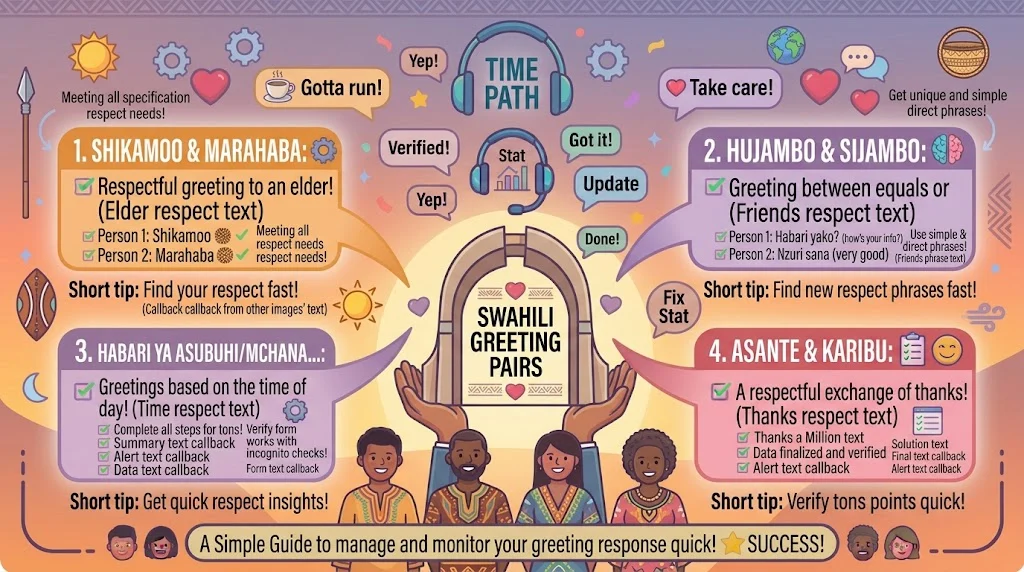
Swahili greetings are built on respect, warmth, and rhythm.
The safest replies are Nzuri asante, Sijambo, Poa, Marahaba, and Salama.
Swahili greetings and responses are the first thing people notice when you try the language. Maybe you are texting a friend in Dar es Salaam, replying to a coworker in Nairobi, or practicing before a trip to Zanzibar. A simple reply can show respect, warmth, or playful confidence in seconds.
The tricky part is matching the greeting to the person and the moment. Shikamoo needs Marahaba, Hujambo needs Sijambo, and Mambo needs Poa. Get the tone right and people light up. Get it wrong and you sound like a phrasebook.
Classic And Everyday Responses
- “Nzuri, asante.”
- Example: Use when someone asks Habari yako.
- Meaning: It means I am fine, thank you.
- “Sijambo.”
- Example: Use when someone greets you with Hujambo.
- Meaning: It means I have no problems.
- “Hatujambo.”
- Example: Use when a group is greeted with Hamjambo.
- Meaning: It means we are all fine.
- “Salama.”
- Example: Use when someone asks Salama?
- Meaning: It means peaceful or safe.
- “Poa.”
- Example: Use when a friend says Mambo?
- Meaning: It means cool or I am good.
- “Safi.”
- Example: Use when someone says Mambo vipi?
- Meaning: It means clean or doing well.
- “Freshi.”
- Example: Use when a friend texts Niaje?
- Meaning: It is casual slang for fresh or fine.
- “Marahaba.”
- Example: Use when an elder greets you with Shikamoo.
- Meaning: It accepts their respect with warmth.
- “Nimeamka vizuri.”
- Example: Use when someone asks Umeamkaje?
- Meaning: It means I woke up well.
- “Habari za asubuhi.”
- Example: Use when replying to a morning greeting.
- Meaning: It means good morning or how is your morning.
- “Habari za jioni.”
- Example: Use when replying to an evening greeting.
- Meaning: It means good evening or how is your evening.
- “Tutaonana.”
- Example: Use when ending a friendly conversation.
- Meaning: It means see you later.
Respectful Responses To Elders
- “Marahaba, asante.”
- Example: Use when an elder says Shikamoo to you.
- Meaning: It accepts the greeting with gratitude.
- “Marahaba, karibu.”
- Example: Use when welcoming an elder after Shikamoo.
- Meaning: It is warm and respectful.
- “Marahaba, mzee.”
- Example: Use when replying to an older man.
- Meaning: It adds respect to the reply.
- “Marahaba, mama.”
- Example: Use when replying to an older woman.
- Meaning: It is polite and familiar.
- “Nzuri, asante, mzee.”
- Example: Use when an elder asks Habari yako.
- Meaning: It answers with respect.
- “Salama, kaka.”
- Example: Use when greeting an older brother figure.
- Meaning: It is calm and respectful.
- “Poa, dada.”
- Example: Use when replying to an older sister figure.
- Meaning: It is friendly but polite.
- “Sijambo, mama.”
- Example: Use when an elder asks Hujambo.
- Meaning: It answers with courtesy.
- “Hatujambo, baba.”
- Example: Use when an elder greets the whole group.
- Meaning: It speaks for everyone respectfully.
- “Nimeamka vizuri, bibi.”
- Example: Use when a grandmother asks Umeamkaje.
- Meaning: It is gentle and respectful.
- “Asante kwa kunisalimia.”
- Example: Use when an elder takes time to greet you.
- Meaning: It means thank you for greeting me.
- “Karibu, mzee.”
- Example: Use when welcoming an elder into a space.
- Meaning: It is warm and respectful.
Casual Slang Responses
- “Poa poa.”
- Example: Use when a friend asks Mambo hapa?
- Meaning: It means everything is cool.
- “Freshi tu.”
- Example: Use when someone texts Vipi?
- Meaning: It means just fresh or all good.
- “Safi kabisa.”
- Example: Use when a friend says Niaje?
- Meaning: It means completely fine.
- “Nipo.”
- Example: Use when someone asks Upo?
- Meaning: It means I am here.
- “Naendelea.”
- Example: Use when someone asks Unaendelea?
- Meaning: It means I am getting on.
- “Mazuri.”
- Example: Use when someone asks Mambo mazuri?
- Meaning: It means things are good.
- “Fit.”
- Example: Use when a friend says Niaje bwana?
- Meaning: It is slang for I am good.
- “Poa kama kawa.”
- Example: Use when replying to Sasa?
- Meaning: It means cool as usual.
- “Freshi, wewe je?”
- Example: Use when you want to bounce the greeting back.
- Meaning: It means fresh, and you?
- “Safi, asante.”
- Example: Use when a friend greets you in a group chat.
- Meaning: It is quick and friendly.
- “Poa sana.”
- Example: Use when someone checks in on you.
- Meaning: It means very cool or very good.
- “Nipo sawa.”
- Example: Use when a friend asks if you are okay.
- Meaning: It means I am alright.
Friendly And Warm Responses
- “Nzuri sana, asante.”
- Example: Use when a friend asks how you are.
- Meaning: It is warm and appreciative.
- “Salama kabisa.”
- Example: Use when replying to a caring greeting.
- Meaning: It means completely peaceful.
- “Poa sana, rafiki.”
- Example: Use with a close friend.
- Meaning: It adds warmth to the reply.
- “Safi kabisa, asante.”
- Example: Use when someone checks in on you.
- Meaning: It is bright and grateful.
- “Nipo vizuri.”
- Example: Use when someone asks about your day.
- Meaning: It means I am doing well.
- “Asante kwa kunisalimia.”
- Example: Use when someone goes out of their way to greet you.
- Meaning: It shows you noticed their kindness.
- “Karibu, rafiki.”
- Example: Use when welcoming a friend.
- Meaning: It is open and warm.
- “Na wewe je?”
- Example: Use when you want to return the care.
- Meaning: It means and how about you?
- “Habari zako?”
- Example: Use when asking back after a greeting.
- Meaning: It means how is your news or how are you?
- “Mambo yako?”
- Example: Use with a close friend.
- Meaning: It means how are your things?
- “Tuko pamoja.”
- Example: Use when comforting a friend.
- Meaning: It means we are together.
- “Vizuri, asante.”
- Example: Use when replying to a gentle greeting.
- Meaning: It means well, thank you.
Funny And Playful Responses
- “Poa kama maji ya baridi.”
- Example: Use with a friend on a hot day.
- Meaning: It means cool as cold water.
- “Safi kama pamba.”
- Example: Use when you want a silly compliment.
- Meaning: It means clean as cotton.
- “Freshi kama mkate wa asubuhi.”
- Example: Use in a light group chat.
- Meaning: It means fresh as morning bread.
- “Poa lakini nina njaa.”
- Example: Use when a friend asks how you are.
- Meaning: It means cool, but I am hungry.
- “Nzuri, lakini kaunta ya kahawa?”
- Example: Use when you need coffee first.
- Meaning: It is a playful way to say I need coffee.
- “Sijambo, lakini simu yangu inalia.”
- Example: Use when your phone keeps buzzing.
- Meaning: It means I am fine, but my phone is crying.
- “Salama, lakini nina kazi.”
- Example: Use when you are buried in tasks.
- Meaning: It means peaceful, but I have work.
- “Freshi, lakini nina usingizi.”
- Example: Use in a sleepy text.
- Meaning: It means fresh, but I am sleepy.
- “Poa, lakini niletee chai.”
- Example: Use with a close friend.
- Meaning: It means cool, but bring me tea.
- “Nipo, lakini nina haraka.”
- Example: Use when you are rushing.
- Meaning: It means I am here, but I am in a hurry.
- “Mzima, asante, lakini nina njaa.”
- Example: Use when someone asks if you are well.
- Meaning: It is healthy but hungry energy.
- “Poa, lakini nina mambo mengi.”
- Example: Use when life is busy.
- Meaning: It means cool, but I have a lot going on.
Travel And Tourist Responses
- “Jambo, asante.”
- Example: Use when a local greets you with Jambo.
- Meaning: It is a friendly tourist reply.
- “Habari, nzuri.”
- Example: Use when someone asks Habari.
- Meaning: It means hello, I am fine.
- “Asante, rafiki.”
- Example: Use when a local welcomes you.
- Meaning: It means thank you, friend.
- “Karibu, asante.”
- Example: Use when someone says Karibu to you.
- Meaning: It is polite and warm.
- “Poa, asante sana.”
- Example: Use when a guide greets you casually.
- Meaning: It means cool, thank you very much.
- “Salama, asante.”
- Example: Use when someone asks Salama?
- Meaning: It is calm and respectful.
- “Nzuri, na wewe?”
- Example: Use when you want to keep the chat going.
- Meaning: It means fine, and you?
- “Sijambo, asante.”
- Example: Use when someone greets you with Hujambo.
- Meaning: It means I am fine, thanks.
- “Hatujambo, karibu.”
- Example: Use when greeting a group with you.
- Meaning: It speaks for the group warmly.
- “Tutaonana, asante.”
- Example: Use when leaving a shop or tour.
- Meaning: It means see you, thanks.
- “Kwaheri, asante.”
- Example: Use when saying goodbye to a host.
- Meaning: It is polite and grateful.
- “Marahaba, asante.”
- Example: Use when an elder greets you with Shikamoo.
- Meaning: It accepts the respect with thanks.
Formal And Professional Responses
- “Habari za asubuhi, nzuri.”
- Example: Use when replying to a morning greeting at work.
- Meaning: It is polished and polite.
- “Habari za mchana, salama.”
- Example: Use in an afternoon meeting.
- Meaning: It is calm and professional.
- “Habari za jioni, nzuri.”
- Example: Use when ending a work call.
- Meaning: It is warm but formal.
- “Nzuri, asante kwa kuuliza.”
- Example: Use with a client or colleague.
- Meaning: It means fine, thanks for asking.
- “Salama, asante.”
- Example: Use in a formal email reply.
- Meaning: It is respectful and brief.
- “Sijambo, asante.”
- Example: Use when a coworker greets you.
- Meaning: It is friendly and proper.
- “Tuko salama, asante.”
- Example: Use when speaking for a team.
- Meaning: It means we are fine, thank you.
- “Nipo vizuri, asante.”
- Example: Use in a professional check-in.
- Meaning: It is clear and courteous.
- “Asante kwa salamu zako.”
- Example: Use when someone sends kind greetings.
- Meaning: It means thanks for your greetings.
- “Karibu, asante.”
- Example: Use when welcoming a colleague.
- Meaning: It is warm and appropriate.
- “Tutaonana, kwaheri.”
- Example: Use when leaving a work event.
- Meaning: It is a polite goodbye.
- “Na wewe pia, asante.”
- Example: Use when returning a formal greeting.
- Meaning: It means and you too, thank you.
Quick And Short Responses
- “Nzuri.”
- Example: Use in a fast text reply.
- Meaning: It means fine.
- “Salama.”
- Example: Use when you want a calm reply.
- Meaning: It means peaceful.
- “Poa.”
- Example: Use with friends.
- Meaning: It means cool.
- “Safi.”
- Example: Use in a quick DM.
- Meaning: It means clean or good.
- “Sijambo.”
- Example: Use when someone says Hujambo.
- Meaning: It means I am fine.
- “Hatujambo.”
- Example: Use for a group reply.
- Meaning: It means we are fine.
- “Freshi.”
- Example: Use in casual slang.
- Meaning: It means fresh or good.
- “Marahaba.”
- Example: Use when an elder says Shikamoo.
- Meaning: It accepts the respect.
- “Vizuri.”
- Example: Use in a gentle reply.
- Meaning: It means well or good.
- “Asante.”
- Example: Use when someone greets you kindly.
- Meaning: It means thank you.
- “Karibu.”
- Example: Use when welcoming someone.
- Meaning: It means welcome.
- “Kwaheri.”
- Example: Use when leaving.
- Meaning: It means goodbye.
Morning And Evening Responses
- “Habari za asubuhi, nzuri.”
- Example: Use when someone says good morning.
- Meaning: It answers the morning greeting.
- “Nimeamka vizuri, asante.”
- Example: Use when asked how you woke up.
- Meaning: It means I woke up well, thanks.
- “Asubuhi njema, asante.”
- Example: Use when replying to a warm morning wish.
- Meaning: It means good morning, thank you.
- “Habari za mchana, salama.”
- Example: Use after lunch.
- Meaning: It is a calm afternoon reply.
- “Mchana mwema, asante.”
- Example: Use when someone wishes you a good afternoon.
- Meaning: It is polite and warm.
- “Habari za jioni, nzuri.”
- Example: Use when the sun starts to set.
- Meaning: It answers an evening greeting.
- “Jioni njema, asante.”
- Example: Use with a coworker at the end of the day.
- Meaning: It means good evening, thank you.
- “Usiku mwema, asante.”
- Example: Use when someone wishes you a good night.
- Meaning: It is a gentle night reply.
- “Lala salama, asante.”
- Example: Use before bed.
- Meaning: It means sleep peacefully, thank you.
- “Habari za usiku, salama.”
- Example: Use in a late-night text.
- Meaning: It is a calm night reply.
- “Alfajiri njema, asante.”
- Example: Use at dawn.
- Meaning: It means good dawn, thank you.
- “Asante, na wewe pia.”
- Example: Use when returning any time-based greeting.
- Meaning: It means thanks, and you too.
Goodbye And Farewell Responses
- “Kwaheri.”
- Example: Use when leaving a shop.
- Meaning: It means goodbye.
- “Tutaonana.”
- Example: Use with a friend.
- Meaning: It means we will see each other.
- “Kwaheri ya kuonana.”
- Example: Use when you plan to meet again.
- Meaning: It means goodbye until we see each other.
- “Baadaye.”
- Example: Use in a casual text.
- Meaning: It means later.
- “Kwaheri, asante.”
- Example: Use when leaving a kind host.
- Meaning: It is grateful goodbye.
- “Tutaonana kesho.”
- Example: Use when you will meet tomorrow.
- Meaning: It means see you tomorrow.
- “Lala salama.”
- Example: Use when saying goodnight.
- Meaning: It means sleep peacefully.
- “Safiri salama.”
- Example: Use when someone is traveling.
- Meaning: It means travel safely.
- “Kwaheri, rafiki.”
- Example: Use with a close friend.
- Meaning: It is a warm goodbye.
- “Tutaonana hivi karibuni.”
- Example: Use when you hope to meet soon.
- Meaning: It means see you soon.
- “Kwaheri, mzee.”
- Example: Use when leaving an elder.
- Meaning: It is a respectful goodbye.
- “Baadaye, dada.”
- Example: Use with an older sister figure.
- Meaning: It is a friendly farewell.
Polite And Grateful Responses
- “Asante sana.”
- Example: Use when someone greets you warmly.
- Meaning: It means thank you very much.
- “Asante kwa kunisalimia.”
- Example: Use when someone takes time to greet you.
- Meaning: It means thanks for greeting me.
- “Karibu.”
- Example: Use when someone thanks you.
- Meaning: It means welcome.
- “Asante, na wewe pia.”
- Example: Use when returning a kind wish.
- Meaning: It means thanks, and you too.
- “Nashukuru.”
- Example: Use in a formal reply.
- Meaning: It means I am grateful.
- “Asante kwa salamu.”
- Example: Use when someone sends greetings.
- Meaning: It means thanks for the greetings.
- “Karibu tena.”
- Example: Use when welcoming someone back.
- Meaning: It means welcome again.
- “Asante, rafiki.”
- Example: Use with a friend.
- Meaning: It is warm and simple.
- “Nashukuru sana.”
- Example: Use when you feel deeply grateful.
- Meaning: It means I am very grateful.
- “Asante, mzee.”
- Example: Use with an elder.
- Meaning: It is respectful gratitude.
- “Asante, dada.”
- Example: Use with an older sister figure.
- Meaning: It is warm and polite.
- “Asante, kaka.”
- Example: Use with an older brother figure.
- Meaning: It is friendly and respectful.
Confident And Cool Responses
- “Poa, nipo.”
- Example: Use when a friend checks in.
- Meaning: It means cool, I am here.
- “Freshi, asante.”
- Example: Use in a casual chat.
- Meaning: It means fresh, thanks.
- “Safi, nipo.”
- Example: Use when someone asks if you are around.
- Meaning: It means good, I am here.
- “Mzima, asante.”
- Example: Use when someone asks about your health.
- Meaning: It means healthy, thanks.
- “Nipo vizuri, asante.”
- Example: Use in a calm reply.
- Meaning: It means I am well, thanks.
- “Salama, nipo.”
- Example: Use when you want a smooth reply.
- Meaning: It means peaceful, I am here.
- “Nzuri, nipo.”
- Example: Use in a quick text.
- Meaning: It means fine, I am here.
- “Poa kabisa.”
- Example: Use with close friends.
- Meaning: It means completely cool.
- “Freshi kabisa.”
- Example: Use in a trendy reply.
- Meaning: It means completely fresh.
- “Safi kabisa.”
- Example: Use when you feel great.
- Meaning: It means completely fine.
- “Nipo sawa.”
- Example: Use when someone worries about you.
- Meaning: It means I am alright.
- “Tuko poa.”
- Example: Use when speaking for a group.
- Meaning: It means we are cool.
Text And DM Responses
- “Poa, asante.”
- Example: Use when a friend texts Mambo?
- Meaning: It is quick and friendly.
- “Nzuri, na wewe?”
- Example: Use in a DM.
- Meaning: It keeps the chat going.
- “Sijambo, asante.”
- Example: Use when someone texts Hujambo.
- Meaning: It is polite and short.
- “Freshi, wewe je?”
- Example: Use in a casual text.
- Meaning: It means fresh, and you?
- “Salama, asante.”
- Example: Use when replying to a check-in.
- Meaning: It is calm and kind.
- “Poa sana.”
- Example: Use in a quick reply.
- Meaning: It is warm and easy.
- “Nipo, asante.”
- Example: Use when someone asks if you are around.
- Meaning: It means I am here, thanks.
- “Safi, asante.”
- Example: Use in a group chat.
- Meaning: It is short and bright.
- “Marahaba, asante.”
- Example: Use when an elder texts Shikamoo.
- Meaning: It is respectful and grateful.
- “Tutaonana.”
- Example: Use when ending a text chat.
- Meaning: It means see you later.
- “Asante kwa text.”
- Example: Use when someone checks in.
- Meaning: It means thanks for the text.
- “Karibu, asante.”
- Example: Use when someone thanks you first.
- Meaning: It is warm and polite.
Clever And Cultural Responses
- “Shikamoo, Marahaba.”
- Example: Use when practicing the elder greeting pair.
- Meaning: It shows respect and acceptance.
- “Hujambo, Sijambo.”
- Example: Use when learning the classic question and answer.
- Meaning: It means I have no problem.
- “Hamjambo, Hatujambo.”
- Example: Use when greeting a group.
- Meaning: It means we are all fine.
- “Habari yako, Nzuri.”
- Example: Use in a first Swahili lesson.
- Meaning: It answers how are you with fine.
- “Mambo vipi, Poa.”
- Example: Use with younger friends.
- Meaning: It is a casual cool reply.
- “Umeamkaje, Nimeamka vizuri.”
- Example: Use in the morning.
- Meaning: It answers how you woke up.
- “Salama, Salama.”
- Example: Use when you want a calm exchange.
- Meaning: It mirrors peace with peace.
- “Niaje, Freshi.”
- Example: Use in urban slang.
- Meaning: It is a relaxed city reply.
- “Vipi, Safi.”
- Example: Use with a close friend.
- Meaning: It is short and smooth.
- “Karibu, Asante.”
- Example: Use when someone welcomes you.
- Meaning: It is polite and warm.
- “Kwaheri, Tutaonana.”
- Example: Use when leaving a friendly place.
- Meaning: It means goodbye, see you.
- “Asante, Karibu.”
- Example: Use when someone thanks you.
- Meaning: It means thank you, you are welcome.
Beginner-Friendly Responses
- “Nzuri, asante.”
- Example: Use as your first safe reply.
- Meaning: It means I am fine, thank you.
- “Sijambo.”
- Example: Use when someone says Hujambo.
- Meaning: It means I have no issues.
- “Poa.”
- Example: Use with friends and young people.
- Meaning: It means cool or good.
- “Safi.”
- Example: Use when you want a simple reply.
- Meaning: It means clean or fine.
- “Salama.”
- Example: Use in a calm setting.
- Meaning: It means peaceful.
- “Marahaba.”
- Example: Use when an elder says Shikamoo.
- Meaning: It accepts their respect.
- “Hatujambo.”
- Example: Use when you answer for a group.
- Meaning: It means we are fine.
- “Freshi.”
- Example: Use in casual slang.
- Meaning: It means fresh or good.
- “Nimeamka vizuri.”
- Example: Use in the morning.
- Meaning: It means I woke up well.
- “Tutaonana.”
- Example: Use when saying goodbye.
- Meaning: It means see you later.
- “Asante.”
- Example: Use whenever someone is kind.
- Meaning: It means thank you.
- “Karibu.”
- Example: Use when welcoming someone.
- Meaning: It means welcome.
FAQs
What does Shikamoo mean?
It is a respectful greeting used for elders. The reply is Marahaba.
What does Mambo vipi mean?
It is casual slang for how are things. Reply with Poa or Safi.
Can I use these greetings at work?
Yes. Stick to Habari za asubuhi, Nzuri asante, and Salama. Avoid slang unless coworkers use it first.
What if I do not mean the greeting?
Use a neutral reply like Asante, na wewe pia. It is polite without overpromising.
Is humor okay with Swahili greetings?
Yes with friends and peers. Keep it respectful with elders and in formal settings.
What is the safest reply for a beginner?
Nzuri asante works in most everyday situations.
Conclusion
Swahili greetings and responses are a small window into respect, warmth, and community. Whether you are saying Shikamoo to an elder, Poa to a friend, or Tutaonana at the end of the day, the right reply opens doors. You do not need perfect grammar to make someone smile.
You just need the right phrase and a little confidence. Save this list, share it with a friend learning Swahili, and try one new reply today. Karibu, and happy speaking.
