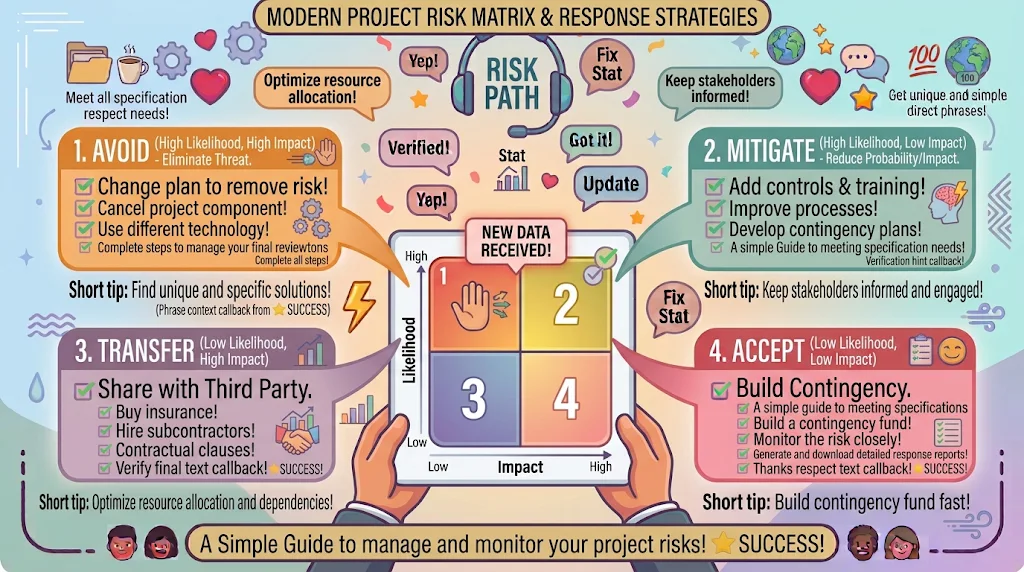
Risk responses are the planned actions you take to handle a risk before it becomes a problem, and the classic strategies are avoid, mitigate, transfer, accept, escalate, exploit, enhance, and share. Top alternatives: We are mitigating it, We will avoid it, We are transferring it, We accept it, We are escalating it.
Risk responses are the part of project planning where theory meets real life. You have identified the risk, scored it, and now someone in the meeting asks the question nobody wants to answer: so what are we actually going to do about it? That is where the right words matter. A vague answer builds anxiety. A clear one builds trust.
Whether you are replying to a stakeholder email, answering a question in a status call, or writing a note in your risk register, the tone you choose shapes how people feel about the project. This guide gives you 180+ ready-to-use lines for every strategy, situation, and mood, so you never freeze when the risk conversation starts.
Avoidance Risk Responses
- “We are changing the approach so the risk cannot occur at all.”
- Example: Use in a planning meeting when a risk is too serious to manage.
- Meaning: It removes the threat at the source.
- “We will drop that feature from this release to eliminate the exposure.”
- Example: Use when scope is driving most of the risk.
- Meaning: It trades scope for safety.
- “We are choosing a proven vendor instead of the experimental one.”
- Example: Use when supplier risk is high.
- Meaning: It avoids uncertainty upfront.
- “We will not proceed until the legal review is complete.”
- Example: Use when compliance risk is on the table.
- Meaning: It pauses work to prevent harm.
- “We are moving the launch date to avoid the holiday freeze.”
- Example: Use when timing creates operational risk.
- Meaning: It removes the conflict by rescheduling.
- “That path is closed. We are taking the safer route.”
- Example: Use when a shortcut carries real danger.
Meaning: It is clear and decisive.
- Example: Use when a shortcut carries real danger.
- “We are removing the third-party integration from scope.”
- Example: Use when dependency risk is too high.
- Meaning: It cuts the risk out entirely.
- “We will avoid signing anything until finance signs off.”
- Example: Use in procurement conversations.
- Meaning: It prevents contractual exposure.
- “The team is not travelling to that region this quarter.”
- Example: Use when safety risk is elevated.
- Meaning: It protects people first.
- “We are skipping the pilot and going straight to the stable build.”
- Example: Use when the pilot introduces new risk.
- Meaning: It avoids added complexity.
- “We are not pursuing that market. The risk profile is too high.”
- Example: Use in strategy discussions.
- Meaning: It is a clear strategic no.
- “That option is off the table. It creates more risk than value.”
- Example: Use when evaluating alternatives.
- Meaning: It closes the door firmly.
Mitigation Risk Responses
- “We are reducing the impact by adding a fallback process.”
- Example: Use when a critical system could fail.
- Meaning: It softens the blow if it happens.
- “We will run weekly checks to catch issues earlier.”
- Example: Use for quality risk.
- Meaning: It reduces the chance of surprise.
- “We are adding a buffer to the timeline to absorb delays.”
- Example: Use in schedule planning.
- Meaning: It creates breathing room.
- “We are training the team so the skill gap closes before launch.”
- Example: Use when capability risk is identified.
- Meaning: It lowers the probability of error.
- “We are splitting the rollout into smaller phases to contain issues.”
- Example: Use for high-risk deployments.
- Meaning: It limits the damage window.
- “We will run a dry run before the real event.”
- Example: Use before a big presentation or launch.
- Meaning: It exposes problems early.
- “We are tightening the acceptance criteria to reduce rework.”
- Example: Use in delivery planning.
- Meaning: It raises the bar to lower risk.
- “We will add a second reviewer to the approval step.”
- Example: Use when human error is a concern.
Meaning: It adds a safety net.
- Example: Use when human error is a concern.
- “We are increasing test coverage in the riskiest areas.”
- Example: Use in QA planning.
- Meaning: It targets effort where it matters.
- “We will monitor the metrics daily until the risk settles.”
- Example: Use during unstable periods.
- Meaning: It keeps you ahead of problems.
- “We are documenting the process so it does not depend on one person.”
- Example: Use when key-person risk exists.
- Meaning: It reduces fragility.
- “We will communicate early so nobody is caught off guard.”
- Example: Use for reputational risk.
- Meaning: It manages perception proactively.
Transfer Risk Responses
- “We are moving that risk to the vendor through the contract.”
- Example: Use when outsourcing a risky activity.
- Meaning: It shifts responsibility formally.
- “We will insure the asset so the financial impact is covered.”
- Example: Use for property or liability exposure.
- Meaning: It protects against loss.
- “We are buying the support plan so the vendor handles failures.”
- Example: Use for critical software.
- Meaning: It outsources the response.
- “The warranty covers that scenario, so we are covered.”
- Example: Use in procurement discussions.
Meaning: It points to existing protection.
- Example: Use in procurement discussions.
- “We will use a fixed-price contract so the cost risk sits with the supplier.”
- Example: Use in vendor negotiations.
- Meaning: It moves financial exposure.
- “We are partnering with a specialist who owns that risk area.”
- Example: Use when expertise is thin internally.
- Meaning: It shares the burden.
- “That liability is handled by the third party under the agreement.”
- Example: Use in legal reviews.
- Meaning: It clarifies ownership.
- “We will require the contractor to carry their own insurance.”
- Example: Use in contract terms.
- Meaning: It prevents cost landing on you.
- “We are outsourcing the compliance review to an external auditor.”
- Example: Use when internal capacity is low.
- Meaning: It brings in accountable expertise.
- “The cloud provider covers uptime under the SLA.”
- Example: Use in technical risk discussions.
- Meaning: It defines the protection.
- “We are transferring the logistics risk to the delivery partner.”
- Example: Use in operations planning.
- Meaning: It moves execution risk.
- “That risk sits with the bank now, not with us.”
- Example: Use in financial planning.
- Meaning: It is clear and final.
Acceptance Risk Responses
- “We are accepting this risk because the impact is low.”
- Example: Use when the cost of fixing outweighs the threat.
- Meaning: It is a conscious choice.
- “We will monitor it and act if it starts to grow.”
- Example: Use for minor ongoing risks.
- Meaning: It is accepted with oversight.
- “We are keeping a contingency budget for this one.”
- Example: Use when some exposure is unavoidable.
- Meaning: It is accepted with a safety net.
- “That risk is within our tolerance, so we are proceeding.”
- Example: Use in governance meetings.
- Meaning: It references agreed limits.
- “We accept it and move on. The upside is worth it.”
- Example: Use in opportunity-focused decisions.
- Meaning: It balances risk and reward.
- “We are not acting on this yet. It is low priority.”
- Example: Use in a risk register review.
- Meaning: It defers action consciously.
- “We will document it and revisit next quarter.”
- Example: Use for slow-moving risks.
- Meaning: It keeps it visible.
- “The team knows about it and is comfortable with it.”
- Example: Use when the risk is understood.
- Meaning: It shows informed acceptance.
- “We are accepting the small delay to protect quality.”
- Example: Use in trade-off discussions.
- Meaning: It names the trade-off.
- “We will absorb the cost if it happens. It is manageable.”
- Example: Use in budget conversations.
- Meaning: It is honest about impact.
- “That is a known risk and it is on our watch list.”
- Example: Use when asked in a status meeting.
- Meaning: It is tracked and owned.
- “We are okay with this for now. Revisit if conditions change.”
- Example: Use when circumstances may shift.
- Meaning: It is conditional acceptance.
Escalation Risk Responses
- “This is above my authority. I am escalating it to the sponsor.”
- Example: Use when the risk exceeds your mandate.
- Meaning: It follows proper governance.
- “We are raising this to leadership today.”
- Example: Use for high-impact risks.
- Meaning: It moves it to where it belongs.
- “I have flagged it to the steering committee for a decision.”
- Example: Use when a call needs senior input.
- Meaning: It shows accountability.
- “This needs a cross-team decision, so I am looping in the leads.”
- Example: Use when the risk spans departments.
- Meaning: It avoids silo decisions.
- “I am escalating because the timeline impact is now significant.”
- Example: Use when conditions worsen.
- Meaning: It explains the trigger.
- “We are handing this to risk and compliance for review.”
- Example: Use for regulatory exposure.
- Meaning: It routes to specialists.
- “I have raised it in the risk log for visibility.”
- Example: Use in routine reporting.
- Meaning: It creates a record.
- “This is now a board-level item.”
- Example: Use for severe risks.
- Meaning: It signals seriousness.
- “I am escalating so we can get a decision this week.”
- Example: Use when delay is costly.
- Meaning: It sets urgency.
- “We are asking the client to decide on the trade-off.”
- Example: Use when scope and risk clash.
- Meaning: It shares ownership.
- “That call belongs to the project board, not to us.”
- Example: Use when asked to decide beyond scope.
- Meaning: It is clear and correct.
- “I am raising it early so nobody is surprised later.”
- Example: Use in proactive reporting.
- Meaning: It builds trust.
Exploit Opportunity Responses
- “We are going all in on this opportunity while conditions are right.”
- Example: Use when an upside risk appears.
- Meaning: It pursues the gain deliberately.
- “We are assigning the best people to maximise this win.”
- Example: Use for a high-value chance.
- Meaning: It invests resources where they count.
- “We are accelerating the schedule to capture the market first.”
- Example: Use in competitive situations.
- Meaning: It turns speed into advantage.
- “We will double the scope because demand is stronger than expected.”
- Example: Use when early results are strong.
- Meaning: It scales with confidence.
- “We are locking in the price before it rises.”
- Example: Use in procurement.
- Meaning: It captures a favourable window.
- “We are turning this into a flagship case study.”
- Example: Use when a result exceeds targets.
- Meaning: It converts success into marketing.
- “We will expand the pilot to other teams immediately.”
- Example: Use when the trial performs well.
- Meaning: It spreads the benefit.
- “We are hiring now while the talent market is favourable.”
- Example: Use in workforce planning.
- Meaning: It takes advantage of timing.
- “We are fast-tracking the approval to beat the competitor.”
- Example: Use in product launches.
- Meaning: It seizes the moment.
- “We will increase the marketing spend because demand is spiking.”
- Example: Use when traction appears.
- Meaning: It amplifies a good thing.
- “We are negotiating a longer contract while we have leverage.”
- Example: Use in renewals.
- Meaning: It locks in an advantage.
- “We are making this the centrepiece of the roadmap.”
- Example: Use when an opportunity is strategic.
- Meaning: It commits fully.
Enhance Opportunity Responses
- “We are adding resources to increase the chance of success.”
- Example: Use when an opportunity needs a push.
- Meaning: It improves the odds.
- “We will bring in a specialist to strengthen the outcome.”
- Example: Use for a high-value project.
- Meaning: It boosts quality.
- “We are increasing the budget to raise the impact.”
- Example: Use when returns look strong.
- Meaning: It enhances the upside.
- “We are running an extra pilot to make the launch smoother.”
- Example: Use before a big release.
- Meaning: It improves readiness.
- **We are pairing the junior team with a mentor to lift performance.
- Example: Use in capability building.
- Meaning: It raises the ceiling.
- “We will test two versions so we learn faster.”
- Example: Use in marketing campaigns.
- Meaning: It improves learning speed.
- “We are adding a partner to widen the reach.”
- Example: Use when distribution is limited.
- Meaning: It grows the opportunity.
- “We will extend the timeline slightly to improve quality.”
- Example: Use in delivery planning.
- Meaning: It enhances the result.
- “We are doubling down on what is already working.”
- Example: Use when early signs are positive.
- Meaning: It amplifies strengths.
- “We are adding automation so the benefit scales.”
- Example: Use in process improvement.
- Meaning: It makes the gain repeatable.
- “We will increase the frequency of reviews to keep momentum.”
- Example: Use in fast-moving projects.
- Meaning: It sustains the upside.
- “We are upgrading the tooling to raise the success rate.”
- Example: Use in technical planning.
- Meaning: It improves reliability.
Share Risk Responses
- “We are sharing this risk with a partner under a joint agreement.”
- Example: Use in a strategic alliance.
- Meaning: It splits the exposure.
- “We will co-fund the mitigation with the client.”
- Example: Use when both sides benefit.
- Meaning: It distributes the cost.
- “The consortium will carry this risk together.”
- Example: Use in multi-party projects.
- Meaning: It spreads responsibility.
- “We are splitting the scope so both teams own part of the risk.”
- Example: Use in joint delivery.
- Meaning: It creates shared ownership.
- “We will run a joint contingency pool with the vendor.”
- Example: Use in long-term contracts.
- Meaning: It shares the safety net.
- “We are sharing the opportunity with a partner to grow faster.”
- Example: Use when an upside is too big alone.
- Meaning: It trades control for reach.
- “Both parties will review the risk monthly together.”
- Example: Use in partnership governance.
- Meaning: It keeps shared oversight.
- “We are co-investing in the pilot to share the upside.”
- Example: Use in innovation projects.
- Meaning: It splits both risk and reward.
- “The risk is joint and so is the reward.”
- Example: Use in negotiation talks.
- Meaning: It is fair and clear.
- “We will share the data so both teams can respond faster.”
- Example: Use in operational partnerships.
- Meaning: It improves joint response.
- “We are dividing the work so neither side is overloaded.”
- Example: Use in collaborative delivery.
- Meaning: It keeps things balanced.
- “Let us agree on who owns what before we start.”
- Example: Use at the beginning of a partnership.
- Meaning: It prevents confusion later.
Professional And Stakeholder Responses
- “The risk has been logged, assessed, and assigned an owner.”
- Example: Use in a status report.
- Meaning: It shows governance is in place.
- “Here is the mitigation plan, the owner, and the review date.”
- Example: Use in a steering committee update.
- Meaning: It gives complete information.
- “The current risk rating is medium and trending down.”
- Example: Use in weekly reporting.
- Meaning: It is data-led.
- “We are within the agreed risk appetite for this phase.”
- Example: Use in governance discussions.
- Meaning: It references agreed limits.
- “The contingency plan is ready and the team knows the trigger.”
- Example: Use before a high-risk event.
- Meaning: It shows readiness.
- “I will update the register by end of day so everyone has visibility.”
- Example: Use when asked for documentation.
- Meaning: It is accountable.
- “The response strategy is mitigation, with escalation if it worsens.”
- Example: Use in a formal review.
- Meaning: It explains the layered approach.
- “We are tracking this weekly until the exposure reduces.”
- Example: Use for ongoing risks.
- Meaning: It shows monitoring.
- “The impact is contained to one workstream for now.”
- Example: Use when reporting scope.
- Meaning: It is precise.
- “This risk does not change the overall project health rating.”
- Example: Use in executive updates.
- Meaning: It gives perspective.
- “We are documenting lessons learned as we respond.”
- Example: Use in post-incident reviews.
- Meaning: It improves future practice.
- “The response is agreed and the decision is recorded.”
- Example: Use when closing a risk item.
- Meaning: It provides closure.
Short And Quick Responses
- “We are mitigating it.”
- Example: Use in a quick status update.
- Meaning: It is clear and fast.
- “We are avoiding it.”
- Example: Use when the path is removed.
- Meaning: It is decisive.
- “We are transferring it.”
- Example: Use when a vendor takes it.
- Meaning: It is precise.
- “We are accepting it.”
- Example: Use for low-impact risks.
- Meaning: It is honest.
- “We are escalating it.”
- Example: Use when authority is needed.
- Meaning: It is responsible.
- “It is on the register.”
- Example: Use in a meeting.
- Meaning: It is tracked.
- “Owner assigned.”
- Example: Use in a follow-up note.
- Meaning: It is accountable.
- “Watching it closely.”
- Example: Use for monitored risks.
- Meaning: It is active oversight.
- “Plan is ready.”
- Example: Use before a risky event.
- Meaning: It is prepared.
- “Under control.”
- Example: Use in calm reporting.
- Meaning: It is reassuring.
- “Revisit next week.”
- Example: Use for slow risks.
- Meaning: It keeps it alive.
- “No action needed yet.”
- Example: Use for accepted risks.
- Meaning: It is clear.
Confident And Decisive Responses
- “I am taking ownership of this risk and the response.”
- Example: Use in a leadership meeting.
- Meaning: It shows accountability.
- “The decision is made. We are mitigating and moving on.”
- Example: Use when debate drags on.
- Meaning: It ends ambiguity.
- “We will not gamble on this. We are avoiding it.”
- Example: Use for serious exposure.
- Meaning: It is firm.
- “I am comfortable with the residual risk after mitigation.”
- Example: Use in approvals.
- Meaning: It is a considered call.
- “The plan covers the worst case, not just the likely case.”
- Example: Use in planning reviews.
- Meaning: It is thorough.
- “We are acting now, not after the problem shows up.”
- Example: Use in proactive reporting.
- Meaning: It is forward-looking.
- “I will report back with evidence, not just updates.”
- Example: Use when challenged.
- Meaning: It is confident.
- “That risk is closed. It is no longer a concern.”
- Example: Use in register reviews.
- Meaning: It is final.
- “We are choosing the safer option even if it costs more.”
- Example: Use in trade-off discussions.
- Meaning: It is principled.
- “If conditions change, I will escalate immediately.”
- Example: Use in status commitments.
- Meaning: It is reliable.
- “The trigger point is clear and the team knows it.”
- Example: Use for contingency planning.
- Meaning: It is prepared.
- “We are ahead of this. That is the point of planning.”
- Example: Use in a calm update.
- Meaning: It builds confidence.
Empathetic And People-Focused Responses
- “The team’s wellbeing is the first risk we are managing here.”
- Example: Use when workload is unsustainable.
- Meaning: It puts people first.
- “We are reducing the load before it turns into burnout.”
- Example: Use when capacity risk appears.
- Meaning: It is preventive.
- “I know this feels uncertain. Here is exactly what we are doing.”
- Example: Use in a team briefing.
- Meaning: It calms with clarity.
- “Please raise concerns early. That is how we catch risks before they grow.”
- Example: Use in a team meeting.
- Meaning: It invites honesty.
- “We are not blaming anyone. We are solving the problem.”
- Example: Use after an incident.
- Meaning: It builds psychological safety.
- “Thank you for flagging this. It took courage.”
- Example: Use when someone reports a risk.
- Meaning: It rewards transparency.
- “We will support the person affected, not just the process.”
- Example: Use in people-related risk.
- Meaning: It is humane.
- “Take the break. The risk will still be here tomorrow.”
- Example: Use when someone is exhausted.
- Meaning: It prioritises health.
- “No one is expected to carry this alone.”
- Example: Use in a difficult phase.
- Meaning: It builds solidarity.
- “We will communicate often so nobody feels in the dark.”
- Example: Use during uncertainty.
- Meaning: It builds trust.
- “Your concerns are valid. Let us build the response together.”
- Example: Use in a team discussion.
- Meaning: It is collaborative.
- “We will check in on the team, not just the deliverables.”
- Example: Use in a project review.
- Meaning: It is caring.
Beginner-Friendly Responses
- “A risk response is just the action you choose after identifying a risk.”
- Example: Use when explaining to a new team member.
- Meaning: It is simple and clear.
- “There are a few standard options: avoid, mitigate, transfer, accept, and escalate.”
- Example: Use in a training session.
- Meaning: It gives the framework.
- “Start by asking what the impact would be if it happened.”
- Example: Use when coaching a junior.
- Meaning: It teaches prioritisation.
- “You do not need a complex plan. A clear owner and a review date work.”
- Example: Use when someone feels overwhelmed.
- Meaning: It simplifies the task.
- “Pick the cheapest response that gets the risk within tolerance.”
- Example: Use in a planning workshop.
- Meaning: It is practical advice.
- “If the cost of fixing it is higher than the impact, acceptance is fine.”
- Example: Use when debating options.
- Meaning: It gives a simple rule.
- “Write it down. A risk that is not recorded is just a worry.”
- Example: Use in a team review.
- Meaning: It builds good habits.
- “Ask the team what happened last time. That is your best data.”
- Example: Use when starting a new project.
- Meaning: It encourages learning.
- “You can always change the response later. Just start somewhere.”
- Example: Use when someone hesitates.
- Meaning: It removes perfectionism.
- “If it feels too big, break the risk into smaller pieces.”
- Example: Use when the list is overwhelming.
- Meaning: It makes it manageable.
- “Testing the plan once is worth more than a perfect document.”
- Example: Use in a project review.
- Meaning: It values action.
- “You are already doing the hard part by thinking ahead.”
- Example: Use as encouragement.
- Meaning: It builds confidence.
FAQs
What are risk responses?
They are the planned actions you take to handle a risk. The common strategies are avoid, mitigate, transfer, accept, escalate, exploit, enhance, and share.
How do I choose the right risk response?
Look at the likelihood, the impact, and the cost of the response. Pick the option that brings the risk within your tolerance for the least effort.
What is the difference between mitigation and avoidance?
Avoidance removes the risk entirely. Mitigation reduces either the chance of it happening or the damage if it does.
When should I escalate a risk?
Escalate when the risk is beyond your authority, affects other teams, or needs a decision at a higher level.
Is accepting a risk the same as ignoring it?
No. Acceptance is a conscious, documented decision. Ignoring is a failure to act.
Can I use more than one response for a single risk?
Yes. Many risks need a primary strategy plus escalation or contingency if conditions change.
Conclusion
Risk responses are where good planning shows itself. Anyone can list risks. The people who get trusted are the ones who name the response, assign the owner, and follow through. Whether you are mitigating, avoiding, transferring, accepting, or escalating, the key is clarity and consistency.
Save this guide, share it with your project team, and come back before every status meeting. Your calm, clear answer is what turns a nervous room into a confident one. Now go own that risk register.
