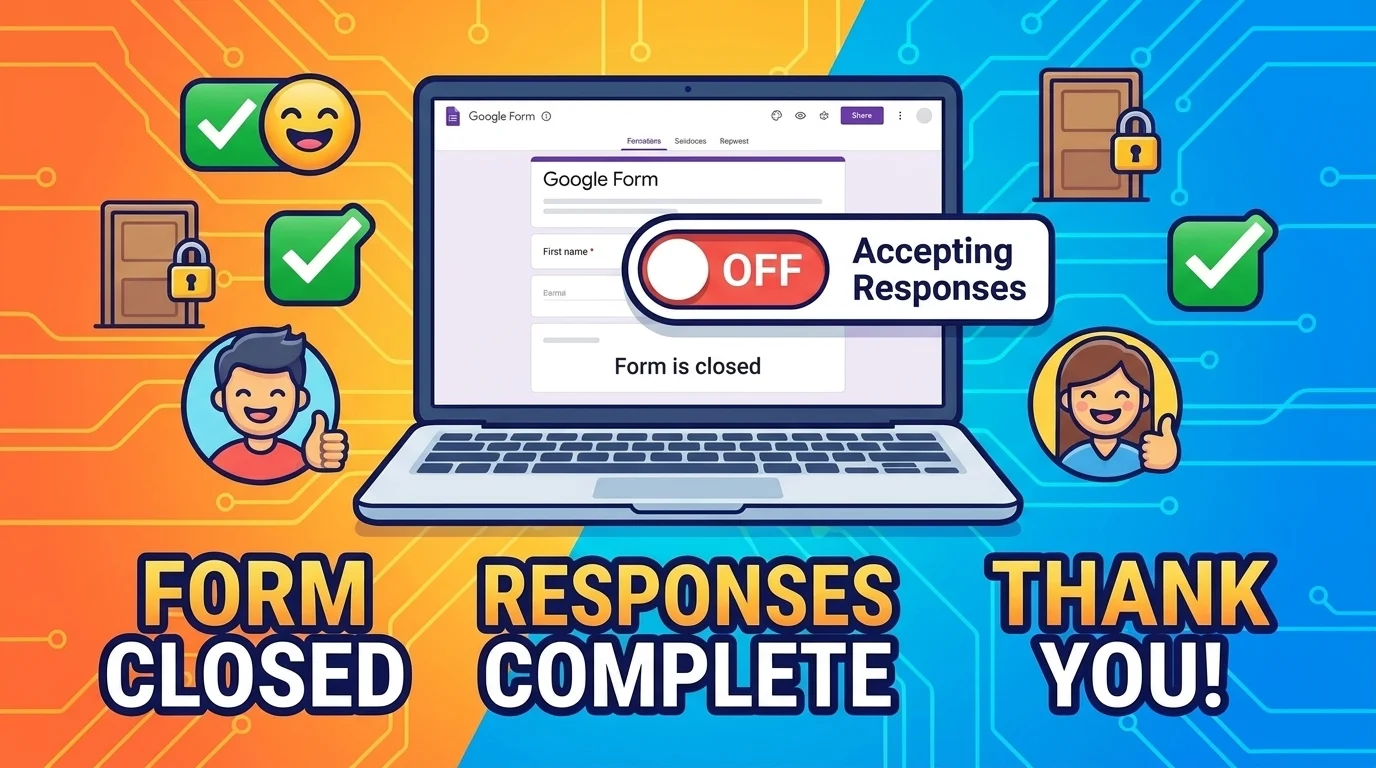
To turn off responses on Google Form, open your form, go to the Responses tab, click the three-dot menu, and toggle off Accepting responses. You can also set a response limit or close it manually anytime.
Learning how to turn off responses on Google Form is a game changer when you need to stop incoming submissions without deleting your entire form. Whether you are a teacher collecting homework, an event planner managing RSVPs, or a business owner gathering feedback, you need a quick way to close the floodgates.
Turning off responses keeps your data clean, prevents spam, and gives you control over when your form stops accepting answers. The best part? It takes just a few clicks, and you can always turn it back on later. Let us dive into every possible method, tip, and trick.
Basic Steps to Turn Off Responses
- Open Your Google Form
Example: Use this when you first log into Google Forms and need to access your form.
Meaning: The essential first step to reach the form editor and response settings. - Click the Responses Tab
Example: Use this when you are ready to manage incoming submissions.
Meaning: This tab shows all responses and gives you access to response controls. - Find the Three-Dot Menu
Example: Use this when you are inside the Responses tab and need more options.
Meaning: The menu hides the toggle for accepting responses. - Toggle Off Accepting Responses
Example: Use this when you want to stop new submissions immediately.
Meaning: This switch turns off the form so no one else can submit. - Confirm the Change
Example: Use this when you want to make sure the form is now closed.
Meaning: A quick check ensures your setting was saved correctly. - Share the Closed Status
Example: Use this when you need to inform people that the form is no longer accepting entries.
Meaning: Clear communication prevents confusion and repeated attempts. - Set a Response Limit
Example: Use this when you want the form to close automatically after a certain number.
Meaning: This feature stops responses once your desired count is reached. - Manually Close the Form
Example: Use this when you want to stop responses without using the toggle.
Meaning: You can simply delete the form link or restrict access. - Check the Form Link
Example: Use this when you want to verify that the form is truly closed.
Meaning: Testing the link yourself confirms the form no longer accepts responses. - Turn Responses Back On
Example: Use this when you need to reopen the form for a new round.
Meaning: You can toggle the switch back anytime to resume collecting data. - Use the Form Settings
Example: Use this when you want to limit responses to one per person.
Meaning: Settings can prevent multiple submissions from the same user. - Save Your Changes
Example: Use this when you have finished adjusting response settings.
Meaning: Google Forms saves automatically, but a quick refresh confirms it.
For New Forms
- Create a New Form First
Example: Use this when you are starting from scratch and want to control responses from day one.
Meaning: You can set response limits before sharing the form. - Go to Settings Immediately
Example: Use this when you want to configure response behavior before sending the link.
Meaning: Early setup saves time later. - Set a Response Limit
Example: Use this when you only need a specific number of entries.
Meaning: The form closes automatically once the limit is hit. - Disable Multiple Responses
Example: Use this when you want one submission per person.
Meaning: This requires users to sign in with their Google account. - Share the Form After Setup
Example: Use this when you are ready to collect responses.
Meaning: Only share once your response controls are in place. - Test the Form Yourself
Example: Use this when you want to ensure the settings work.
Meaning: Submit a test response to confirm the form behaves as expected. - Adjust the Confirmation Message
Example: Use this when you want to tell users the form is closed.
Meaning: A custom message can explain why responses are no longer accepted. - Use a Pre-Filled Link
Example: Use this when you want to control who can respond.
Meaning: Pre-filled links can restrict access to specific people. - Turn Off Responses Manually
Example: Use this when you want to close the form at a moment’s notice.
Meaning: The toggle in the Responses tab works for any form. - Set a Deadline in the Description
Example: Use this when you want to warn users about a cutoff time.
Meaning: Clear expectations reduce late submissions. - Archive the Form
Example: Use this when you no longer need the form but want to keep the data.
Meaning: Archiving removes it from your active list without deleting responses. - Duplicate the Form for Later
Example: Use this when you want to reuse the same questions for a new round.
Meaning: Duplicating lets you start fresh with new response settings.
For Existing Forms
- Open the Existing Form
Example: Use this when you need to stop responses on a form you already shared.
Meaning: Access the form editor to reach the response controls. - Navigate to the Responses Tab
Example: Use this when you want to see how many responses you have.
Meaning: This tab shows all submissions and the toggle for accepting responses. - Toggle Off Accepting Responses
Example: Use this when you want to stop new submissions immediately.
Meaning: This is the fastest way to close an existing form. - Check for Pending Responses
Example: Use this when you want to ensure no new responses come in.
Meaning: After toggling off, no new entries will be recorded. - Export Existing Data
Example: Use this when you want to save responses before closing.
Meaning: Download a CSV or link to Sheets to keep your data safe. - Notify Respondents
Example: Use this when you need to tell people the form is closed.
Meaning: Send an email or message to inform them of the change. - Set a Response Limit
Example: Use this when you want the form to close automatically after a certain number.
Meaning: This is useful for giveaways or limited offers. - Disable Multiple Responses
Example: Use this when you suspect duplicate entries.
Meaning: This setting requires sign-in and limits one response per account. - Change the Form Link
Example: Use this when you want to invalidate the old link.
Meaning: Creating a new link stops old shared links from working. - Use Add-Ons for More Control
Example: Use this when you need advanced response management.
Meaning: Add-ons like Form Limiter can schedule closures. - Review Form Settings
Example: Use this when you want to double-check all response options.
Meaning: Settings include response limits, editing, and confirmation messages. - Turn Responses Back On
Example: Use this when you need to reopen the form later.
Meaning: You can always toggle the switch back on.
On Mobile Devices
- Open the Google Forms App
Example: Use this when you are on your phone and need to close a form.
Meaning: The mobile app gives you full access to response settings. - Tap on Your Form
Example: Use this when you want to edit a specific form.
Meaning: Select the form you want to manage. - Go to the Responses Tab
Example: Use this when you are inside the form and need response controls.
Meaning: The tab is usually at the bottom or top of the screen. - Tap the Three-Dot Menu
Example: Use this when you need more options in the Responses tab.
Meaning: The menu contains the toggle for accepting responses. - Toggle Off Accepting Responses
Example: Use this when you want to stop submissions from your phone.
Meaning: A simple tap closes the form instantly. - Check the Form Status
Example: Use this when you want to confirm the form is closed.
Meaning: The app will show a message that the form is no longer accepting responses. - Share the Closed Status
Example: Use this when you need to inform people via mobile.
Meaning: You can copy the form link and send a message that it is closed. - Set a Response Limit
Example: Use this when you want automatic closure on mobile.
Meaning: The mobile app supports response limits in settings. - Disable Multiple Responses
Example: Use this when you want to prevent duplicate entries on mobile.
Meaning: This option is available in the form settings. - Turn Responses Back On
Example: Use this when you need to reopen the form from your phone.
Meaning: The toggle works the same way to resume accepting responses. - Use the Mobile Browser
Example: Use this when you prefer the desktop version on your phone.
Meaning: You can access forms.google.com in your mobile browser. - Save Your Changes
Example: Use this when you have finished adjusting settings on mobile.
Meaning: Google Forms saves automatically, but you can refresh to confirm.
On Desktop Computers
- Open Google Forms in Your Browser
Example: Use this when you are on a computer and need to manage responses.
Meaning: The desktop version offers the most features. - Select Your Form
Example: Use this when you have multiple forms and need to choose one.
Meaning: Click the form you want to edit. - Click the Responses Tab
Example: Use this when you are in the form editor.
Meaning: This tab is at the top of the screen. - Click the Three-Dot Menu
Example: Use this when you are in the Responses tab.
Meaning: The menu is in the top right corner. - Toggle Off Accepting Responses
Example: Use this when you want to stop new submissions.
Meaning: This switch is the primary control for closing the form. - Set a Response Limit
Example: Use this when you want the form to close automatically.
Meaning: This option is in the same menu. - Disable Multiple Responses
Example: Use this when you want one response per person.
Meaning: This requires sign-in and is found in settings. - Check the Form Link
Example: Use this when you want to test if the form is closed.
Meaning: Open the link in an incognito window to verify. - Export Responses
Example: Use this when you want to save data before closing.
Meaning: Click the Sheets icon or download CSV. - Notify Respondents
Example: Use this when you need to inform people the form is closed.
Meaning: Send an email or update your website. - Turn Responses Back On
Example: Use this when you need to reopen the form.
Meaning: Toggle the switch back on anytime. - Use Keyboard Shortcuts
Example: Use this when you want to navigate faster.
Meaning: Google Forms supports some shortcuts for efficiency.
For Teachers and Educators
- Close the Quiz After Class
Example: Use this when you want to stop students from submitting late answers.
Meaning: Turning off responses ensures fairness and prevents cheating. - Set a Deadline
Example: Use this when you want the form to close automatically at a certain time.
Meaning: You can use add-ons like Form Limiter for scheduled closure. - Disable Multiple Submissions
Example: Use this when you want one attempt per student.
Meaning: Require sign-in and limit to one response. - Share Results with Students
Example: Use this when you want to give feedback after closing.
Meaning: You can release scores manually after turning off responses. - Use a Separate Form for Each Class
Example: Use this when you want to manage responses per period.
Meaning: Separate forms make it easier to close one class without affecting others. - Turn Off Responses During Breaks
Example: Use this when you want to pause submissions during holidays.
Meaning: Simply toggle off and turn back on when ready. - Collect Homework Submissions
Example: Use this when you want to stop accepting late work.
Meaning: Close the form at the deadline to enforce rules. - Give a Confirmation Message
Example: Use this when students try to submit after closure.
Meaning: A custom message can explain that the form is closed. - Use the Responses Tab for Grading
Example: Use this when you want to review submissions.
Meaning: The tab shows all responses in a tidy list. - Export to Google Sheets
Example: Use this when you want to analyze grades.
Meaning: Linking to Sheets makes grading easier. - Reopen for Retakes
Example: Use this when you want to allow a second attempt.
Meaning: Toggle responses back on for specific students. - Archive Old Forms
Example: Use this when the school year ends.
Meaning: Archiving keeps your form list clean.
For Business and Corporate Use
- Close the Form After a Campaign
Example: Use this when a promotion or survey period ends.
Meaning: Turning off responses prevents outdated submissions. - Set a Response Limit for Giveaways
Example: Use this when you want to cap entries.
Meaning: The form closes automatically once the limit is reached. - Disable Multiple Entries
Example: Use this when you want one entry per customer.
Meaning: Require sign-in to prevent duplicates. - Use a Custom Confirmation Message
Example: Use this when you want to thank customers for their interest.
Meaning: A friendly message improves brand experience. - Export Data for CRM
Example: Use this when you need to import responses into your system.
Meaning: Download CSV or link to Sheets. - Notify Your Team
Example: Use this when the form is closed.
Meaning: Inform sales or support that no new leads are coming in. - Schedule Closure with Add-Ons
Example: Use this when you want automatic closure at a specific time.
Meaning: Add-ons like Form Limiter can handle scheduling. - Use a Redirect After Closure
Example: Use this when you want to send users to a landing page.
Meaning: You can set a custom redirect URL in settings. - Track Responses in Real Time
Example: Use this when you want to monitor submissions.
Meaning: The Responses tab updates live. - Turn Off Responses for Sensitive Data
Example: Use this when you want to stop collecting personal info.
Meaning: Close the form to comply with privacy rules. - Reopen for New Intake
Example: Use this when a new quarter begins.
Meaning: Toggle responses back on to start fresh. - Archive the Form
Example: Use this when the project is complete.
Meaning: Archiving keeps the data but removes the form from active view.
For Surveys and Feedback
- Close the Survey After a Set Period
Example: Use this when you have collected enough feedback.
Meaning: Turning off responses ensures data analysis can begin. - Set a Response Goal
Example: Use this when you need a specific number of responses.
Meaning: The form closes automatically when the goal is met. - Disable Multiple Responses
Example: Use this when you want one response per participant.
Meaning: This prevents bias from duplicate entries. - Use a Thank You Message
Example: Use this when respondents try to submit after closure.
Meaning: A polite message explains that the survey is closed. - Export Responses for Analysis
Example: Use this when you are ready to review data.
Meaning: Download CSV or link to Sheets. - Share Results with Stakeholders
Example: Use this when you want to present findings.
Meaning: You can create charts and summaries from the Responses tab. - Turn Off Responses During Analysis
Example: Use this when you want to freeze the data set.
Meaning: Closing the form prevents new entries from skewing results. - Reopen for Follow-Up
Example: Use this when you need more responses.
Meaning: Toggle responses back on to collect additional data. - Use Conditional Logic
Example: Use this when you want to direct respondents based on answers.
Meaning: Google Forms supports branching, but closing is separate. - Set a Reminder to Close
Example: Use this when you might forget to turn off responses.
Meaning: Use a calendar reminder or add-on. - Archive Old Surveys
Example: Use this when the survey is no longer needed.
Meaning: Archiving keeps your workspace organized. - Duplicate for Future Surveys
Example: Use this when you want to reuse questions.
Meaning: Duplicating saves time and lets you start fresh.
For Quizzes and Assessments
- Close the Quiz After the Time Limit
Example: Use this when you want to stop submissions after a set time.
Meaning: Turning off responses ensures fairness. - Set a Response Limit
Example: Use this when you have a large class.
Meaning: The form closes automatically after the last student. - Disable Multiple Attempts
Example: Use this when you want one attempt per student.
Meaning: Require sign-in and limit to one response. - Release Scores After Closing
Example: Use this when you want to review results first.
Meaning: You can manually release grades after turning off responses. - Use a Custom Confirmation
Example: Use this when students try to submit late.
Meaning: A message can explain that the quiz is closed. - Export Grades to Sheets
Example: Use this when you want to analyze performance.
Meaning: Linking to Sheets makes grading easier. - Turn Off Responses During the Quiz
Example: Use this when you want to control when students can submit.
Meaning: You can toggle off at the start and on at the end. - Reopen for Retakes
Example: Use this when you want to allow a second chance.
Meaning: Toggle responses back on for specific students. - Archive Old Quizzes
Example: Use this when the unit is over.
Meaning: Archiving keeps your form list clean. - Duplicate for Next Term
Example: Use this when you want to reuse questions.
Meaning: Duplicating saves time. - Use the Responses Tab for Review
Example: Use this when you want to see individual answers.
Meaning: The tab shows each student’s submission. - Notify Students of Closure
Example: Use this when the quiz is no longer available.
Meaning: Send an announcement to avoid confusion.
For Event Registrations
- Close Registration When Full
Example: Use this when you have reached capacity.
Meaning: Turning off responses prevents overbooking. - Set a Response Limit
Example: Use this when you have a fixed number of seats.
Meaning: The form closes automatically when the limit is reached. - Disable Multiple Registrations
Example: Use this when you want one ticket per person.
Meaning: Require sign-in to prevent duplicates. - Use a Waitlist Form
Example: Use this when you want to collect names after closure.
Meaning: Create a separate form for those who missed the cutoff. - Send a Confirmation Email
Example: Use this when someone registers successfully.
Meaning: A confirmation reassures attendees. - Notify Registrants of Closure
Example: Use this when the event is full.
Meaning: Send an email to inform them that registration is closed. - Export Attendee List
Example: Use this when you need to check people in.
Meaning: Download CSV or link to Sheets. - Turn Off Responses on the Day
Example: Use this when the event starts.
Meaning: Closing the form prevents last-minute registrations. - Reopen for Future Events
Example: Use this when you plan another event.
Meaning: Duplicate the form and turn responses back on. - Use a Custom Redirect
Example: Use this when you want to send users to an event page.
Meaning: You can set a redirect URL in settings. - Archive the Form
Example: Use this when the event is over.
Meaning: Archiving keeps your workspace tidy. - Share the Closed Status
Example: Use this when people ask if they can still register.
Meaning: A quick message saves time.
For Permissions and Sharing
- Restrict Form to Your Organization
Example: Use this when you only want internal responses.
Meaning: You can limit access to users within your domain. - Turn Off Responses for External Users
Example: Use this when you want to close the form to the public.
Meaning: Toggle off accepting responses and share only with specific people. - Use a Pre-Filled Link
Example: Use this when you want to control who can respond.
Meaning: Pre-filled links can be sent to a select group. - Disable Copying of the Form
Example: Use this when you want to prevent unauthorized sharing.
Meaning: You can restrict who can edit or copy the form. - Set Permissions in Google Drive
Example: Use this when you want to control access to the form file.
Meaning: Share settings in Drive affect who can view or edit. - Turn Off Responses for Specific Users
Example: Use this when you want to exclude someone.
Meaning: Google Forms does not support per-user blocking, but you can use a new link. - Use a Password-Protected Form
Example: Use this when you want only certain people to respond.
Meaning: Add-ons can add password protection. - Monitor Responses for Spam
Example: Use this when you suspect fake entries.
Meaning: Close the form if spam becomes an issue. - Report Abuse
Example: Use this when someone is misusing your form.
Meaning: Google provides a report abuse option. - Change the Form Link
Example: Use this when you want to invalidate old shares.
Meaning: Creating a new link stops old ones from working. - Notify Collaborators
Example: Use this when you change permissions.
Meaning: Inform your team so they know the new settings. - Archive the Form
Example: Use this when you no longer need it.
Meaning: Archiving removes it from active view.
For Troubleshooting Issues
- Check If Responses Are Actually Off
Example: Use this when you are not sure if the toggle worked.
Meaning: Test the form link in an incognito window. - Refresh the Page
Example: Use this when the toggle does not seem to save.
Meaning: A refresh can fix temporary glitches. - Clear Browser Cache
Example: Use this when Google Forms is acting up.
Meaning: Cached data can cause display issues. - Try a Different Browser
Example: Use this when the toggle is unresponsive.
Meaning: Switching browsers can resolve compatibility problems. - Check Your Internet Connection
Example: Use this when changes are not saving.
Meaning: A stable connection is needed for Google Forms to work. - Disable Browser Extensions
Example: Use this when the form behaves unexpectedly.
Meaning: Some extensions can interfere with Google Forms. - Use the Mobile App
Example: Use this when the desktop version is buggy.
Meaning: The mobile app may work when the browser does not. - Contact Google Support
Example: Use this when nothing else works.
Meaning: Google Support can help with persistent issues. - Check for Service Outages
Example: Use this when Google Forms is down.
Meaning: Visit the Google Workspace Status Dashboard. - Try Incognito Mode
Example: Use this when you suspect account issues.
Meaning: Incognito mode disables extensions and cookies. - Recreate the Form
Example: Use this when the form is corrupted.
Meaning: Starting fresh can solve stubborn problems. - Export Responses First
Example: Use this when you need to save data before troubleshooting.
Meaning: Always back up your data before making changes.
For Automation and Scheduling
- Use Form Limiter Add-On
Example: Use this when you want to close the form at a specific date and time.
Meaning: Form Limiter automates response closure. - Set a Response Limit
Example: Use this when you want the form to close after a number of entries.
Meaning: This is built into Google Forms. - Use Google Apps Script
Example: Use this when you need custom automation.
Meaning: You can write a script to close the form based on triggers. - Schedule Closure with Zapier
Example: Use this when you want to integrate with other apps.
Meaning: Zapier can trigger form closure based on external events. - Use IFTTT for Automation
Example: Use this when you want simple automation.
Meaning: IFTTT can connect Google Forms to other services. - Set a Calendar Reminder
Example: Use this when you want a manual reminder to close the form.
Meaning: A simple reminder ensures you do not forget. - Use a Countdown Timer
Example: Use this when you want to show users how long is left.
Meaning: Add-ons can display a countdown on the form. - Automate Email Notifications
Example: Use this when you want to be alerted when responses hit a threshold.
Meaning: Google Forms can send email notifications for new responses. - Use a Webhook
Example: Use this when you want to trigger actions on form submission.
Meaning: Webhooks can close the form programmatically. - Integrate with Google Sheets
Example: Use this when you want to analyze responses in real time.
Meaning: Linking to Sheets allows for advanced automation. - Use Conditional Logic
Example: Use this when you want to direct users based on answers.
Meaning: Branching can lead to a “form closed” page. - Test Your Automation
Example: Use this when you set up any automated closure.
Meaning: Always test to ensure it works as expected.
For Advanced Settings
- Enable Response Receipts
Example: Use this when you want respondents to get a copy of their answers.
Meaning: This setting is in the form settings under Responses. - Allow Response Editing
Example: Use this when you want users to change their answers.
Meaning: You can enable or disable editing after submission. - Set a Custom Confirmation Message
Example: Use this when you want to personalize the post-submission experience.
Meaning: This message appears after someone submits the form. - Redirect to a URL
Example: Use this when you want to send users to a different page after submission.
Meaning: You can set a redirect URL in settings. - Shuffle Question Order
Example: Use this when you want to prevent cheating.
Meaning: This setting is in the form settings under Presentation. - Limit to One Response
Example: Use this when you want one submission per person.
Meaning: This requires sign-in and is in the Responses settings. - Collect Email Addresses
Example: Use this when you need to identify respondents.
Meaning: This is in the Responses settings. - Send Response Copies
Example: Use this when you want respondents to have a record.
Meaning: This is in the Responses settings. - Disable Autosave
Example: Use this when you want to control when data is saved.
Meaning: Google Forms autosaves by default, but you can manage this with add-ons. - Use Data Validation
Example: Use this when you want to ensure accurate responses.
Meaning: Data validation restricts what users can enter. - Add a Progress Bar
Example: Use this when you want to show how far along users are.
Meaning: This is in the Presentation settings. - Customize the Theme
Example: Use this when you want your form to match your brand.
Meaning: Theme options are in the form editor.
For Creative and Unusual Scenarios
- Close the Form for a Scavenger Hunt
Example: Use this when you want to stop entries after the first correct answer.
Meaning: Turn off responses manually when a winner is found. - Use a Form as a Waitlist
Example: Use this when you want to collect names after an event is full.
Meaning: Create a separate form that stays open. - Turn Off Responses for a Flash Sale
Example: Use this when you want to limit orders to a certain number.
Meaning: Set a response limit to close automatically. - Use a Form for a Poll
Example: Use this when you want to gather opinions quickly.
Meaning: Close the form after a set time to analyze results. - Create a Form for a Contest
Example: Use this when you want to collect entries.
Meaning: Set a deadline and turn off responses after it. - Use a Form for RSVP to a Party
Example: Use this when you need a headcount.
Meaning: Close the form a few days before the event. - Turn Off Responses for a Survey
Example: Use this when you have enough data.
Meaning: Toggle off to stop new submissions. - Use a Form for a Quiz Night
Example: Use this when you want to collect answers.
Meaning: Close the form after the quiz ends. - Create a Form for Feedback
Example: Use this when you want to improve your service.
Meaning: Close the form after a set period. - Use a Form for a Giveaway
Example: Use this when you want to collect entries.
Meaning: Set a response limit or close manually. - Turn Off Responses for a Test
Example: Use this when you want to stop late submissions.
Meaning: Toggle off after the test time is up. - Use a Form for a Petition
Example: Use this when you want to collect signatures.
Meaning: Close the form when you reach your goal.
Frequently Asked Questions
What does turning off responses mean on Google Form?
It means you are stopping the form from accepting any new submissions. Existing responses are kept safe, but no one can submit new answers.
Can I turn off responses for specific people?
Google Forms does not support blocking individual users directly. You can create a new form link and share it only with the people you want to allow.
Is turning off responses reversible?
Yes. You can toggle the switch back on anytime to start accepting responses again. Your existing data remains intact.
What happens to existing responses when I turn off responses?
All existing responses stay in the Responses tab. You can still view, export, and analyze them even after the form is closed.
Can I schedule when responses turn off automatically?
Google Forms does not have a built-in scheduler. You can use add-ons like Form Limiter or Google Apps Script to automate closure.
Conclusion
Turning off responses on Google Form is a simple but powerful skill that gives you control over your data and your audience. Whether you are a teacher, event planner, or business owner, knowing how to close a form at the right moment keeps things organized and fair.
Now that you have over 150 tips and methods, you can handle any scenario with confidence. Try different approaches, experiment with add-ons, and find what works best for you. Save this guide, share it with your friends, and bookmark it for your next project. You have got this, and your forms will thank you.
