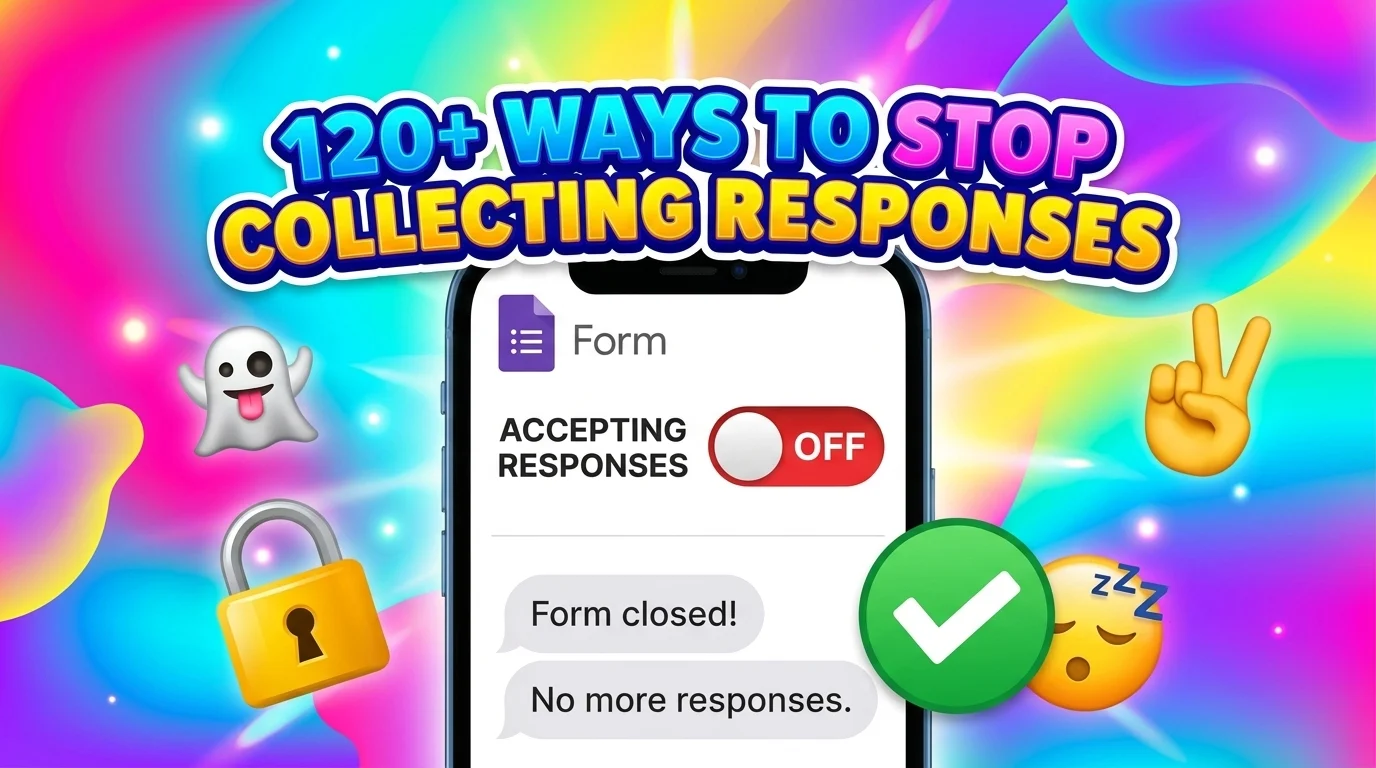
To stop collecting responses on Google Form, open your form, go to the Responses tab, and toggle off “Accepting responses.” You can also use “Close form” or set a response limit. Try these quick alternatives: toggle off accepting responses, delete the form link, set a deadline, use an add-on, or send a polite closing message.
You built a Google Form. You shared the link. Now responses are flooding in and you need them to stop. Maybe the survey is done, the event is full, or you just want your inbox to chill. Knowing how to stop collecting responses on Google Form is a basic skill that saves you from data overload and awkward follow-ups.
The good news? Google Forms gives you multiple ways to shut down responses, from a simple toggle to scheduling a cutoff. The better news? You can pair those technical steps with friendly, funny, or professional messages so people know why the form is closed.
This guide gives you 120+ ready-to-use responses, settings, and communication scripts for every mood and situation. Whether you want to be polite, funny, or straight to the point, you will find the perfect way to stop collecting responses without the drama.
Funny Responses to Stop Collecting Responses
- “Form closed. Go outside and touch grass.” Example: Use when you close a fun survey and want to keep the mood light. Meaning: A humorous way to tell people the form is no longer accepting responses.
- “This form has retired. Please respect its privacy.” Example: Perfect for a colleague who keeps asking if they can still submit. Meaning: A playful way to announce the form is closed.
- “Responses are now a collector’s item.” Example: Use when you shut down a form after hitting your target. Meaning: A funny way to say the submission window is over.
- “The form has left the chat.” Example: Great for a group chat where you share the closing notice. Meaning: A meme-friendly way to say responses are no longer accepted.
- “Your response has been added to the museum of closed forms.” Example: Use when someone tries to submit after the deadline. Meaning: A witty way to decline late responses.
- “Form status: gone fishing.” Example: Perfect for a casual team update. Meaning: A lighthearted way to say the form is closed for now.
- “Responses are sold out. Try again never.” Example: Use when you reach your maximum number of submissions. Meaning: A funny spin on the “sold out” concept.
- “This form is now a historical artifact.” Example: Great for a school project or club survey. Meaning: A humorous way to announce the end of data collection.
- “The response party is over. Please exit quietly.” Example: Use when closing a form after an event. Meaning: A playful way to signal that submissions are done.
- “Form closed. Your keyboard can rest now.” Example: Perfect for a friend who keeps asking if they can still fill it out. Meaning: A funny way to tell people to stop trying.
- “We have enough data to write a trilogy.” Example: Use when you hit your response goal. Meaning: A humorous way to say you have more than enough responses.
- “The form is on vacation. Do not disturb.” Example: Great for a seasonal or temporary closure. Meaning: A cute and funny way to say the form is not accepting responses.
Brutal Responses to Stop Collecting Responses
- “Form closed. No exceptions.” Example: Use when you need to be firm with late submitters. Meaning: A direct way to make it clear that responses are no longer accepted.
- “Stop asking. The form is done.” Example: Perfect for a persistent colleague who keeps requesting an extension. Meaning: A blunt way to shut down further requests.
- “Responses are closed. Move on.” Example: Use when someone keeps sending you their answers via email. Meaning: A no-nonsense way to end the conversation.
- “The deadline was not a suggestion.” Example: Great for a project manager who needs to enforce rules. Meaning: A sharp reminder that the cutoff was real.
- “Form closed. Your excuses are not needed.” Example: Use when someone begs to submit after the deadline. Meaning: A direct way to reject late responses.
- “I have enough data. You can stop now.” Example: Perfect for a group chat where people keep asking if they should fill it out. Meaning: A clear message that no more responses are needed.
- “This form is closed. Please respect that.” Example: Use when someone keeps trying to access the link. Meaning: A firm but simple boundary.
- “Responses are off. That is final.” Example: Great for a team lead closing a feedback form. Meaning: A decisive statement that ends the discussion.
- “No more submissions. Please stop refreshing.” Example: Use when people keep checking if the form is open again. Meaning: A blunt way to say the form is permanently closed.
- “The form is dead. Let it rest.” Example: Perfect for a dramatic but direct closure notice. Meaning: A final and clear message that responses are over.
- “I will not reopen the form. Do not ask.” Example: Use when you anticipate repeated requests. Meaning: A preemptive boundary that saves you time.
- “Responses closed. Read the notice.” Example: Great for a public form where people ignore updates. Meaning: A sharp reminder to pay attention to the closing message.
Polite Responses to Stop Collecting Responses
- “Thank you for your interest. The form is now closed.” Example: Use when closing a public survey. Meaning: A courteous way to inform people that responses are no longer accepted.
- “We have received enough responses. Thank you.” Example: Perfect for a community feedback form. Meaning: A polite way to announce the end of data collection.
- “The response window has ended. We appreciate your participation.” Example: Use in a professional email update. Meaning: A respectful closure message.
- “No further submissions are needed at this time.” Example: Great for a workplace form. Meaning: A polite way to say the form is closed.
- “Thank you for your understanding. The form is closed.” Example: Use when you need to decline late requests. Meaning: A kind but clear boundary.
- “We are no longer accepting responses. Thanks for checking.” Example: Perfect for a website or social media update. Meaning: A friendly way to inform visitors.
- “The form has been closed. Please reach out if you have questions.” Example: Use in an email signature or auto-reply. Meaning: A polite way to redirect inquiries.
- “Responses are now closed. We appreciate your time.” Example: Great for a survey closing notice. Meaning: A respectful end to the data collection phase.
- “Thank you for everyone who participated. The form is now closed.” Example: Use in a group announcement. Meaning: A warm and polite closure.
- “We have all the information we need. Thank you.” Example: Perfect for a client intake form. Meaning: A professional way to stop collecting responses.
- “The deadline has passed. We cannot accept late responses.” Example: Use when enforcing a cutoff date. Meaning: A polite but firm message.
- “Please note that the form is no longer active.” Example: Great for a website FAQ or help page. Meaning: A clear and courteous notice.
Professional Responses to Stop Collecting Responses
- “The form is now closed for submissions.” Example: Use in a company-wide email. Meaning: A formal way to announce the end of response collection.
- “We have reached our response target. The form is closed.” Example: Perfect for a project manager updating stakeholders. Meaning: A professional closure statement.
- “Effective immediately, the form is no longer accepting responses.” Example: Use in an official notice. Meaning: A clear and formal announcement.
- “The response period has concluded. Thank you for your cooperation.” Example: Great for a compliance or HR form. Meaning: A professional way to end data collection.
- “Please be advised that the form has been deactivated.” Example: Use in a corporate setting. Meaning: A formal way to say the form is closed.
- “The submission window is now closed. We will follow up with next steps.” Example: Perfect for an event registration form. Meaning: A professional way to manage expectations.
- “We are no longer accepting new responses at this time.” Example: Use in a client-facing communication. Meaning: A polite and formal closure.
- “The form has been archived. No further responses will be collected.” Example: Great for a records management update. Meaning: A formal way to say the form is done.
- “This form is now inactive. Please contact the administrator for assistance.” Example: Use on a public form page. Meaning: A professional way to redirect inquiries.
- “The data collection phase has ended. Thank you for your participation.” Example: Perfect for a research project. Meaning: A formal closure message.
- “All responses have been recorded. The form is closed.” Example: Use in a team update. Meaning: A clear and professional status update.
- “The form is locked. No additional submissions will be accepted.” Example: Great for a formal process. Meaning: A definitive closure statement.
Creative Responses to Stop Collecting Responses
- “The form has flown south for the winter.” Example: Use when closing a seasonal survey. Meaning: A creative and whimsical way to say the form is closed.
- “Responses are now a rare collectible. Do not ask for more.” Example: Perfect for a fun internal survey. Meaning: A playful and creative closure message.
- “We have enough data to build a rocket. Form closed.” Example: Use when you hit a high response number. Meaning: A fun exaggeration to announce closure.
- “The form is on a permanent coffee break.” Example: Great for a casual team update. Meaning: A creative way to say the form is not accepting responses.
- “Your submissions have been safely tucked into bed. The form is closed.” Example: Use for a community form with a cute tone. Meaning: A creative and warm closure.
- “The response door is now locked. The key is lost.” Example: Perfect for a playful notice. Meaning: A creative way to say no more responses.
- “We have captured all the data we need. The form has retired.” Example: Use in a lighthearted email. Meaning: A creative closure announcement.
- “The form is now a butterfly. It has flown away.” Example: Great for a creative writing group or art project. Meaning: A whimsical way to say the form is closed.
- “Responses have been wrapped up and put in storage.” Example: Use when closing a long-running survey. Meaning: A creative and clear closure message.
- “The form is sleeping. Please do not wake it.” Example: Perfect for a friendly notice. Meaning: A cute and creative way to stop responses.
- “We have collected enough stories. The form is now a closed book.” Example: Use for a story submission form. Meaning: A creative and thematic closure.
- “The response train has left the station. Form closed.” Example: Great for a time-sensitive form. Meaning: A creative way to say the deadline has passed.
Sarcastic Responses to Stop Collecting Responses
- “Oh look, the form is closed. What a surprise.” Example: Use when people keep asking if they can still submit. Meaning: A sarcastic way to point out the obvious.
- “Yes, please keep refreshing. It will definitely reopen.” Example: Perfect for someone who ignores the closure notice. Meaning: A sarcastic remark that highlights the futility.
- “I am sure your late response would have changed everything.” Example: Use when someone begs to submit after the deadline. Meaning: A sarcastic way to decline late entries.
- “The form closed hours ago, but thanks for checking.” Example: Great for a group chat with slow responders. Meaning: A sarcastic reminder that the window has passed.
- “Your determination to submit is truly inspiring.” Example: Use when someone keeps trying to access a closed form. Meaning: A sarcastic compliment that says “stop trying.”
- “I will add your request to the pile of other ignored requests.” Example: Perfect for a manager who keeps getting deadline extension requests. Meaning: A sarcastic way to say no.
- “The form is closed, but I admire your optimism.” Example: Use when someone asks if they can still fill it out. Meaning: A sarcastic but lighthearted rejection.
- “Please, take your time. The form will wait forever.” Example: Great for a sarcastic auto-reply. Meaning: A sarcastic way to say the deadline has passed.
- “I love how the closure notice is invisible to some people.” Example: Use in a team chat when people ignore updates. Meaning: A sarcastic call-out.
- “Your response is so important that we closed the form just for you.” Example: Perfect for a dramatic but sarcastic closure. Meaning: A sarcastic way to say the form is done.
- “I will frame your late submission request as a work of art.” Example: Use when someone sends a lengthy excuse. Meaning: A sarcastic way to decline politely.
- “The form is closed. But please, tell me more about why you are special.” Example: Great for a sarcastic response to a special request. Meaning: A witty way to shut down the conversation.
Cute Responses to Stop Collecting Responses
- “The form is closed, but my gratitude is still open.” Example: Use when closing a community survey. Meaning: A sweet way to thank people while ending responses.
- “Thank you for filling my form. It is now taking a nap.” Example: Perfect for a friendly audience. Meaning: A cute way to say the form is closed.
- “Responses are closed, but you are still appreciated.” Example: Use in a group message. Meaning: A warm closure that keeps the mood positive.
- “The form has enough hugs. It is now closed.” Example: Great for a lighthearted internal form. Meaning: A cute and playful closure message.
- “Your response was a gift. The form is now wrapped up.” Example: Use when closing a feedback form. Meaning: A sweet way to end data collection.
- “We have collected all the smiles we need. Form closed.” Example: Perfect for a fun survey. Meaning: A cute and positive closure.
- “The form is closed, but my inbox is always open for kind words.” Example: Use in a friendly notice. Meaning: A sweet way to redirect communication.
- “Thank you for participating. The form is now in dreamland.” Example: Great for a children’s event form. Meaning: A cute and gentle closure.
- “Responses closed. Sending you good vibes instead.” Example: Use in a social media update. Meaning: A warm and friendly way to end the form.
- “The form is taking a break. You should too.” Example: Perfect for a wellness survey. Meaning: A cute and caring closure message.
- “We have enough answers. Now go enjoy your day.” Example: Use in a casual team chat. Meaning: A friendly and upbeat closure.
- “The form is closed, but you are still my favorite.” Example: Great for a small group or personal project. Meaning: A sweet and personal way to end responses.
Dramatic Responses to Stop Collecting Responses
- “The form is dead. Long live the form.” Example: Use when closing a form after a major event. Meaning: A dramatic way to announce the end.
- “I am shutting down the form. This is not a drill.” Example: Perfect for a team that ignores updates. Meaning: A dramatic and clear closure.
- “The response era has ended. We are now in the silence era.” Example: Use in a humorous announcement. Meaning: A dramatic way to say no more responses.
- “I have closed the form. Please hold your applause.” Example: Great for a confident closure. Meaning: A dramatic and funny way to end submissions.
- “The form is gone. It is in a better place now.” Example: Use when you delete the form entirely. Meaning: A dramatic way to say the form no longer exists.
- “I will never accept another response. Never.” Example: Perfect for a dramatic boundary. Meaning: A funny and over-the-top closure.
- “The form has been sealed. No one shall enter.” Example: Use for a formal or important survey. Meaning: A dramatic and clear message.
- “Responses are closed. My inbox is now a peaceful garden.” Example: Great for a lighthearted update. Meaning: A dramatic and poetic closure.
- “The form is closed. I am free.” Example: Perfect for a personal project. Meaning: A dramatic and relatable announcement.
- “I am deleting the form. You will never see it again.” Example: Use when you want to be extra clear. Meaning: A dramatic way to stop responses.
- “The response window has slammed shut.” Example: Great for a deadline-driven form. Meaning: A dramatic and vivid closure.
- “This form is officially over. Please exit through the gift shop.” Example: Perfect for a fun event form. Meaning: A dramatic and humorous way to end responses.
Chill And Casual Responses to Stop Collecting Responses
- “Form is closed. No big deal.” Example: Use in a relaxed team update. Meaning: A casual way to announce closure.
- “All good, responses are off.” Example: Perfect for a quick message to friends. Meaning: A laid-back closure notice.
- “We are done collecting. Thanks, everyone.” Example: Use in a group chat. Meaning: A simple and casual way to end the form.
- “Responses are closed. Have a good one.” Example: Great for a low-key survey. Meaning: A chill way to wrap things up.
- “Form is shut. Catch you later.” Example: Perfect for a casual colleague. Meaning: A relaxed closure message.
- “No more responses needed. We are good.” Example: Use in a friendly email. Meaning: A casual and clear statement.
- “The form is off. Go enjoy your weekend.” Example: Great for a Friday closure. Meaning: A chill way to end the workweek.
- “Responses are done. Easy peasy.” Example: Perfect for a simple survey. Meaning: A casual and lighthearted closure.
- “We have enough. Form is closed.” Example: Use in a quick update. Meaning: A straightforward and relaxed message.
- “The form is no longer active. All good.” Example: Great for a public notice. Meaning: A chill way to say the form is closed.
- “Responses stopped. Thanks for playing.” Example: Perfect for a fun survey. Meaning: A casual and playful closure.
- “Form closed. Nothing else to see here.” Example: Use when you want a simple closure. Meaning: A relaxed and final message.
Confident Responses to Stop Collecting Responses
- “I have closed the form. That is the final decision.” Example: Use when you need to assert authority. Meaning: A confident and clear closure.
- “Responses are no longer accepted. Move forward.” Example: Perfect for a manager closing a feedback form. Meaning: A decisive and confident message.
- “The form is closed. I know what I am doing.” Example: Use when someone questions your decision. Meaning: A confident way to shut down doubts.
- “I have enough data. The form is closed.” Example: Great for a project lead. Meaning: A confident and simple closure.
- “No more responses. This is final.” Example: Use in a team chat. Meaning: A confident and unambiguous message.
- “The form is shut down. No need to discuss further.” Example: Perfect for a decisive closure. Meaning: A confident way to end the conversation.
- “I am not reopening the form. Period.” Example: Use when people keep asking for extensions. Meaning: A confident boundary.
- “Responses are closed. I have made my choice.” Example: Great for a personal project. Meaning: A confident and final statement.
- “The form is done. I am satisfied with the results.” Example: Use when you hit your target. Meaning: A confident closure.
- “I have locked the form. No more entries.” Example: Perfect for a contest or giveaway. Meaning: A confident and clear message.
- “The response period is over. I am in control.” Example: Use when you need to reassert control. Meaning: A confident and assertive closure.
- “Form closed. Trust me, it is the right call.” Example: Great for a team lead. Meaning: A confident way to reassure others.
Emotional Responses to Stop Collecting Responses
- “I am closing the form because I have enough stories to cry about.” Example: Use when closing a deeply personal survey. Meaning: An emotional way to say you have enough responses.
- “The form is closed. My heart is full.” Example: Perfect for a heartfelt feedback form. Meaning: An emotional and grateful closure.
- “Thank you for every response. The form is now closed.” Example: Use in a community project. Meaning: An emotional and appreciative message.
- “I never thought I would get this many responses. Form closed.” Example: Great for a first-time survey. Meaning: An emotional and surprised closure.
- “The form is closed, but the memories remain.” Example: Use for an event feedback form. Meaning: An emotional and nostalgic closure.
- “I am closing the form because my inbox is overflowing with love.” Example: Perfect for a kind audience. Meaning: An emotional and warm closure.
- “Responses are closed. My heart is doing a happy dance.” Example: Use when you are overwhelmed with positive responses. Meaning: An emotional and joyful closure.
- “Thank you for making this form a success. It is now closed.” Example: Great for a team project. Meaning: An emotional and grateful message.
- “The form is closed. I am taking a moment to appreciate everyone.” Example: Use in a heartfelt update. Meaning: An emotional and appreciative closure.
- “I will never forget these responses. The form is closed.” Example: Perfect for a meaningful survey. Meaning: An emotional and memorable closure.
- “Responses are over, but my gratitude is not.” Example: Use in a personal thank-you note. Meaning: An emotional and lasting message.
- “The form is closed. I am smiling at every single response.” Example: Great for a fun and positive survey. Meaning: An emotional and happy closure.
Sweet Responses to Stop Collecting Responses
- “Thank you for being part of this. The form is now closed.” Example: Use in a community update. Meaning: A sweet and appreciative closure.
- “Your responses meant the world. The form is closed.” Example: Perfect for a heartfelt survey. Meaning: A sweet and grateful message.
- “We have enough smiles. The form is closed.” Example: Great for a friendly project. Meaning: A sweet and positive closure.
- “The form is closed, but my gratitude is forever open.” Example: Use in a thank-you message. Meaning: A sweet and enduring closure.
- “Thank you for filling my form. You are the best.” Example: Perfect for a small group. Meaning: A sweet and personal message.
- “Responses are closed. Sending you all my love.” Example: Great for a social media update. Meaning: A sweet and loving closure.
- “The form is closed, but you made it special.” Example: Use when you receive heartfelt responses. Meaning: A sweet and appreciative message.
- “I am closing the form with a grateful heart.” Example: Perfect for a personal project. Meaning: A sweet and warm closure.
- “Thank you for every single response. The form is now closed.” Example: Great for a community survey. Meaning: A sweet and appreciative message.
- “The form is closed. You are all amazing.” Example: Use in a group chat. Meaning: A sweet and encouraging closure.
- “Responses are over, but the kindness remains.” Example: Perfect for a kind audience. Meaning: A sweet and lasting message.
- “The form is closed. I hope you have a wonderful day.” Example: Great for a friendly notice. Meaning: A sweet and caring closure.
Clever Responses to Stop Collecting Responses
- “The form is now a pumpkin. It has turned back.” Example: Use when closing a time-limited form. Meaning: A clever and whimsical way to say the form is closed.
- “Responses are off. The data has been secured.” Example: Perfect for a tech-savvy audience. Meaning: A clever and clear closure.
- “I have closed the form. The algorithm has spoken.” Example: Use in a humorous update. Meaning: A clever and funny way to end responses.
- “The form is closed. The data has left the building.” Example: Great for a dramatic but clever closure. Meaning: A clever way to say no more responses.
- “Responses are locked. The key is in the cloud.” Example: Perfect for a cloud-based form. Meaning: A clever and tech-themed closure.
- “The form is now a closed loop. No more inputs.” Example: Use in a systems or process update. Meaning: A clever and precise closure.
- “I have stopped the responses. The form is now at peace.” Example: Great for a calm closure. Meaning: A clever and peaceful message.
- “The form is closed. The data has been put to bed.” Example: Perfect for a data management update. Meaning: A clever and clear closure.
- “Responses are off. The form is in hibernation.” Example: Use when closing a seasonal form. Meaning: A clever and seasonal closure.
- “The form is closed. The response train has left.” Example: Great for a deadline-driven form. Meaning: A clever and vivid closure.
- “I have shut the form. The data is safe and sound.” Example: Use when you need to reassure people. Meaning: A clever and reassuring closure.
- “The form is closed. The data has been harvested.” Example: Perfect for a data collection project. Meaning: A clever and clear closure.
Work-Appropriate Responses to Stop Collecting Responses
- “The form is now closed for submissions. Thank you for your cooperation.” Example: Use in an official company email. Meaning: A formal and clear closure.
- “Please note that the form is no longer accepting responses.” Example: Perfect for a workplace notice. Meaning: A professional and direct message.
- “The response period has ended. We will share the results soon.” Example: Great for a project update. Meaning: A formal and informative closure.
- “Effective today, the form has been deactivated.” Example: Use in a corporate communication. Meaning: A formal and clear announcement.
- “We have received sufficient responses. The form is now closed.” Example: Perfect for an HR or admin form. Meaning: A professional closure statement.
- “The form is closed. Please direct any questions to the administrator.” Example: Use in a public form notice. Meaning: A formal way to redirect inquiries.
- “All responses have been collected. The form is now inactive.” Example: Great for a team update. Meaning: A clear and professional status message.
- “The submission deadline has passed. We cannot accept late responses.” Example: Perfect for a deadline-driven form. Meaning: A formal and firm closure.
- “The form is locked. No further responses will be recorded.” Example: Use in a formal setting. Meaning: A definitive and professional message.
- “The data collection phase is complete. Thank you for your time.” Example: Great for a research or survey project. Meaning: A formal and grateful closure.
- “Please be advised that the form is no longer active.” Example: Perfect for a corporate notice. Meaning: A formal and clear message.
- “The form is closed. We appreciate your participation.” Example: Use in a final update. Meaning: A professional and appreciative closure.
Gen Z Responses to Stop Collecting Responses
- “Form is closed, bestie. No more submissions.” Example: Use in a group chat with friends. Meaning: A trendy and casual way to announce closure.
- “The form said ‘I am out.'” Example: Perfect for a social media update. Meaning: A Gen Z way to say the form is closed.
- “Not me closing the form because I have enough data.” Example: Use in a relatable update. Meaning: A trendy and self-aware closure.
- “It’s giving closed form energy.” Example: Great for a casual notice. Meaning: A Gen Z way to describe the closure.
- “The form is no longer slaying. It is closed.” Example: Perfect for a fun audience. Meaning: A trendy and playful closure.
- “Lowkey the form is done. Highkey no more responses.” Example: Use in a casual chat. Meaning: A Gen Z way to say the form is closed.
- “The form has left the group chat.” Example: Great for a meme-friendly update. Meaning: A trendy way to say no more responses.
- “I am ghosting the form. It is closed.” Example: Perfect for a humorous closure. Meaning: A Gen Z way to say the form is done.
- “The form is closed. It is not the vibe anymore.” Example: Use in a social media post. Meaning: A trendy and clear closure.
- “Not the form being closed. Period.” Example: Great for a dramatic and trendy closure. Meaning: A Gen Z way to announce the end.
- “The form is done. I am manifesting no more responses.” Example: Perfect for a lighthearted update. Meaning: A trendy and fun closure.
- “Form closed. I am in my peaceful era.” Example: Use in a personal update. Meaning: A Gen Z way to say you are done collecting responses.
FAQs
How do I stop collecting responses on Google Form?
Open your form, go to the Responses tab, and toggle off “Accepting responses.” You can also set a response limit or close the form entirely.
Can I stop responses at a specific time?
Yes. Use the “Close form” option and set a deadline, or use an add-on like Form Scheduler to automatically close the form at a specific time.
What happens to existing responses when I stop collecting?
All existing responses stay in your Google Form and linked Google Sheet. Closing the form only stops new submissions.
Can I reopen the form after stopping responses?
Yes. Go back to the Responses tab and toggle “Accepting responses” back on. You can also reopen a closed form from the form settings.
Is it better to delete the form or just stop responses?
If you might need the data later, just stop responses. Deleting the form removes it permanently and you lose all responses.
Conclusion
Stopping responses on Google Form is easy once you know where to click. But the way you communicate the closure matters just as much as the technical step. Whether you go funny, polite, professional, or Gen Z, the right message keeps your audience informed and your inbox calm.
Now you have over 120 ready-to-use responses and settings for every situation. Save this guide, share it with your team, and never stress about late submissions again. Close that form with confidence and enjoy the peace.
