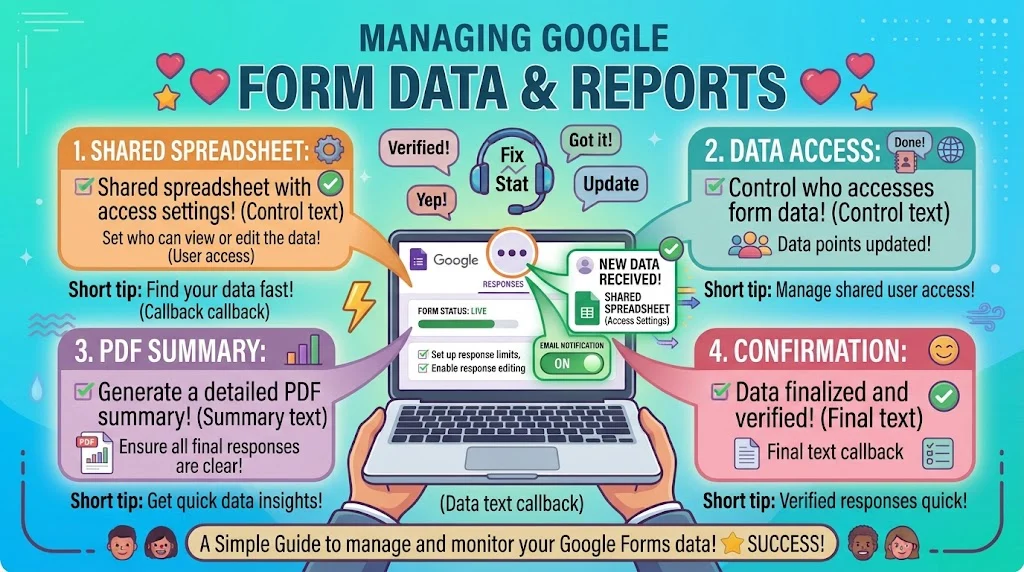
To share responses from Google Forms, open the Responses tab and click the green Sheets icon to send data to a spreadsheet, then share that sheet with view or edit access. You can also download a CSV, print a summary, or copy a response link for a single entry. send to Sheets, download CSV, print summary, share the response link, copy the summary.
How to share responses from Google Forms is a question that shows up the moment your form starts collecting real data. You built the survey, sent the link, and now your boss, client, or teammate wants the results yesterday. Clicking around the Responses tab can feel like a maze when you just need a clean way to hand data over.
The way you share matters because responses often contain names, emails, and honest feedback. Share the wrong link and you expose data to people who should not see it. Share it clearly and you look organized, helpful, and trustworthy. This guide gives you 180+ ready-to-use lines for every tone and situation, from patient tutorials to quick privacy reminders.
Polite And Professional Responses
- “You can share responses by sending the form to Google Sheets, then sharing that sheet with the right people.”
- Example: Use in a work email when a colleague asks for the results.
- Meaning: It gives a clear and respectful method.
- “I have exported the responses to a spreadsheet and shared it with view access. Let me know if you need edit rights.”
- Example: Use when sending results to a manager.
- Meaning: It states the action and offers flexibility.
- “The Responses tab has a summary view you can print or save as a PDF for a quick share.”
- Example: Use when someone wants a visual overview.
- Meaning: It points to a simple option.
- “Thank you for asking. I will send you a link to the responses sheet today.”
- Example: Use in a quick acknowledgment email.
- Meaning: It confirms and sets timing.
- “You can download the responses as a CSV if you prefer to work in Excel.”
- Example: Use when a client uses different software.
- Meaning: It adapts to their tools.
- “Please let me know which format works best: spreadsheet, PDF, or CSV.”
- Example: Use when sharing with a new stakeholder.
- Meaning: It invites preference.
- “I have shared the response summary with the team. Please review and send any questions.”
- Example: Use in a project update.
- Meaning: It opens a feedback loop.
- “Only people with the sheet link can view it. I have limited access to the project group.”
- Example: Use when addressing confidentiality.
- Meaning: It reassures on access.
- “The individual response links are useful when you only need one person’s answers.”
- Example: Use when explaining options.
- Meaning: It clarifies a lesser-known feature.
- “I would recommend sharing a copy rather than the original to avoid accidental edits.”
- Example: Use when advising a teammate.
- Meaning: It protects the data.
- “Feel free to reply if you need the data sorted or filtered before sharing further.”
- Example: Use in a closing line.
- Meaning: It offers extra help.
- “I will keep the original responses private and share only the cleaned export.”
- Example: Use with a client.
- Meaning: It demonstrates care.
Funny And Relatable Responses
- “The responses are in. They are beautiful. And they are hiding in the Responses tab.”
- Example: Use when a friend asks where the data went.
- Meaning: It keeps the mood light.
- “Sharing responses is easy. Understanding why 40 people wrote the same joke is the hard part.”
- Example: Use in a team chat after a survey.
- Meaning: It adds humor to data review.
- “I clicked Share and immediately worried I shared the wrong thing. Classic.”
- Example: Use when talking about your own near-miss.
- Meaning: It builds relatability.
- “The green Sheets icon is the real MVP of Google Forms.”
- Example: Use in a casual post.
- Meaning: It highlights the best shortcut.
- “You can download a CSV, which is fancy talk for please do not type this by hand.”
- Example: Use when explaining to a beginner.
- Meaning: It makes the feature sound friendly.
- “My favorite part of sharing responses is pretending I organized the data on purpose.”
- Example: Use in a self-aware post.
- Meaning: It is honest with humor.
- “Send it to Sheets. Your future self will send you a thank-you note.”
- Example: Use when advising a teammate.
- Meaning: It frames the tip as a favor.
- “The summary view is great until someone asks for a pivot table.”
- Example: Use when discussing data requests.
- Meaning: It pokes fun at scope creep.
- “I shared the responses and instantly got twelve follow-up questions. Worth it.”
- Example: Use in a light update.
- Meaning: It is relatable.
- “Be careful with the share link. One wrong click and everyone sees the chaos.”
- Example: Use in a friendly warning.
- Meaning: It adds humor to privacy.
- “CSV stands for Can Sometimes Vex you. But it works.”
- Example: Use in a casual explainer.
- Meaning: It is playful and memorable.
- “My responses sheet is now the most organized thing in my life. Slightly concerning.”
- Example: Use in a relatable post.
- Meaning: It is funny and true.
Step-By-Step Instructional Responses
- “Open your form, click Responses, then click the green Sheets icon to create a linked spreadsheet.”
- Example: Use when someone needs the exact clicks.
- Meaning: It removes all guesswork.
- “Once the sheet is created, click Share in the top right and add people by email or link.”
- Example: Use as the second step in a guide.
- Meaning: It completes the handoff.
- “To download a copy, go to the three-dot menu in Responses and choose Download responses as CSV.”
- Example: Use when someone needs an offline file.
- Meaning: It gives the file route.
- “For a visual overview, click Summary, then use the print option to save as a PDF.”
- Example: Use when a client wants charts.
- Meaning: It explains the presentation option.
- “To share one entry, open the individual response and copy the link from the address bar.”
- Example: Use when discussing a single case.
- Meaning: It handles a narrow request.
- “Set the sheet sharing to Viewer if people only need to read the data.”
- Example: Use as a safety step.
- Meaning: It prevents accidental edits.
- “Turn off link sharing after the review period so the data does not stay public.”
- Example: Use in a closing checklist.
- Meaning: It adds a cleanup step.
- “Rename the responses sheet clearly, like Event Signups May, before sharing.”
- Example: Use when organizing files.
- Meaning: It avoids confusion.
- “If you need the data live, share the sheet link and leave it connected to the form.”
- Example: Use when updates matter.
- Meaning: It explains live sync.
- “If you need a snapshot, make a copy of the sheet and share the copy instead.”
- Example: Use when data changes constantly.
- Meaning: It protects the original.
- “Add a note in the email explaining which tab holds the responses and which holds the summary.”
- Example: Use when sending a multi-tab sheet.
- Meaning: It guides the reader.
- “Test the shared link in an incognito window to confirm access works.”
- Example: Use before sending to a client.
- Meaning: It catches permission issues.
Beginner-Friendly Responses
- “Think of the Responses tab as the inbox for your form. Sharing means handing that inbox to someone.”
- Example: Use when explaining to a first-time user.
- Meaning: It makes the concept simple.
- “You do not need code to share responses. Google does the heavy lifting.”
- Example: Use when someone expects it to be hard.
- Meaning: It removes fear.
- “Start with the summary view. It is the easiest way to show someone the results.”
- Example: Use as a first suggestion.
- Meaning: It keeps things simple.
- “The green icon is your best friend. It sends everything to a spreadsheet automatically.”
- Example: Use when pointing out the shortcut.
- Meaning: It gives a visual cue.
- “You only need to set this up once per form. After that, the sheet updates itself.”
- Example: Use when someone worries about repeat work.
- Meaning: It clarifies the setup.
- “If the share button confuses you, start by sending the file to yourself first.”
- Example: Use as a safe practice step.
- Meaning: It builds confidence.
- “A CSV is just a spreadsheet file. You can open it in Excel or Google Sheets.”
- Example: Use when explaining formats.
- Meaning: It removes jargon.
- “You cannot break anything by clicking around. The worst case is a duplicate sheet.”
- Example: Use when someone hesitates.
- Meaning: It lowers pressure.
- “Ask one person to open the link and confirm they can see it. That is the whole test.”
- Example: Use in a simple verification tip.
- Meaning: It makes testing easy.
- “Keep the original responses private until you are sure who needs access.”
- Example: Use as a first rule.
- Meaning: It teaches safe habits.
- “You do not need a paid plan to share a responses sheet with a few people.”
- Example: Use when someone asks about cost.
- Meaning: It clears up a worry.
- “Once you share it once, the next time takes ten seconds.”
- Example: Use as encouragement.
- Meaning: It builds long-term confidence.
Troubleshooting Responses
- “If the person cannot open the sheet, check whether you shared it with their exact email address.”
- Example: Use when access fails.
- Meaning: It solves the most common issue.
- “Make sure the sheet is not restricted to your organization if you are sharing outside it.”
- Example: Use in a mixed-audience situation.
- Meaning: It flags a policy blocker.
- “If the data looks outdated, confirm the form is still linked to that spreadsheet.”
- Example: Use when numbers do not update.
- Meaning: It checks the connection.
- “Check whether you shared the form link by mistake instead of the sheet link.”
- Example: Use when someone sees the wrong screen.
Meaning: It catches a simple mix-up.
- Example: Use when someone sees the wrong screen.
- “If edits keep happening, change the access level from Editor to Viewer.”
- Example: Use when data gets changed unexpectedly.
- Meaning: It protects integrity.
- “If the CSV opens with strange characters, import it instead of double-clicking.”
- Example: Use when a file looks broken.
- Meaning: It fixes an encoding issue.
- “If the download is empty, confirm responses actually exist and the form was accepting entries.”
- Example: Use when a file has no rows.
- Meaning: It rules out the basics.
- “If someone says the link expired, ask them to sign in with the right Google account.”
- Example: Use when access seems random.
- Meaning: It explains account confusion.
- “If the sheet is too large, share a filtered view or a smaller export.”
- Example: Use when performance lags.
- Meaning: It offers a practical workaround.
- “If you see duplicate rows, check whether you sent the form to Sheets twice.”
- Example: Use when data looks repeated.
- Meaning: It identifies a known quirk.
- “If a shared copy stops updating, it is because copies do not stay linked to the form.”
- Example: Use when someone expects live data from a copy.
- Meaning: It sets expectations.
- “If nothing works, make a fresh copy of the form, link a new sheet, and share that.”
- Example: Use as a last resort.
- Meaning: It gives a clean restart.
Short And Simple Responses
- “Send it to Sheets, then share the sheet.”
- Example: Use in a quick text reply.
- Meaning: It is the fastest answer.
- “Use the green Sheets icon.”
- Example: Use in a group chat.
- Meaning: It points to the shortcut.
- “Download it as a CSV.”
- Example: Use when someone needs a file.
- Meaning: It is direct.
- “Click Share, then add their email.”
- Example: Use in a brief guide.
- Meaning: It gives the path.
- “Set it to Viewer for safety.”
- Example: Use when advising access.
- Meaning: It is a quick tip.
- “Print the summary as a PDF.”
- Example: Use when charts are needed.
- Meaning: It is simple.
- “Copy the single response link.”
- Example: Use for one entry.
- Meaning: It is precise.
- “Check the email address first.”
- Example: Use in troubleshooting.
- Meaning: It is the first fix.
- “Make a copy before sharing.”
- Example: Use when protecting data.
- Meaning: It is safe advice.
- “Turn link sharing off after.”
- Example: Use as a cleanup tip.
Meaning: It is direct.
- Example: Use as a cleanup tip.
- “Test it in incognito.”
- Example: Use before sending.
- Meaning: It is practical.
- “You are all set.”
- Example: Use after confirming access.
- Meaning: It closes the loop.
Confident And Expert Responses
- “Send the form to Sheets first. Sharing a live sheet is cleaner than forwarding a CSV around.”
- Example: Use when advising a team lead.
- Meaning: It shows practical expertise.
- “For one-time reports, download a CSV. For ongoing work, share the linked sheet.”
- Example: Use when choosing a method.
- Meaning: It gives a clear rule.
- “Always share a copy, not the original, if people might edit the data.”
- Example: Use in a process guideline.
- Meaning: It protects source data.
- “The individual response link is underrated. Use it for case reviews and disputes.”
- Example: Use when discussing specific entries.
- Meaning: It highlights a smart feature.
- “Set permissions to Viewer by default and upgrade only on request.”
- Example: Use in a privacy policy.
- Meaning: It sets a safe standard.
- “If you need custom recipients, an Apps Script trigger is more reliable than manual exports.”
- Example: Use in a technical discussion.
- Meaning: It shows deeper knowledge.
- “Never share responses containing personal data over an open link. Use email-restricted access.”
- Example: Use in a compliance note.
- Meaning: It is firm and informed.
- “Keep a naming convention for exports so old and new data do not mix.”
- Example: Use when managing repeated surveys.
- Meaning: It avoids errors.
- “Review sharing settings every quarter. Old links become quiet risks.”
- Example: Use in a data hygiene review.
- Meaning: It adds long-term thinking.
- “Share the summary PDF for stakeholders and the sheet for analysts. Match the format to the reader.”
- Example: Use when planning distribution.
- Meaning: It is audience-aware.
- “If the data is sensitive, anonymize the export before it leaves your account.”
- Example: Use in a privacy briefing.
- Meaning: It demonstrates responsibility.
- “Document the sharing steps once so the next person does not rebuild the process.”
- Example: Use when handing off a project.
- Meaning: It adds lasting value.
Casual And Chill Responses
- “Yeah, just send it to Sheets and share that link. Super easy.”
- Example: Use in a relaxed Slack message.
- Meaning: It keeps things friendly.
- “You can also download a CSV if that is more your thing.”
- Example: Use in a casual chat.
- Meaning: It offers an option.
- “I usually share the summary PDF. People love a clean chart.”
- Example: Use when sharing your habit.
- Meaning: It is honest and relaxed.
- “Just set it to view only and you are good.”
- Example: Use in a quick reply.
- Meaning: It is simple advice.
- “No big deal, it takes like ten seconds.”
- Example: Use when someone hesitates.
- Meaning: It removes pressure.
- “I shared it with the group already. Check your email.”
- Example: Use in a team thread.
- Meaning: It is direct and chill.
- “You can grab one response link if you only need one person’s answers.”
- Example: Use in a friendly tip.
- Meaning: It is helpful.
- “If the link does not work, it is usually the wrong email.”
- Example: Use in troubleshooting.
- Meaning: It is low-effort help.
- “Make a copy so nobody edits the original. Trust me.”
- Example: Use in a casual warning.
- Meaning: It is practical.
- “The green icon does all the work. Just click it.”
- Example: Use when someone is stuck.
- Meaning: It is simple.
- “Once it is shared, you can forget about it.”
- Example: Use as a friendly sign-off.
- Meaning: It is reassuring.
- “Ping me if it does not open. We will sort it out.”
- Example: Use in a relaxed closing.
- Meaning: It offers support.
Creative And Clever Responses
- “Think of the Responses tab as a filing cabinet. The Sheets icon is the drawer you hand over.”
- Example: Use in a teaching post.
- Meaning: It uses a familiar image.
- “Sharing responses is like passing the baton. The sheet is the baton.”
- Example: Use in a workshop.
- Meaning: It is memorable.
- “The summary view is the highlight reel. The sheet is the full game footage.”
- Example: Use when explaining formats.
- Meaning: It is clear and creative.
- “A CSV is a snapshot. A linked sheet is a live feed. Choose your adventure.”
- Example: Use in a guide.
- Meaning: It frames the choice.
- “Share the sheet and you have basically built a tiny dashboard for free.”
- Example: Use when motivating a team.
- Meaning: It shows value.
- “The green icon is the bridge between your form and your team.”
- Example: Use in a tutorial.
- Meaning: It is vivid and simple.
- “Sharing responses well is a quiet superpower. It makes you look organized.”
- Example: Use in a career tip post.
- Meaning: It connects to reputation.
- “Think of access levels as doors. Viewer is a window, Editor is a key.”
- Example: Use when explaining permissions.
- Meaning: It is clear and clever.
- “The PDF summary is the trailer. The spreadsheet is the whole movie.”
- Example: Use in a marketing caption.
- Meaning: It is engaging.
- “Each response link is a spotlight on one person’s answers. Use it wisely.”
- Example: Use when discussing individual entries.
- Meaning: It is creative and useful.
- “Pair a live sheet with a clean PDF and you have covered every reader.”
- Example: Use when planning a report.
- Meaning: It connects tools logically.
- “Sharing is not just sending a file. It is telling a story with data.”
- Example: Use in a presentation note.
- Meaning: It is thoughtful.
Sarcastic And Witty Responses
- “Oh, the sharing options are in the Responses tab. Of course they are not in Settings.”
- Example: Use when someone complains about the layout.
- Meaning: It acknowledges the irony.
- “Sure, email everyone a CSV and watch the versions multiply.”
- Example: Use when warning against messy sharing.
- Meaning: It is dry and true.
- “You can share an open link. What could possibly go wrong.”
- Example: Use in a privacy chat.
- Meaning: It is sarcastic but pointed.
- “The green icon has been there the whole time. It was just waiting for you.”
- Example: Use when someone finally finds it.
- Meaning: It is playful.
- “You mean you do not love exporting the same data five times? Wild.”
- Example: Use when discussing repeat requests.
- Meaning: It is witty.
- “Set it to Editor and enjoy the mystery edits that appear overnight.”
- Example: Use when warning about access levels.
- Meaning: It is dryly funny.
- “Sharing a CSV is the digital version of printing extra copies for the meeting.”
- Example: Use in a relatable post.
- Meaning: It is clever.
- “The summary PDF is great. Until someone asks for a filter.”
- Example: Use when discussing scope.
- Meaning: It is honest with humor.
- “Yes, the link works. No, they were not signed into the right account.”
- Example: Use in a troubleshooting thread.
- Meaning: It is wry and accurate.
- “Turn off link sharing after. Or do not. Live dangerously.”
- Example: Use in a friendly nudge.
- Meaning: It is funny but clear.
- “Google gives you five ways to share. You only need one, but you will try all five.”
- Example: Use in a casual post.
- Meaning: It is relatable.
- “The data is shared. The follow-up questions are not far behind.”
- Example: Use in a team chat.
- Meaning: It is light and true.
Empathetic And Patient Responses
- “I know sharing settings can feel confusing. The good news is you only need one method to start.”
- Example: Use when someone is overwhelmed.
- Meaning: It validates the feeling.
- “Take your time. Clicking the green icon does not change anything until you share it.”
- Example: Use when guiding a beginner.
- Meaning: It removes pressure.
- “It is okay to test with your own email first. That is what I do.”
- Example: Use when someone worries about mistakes.
- Meaning: It offers a safe habit.
- “You are not the first person to ask this. The tabs can be confusing.”
- Example: Use in a support reply.
Meaning: It normalizes the struggle.
- Example: Use in a support reply.
- “If you are unsure who should see the data, start with one trusted person.”
- Example: Use when confidentiality matters.
- Meaning: It is cautious and kind.
- “No rush. Sharing a copy now is better than sharing everything by accident.”
- Example: Use when someone is hurried.
- Meaning: It slows things down safely.
- “I am happy to walk you through it. It takes two minutes.”
- Example: Use in a live support moment.
- Meaning: It offers partnership.
- “You are doing fine. This part is just fiddly the first time.”
- Example: Use when someone doubts themselves.
- Meaning: It builds confidence.
- “It is completely okay to send me the file instead. We can sort the access together.”
- Example: Use when someone is stuck.
- Meaning: It offers an alternative.
- “If a teammate is upset about access, reassure them it is easy to fix.”
- Example: Use when mediating.
- Meaning: It keeps the peace.
- “You will get the hang of it. And once you do, this saves hours.”
- Example: Use as encouragement.
- Meaning: It ends on hope.
- “Ask me anything. No question is too basic here.”
- Example: Use in a team onboarding.
- Meaning: It creates safety.
Firm And Direct Responses
- “Do not share the form link when people asked for results. Share the responses sheet.”
- Example: Use when correcting a common mistake.
- Meaning: It is clear and corrective.
- “Set it to Viewer. The data is not a group edit project.”
- Example: Use when access is too open.
- Meaning: It is blunt and practical.
- “Never share a public link for responses that contain personal data.”
- Example: Use in a privacy warning.
- Meaning: It sets a hard rule.
- “If you need a snapshot, make a copy. Do not hand over the live original.”
- Example: Use when advising caution.
- Meaning: It is direct.
- “Turn off link sharing when the review is over.”
- Example: Use in a closing checklist.
- Meaning: It is firm and simple.
- “Check the recipient email before you send. Guessing wastes everyone’s time.”
- Example: Use in troubleshooting.
- Meaning: It is efficient.
- “Do not edit the responses sheet directly. Use filters and sorting instead.”
- Example: Use in a data rule.
- Meaning: It protects accuracy.
- “If the data is sensitive, anonymize it first. No exceptions.”
- Example: Use in a compliance note.
- Meaning: It is strict.
- “Share the summary, not the raw responses, unless the person needs detail.”
- Example: Use when choosing a format.
- Meaning: It is practical guidance.
- “Confirm access before the meeting starts. Do not test links live.”
- Example: Use in a prep checklist.
- Meaning: It prevents embarrassment.
- “Document who has access. Unlisted links become forgotten risks.”
- Example: Use in a data review.
- Meaning: It enforces accountability.
- “If you cannot explain the access level, you are not ready to share.”
- Example: Use in a training session.
- Meaning: It sets a standard.
Team And Collaboration Responses
- “I have linked the form to Sheets and shared it with the project group as Viewers.”
- Example: Use in a project update.
- Meaning: It states the action and access.
- “Let us keep one master sheet and share filtered views for different teams.”
- Example: Use in a planning meeting.
- Meaning: It offers a clean structure.
- “I will add you as an Editor so you can update the status column.”
- Example: Use when assigning tasks.
- Meaning: It matches access to role.
- “Please do not add new rows to the responses sheet. It can break the form link.”
- Example: Use as a team guideline.
- Meaning: It prevents a common error.
- “I will own the data hygiene. You own the review. Deal?”
- Example: Use when dividing work.
- Meaning: It clarifies responsibility.
- “The summary tab is for stakeholders. The raw tab is for analysis. Share accordingly.”
- Example: Use in a handoff note.
- Meaning: It is audience-aware.
- “I have created a copy for the client and kept the original internal.”
- Example: Use when separating audiences.
- Meaning: It protects internal data.
- “Let us set a weekly export so we always have a dated backup.”
- Example: Use in a recurring workflow.
- Meaning: It adds reliability.
- “If two people need edit access, name the columns clearly so edits do not clash.”
- Example: Use in a team setup.
- Meaning: It prevents confusion.
- “I will post the response link in the project channel once the review opens.”
- Example: Use when coordinating timing.
- Meaning: It keeps communication clear.
- “Please confirm you can open the sheet before we discuss the findings.”
- Example: Use before a meeting.
- Meaning: It avoids wasted time.
- “The team has access now. Let me know if anyone is missing.”
- Example: Use in a wrap-up message.
- Meaning: It closes the loop.
Privacy And Security Responses
- “Responses often contain personal data, so share with named emails rather than open links.”
- Example: Use in a privacy briefing.
- Meaning: It sets a safe default.
- “Set the sheet to Viewer and restrict download and print if the data is sensitive.”
- Example: Use in a compliance checklist.
- Meaning: It adds extra control.
- “Anonymize the export before sending it outside the organization.”
- Example: Use when sharing externally.
- Meaning: It protects individuals.
- “Avoid forwarding response emails. They contain personal details.”
- Example: Use in a team reminder.
- Meaning: It is a clear rule.
- “Use a separate copy for each audience so access stays limited.”
- Example: Use when multiple groups need data.
- Meaning: It limits exposure.
- “Review access every month and remove people who no longer need it.”
- Example: Use in a data hygiene routine.
- Meaning: It keeps permissions current.
- “Do not share the form editor link. Only share the responses sheet or a copy.”
- Example: Use when preventing mistakes.
- Meaning: It is firm and clear.
- “If a link was shared publicly by mistake, revoke access immediately.”
- Example: Use in an incident response.
- Meaning: It gives a fast remedy.
- “Keep the raw data internal and share a summarized version externally.”
- Example: Use when dealing with clients.
- Meaning: It balances transparency and safety.
- “Ask before adding new people to a sheet that holds personal responses.”
- Example: Use in a team policy.
- Meaning: It prevents surprise exposure.
- “Screenshot only what is needed. Full screenshots often reveal more than intended.”
- Example: Use when sharing visuals.
- Meaning: It is a careful practice.
- “If you are unsure about sharing safely, ask first. It is always faster than fixing a leak.”
- Example: Use in a closing reminder.
- Meaning: It encourages caution.
Mobile And On-The-Go Responses
- “You can share responses from the Google Forms app by opening Responses and tapping the Sheets option.”
- Example: Use when someone is away from a laptop.
- Meaning: It gives a mobile route.
- “On mobile, the summary view is easier to read than the full sheet.”
- Example: Use when advising a phone user.
- Meaning: It is practical.
- “If the share menu is hidden, rotate your phone or use desktop view.”
- Example: Use when mobile layout hides options.
- Meaning: It solves a common issue.
- “You can copy the response link on mobile by long pressing the address bar.”
- Example: Use when sharing a single entry.
- Meaning: It is a quick tip.
- “For large exports, do it on desktop. Mobile downloads can get messy.”
- Example: Use when someone is traveling.
- Meaning: It sets realistic expectations.
- “Use the Sheets app to share access if you are not near a computer.”
- Example: Use in a mobile workflow.
- Meaning: It offers an alternative.
- “Check that the recipient can open the link on their phone before the meeting.”
- Example: Use before a mobile review.
- Meaning: It prevents surprises.
- “If you are in a hurry, screenshot the summary and send it. Full access can wait.”
- Example: Use in a fast-moving situation.
- Meaning: It offers a quick option.
- “Set a reminder to update access levels when you are back at your desk.”
- Example: Use when sharing on the go.
- Meaning: It adds follow-through.
- “Mobile sharing works, but double-check the email address before you tap send.”
- Example: Use as a careful reminder.
- Meaning: It prevents typos.
- “The Sheets app lets you share with specific people even if the form was made on desktop.”
- Example: Use when explaining flexibility.
- Meaning: It clarifies access.
- “Do the sensitive steps on desktop. Do the quick checks on mobile.”
- Example: Use as a simple rule.
- Meaning: It is practical guidance.
FAQs
How do I share responses from Google Forms?
Go to the Responses tab, click the green Sheets icon to create a linked spreadsheet, then use the Share button to add people by email or link. You can also download a CSV or print the summary as a PDF.
Can I share responses without sharing the form itself?
Yes. Sharing the responses sheet, a CSV export, or the summary PDF does not give anyone access to the form editor or the ability to change questions.
Can I share just one response?
Yes. Open the individual response and copy the link from the address bar. That link opens only that entry for people with access.
What is the difference between a linked sheet and a downloaded CSV?
A linked sheet updates automatically as new responses arrive. A CSV is a fixed snapshot you download and share as a file.
How do I keep responses private when sharing?
Set access to Viewer, share with named email addresses instead of an open link, avoid forwarding response emails, and anonymize data before sending it outside your organization.
Why can’t the person I shared with open the sheet?
Check that you used their correct email, that the sheet is not restricted to your organization, and that they are signed in with the right Google account.
Conclusion
How to share responses from Google Forms comes down to three moves: link the form to Sheets, set the right access level, and send it to the right people. Whether you are handing data to a client, a class, or your own team, a clean share makes you look organized and trustworthy.
Save this guide, use the lines that fit your tone, and review your access settings before every handoff. A little care here saves a lot of awkward follow-up later. You have got the data. Now go share it like a pro.
