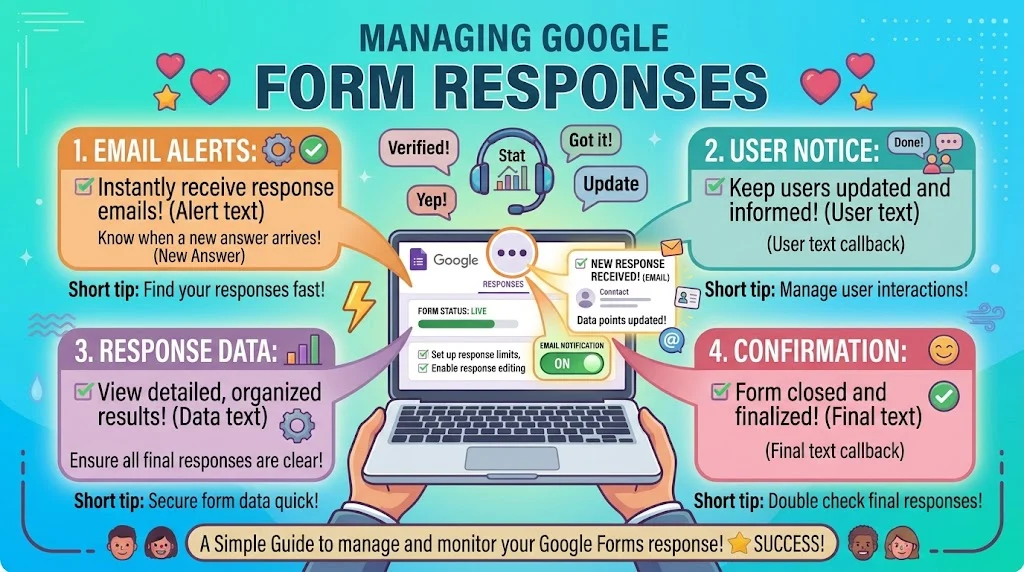
To get email notifications in Google Forms, open your form, go to the Responses tab, click the three-dot menu, and turn on Get email notifications for new responses. Top alternatives: turn on notifications, use the Responses menu, connect Google Sheets alerts, use an Apps Script, check your spam folder.
Google Forms get email notifications for new responses is one of those settings people hunt for after missing a hundred submissions. Maybe you built a signup form for an event, a client intake form, or a quiz for your class, and now you are refreshing the responses tab like it owes you money. The good news is the toggle exists. The better news is you can also route alerts through Sheets or a script if you need them sent somewhere else.
Whether you are replying to a coworker in Slack, answering a client email, or explaining the setup to your team, the right words save everyone time. A clear answer stops the “did you see my form entry?” messages for good. This guide gives you 170+ ready-to-use lines for every tone and situation, from patient tutorials to quick fixes.
Polite And Professional Responses
- “You can turn on email notifications from the Responses tab in your form.”
- Example: Use in a work email when a colleague asks how to get alerts.
- Meaning: It gives a direct and respectful answer.
- “Google Forms can email you each time someone submits. The setting lives in the Responses menu.”
- Example: Use in a team chat when onboarding someone new.
- Meaning: It explains the feature without jargon.
- “Please enable notifications in the Responses tab so you do not miss any entries.”
- Example: Use in a handover note.
- Meaning: It guides with courtesy.
- “Thank you for asking. You can find the notification toggle under the three-dot menu in Responses.”
- Example: Use when replying to a support question.
- Meaning: It validates the question and answers it.
- “I have turned on email alerts for this form, so we will both be notified.”
- Example: Use when confirming setup with a teammate.
- Meaning: It reassures with action taken.
- “Notifications go to the email tied to the Google account that owns the form.”
- Example: Use when clarifying who receives alerts.
- Meaning: It sets accurate expectations.
- “You may need to check your spam folder if the alerts are not arriving.”
- Example: Use in a troubleshooting email.
- Meaning: It offers a simple next step.
- “Only form editors with notifications enabled will receive the emails.”
- Example: Use in a team guideline document.
- Meaning: It explains the permission model.
- “Feel free to share the form link once notifications are active on your end.”
- Example: Use in a project update.
- Meaning: It keeps workflow moving politely.
- “I would recommend testing it with one submission before you share it widely.”
- Example: Use when advising a first-time user.
- Meaning: It prevents surprises.
- “The notification email includes a summary of the response and a link to view details.”
- Example: Use when explaining what to expect.
- Meaning: It describes the output clearly.
- “Let me know if you would like me to walk you through the setup.”
- Example: Use in a closing line of an email.
- Meaning: It offers support.
Funny And Relatable Responses
- “The notification toggle is hiding in the three-dot menu like it owes you rent.”
- Example: Use when a friend cannot find the setting.
- Meaning: It makes the hunt feel normal.
- “You can get an email for every response. Yes, every single one. Prepare your inbox.”
- Example: Use when warning a colleague about volume.
- Meaning: It is honest with humor.
- “I refreshed the responses tab for ten minutes before I found the notification setting.”
- Example: Use when sharing your own mistake.
- Meaning: It builds relatability.
- “Google Forms will email you so fast you will think it is your boss.”
- Example: Use in a light team chat.
Meaning: It adds a playful comparison.
- Example: Use in a light team chat.
- “Notifications on means your inbox becomes a group project.”
- Example: Use when discussing shared forms.
- Meaning: It keeps the tone fun.
- “I missed forty responses because I never turned it on. Learn from my pain.”
- Example: Use in a casual post.
Meaning: It turns a mistake into advice.
- Example: Use in a casual post.
- “The setting is not lost. It is just taking a nap in the menu.”
- Example: Use when someone feels stuck.
- Meaning: It eases frustration.
- “Turn it on and let the dopamine hits roll in with every submission.”
- Example: Use in a creator group.
- Meaning: It is playful and motivating.
- “My inbox and I have a complicated relationship now that notifications are on.”
- Example: Use when venting lightly.
- Meaning: It is funny and self-aware.
- “You will get an email faster than your group chat replies to plans.”
- Example: Use in a friend group.
- Meaning: It lands a familiar joke.
- “Google Forms said ding. Your inbox said what now.”
- Example: Use in a meme-style reply.
Meaning: It keeps things light.
- Example: Use in a meme-style reply.
- “I turned on notifications and immediately got three responses. It works. Too well.”
- Example: Use when confirming the setup.
- Meaning: It is honest with a smile.
Step-By-Step Instructional Responses
- “Open your form, click Responses, open the three-dot menu, and select Get email notifications for new responses.”
- Example: Use when someone needs exact clicks.
- Meaning: It removes all guesswork.
- “Make sure you are signed in as the form owner or an editor with notification access.”
- Example: Use as step zero in a guide.
- Meaning: It prevents permission errors.
- “After turning it on, submit a test entry so you can confirm the email arrives.”
- Example: Use when verifying a setup.
- Meaning: It closes the loop.
- “If you want a second person notified, add them as an editor and have them enable alerts too.”
- Example: Use when a team needs shared alerts.
- Meaning: It explains multi-recipient workarounds.
- “To route alerts to a spreadsheet, connect the form to Google Sheets first.”
- Example: Use when someone wants data tracking.
- Meaning: It sets the foundation.
- “In Google Sheets, go to Tools, then Notification settings, and set alerts for changes.”
- Example: Use when form notifications are not enough.
- Meaning: It gives a reliable fallback.
- “You can also use an Apps Script trigger to email any address you choose.”
- Example: Use when someone needs a custom recipient.
- Meaning: It explains the advanced route.
- “Check that your form is still accepting responses before testing notifications.”
- Example: Use when alerts seem missing.
- Meaning: It removes an easy mistake.
- “Open the notification email and click the response link to view the full entry in the form.”
- Example: Use when explaining the workflow.
- Meaning: It shows what happens next.
- “Toggle notifications off and on again if the setting looks stuck.”
- Example: Use in a quick fix guide.
- Meaning: It offers a reset.
- “Keep the form in the same Google account. Moving ownership can affect notification delivery.”
- Example: Use when transferring a project.
- Meaning: It avoids a common pitfall.
- “Document the setup in your team notes so nobody has to rebuild it later.”
- Example: Use when finishing a project.
- Meaning: It adds long-term value.
Beginner-Friendly Responses
- “Think of it like a doorbell for your form. Every submission rings your email.”
- Example: Use when explaining to a first-time user.
- Meaning: It makes the concept simple.
- “You do not need any code. The notification setting is built right into the form.”
- Example: Use when someone expects it to be hard.
- Meaning: It removes fear.
- “Start with the Responses tab. That is where all the magic lives.”
- Example: Use as a first pointer.
- Meaning: It narrows the search.
- “It is okay if you cannot find it. The menu is small and easy to miss.”
- Example: Use when someone feels silly.
- Meaning: It offers reassurance.
- “You only need to do this once per form. It stays on until you turn it off.”
- Example: Use when someone worries about repeating steps.
- Meaning: It simplifies expectations.
- “The email will look plain, but it contains everything you need to view the response.”
- Example: Use when setting expectations.
- Meaning: It prevents disappointment.
- “If you can share a form link, you can turn on notifications. Same skill level.”
- Example: Use when encouraging a nervous user.
- Meaning: It builds confidence.
- “Try it on a practice form first. No pressure, no audience.”
- Example: Use when teaching a beginner.
- Meaning: It creates a safe test.
- “You do not need a paid Google Workspace plan for basic notifications.”
- Example: Use when someone asks about cost.
- Meaning: It clears up a common worry.
- “Notifications are separate from response receipts. Receipts go to the person filling the form.”
- Example: Use when someone confuses the two.
- Meaning: It clarifies a key difference.
- “Ask one question in the form and test it. Small steps make it click.”
- Example: Use when someone feels overwhelmed.
- Meaning: It breaks the task down.
- “Once it is on, you can forget about it and just check your inbox.”
- Example: Use as a final reassurance.
- Meaning: It shows the payoff.
Troubleshooting Responses
- “Check your spam and promotions folders. Notification emails often land there first.”
- Example: Use when someone says alerts are missing.
- Meaning: It solves the most common issue.
- “Confirm the toggle is still on. Some accounts reset it after ownership changes.”
- Example: Use when notifications suddenly stop.
- Meaning: It points to a likely cause.
- “Make sure the form is accepting responses. A closed form sends no alerts.”
- Example: Use when no emails arrive despite submissions.
- Meaning: It rules out the simplest cause.
- “Verify you are signed in with the account that owns the form.”
- Example: Use when someone uses multiple Google accounts.
- Meaning: It prevents account mix-ups.
- “If you use a work account, your admin may block external notification emails.”
- Example: Use in a corporate setting.
- Meaning: It flags a policy issue.
- “Try submitting a test response from a different browser or device.”
- Example: Use when testing feels unreliable.
- Meaning: It isolates the problem.
- “Clear your browser cache and reload the form before toggling notifications again.”
- Example: Use when the setting will not save.
- Meaning: It fixes a stuck interface.
- “Check that the form has at least one question and is published.”
- Example: Use when a brand new form misbehaves.
- Meaning: It catches setup gaps.
- “If you added an add-on, disable it and test the built-in notifications alone.”
- Example: Use when multiple tools conflict.
- Meaning: It narrows the cause.
- “Look at the form’s version history if a recent edit broke the setup.”
- Example: Use when alerts worked before an update.
- Meaning: It traces the change.
- “Ask a teammate to submit a real response and watch your inbox together.”
- Example: Use when remote debugging is needed.
- Meaning: It confirms in real time.
- “If nothing works, duplicate the form and turn on notifications in the copy.”
- Example: Use as a last resort.
- Meaning: It gives a clean restart.
Short And Simple Responses
- “Turn it on in the Responses menu.”
- Example: Use in a quick text reply.
- Meaning: It is clear and fast.
- “Three-dot menu, then notifications.”
- Example: Use in a group chat.
- Meaning: It gives the path.
- “Yes, Google Forms can email you.”
- Example: Use when answering a yes or no question.
- Meaning: It is direct.
- “Check spam first.”
- Example: Use in a troubleshooting thread.
- Meaning: It is the fastest fix.
- “Only editors get the alerts.”
- Example: Use when clarifying recipients.
- Meaning: It is brief and accurate.
- “Test with one entry.”
- Example: Use when advising setup.
- Meaning: It is practical.
- “It stays on until you turn it off.”
- Example: Use when someone worries about repeat steps.
- Meaning: It is reassuring.
- “Use Sheets alerts as a backup.”
- Example: Use when the built-in option is not enough.
- Meaning: It offers a plan B.
- “Confirm you own the form.”
- Example: Use when notifications fail.
- Meaning: It points to permissions.
- “No code needed.”
- Example: Use when someone expects a technical fix.
- Meaning: It removes fear.
- “It is in the Responses tab.”
- Example: Use when someone searches Settings.
- Meaning: It redirects quickly.
- “You are all set.”
- Example: Use after confirming the setup.
- Meaning: It closes the loop.
Confident And Expert Responses
- “The built-in toggle is the fastest route. Skip the add-ons unless you need custom recipients.”
- Example: Use when advising a team lead.
- Meaning: It shows practical expertise.
- “For shared inboxes, use an Apps Script trigger. It is reliable and easy to maintain.”
- Example: Use in a technical discussion.
- Meaning: It gives a solid recommendation.
- “Notifications are tied to the account, not the form link. That is the key detail.”
- Example: Use when someone troubleshoots delivery.
- Meaning: It clarifies the model.
- “I always test with a live submission before sharing the form. It saves headaches.”
- Example: Use when sharing best practice.
- Meaning: It shows experience.
- “If you need alerts in Slack, connect the Sheet to a webhook. Forms alone will not do it.”
- Example: Use in a workflow meeting.
- Meaning: It sets realistic expectations.
- “Keep the form in a shared drive if multiple people need visibility.”
- Example: Use when planning team access.
- Meaning: It prevents ownership issues.
- “The email notification is a summary, not the full data export. Use Sheets for analysis.”
- Example: Use when someone expects spreadsheets in their inbox.
- Meaning: It manages expectations.
- “I recommend turning on notifications the same day you create the form.”
- Example: Use in a process document.
- Meaning: It builds a good habit.
- “Check admin console settings before blaming Google Forms. Restrictions are common.”
- Example: Use in an enterprise environment.
Meaning: It saves time.
- Example: Use in an enterprise environment.
- “A duplicate form is a clean way to reset a broken notification setup.”
- Example: Use when troubleshooting drags on.
- Meaning: It offers a decisive fix.
- “Response receipts and owner notifications are two different features. Do not mix them up.”
- Example: Use when explaining to a client.
- Meaning: It prevents confusion.
- “You can verify delivery in the sent folder of the account that owns the form.”
- Example: Use when confirming the setup.
- Meaning: It gives a concrete check.
Casual And Chill Responses
- “Yeah, just flip it on in the Responses tab. Super easy.”
- Example: Use in a relaxed Slack message.
- Meaning: It keeps things friendly.
- “Google will email you every time someone submits. Handy, right?”
- Example: Use when chatting with a friend.
- Meaning: It is warm and simple.
- “I usually turn it on right after I build the form. Takes ten seconds.”
- Example: Use when sharing your habit.
- Meaning: It is casual advice.
- “If the emails stop, check spam. That is usually it.”
- Example: Use in a quick reply.
- Meaning: It is low-effort and helpful.
- “No big deal, it is just a toggle. You cannot break anything.”
- Example: Use when someone hesitates.
- Meaning: It removes pressure.
- “You can also watch the responses tab, but email is way less work.”
- Example: Use when comparing options.
- Meaning: It is honest and practical.
- “I have it on for all my forms. My inbox is loud but informed.”
- Example: Use in a casual post.
- Meaning: It is relatable.
- “Just test it once and you are good to go.”
- Example: Use when wrapping up a chat.
- Meaning: It is simple closure.
- “It is under the three dots. Took me a while too.”
- Example: Use when someone struggles.
- Meaning: It normalizes the search.
- “Yeah, only the owner and editors get the emails. That part trips people up.”
- Example: Use in a team thread.
- Meaning: It clarifies casually.
- “You do not need to install anything. It is already there.”
- Example: Use when someone asks about tools.
- Meaning: It is reassuring.
- “Once it is on, you can forget about it. It just works.”
- Example: Use as a friendly sign-off.
- Meaning: It builds trust.
Creative And Clever Responses
- “Think of the notification as a tiny applause for every submission.”
- Example: Use when explaining to a creator.
- Meaning: It makes the feature feel rewarding.
- “Your form is a mailbox. The notification is the little flag that pops up.”
- Example: Use in a teaching post.
- Meaning: It uses a familiar image.
- “Turning on notifications is like giving your form a voice.”
- Example: Use in a marketing caption.
- Meaning: It is vivid and simple.
- “The toggle is the form’s way of saying hey, someone just showed up.”
- Example: Use in a casual explanation.
- Meaning: It adds personality.
- “Each email is a receipt that says your audience is paying attention.”
- Example: Use when motivating a client.
- Meaning: It frames alerts as proof of traction.
- “You are basically building a doorbell for your data.”
- Example: Use in a workshop.
- Meaning: It is memorable.
- “Notifications turn a silent form into a conversation starter.”
- Example: Use in a blog intro.
- Meaning: It is engaging.
- “The three-dot menu is a treasure chest. Notifications are the gem inside.”
- Example: Use when someone cannot find it.
- Meaning: It adds whimsy.
- “Think of it as a watchtower for your responses.”
- Example: Use in a process guide.
- Meaning: It is clear and creative.
- “Your inbox becomes the front desk. Every submission checks in.”
- Example: Use when explaining volume.
- Meaning: It uses a strong metaphor.
- “The setting is small but mighty. It changes how you run the whole form.”
- Example: Use in a tip post.
- Meaning: It highlights impact.
- “Pair notifications with Sheets and you have a full command center.”
- Example: Use when recommending a setup.
- Meaning: It connects tools logically.
Sarcastic And Witty Responses
- “Oh, the setting is not in Settings. Of course it is not.”
- Example: Use when someone complains about the layout.
- Meaning: It acknowledges the irony.
- “Google hid the toggle in the three-dot menu because easy would be boring.”
- Example: Use in a relatable post.
- Meaning: It is dry and funny.
- “Turn it on and enjoy the sound of your inbox becoming a group chat.”
- Example: Use when warning a friend.
- Meaning: It is witty and true.
- “You mean you do not enjoy manually refreshing the responses tab? Wild.”
- Example: Use when someone finally asks for help.
- Meaning: It teases gently.
- “Yes, the feature exists. It just refuses to introduce itself.”
- Example: Use in a support thread.
- Meaning: It is playful.
- “You can get an email for every entry. Choose your own adventure.”
- Example: Use when discussing notification volume.
- Meaning: It is light and clever.
- “The notification toggle is like a light switch. Except harder to find.”
- Example: Use in a tutorial.
- Meaning: It is honest with humor.
- “I clicked every tab before I found it. Glad we are in this together.”
- Example: Use when someone is frustrated.
- Meaning: It builds camaraderie.
- “Notifications on, patience off. That inbox fills fast.”
- Example: Use in a casual warning.
- Meaning: It is witty.
- “Google Forms will email you so you can ignore it in a new place.”
- Example: Use in a meme-style post.
- Meaning: It pokes fun at inbox habits.
- “Sure, keep checking the tab manually. The toggle will wait.”
- Example: Use when someone resists setup.
- Meaning: It is dryly helpful.
- “The email is plain, the feature is hidden, but it works. Very Google.”
- Example: Use in a review.
- Meaning: It is a fair and funny take.
Empathetic And Patient Responses
- “I know it is frustrating to miss responses. The fix is quicker than it looks.”
- Example: Use when someone is upset about lost data.
- Meaning: It validates the feeling.
- “Take your time. The setting is easy to miss and that is not your fault.”
- Example: Use when guiding a beginner.
- Meaning: It removes blame.
- “It is okay to test a few times. That is how everyone learns the setup.”
- Example: Use when someone makes mistakes.
- Meaning: It encourages patience.
- “If you feel overwhelmed, start with just the notifications. Ignore the rest for now.”
- Example: Use when someone is juggling tasks.
- Meaning: It simplifies the moment.
- “You are not the first person to ask this. It is a common question.”
- Example: Use in a support reply.
- Meaning: It normalizes the struggle.
- “I understand the worry about missing a submission. Let us fix it together.”
- Example: Use when a client is anxious.
- Meaning: It offers partnership.
- “No rush. Once the toggle is on, it handles itself.”
- Example: Use when someone is short on time.
- Meaning: It is calm and reassuring.
- “It is completely fine to ask for help with the three-dot menu. It is small.”
- Example: Use when someone apologizes for asking.
- Meaning: It is kind.
- “You are doing better than you think. This part is just fiddly.”
- Example: Use when someone doubts themselves.
- Meaning: It builds confidence.
- “If it still does not work, we will try the Sheets route. One step at a time.”
- Example: Use when troubleshooting continues.
- Meaning: It offers a path forward.
- “I am happy to stay on the call until you see that first email.”
- Example: Use in a live support moment.
- Meaning: It shows commitment.
- “You will get this sorted. And once it is on, you will wonder how you worked without it.”
- Example: Use as a closing reassurance.
- Meaning: It ends on hope.
Firm And Direct Responses
- “You need to turn it on in the Responses menu. It is not automatic.”
- Example: Use when someone assumes alerts are default.
- Meaning: It corrects a false assumption.
- “Do not rely on memory. Use the built-in toggle.”
- Example: Use when someone plans to check manually.
- Meaning: It is blunt and practical.
- “Only editors receive notifications. Add the right people or expect silence.”
- Example: Use when a team misses entries.
- Meaning: It sets a hard rule.
- “Check spam before asking me. It is almost always spam.”
- Example: Use in a busy support channel.
- Meaning: It is direct and efficient.
- “A closed form sends nothing. Confirm it is open first.”
- Example: Use when troubleshooting starts.
- Meaning: It removes a common error.
- “Stop refreshing the tab. Turn on the email.”
- Example: Use in a team chat.
- Meaning: It is clear and corrective.
- “If you need alerts for another address, you need a script or an add-on. The default will not do it.”
- Example: Use when requirements are unclear.
Meaning: It sets a firm boundary.
- Example: Use when requirements are unclear.
- “Test it with one submission. Guessing wastes more time.”
- Example: Use when someone hesitates to try.
- Meaning: It pushes action.
- “Work accounts may block these emails. Check with your admin.”
- Example: Use in a corporate thread.
- Meaning: It points to policy.
- “Do not share the form until notifications are confirmed.”
- Example: Use in a launch checklist.
- Meaning: It prevents lost data.
- “The setting is per form. You cannot set it globally across all forms.”
- Example: Use when someone wants a one-time fix.
- Meaning: It clarifies scope.
- “Document who receives alerts so nobody assumes they are covered.”
- Example: Use in a team handover.
- Meaning: It enforces accountability.
Time-Saving And Efficiency Responses
- “Set it once and let the form do the watching for you.”
- Example: Use when someone plans to monitor manually.
- Meaning: It saves effort.
- “Pair notifications with a Sheets filter so you can scan entries fast.”
- Example: Use when handling high volume.
- Meaning: It improves workflow.
- “Create a Gmail filter for the notification subject so it skips your main inbox.”
- Example: Use when alerts flood your inbox.
- Meaning: It organizes delivery.
- “Use a label for form alerts so you can review them in batches.”
- Example: Use in a busy role.
- Meaning: It adds structure.
- “Turn off notifications after the campaign ends so your inbox stays clean.”
- Example: Use when wrapping a project.
- Meaning: It manages long-term noise.
- “Duplicate your best form template with notifications already enabled.”
- Example: Use when launching similar forms.
- Meaning: It cuts setup time.
- “Add a co-editor who also has alerts on so coverage does not depend on one person.”
- Example: Use in a team setting.
- Meaning: It builds redundancy.
- “Review responses once a day instead of reacting to every email.”
- Example: Use when volume is high.
- Meaning: It protects focus.
- “Keep a short internal note on the setup steps for future projects.”
- Example: Use when handing off tasks.
- Meaning: It prevents repeat work.
- “Use the notification email link to open responses directly and skip the dashboard.”
- Example: Use when moving quickly.
- Meaning: It saves clicks.
- “Check notification settings before sharing a reused form.”
- Example: Use when recycling old files.
- Meaning: It prevents silent gaps.
- “Batch your responses at a set time so email does not run your day.”
- Example: Use in a high-demand role.
- Meaning: It keeps boundaries.
Mobile And On-The-Go Responses
- “You can turn it on from the Google Forms app too. It is in the Responses section.”
- Example: Use when someone is away from a laptop.
- Meaning: It gives a mobile route.
- “Mobile layout hides the three-dot menu sometimes. Rotate or use desktop view.”
- Example: Use when someone cannot find the toggle on a phone.
- Meaning: It solves a common mobile issue.
- “The Gmail app will show the alert, but opening the response is easier on desktop.”
- Example: Use when advising a hybrid worker.
- Meaning: It sets realistic expectations.
- “If you are on the go, use Sheets alerts as a quick backup.”
- Example: Use when traveling.
- Meaning: It offers a mobile-friendly option.
- “Enable push notifications for Gmail so form alerts reach you faster.”
- Example: Use when someone misses emails.
- Meaning: It improves delivery.
- “Turn it on before you leave the office so you are covered after hours.”
- Example: Use in a busy season.
- Meaning: It is proactive.
- “The mobile app can view responses, but notification setup is smoother on desktop.”
- Example: Use when guiding a phone user.
- Meaning: It is honest and helpful.
- “Save the form link to your home screen for quick checks between meetings.”
- Example: Use when someone checks often.
- Meaning: It speeds access.
- “Use a tablet if the phone view cuts off the menu.”
- Example: Use when mobile is the only option.
- Meaning: It gives a workaround.
- “Test the mobile setup with one submission so you know it works on the road.”
- Example: Use before a trip.
- Meaning: It prevents surprises.
- “If you use a shared device, confirm which Google account is signed in first.”
- Example: Use when borrowing a phone.
- Meaning: It avoids account mix-ups.
- “You can manage notifications later on desktop. Nothing breaks if you wait.”
- Example: Use when someone is rushed.
- Meaning: It reduces pressure.
Hopeful And Motivating Responses
- “Once notifications are on, you can stop worrying about missing entries.”
- Example: Use when someone is stressed about data loss.
- Meaning: It offers relief.
- “This is a small setup with a big payoff. You will feel the difference today.”
- Example: Use when motivating a teammate.
- Meaning: It frames effort as worth it.
- “You are one toggle away from a smoother workflow.”
- Example: Use in a quick pep talk.
- Meaning: It is encouraging.
- “Setting this up now saves you hours of manual checking later.”
- Example: Use when someone hesitates.
- Meaning: It highlights value.
- “You already built the form. This is the easy part.”
- Example: Use when someone is tired.
- Meaning: It builds momentum.
- “Every project gets easier once the alerts are handled.”
- Example: Use in a wrap-up note.
- Meaning: It is optimistic.
- “You will be glad you did this before sharing the link.”
- Example: Use when advising a launch.
- Meaning: It reinforces good timing.
- “Small systems like this make big projects feel manageable.”
- Example: Use in a process review.
- Meaning: It is motivating.
- “Take the win. Your form is now working for you.”
- Example: Use after setup is complete.
- Meaning: It celebrates progress.
- “This is how you build reliable workflows one setting at a time.”
- Example: Use when teaching a team.
- Meaning: It frames growth.
- “You are officially ahead of the people still refreshing their tabs.”
- Example: Use in a friendly nudge.
- Meaning: It is playful and motivating.
- “Next project, this step will take you seconds.”
- Example: Use as a closing thought.
- Meaning: It builds long-term confidence.
FAQs
How do I get email notifications for new responses in Google Forms?
Open the form, go to Responses, click the three-dot menu, and turn on Get email notifications for new responses. Submit a test entry to confirm it works.
Who receives the notification emails?
The form owner and any editors who have enabled notifications on their own account. Google Forms does not let you type in custom recipient emails.
Can I send form notifications to a different email address?
Not natively. Use an Apps Script trigger, a Google Sheets notification, or a third-party add-on to route alerts to another inbox.
Why am I not getting email notifications?
Check spam, confirm the toggle is on, make sure the form is accepting responses, and verify you are signed in with the correct Google account.
Does Google Forms send a notification for every single response?
Yes, if the setting is enabled. Each submission triggers one email with a summary and a link to the full response.
Is there a way to get notifications only for certain answers?
Not with the built-in toggle. Connect the form to Google Sheets and use filters or Apps Script to alert you only when specific conditions are met.
Conclusion
Google Forms get email notifications for new responses is one of those small settings that changes your whole workflow. Turn it on and you stop refreshing tabs, stop missing entries, and stop apologizing for gaps in your data. If the built-in option is not enough, Sheets alerts and Apps Script give you room to grow.
Save this guide, share it with the teammate who keeps asking, and set up your next form with confidence. You are now the person who actually knows where the toggle lives. Use that power for good.
