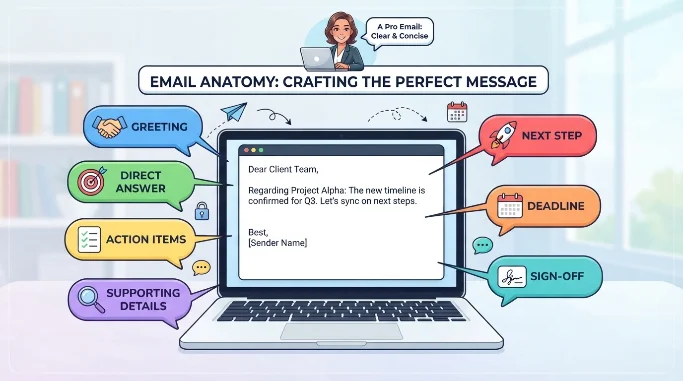
A professional email response format is a clear, polite structure for replying to work messages. It usually includes a subject line, greeting, direct answer, next step, and sign-off.Professional reply template, business email response layout, formal email reply structure, workplace email format, corporate response example
Professional email response format examples are the secret sauce behind replies that sound calm, clear, and competent. They help you answer bosses, clients, coworkers, and recruiters without overthinking every word. A strong format can turn a simple reply into a trust-building moment.
Whether you are confirming a meeting, declining a request, or following up on a deadline, structure keeps you safe. The right greeting, body, and sign-off make you look organized and easy to work with. Use these ready-to-copy examples and hit send with confidence.
Professional Responses
- Thank you for your email. I will review and respond by Friday.
Example: Use when a coworker sends a document and you need time to check it.
Meaning: Acknowledges receipt and sets a clear timeline. - I appreciate you reaching out. Here is the information you requested.
Example: Use when replying to a client who asked for details.
Meaning: Shows gratitude and delivers what was asked. - Noted. I will take care of this and update you shortly.
Example: Use when your manager assigns a quick task.
Meaning: Confirms action without extra fluff. - Thanks for the update. I have added it to my action list.
Example: Use when a teammate shares project news.
Meaning: Shows you are organized and responsive. - I am available to discuss this further at your convenience.
Example: Use when a topic needs a deeper conversation.
Meaning: Offers flexibility and keeps communication open. - Please let me know if you need any additional details from my side.
Example: Use when sending a report or proposal.
Meaning: Invites follow-up and shows willingness to help. - I have copied [Name] so everyone stays aligned.
Example: Use when looping in a stakeholder.
Meaning: Keeps transparency and teamwork front and center. - Thank you for your patience. I am working on this now.
Example: Use when a reply is later than expected.
Meaning: Acknowledges the wait and reassures action. - I confirm receipt and will follow up with next steps.
Example: Use when a client sends a signed contract.
Meaning: Provides a clear status update. - This works for me. I will proceed as outlined.
Example: Use when approving a plan or schedule.
Meaning: Gives a direct green light. - I appreciate your flexibility on this request.
Example: Use when someone adjusts a deadline for you.
Meaning: Recognizes their effort and goodwill. - Best regards, [Your Name]
Example: Use as a standard closing for most work emails.
Meaning: Ends the message with professionalism.
Polite Responses
- Thank you for your kind note. I am happy to help.
Example: Use when a colleague sends a friendly request.
Meaning: Matches warmth with willingness. - I understand your concern. Let me look into it right away.
Example: Use when a customer raises an issue.
Meaning: Validates their feelings and promises action. - I appreciate your patience while I gather the details.
Example: Use when you need more time to answer.
Meaning: Shows respect for their time. - Please accept my apologies for the delay in responding.
Example: Use when you reply late to an important email.
Meaning: Owns the delay without overexplaining. - I would be glad to assist. Could you share a bit more context?
Example: Use when a request is unclear.
Meaning: Offers help and asks for clarity. - Thank you for bringing this to my attention.
Example: Use when someone flags a mistake.
Meaning: Shows appreciation for the heads-up. - I am sorry for any inconvenience this may have caused.
Example: Use when a process change affects someone.
Meaning: Softens the impact with empathy. - I value your input and will consider it carefully.
Example: Use when receiving feedback.
Meaning: Makes the other person feel heard. - Could you please confirm if this timeline works for you?
Example: Use when scheduling a deliverable.
Meaning: Checks alignment before moving forward. - I am here if you need anything else.
Example: Use at the end of a helpful reply.
Meaning: Leaves the door open for support. - Thanks again for your understanding.
Example: Use when someone accepts a change.
Meaning: Closes with gratitude and grace. - Warm regards, [Your Name]
Example: Use for friendly but professional emails.
Meaning: Adds a personal touch to the sign-off.
Confident Responses
- I will handle this and send you an update by end of day.
Example: Use when taking ownership of a task.
Meaning: Shows reliability and control. - Consider it done. I will follow up once complete.
Example: Use when a quick task is assigned.
Meaning: Signals immediate action. - I have reviewed the request and approve it.
Example: Use when you have authority to say yes.
Meaning: Gives a clear decision. - My recommendation is to move forward with option A.
Example: Use when sharing a professional opinion.
Meaning: Guides the team with certainty. - I can confirm that the deadline will be met.
Example: Use when a client asks about timing.
Meaning: Reassures without hesitation. - I will take the lead on this and keep everyone informed.
Example: Use when volunteering for a project.
Meaning: Shows leadership and communication. - Here is my decision and the reasoning behind it.
Example: Use when explaining a choice.
Meaning: Adds clarity to authority. - I am confident this approach will solve the issue.
Example: Use when proposing a fix.
Meaning: Builds trust in your solution. - I will coordinate with the team and report back.
Example: Use when managing a group task.
Meaning: Promises organized follow-through. - Let us proceed as planned. No changes needed.
Example: Use when everything is on track.
Meaning: Keeps momentum without doubt. - I have addressed the concern. See details below.
Example: Use when replying to feedback.
Meaning: Shows you took action. - Best, [Your Name]
Example: Use as a clean, confident closing.
Meaning: Ends with brevity and professionalism.
Warm and Friendly Responses
- Thanks so much for your email. Great to hear from you.
Example: Use when reconnecting with a colleague.
Meaning: Sets a positive tone from the start. - Happy to help with this. It sounds like an exciting project.
Example: Use when joining a new initiative.
Meaning: Shows enthusiasm and support. - I hope you are doing well. Here is what I found.
Example: Use when replying to a check-in.
Meaning: Balances kindness with useful info. - Thanks for checking in. I appreciate you.
Example: Use when someone follows up on your progress.
Meaning: Acknowledges their care. - Absolutely, I would love to support this.
Example: Use when agreeing to help a teammate.
Meaning: Expresses genuine willingness. - So glad you reached out. Let us make it happen.
Example: Use when a friend at work asks for input.
Meaning: Builds energy and collaboration. - Thanks for the thoughtful message. I am on it.
Example: Use when a detailed request arrives.
Meaning: Shows appreciation and action. - I hope your week is going well. Quick update below.
Example: Use for a midweek status email.
Meaning: Adds warmth to routine updates. - You are welcome. Happy to be part of this.
Example: Use when thanked for your help.
Meaning: Responds with grace and positivity. - Thanks for your patience and good energy.
Example: Use when working through a tough task.
Meaning: Recognizes the other person’s attitude. - Looking forward to working together on this.
Example: Use at the start of a partnership.
Meaning: Builds anticipation and rapport. - Cheers, [Your Name]
Example: Use for friendly workplace emails.
Meaning: Closes with casual warmth.
Formal Responses
- Dear [Name], Thank you for your correspondence.
Example: Use when replying to an official letter.
Meaning: Opens with formal respect. - I acknowledge receipt of your email dated [date].
Example: Use in legal or HR communication.
Meaning: Creates a clear record. - Kindly find the requested documents attached.
Example: Use when sending files to a client.
Meaning: Delivers materials politely. - I would like to confirm my availability for the meeting.
Example: Use when responding to a formal invite.
Meaning: Confirms attendance professionally. - Please be advised that the matter is under review.
Example: Use when a decision is pending.
Meaning: Keeps the other party informed. - I appreciate your prompt response to my inquiry.
Example: Use when someone replies quickly.
Meaning: Acknowledges efficiency with respect. - Should you require further assistance, please contact me.
Example: Use at the end of a formal reply.
Meaning: Offers help in a polished way. - I trust this information meets your requirements.
Example: Use when sending requested details.
Meaning: Confirms purpose with confidence. - Thank you for your consideration.
Example: Use when requesting approval.
Meaning: Shows respect for their time. - I look forward to your response.
Example: Use when awaiting a formal reply.
Meaning: Closes with polite expectation. - Sincerely, [Your Name]
Example: Use for formal business letters.
Meaning: Ends with traditional professionalism. - Respectfully, [Your Name]
Example: Use when addressing senior officials.
Meaning: Shows deference and courtesy.
Concise Responses
- Got it. Will do.
Example: Use when a teammate sends a quick task.
Meaning: Confirms action in two words. - Confirmed. Thanks.
Example: Use when accepting a meeting invite.
Meaning: Keeps the reply short and clear. - Approved. Proceed.
Example: Use when signing off on a plan.
Meaning: Gives a fast green light. - Noted. Follow up Friday.
Example: Use when tracking a project item.
Meaning: Sets a reminder without extra detail. - Yes, that works.
Example: Use when agreeing to a time or idea.
Meaning: Answers directly. - No, I cannot attend.
Example: Use when declining a meeting.
Meaning: Keeps the response honest and brief. - Sent. Check inbox.
Example: Use when forwarding a file.
Meaning: Tells the recipient where to look. - Done. See attached.
Example: Use when completing a request.
Meaning: Confirms completion with proof. - Will review today.
Example: Use when you cannot reply fully yet.
Meaning: Sets a same-day expectation. - Thanks. More soon.
Example: Use when you need to send a longer reply later.
Meaning: Acknowledges and buys time. - Agreed.
Example: Use when you have nothing to add.
Meaning: Shows alignment. - Best, [Name]
Example: Use as a minimal sign-off.
Meaning: Keeps it professional and short.
Apologetic Responses
- I am sorry for the mistake. I will correct it today.
Example: Use when you sent the wrong file.
Meaning: Owns the error and promises a fix. - Please accept my apology for the late reply.
Example: Use when responding days later.
Meaning: Shows respect for their time. - I take full responsibility for this error.
Example: Use when you are clearly at fault.
Meaning: Removes blame and builds trust. - I am sorry for the confusion. Here is the correct info.
Example: Use when a previous email was unclear.
Meaning: Clears things up quickly. - Thank you for your patience. I apologize for the delay.
Example: Use when a project is behind schedule.
Meaning: Acknowledges both patience and fault. - I regret that this happened and will make it right.
Example: Use when a client is upset.
Meaning: Shows accountability and action. - I am sorry for any frustration this caused.
Example: Use when a process failed.
Meaning: Validates their feelings. - Please forgive the oversight. I have fixed it.
Example: Use when you missed a detail.
Meaning: Apologizes and shows resolution. - I apologize for missing the deadline. New date below.
Example: Use when you deliver late.
Meaning: Owns the miss and offers a plan. - I am sorry for the inconvenience. Let me help.
Example: Use when a customer faces a problem.
Meaning: Combines empathy with support. - Thank you for understanding. I will do better.
Example: Use when someone gives you grace.
Meaning: Shows gratitude and growth. - Sincerely, [Name]
Example: Use for a serious apology email.
Meaning: Ends with a formal tone.
Follow-Up Responses
- Just following up on my previous email.
Example: Use when you have not heard back.
Meaning: Reopens the conversation politely. - Checking in to see if you had a chance to review.
Example: Use after sending a proposal.
Meaning: Nudges without pressure. - Any updates on this request?
Example: Use when waiting on approval.
Meaning: Asks for status directly. - I wanted to circle back before the end of the week.
Example: Use when a deadline is near.
Meaning: Creates gentle urgency. - Following up again in case this got buried.
Example: Use when your first email was missed.
Meaning: Gives the recipient an easy out. - Please let me know if you need anything from me.
Example: Use when waiting on someone else.
Meaning: Offers support while following up. - I am still waiting on your confirmation.
Example: Use when a decision is pending.
Meaning: States the need clearly. - Quick reminder about the deadline tomorrow.
Example: Use when a task is due soon.
Meaning: Helps the recipient stay on track. - Did you get a chance to look this over?
Example: Use after sharing a document.
Meaning: Checks in without sounding pushy. - I am following up as promised.
Example: Use when you said you would check back.
Meaning: Shows reliability. - Looking forward to your reply.
Example: Use at the end of a follow-up.
Meaning: Keeps the tone positive. - Best, [Name]
Example: Use as a clean follow-up closing.
Meaning: Ends with professionalism.
Thank-You Responses
- Thank you for your quick response.
Example: Use when someone replies fast.
Meaning: Recognizes their efficiency. - I appreciate your help with this.
Example: Use when a coworker assists you.
Meaning: Shows genuine gratitude. - Thanks for the update. Very helpful.
Example: Use when receiving project news.
Meaning: Acknowledges value. - Thank you for your time today.
Example: Use after a meeting.
Meaning: Respects their schedule. - I am grateful for your support.
Example: Use when someone backs your idea.
Meaning: Expresses deeper thanks. - Thanks for looping me in.
Example: Use when added to an email thread.
Meaning: Appreciates inclusion. - Thank you for the opportunity.
Example: Use when considered for a project.
Meaning: Shows professional courtesy. - I appreciate your patience.
Example: Use when someone waited on you.
Meaning: Values their understanding. - Thanks for the clarification.
Example: Use when details are explained.
Meaning: Confirms you understand. - Thank you for the introduction.
Example: Use when connected to a new contact.
Meaning: Recognizes the gesture. - Much appreciated.
Example: Use for a quick thank-you.
Meaning: Keeps gratitude short and warm. - Warm regards, [Name]
Example: Use as a friendly closing.
Meaning: Ends with kindness.
Declining Responses
- Thank you for the invitation. Unfortunately, I cannot attend.
Example: Use when declining an event.
Meaning: Refuses politely. - I appreciate the offer, but I must decline.
Example: Use when turning down a proposal.
Meaning: Keeps the door open for respect. - I am unable to take this on right now.
Example: Use when your schedule is full.
Meaning: Sets a clear boundary. - Thanks for thinking of me. I will pass this time.
Example: Use when invited to join a committee.
Meaning: Declines with warmth. - I cannot commit to this deadline.
Example: Use when a timeline is unrealistic.
Meaning: Protects quality and honesty. - I am not available for that meeting.
Example: Use when you have a conflict.
Meaning: States availability clearly. - I appreciate the opportunity, but it is not a fit.
Example: Use when declining a role.
Meaning: Respects both sides. - I must respectfully decline.
Example: Use in formal settings.
Meaning: Delivers a polished no. - I cannot approve this request.
Example: Use when you lack authority or budget.
Meaning: Gives a direct decision. - Thanks for understanding my decision.
Example: Use at the end of a decline.
Meaning: Acknowledges their response. - I will keep you in mind for future needs.
Example: Use when saying no but staying open.
Meaning: Leaves a positive connection. - Best, [Name]
Example: Use as a professional closing.
Meaning: Ends the decline with grace.
Scheduling Responses
- Does Tuesday at 2 PM work for you?
Example: Use when proposing a meeting time.
Meaning: Offers a clear option. - I am available Thursday morning. Let me know.
Example: Use when sharing availability.
Meaning: Gives flexibility. - Please send a calendar invite for our call.
Example: Use when confirming a meeting.
Meaning: Moves the plan forward. - I can meet next week. What works best?
Example: Use when your schedule is open.
Meaning: Invites the other person to choose. - Let us reschedule for Friday.
Example: Use when the original time fails.
Meaning: Keeps the meeting alive. - I will book the conference room.
Example: Use when arranging an in-person meeting.
Meaning: Takes logistics off their plate. - Confirming our meeting for Monday at 10 AM.
Example: Use as a final check.
Meaning: Locks in the plan. - Can we move this to next week?
Example: Use when you need more time.
Meaning: Requests a change politely. - I have added it to my calendar.
Example: Use after accepting an invite.
Meaning: Confirms you are set. - Please share the agenda before we meet.
Example: Use when preparing for a discussion.
Meaning: Helps everyone stay focused. - I am running 10 minutes late.
Example: Use when delayed for a meeting.
Meaning: Shows respect by updating early. - See you then.
Example: Use as a short sign-off.
Meaning: Confirms the plan simply.
Sales and Client Responses
- Thank you for your interest in our services.
Example: Use when a lead reaches out.
Meaning: Opens with appreciation. - I would be happy to schedule a demo.
Example: Use when a prospect wants to see the product.
Meaning: Moves the sale forward. - Here is the pricing information you requested.
Example: Use when sending a quote.
Meaning: Delivers exactly what was asked. - I will send a proposal by tomorrow.
Example: Use when setting a delivery expectation.
Meaning: Keeps the client informed. - Let us discuss how we can meet your goals.
Example: Use when discovery is needed.
Meaning: Focuses on client needs. - I appreciate your business.
Example: Use when a client renews.
Meaning: Builds loyalty. - I will follow up after you review.
Example: Use when sending materials.
Meaning: Sets a clear next step. - Please let me know if you have questions.
Example: Use at the end of a sales email.
Meaning: Invites conversation. - I can offer a revised quote.
Example: Use when negotiating.
Meaning: Shows flexibility. - Looking forward to partnering with you.
Example: Use when closing a deal.
Meaning: Builds positive momentum. - Thank you for choosing us.
Example: Use after a purchase.
Meaning: Shows gratitude. - Best regards, [Name]
Example: Use as a professional closing.
Meaning: Ends with polish.
Customer Support Responses
- Thank you for contacting support. I can help.
Example: Use when a user opens a ticket.
Meaning: Reassures them immediately. - I have escalated your issue to our team.
Example: Use when a problem needs experts.
Meaning: Shows action and care. - Please try clearing your cache and let me know.
Example: Use for common tech issues.
Meaning: Offers a simple fix. - I am sorry for the trouble. We are on it.
Example: Use when a customer is frustrated.
Meaning: Validates and acts. - Your ticket number is [number].
Example: Use when logging a request.
Meaning: Gives a reference for follow-up. - I will update you within 24 hours.
Example: Use when more time is needed.
Meaning: Sets a clear expectation. - Can you share a screenshot?
Example: Use when the issue is unclear.
Meaning: Gathers helpful details. - I have processed your refund.
Example: Use when resolving a billing issue.
Meaning: Confirms resolution. - Your issue has been resolved.
Example: Use when closing a ticket.
Meaning: Gives a clear final update. - Let me know if you need more help.
Example: Use at the end of support.
Meaning: Keeps the door open. - Thank you for your patience.
Example: Use when a fix took time.
Meaning: Shows appreciation. - Support Team
Example: Use as a department sign-off.
Meaning: Keeps it official and simple.
Creative Responses
- Here is a fresh take on the project timeline.
Example: Use when proposing a new schedule.
Meaning: Shows innovative thinking. - I have an idea that could save us time.
Example: Use when suggesting a process change.
Meaning: Offers value with enthusiasm. - Let us turn this challenge into an opportunity.
Example: Use when a problem arises.
Meaning: Reframes the situation positively. - I have attached a creative draft for review.
Example: Use when sharing early concepts.
Meaning: Invites feedback on ideas. - What if we tried a different approach?
Example: Use when the current plan stalls.
Meaning: Opens the door to alternatives. - I love where this is going.
Example: Use when giving positive feedback.
Meaning: Encourages momentum. - Here is a concept that might work.
Example: Use when brainstorming.
Meaning: Offers a possible solution. - Let us brainstorm together.
Example: Use when teamwork is needed.
Meaning: Invites collaboration. - I have reimagined the layout.
Example: Use when redesigning a document.
Meaning: Shows creative effort. - This could be a game changer.
Example: Use when pitching a big idea.
Meaning: Builds excitement. - Excited to hear your thoughts.
Example: Use at the end of a creative email.
Meaning: Requests feedback warmly. - Cheers, [Name]
Example: Use as a creative closing.
Meaning: Ends with personality.
Clever Responses
- Short answer: yes. Long answer: also yes.
Example: Use when approving a simple request.
Meaning: Adds wit to a clear answer. - I read between the lines. Here is what I found.
Example: Use when addressing an unspoken concern.
Meaning: Shows insight and attention. - Consider this my official yes.
Example: Use when confirming a plan.
Meaning: Makes agreement memorable. - I have a solution and a backup plan.
Example: Use when presenting a proposal.
Meaning: Shows preparation and intelligence. - Let us kill two birds with one email.
Example: Use when covering two topics at once.
Meaning: Saves everyone time. - I am one step ahead of you.
Example: Use when you already completed the task.
Meaning: Shows proactive thinking. - Great minds think alike. See below.
Example: Use when you had the same idea.
Meaning: Builds rapport with humor. - I have cracked the code.
Example: Use when solving a tricky problem.
Meaning: Announces a breakthrough. - This is the email you were hoping for.
Example: Use when delivering good news.
Meaning: Sets a positive tone. - I made it simple. You are welcome.
Example: Use when summarizing complex info.
Meaning: Adds light confidence. - Problem solved. Next question.
Example: Use when closing a task quickly.
Meaning: Shows efficiency with charm. - Best, [Name]
Example: Use as a clever but clean closing.
Meaning: Keeps it professional.
FAQs
What is a professional email response format?
It is a clear structure for work replies. It usually has a greeting, a direct answer, a next step, and a sign-off.
Can a professional email response be friendly?
Yes. You can be warm and still keep it polished. Just avoid slang and overfamiliarity.
How do I respond to a formal email?
Use a formal greeting, clear language, and a respectful closing like Sincerely or Respectfully.
What if I do not mean what I say in a professional email?
Keep it honest. Use neutral phrases like “I will review this” instead of promising something you cannot deliver.
Is humor okay in professional email responses?
A little humor can work with close colleagues. For clients or senior leaders, keep it light and safe.
Conclusion
Professional email response format examples give you a ready toolkit for every work moment. Whether you are saying yes, no, sorry, or following up, the right structure makes you sound calm and capable.
You do not need to write a novel. A clear greeting, a direct reply, and a polite sign-off can do wonders. Save this list, share it with your team, and use it the next time your inbox feels overwhelming. Send with confidence, keep it human, and watch your professional reputation grow one reply at a time
