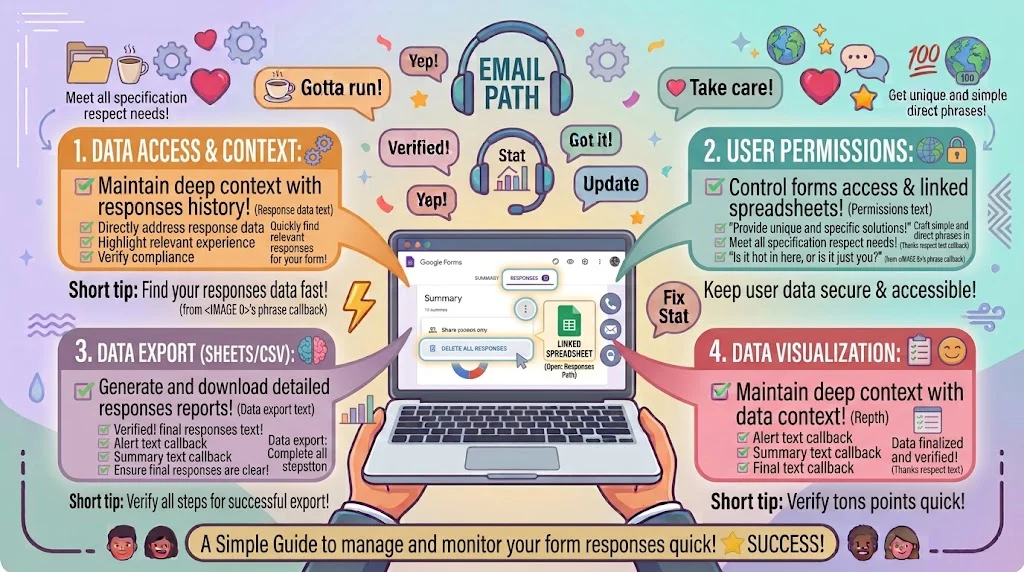
To clear responses in Google Forms, open the Responses tab, click the three-dot menu, and select Delete all responses. Top alternatives: Go to Responses tab, Use the three-dot menu, Delete all responses, Unlink the spreadsheet, Start a fresh form copy.
How to clear responses in Google Forms is a question that hits the moment your test entries pile up or you need a fresh start before a real launch. Maybe you ran a trial run, collected a few submissions, and now the dashboard looks messy. Or maybe you want to reset a form for a new round of feedback without building it again from scratch. The good news is the delete button exists and it works.
Here is the thing. Clearing responses does not always mean deleting data forever. Sometimes you want a clean dashboard. Sometimes you want a full reset. Knowing the difference saves you from a very awkward moment. This guide gives you 170+ ready-to-use lines for every tone and situation, from patient tutorials to quick fixes.
Step-By-Step Instructional Responses
- “Open your form, click the Responses tab, then use the three-dot menu to select Delete all responses.”
- Example: Use when someone needs the exact clicks.
- Meaning: It removes all guesswork.
- “To clear a single response, hover over it and click the trash can icon.”
- Example: Use when only one entry needs removing.
- Meaning: It is precise and useful.
- “Deleting responses in Forms does not delete the linked spreadsheet data. Clear that separately.”
- Example: Use when someone expects a full reset.
- Meaning: It prevents a common mistake.
- “Click the three-dot menu in the Responses tab and choose Delete all responses to start fresh.”
- Example: Use when restarting a test form.
- Meaning: It is clear and direct.
- “If you want to keep a record, download the responses as a CSV before deleting.”
- Example: Use in a data safety briefing.
- Meaning: It protects important data.
- “Unlink the Google Sheet first if you want a completely clean slate.”
- Example: Use when resetting a form entirely.
- Meaning: It prevents old data from reappearing.
- “Make a copy of the form if you need to preserve the original responses.”
- Example: Use when starting a new round.
- Meaning: It gives a safe reset option.
- “Go to the linked Sheet, select the response rows, and delete them manually.”
- Example: Use when the Sheet still shows data.
- Meaning: It completes the cleanup.
- “Clear the form responses before sharing the real link with your audience.”
- Example: Use as a pre-launch checklist item.
- Meaning: It avoids confusing data.
- “Check the form’s version history if you need to recover something deleted by mistake.”
- Example: Use when an accidental deletion happens.
- Meaning: It offers a safety net.
- “Refresh the Responses tab after deleting so the dashboard shows zero.”
- Example: Use when the count looks stuck.
- Meaning: It confirms the action worked.
- “Test with one submission after clearing to make sure the form still works.”
- Example: Use as a final check.
Meaning: It confirms the form is live.
- Example: Use as a final check.
Polite And Professional Responses
- “Thank you for asking. You can clear responses from the Responses tab using the three-dot menu.”
- Example: Use in a work email.
- Meaning: It is courteous and clear.
- “I have cleared the test responses so the form is ready for launch.”
- Example: Use in a project update.
- Meaning: It confirms action taken.
- “Please note that deleting responses in Forms does not clear the linked spreadsheet.”
- Example: Use in a handover note.
- Meaning: It prevents a misunderstanding.
- “I would recommend downloading a backup before clearing anything important.”
- Example: Use in a data policy email.
- Meaning: It is responsible advice.
- “The responses have been removed and the dashboard is now blank.”
- Example: Use when confirming completion.
- Meaning: It closes the loop.
- “If you need to keep the old data, I can make a copy of the form first.”
- Example: Use in a client reply.
- Meaning: It offers a safer option.
- “Kindly confirm before I delete all responses. This action cannot be undone.”
- Example: Use in a permission request.
- Meaning: It builds accountability.
- “I have unlinked the spreadsheet and cleared the entries as requested.”
- Example: Use in a follow-up email.
- Meaning: It shows thorough work.
- “You can export the responses before clearing them if you need a record.”
- Example: Use in a support reply.
- Meaning: It is helpful and professional.
- “The form is now clean and ready for the next round of submissions.”
- Example: Use in a status update.
- Meaning: It is clear and reassuring.
- “Please share the link only after the test responses are cleared.”
- Example: Use in a team guideline.
- Meaning: It prevents confusion.
- “Let me know if you would like me to walk you through the deletion steps.”
- Example: Use as a closing offer.
- Meaning: It is supportive.
Funny And Relatable Responses
- “Clearing responses is easy. Finding the three-dot menu is the real challenge.”
- Example: Use when a friend cannot find the option.
- Meaning: It makes the struggle relatable.
- “I deleted my test responses and felt weirdly powerful. Ten out of ten.”
- Example: Use in a casual team chat.
- Meaning: It is funny and honest.
- “The trash can icon is small, but the satisfaction is huge.”
- Example: Use when clearing old entries.
- Meaning: It adds humor.
- “Yes, you can delete all responses. No, you cannot delete the memory of that one weird answer.”
- Example: Use with a close colleague.
- Meaning: It is playful and true.
- “I cleared the responses and now the form is having a fresh start era.”
- Example: Use in a trendy group chat.
- Meaning: It uses current slang.
- “Deleting responses before launch is self-care for your dashboard.”
- Example: Use in a fun announcement.
- Meaning: It is warm and funny.
- “The three-dot menu has saved me more times than I can count.”
- Example: Use when sharing a tip.
- Meaning: It is relatable.
- “I tested the form forty times and then remembered I could just clear the responses.”
- Example: Use when sharing a mistake.
- Meaning: It is honest and funny.
- “My form had three test entries and one existential crisis. Both cleared now.”
- Example: Use in a meme-style post.
- Meaning: It is funny and self-aware.
- “Clearing responses is the closest thing to a fresh notebook in digital form.”
- Example: Use in a casual chat.
- Meaning: It is a relatable comparison.
- “The delete button does not ask twice. Respect.”
- Example: Use in a lighthearted post.
- Meaning: It is playful.
- “I cleared the form and now I am pretending the messy test run never happened.”
- Example: Use with a friend.
- Meaning: It is funny and true.
Short And Snappy Responses
- “Responses tab, then delete all.”
- Example: Use in a quick text reply.
- Meaning: It is clear and fast.
- “Use the three-dot menu.”
- Example: Use in a group chat.
- Meaning: It gives the path.
- “Hover and hit the trash icon.”
- Example: Use for a single response.
- Meaning: It is precise.
- “Unlink the Sheet first.”
- Example: Use when a full reset is needed.
- Meaning: It is practical.
- “Download a backup first.”
- Example: Use as a safety tip.
- Meaning: It is short advice.
- “It cannot be undone.”
- Example: Use as a warning.
- Meaning: It is direct.
- “Make a copy of the form.”
- Example: Use when preserving data.
- Meaning: It is simple.
- “Clear the Sheet too.”
- Example: Use when data still shows.
- Meaning: It completes the task.
- “Refresh the tab.”
- Example: Use when the count looks stuck.
- Meaning: It is a quick fix.
- “Test again after clearing.”
- Example: Use before launch.
- Meaning: It confirms the form works.
- “Done and clean.”
- Example: Use after clearing.
- Meaning: It closes the loop.
- “You are all set.”
- Example: Use when wrapping up.
- Meaning: It is reassuring.
Troubleshooting Responses
- “If responses still show in the Sheet, delete them there as well. Forms and Sheets are separate.”
- Example: Use when someone thinks the job is done.
- Meaning: It solves the most common issue.
- “If the delete option is greyed out, check that you own the form or have edit access.”
- Example: Use when the button will not click.
- Meaning: It points to permissions.
- “Refresh the page after deleting. Sometimes the count takes a moment to update.”
- Example: Use when the dashboard looks wrong.
Meaning: It fixes a display glitch.
- Example: Use when the dashboard looks wrong.
- “If the form is linked to a Sheet, new submissions may still land there. Unlink it if you want a full reset.”
- Example: Use when old data keeps appearing.
- Meaning: It explains the connection.
- “If you deleted the wrong responses, check the Sheet version history for recovery options.”
- Example: Use after an accident.
- Meaning: It offers a recovery path.
- “If you cannot find the three-dot menu, make sure you are on the Responses tab and not the Questions tab.”
- Example: Use when someone is lost.
- Meaning: It redirects them.
- “If the form is shared with editors, confirm no one is still submitting test entries.”
- Example: Use when new data appears after clearing.
- Meaning: It rules out ongoing activity.
- “If you see blank rows, they may be empty submissions. Select and delete them manually.”
- Example: Use when the data looks odd.
- Meaning: It cleans up the Sheet.
- “If the trash icon does not appear, hover over the response row and it should show up.”
- Example: Use when the interface confuses someone.
- Meaning: It is a small UI fix.
- “If the form will not load, try a different browser or incognito mode.”
- Example: Use when the page is stuck.
- Meaning: It isolates the issue.
- “If you need a full reset, duplicate the form without responses and delete the old one.”
- Example: Use as a clean option.
- Meaning: It prevents inherited data.
- “If nothing works, rebuild the form from scratch. It takes five minutes and saves frustration.”
- Example: Use as a last resort.
- Meaning: It offers a decisive fix.
Beginner-Friendly Responses
- “Think of clearing responses as wiping a whiteboard. The form stays. The answers go.”
- Example: Use when explaining to a first-time user.
- Meaning: It makes the concept simple.
- “You do not need any code. It is just a menu and a button.”
- Example: Use when someone expects it to be hard.
- Meaning: It removes fear.
- “Start on the Responses tab. That is where all the answers live.”
- Example: Use as a first pointer.
- Meaning: It narrows the search.
- “It is okay if you cannot find it. The menu is small and easy to miss.”
- Example: Use when someone feels silly.
- Meaning: It offers reassurance.
- “You are only deleting the answers, not the questions. The form stays intact.”
- Example: Use when someone worries.
- Meaning: It clears up a common fear.
- “Try it on a practice form first. No pressure, no audience.”
- Example: Use when teaching a beginner.
- Meaning: It creates a safe test.
- “If you have a linked Sheet, clear it separately. That part trips everyone up.”
- Example: Use in a beginner guide.
- Meaning: It prevents confusion.
- “You can always make a copy before deleting if you feel nervous.”
- Example: Use when someone hesitates.
- Meaning: It gives a safety net.
- “Clearing responses is free and does not require a paid plan.”
- Example: Use when someone asks about cost.
- Meaning: It removes a barrier.
- “Once you do it once, it takes ten seconds next time.”
- Example: Use as encouragement.
- Meaning: It builds confidence.
- “If the button says delete all, read it twice before clicking.”
- Example: Use as a friendly warning.
- Meaning: It is practical.
- “You are doing better than you think. This part is just a few clicks.”
- Example: Use when someone doubts themselves.
- Meaning: It is encouraging.
Confident And Expert Responses
- “Deleting responses in Forms does not touch the linked Sheet. Treat them as two separate data sources.”
- Example: Use when advising a team lead.
- Meaning: It shows real expertise.
- “I always export a CSV before clearing. It takes ten seconds and saves hours of regret.”
- Example: Use when sharing best practice.
- Meaning: It is a proven habit.
- “If you need a reusable template, duplicate the form with responses cleared and keep the original untouched.”
- Example: Use in a workflow discussion.
- Meaning: It is a smart method.
- “The three-dot menu is the fastest route. The Sheet route is for deeper cleanup.”
- Example: Use when comparing options.
- Meaning: It gives clear direction.
- “Version history in Sheets is your safety net. Use it before you delete anything big.”
- Example: Use in a training session.
- Meaning: It is practical wisdom.
- “Unlinking the Sheet is the only way to guarantee no old data lingers.”
- Example: Use when someone wants a full reset.
- Meaning: It is precise.
- “I keep a clean test form and a live form separate so I never mix the data.”
- Example: Use when sharing a system.
- Meaning: It is smart design.
- “Delete all responses is permanent. There is no undo in Forms itself.”
- Example: Use as a clear warning.
- Meaning: It sets the risk.
- “For recurring surveys, use one form per cycle so clearing is never needed.”
- Example: Use when planning ahead.
- Meaning: It avoids the problem entirely.
- “If you share the form with editors, tell them before you clear. Surprise deletions ruin trust.”
- Example: Use in a team guideline.
- Meaning: It is professional.
- “Test the form again after clearing to confirm the link still works for everyone.”
- Example: Use before launch.
- Meaning: It prevents surprises.
- “Clearing responses is a data decision, not just a click. Treat it that way.”
- Example: Use as a closing rule.
- Meaning: It is wise advice.
Apology And Recovery Responses
- “I accidentally deleted the responses. I am checking the Sheet history now to see what we can recover.”
- Example: Use when a mistake happens.
- Meaning: It is honest and action-focused.
- “I am sorry. I cleared the form before downloading a backup. Here is what we still have.”
- Example: Use when reporting a loss.
- Meaning: It owns the error.
- “We can recover some data from the linked Sheet if it was not cleared too.”
- Example: Use when offering a solution.
- Meaning: It is hopeful and practical.
- “I should have confirmed before deleting. That is on me.”
- Example: Use when apologizing to a team.
- Meaning: It builds accountability.
- “Next time we will export first. I have added it to our checklist.”
- Example: Use in a follow-up note.
- Meaning: It turns a mistake into a system.
- “Thank you for being understanding. I will rebuild the form and run a fresh test.”
- Example: Use after a mishap.
- Meaning: It shows ownership.
- “I have messaged the team to see if anyone still has the old responses in their inbox.”
- Example: Use when searching for recovery options.
- Meaning: It is thorough.
- “The deleted entries are gone from Forms, but notification emails may still have the details.”
- Example: Use when offering a partial fix.
- Meaning: It is clever and helpful.
- “I am sorry for the confusion. Here is the clean form and a summary of what was lost.”
- Example: Use in a recovery update.
- Meaning: It is transparent.
- “We will add a confirmation step before deleting anything important going forward.”
- Example: Use in a process update.
- Meaning: It prevents repeats.
- “I know this is frustrating. I am doing everything I can to fix it.”
- Example: Use when someone is upset.
- Meaning: It is empathetic.
- “Thank you for your patience. The form is clean and ready again.”
- Example: Use when closing the issue.
- Meaning: It ends on a positive note.
Team And Workplace Responses
- “Please do not clear responses without telling the team first. We use that data for reporting.”
- Example: Use in a shared workspace.
- Meaning: It sets a clear rule.
- “I am clearing the test entries today so the form is ready for the launch tomorrow.”
- Example: Use in a status update.
- Meaning: It keeps everyone informed.
- “Only the form owner should delete responses. Editors can view but not always delete.”
- Example: Use in a permissions guide.
- Meaning: It clarifies roles.
- “We keep a backup Sheet for every form. That way clearing Forms never loses data.”
- Example: Use in a process document.
Meaning: It is a smart safeguard.
- Example: Use in a process document.
- “Before clearing, download the CSV and drop it in the shared drive.”
- Example: Use in a workflow checklist.
- Meaning: It builds a habit.
- “I have archived the old responses and cleared the form for the new cycle.”
- Example: Use in a handover note.
- Meaning: It shows a clean process.
- “If you need the old data, check the archived Sheet before asking for a rebuild.”
- Example: Use in a team chat.
- Meaning: It saves time.
- “Let us use a fresh form for each quarter instead of clearing the same one.”
- Example: Use in a planning meeting.
- Meaning: It prevents data loss.
- “Clearing responses does not affect the questions. The form structure stays the same.”
- Example: Use when reassuring the team.
- Meaning: It removes worry.
- “I will run one final test after clearing to confirm everything works.”
- Example: Use before a launch.
- Meaning: It shows care.
- “Please add clearing responses to the pre-launch checklist.”
- Example: Use in a process update.
- Meaning: It builds a system.
- “The form is clean and the dashboard is at zero. We are good to go.”
- Example: Use in a final update.
- Meaning: It confirms readiness.
Creative And Clever Responses
- “Clearing responses is like hitting reset on a game level. Same map, fresh start.”
- Example: Use when explaining to a gamer.
- Meaning: It is a relatable metaphor.
- “The Responses tab is the attic of your form. Sometimes you need to clear it out.”
- Example: Use in a tutorial post.
- Meaning: It is memorable.
- “Deleting responses does not erase the questions. Think of it as emptying the basket, not the laundry room.”
- Example: Use when someone worries.
- Meaning: It is clear and creative.
- “Your form is a mailbox. Clearing responses just empties the letters.”
- Example: Use in a beginner guide.
- Meaning: It is simple and visual.
- “The three-dot menu is the secret door. Behind it is the delete button.”
- Example: Use when someone cannot find it.
- Meaning: It is playful.
- “Clearing responses is a digital deep breath. In with the new, out with the test entries.”
- Example: Use in a fun caption.
- Meaning: It is warm and creative.
- “Think of the CSV export as a photo of the party before you clean the room.”
- Example: Use when explaining backups.
- Meaning: It is a strong image.
- “The Sheet and the Form are roommates. Clearing one does not clean the other’s side.”
- Example: Use in a teaching moment.
- Meaning: It clarifies a key point.
- “Your form is a notebook. Deleting responses just turns the page.”
- Example: Use in a beginner tutorial.
- Meaning: It is simple and reassuring.
- “Clearing responses is not a delete of the form. It is a refresh of the story.”
- Example: Use in a creative post.
- Meaning: It is thoughtful.
- “A clean form is a confident form. Clear the test data and step out.”
- Example: Use in a launch message.
- Meaning: It is motivating.
- “The reset button is not scary. It is just a fresh page waiting for better answers.”
- Example: Use when someone hesitates.
- Meaning: It is encouraging.
Casual And Chill Responses
- “Yeah, just hit delete all in the Responses tab. Easy.”
- Example: Use in a relaxed Slack reply.
- Meaning: It is friendly and simple.
- “I usually export first, then clear. Takes a minute.”
- Example: Use when sharing your habit.
- Meaning: It is casual advice.
- “The trash icon is right there. Just hover over the response.”
- Example: Use in a quick reply.
- Meaning: It is direct.
- “Do not forget the Sheet. That one gets everyone.”
- Example: Use as a friendly reminder.
- Meaning: It is practical.
- “No big deal. It is just a few clicks.”
- Example: Use when someone hesitates.
- Meaning: It removes pressure.
- “I cleared mine this morning. The dashboard looks so much better.”
- Example: Use in a casual chat.
- Meaning: It is relatable.
- “Make a copy if you are nervous. Better safe than sorry.”
- Example: Use as a tip.
- Meaning: It is easy advice.
- “Refresh the page after. Sometimes it lags.”
- Example: Use when the count looks stuck.
- Meaning: It is a quick fix.
- “You can always test it again after clearing. No harm.”
- Example: Use in a relaxed reply.
- Meaning: It is encouraging.
- “Just do not clear it without telling the team. Learned that the hard way.”
- Example: Use when sharing a story.
- Meaning: It is honest and useful.
- “Once it is clean, you are ready to share. Simple as that.”
- Example: Use when wrapping up.
- Meaning: It is clear.
- “It is just a reset. Nothing scary.”
- Example: Use when reassuring.
- Meaning: It is calm and friendly.
Sarcastic And Witty Responses
- “Oh, the delete button is right there. It was just hiding behind a tiny menu.”
- Example: Use when someone complains about the layout.
- Meaning: It is dry and funny.
- “Yes, you can delete all responses. No, it will not delete your regrets.”
- Example: Use in a team chat.
- Meaning: It is witty.
- “Google hid the menu because making things easy would be too much to ask.”
- Example: Use in a relatable post.
- Meaning: It is sarcastic and true.
- “Sure, keep those forty test entries. They look great on the dashboard.”
- Example: Use when someone procrastinates.
- Meaning: It is dryly helpful.
- “The trash can icon is small, but it carries a lot of power.”
- Example: Use in a casual reply.
- Meaning: It is clever.
- “You mean you enjoy scrolling through fake submissions? Wild.”
- Example: Use when someone delays clearing.
- Meaning: It is playful.
- “Clearing responses is easy. Remembering the linked Sheet exists is the hard part.”
- Example: Use in a tutorial.
- Meaning: It is honest with humor.
- “I clicked delete all and felt nothing. Then I felt relief.”
- Example: Use in a meme-style post.
- Meaning: It is funny.
- “The three-dot menu has trust issues. It never shows what you need.”
- Example: Use when someone is frustrated.
- Meaning: It is relatable sarcasm.
- “Please clear the test responses. My eyes cannot take another row of test.”
- Example: Use with a teammate.
- Meaning: It is funny and direct.
- “The form had three fake entries. Now it has zero. Character development.”
- Example: Use in a lighthearted update.
- Meaning: It is witty.
- “Yes, it is permanent. No, there is no dramatic undo button. Proceed carefully.”
- Example: Use as a warning.
- Meaning: It is sharp and clear.
Empathetic And Patient Responses
- “I know this feels risky. Let us export a backup first so you feel safe.”
- Example: Use when someone is nervous.
- Meaning: It offers reassurance.
- “Take your time. The delete button is not going anywhere.”
- Example: Use when someone hesitates.
- Meaning: It is calm.
- “It is completely fair to double check before deleting. That is smart, not silly.”
- Example: Use in a supportive reply.
- Meaning: It validates caution.
- “If you are worried, make a copy of the form and practice on that one.”
- Example: Use when teaching.
- Meaning: It creates a safe test.
- “You are not the first person to miss the three-dot menu. It is easy to overlook.”
- Example: Use when someone apologizes.
- Meaning: It normalizes the struggle.
- “I can walk you through it step by step if that helps.”
- Example: Use as a supportive offer.
- Meaning: It is patient.
- “It is okay if you need a minute. This stuff can feel high stakes.”
- Example: Use when someone is anxious.
- Meaning: It is kind.
- “You will feel better once the dashboard is clean. Let us get there together.”
- Example: Use in a friendly message.
- Meaning: It is encouraging.
- “No question is too basic. Ask away.”
- Example: Use in a teaching context.
- Meaning: It builds trust.
- “I know losing data is stressful. That is why we always back up first.”
- Example: Use after a mistake.
Meaning: It is honest and caring.
- Example: Use after a mistake.
- “You are doing fine. This part is just fiddly.”
- Example: Use when someone doubts themselves.
- Meaning: It is reassuring.
- “If it still feels confusing, I can do it for you and show you how.”
- Example: Use as a final offer.
- Meaning: It is generous.
Data Safety Responses
- “Always download the responses as a CSV before clearing anything.”
- Example: Use in a data policy note.
- Meaning: It protects important information.
- “If the form is linked to a Sheet, copy the Sheet to an archive folder first.”
- Example: Use in a workflow guide.
- Meaning: It builds a safety habit.
- “Clearing responses in Forms does not remove the data from your Google Drive trash.”
- Example: Use when explaining storage.
- Meaning: It is accurate.
- “Keep one backup per cycle so you can compare results later.”
- Example: Use in a reporting process.
- Meaning: It is smart.
- “If the data is sensitive, restrict access to the Sheet before you archive it.”
- Example: Use in a privacy review.
- Meaning: It is responsible.
- “Do not clear responses in the middle of a collection period. Pause the form first.”
- Example: Use when advising a team.
- Meaning: It prevents accidental loss.
- “Name your backup files clearly so future you can find them.”
- Example: Use in a filing tip.
- Meaning: It is practical.
- “Check the Sheet for hidden rows before you assume it is empty.”
- Example: Use in a cleanup guide.
- Meaning: It catches a common error.
- “If you share the form with editors, make sure only one person clears data.”
- Example: Use in a permissions note.
- Meaning: It prevents chaos.
- “Archive the old form instead of deleting it. It costs nothing and saves everything.”
- Example: Use in a long-term plan.
- Meaning: It is wise.
- “Screenshot the summary charts before clearing if you need them for a report.”
- Example: Use in a reporting checklist.
- Meaning: It is clever and simple.
- “Treat clearing responses like deleting a file. Pause, check, then click.”
- Example: Use as a final rule.
- Meaning: It is memorable.
FAQs
How do I clear responses in Google Forms?
Open the form, go to the Responses tab, click the three-dot menu, and select Delete all responses. You can also delete individual responses with the trash icon.
Does clearing responses delete the linked Google Sheet?
No. The Sheet is separate. You need to clear it manually or unlink it from the form.
Can I recover deleted responses in Google Forms?
Not directly in Forms. Check the Sheet version history or your email notifications for partial recovery.
How do I delete just one response instead of all of them?
Hover over the response row in the Responses tab and click the trash can icon next to it.
Will clearing responses delete my questions?
No. The form structure stays the same. Only the submitted answers are removed.
Should I download a backup before clearing?
Yes, always. Export the responses as a CSV or copy the Sheet to a safe folder before deleting anything.
Conclusion
How to clear responses in Google Forms is one of those tasks that feels bigger than it is. Once you know the three-dot menu, the trash icon, and the Sheet connection, it takes seconds. The key is to back up first, check twice, and tell your team before you click.
Save this guide, share it with the coworker who keeps asking, and keep your dashboard clean and your data safe. A fresh form is a confident form. Now go clear those test entries and launch with a clean slate.
