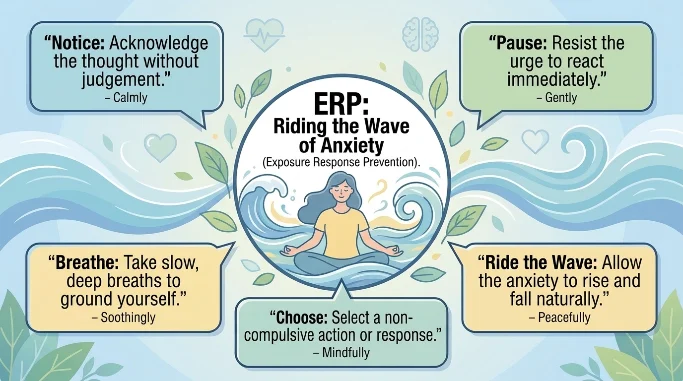
Exposure response prevention therapy teaches you to face feared triggers without doing the compulsion, so your brain can learn that anxiety is not a threat. When the urge hits, keep it simple: I can sit with this, This feeling will pass, I do not need to fix it, I am choosing not to ritualize, I will ride the wave.
Exposure response prevention therapy is not about loving anxiety. It is about teaching your brain that a scary thought is not a command. It shows up in therapy sessions, late-night Google spirals, and real-life moments when OCD or panic begs you to do the ritual. The right response can mean the difference between feeding the loop and breaking it.
Maybe you are texting your therapist, replying to a friend who means well, or talking to yourself in the mirror before a trigger. Words matter here because they shape whether you engage or gently step back. This guide gives you 150+ real-life lines for every mood, from funny to firm to soft.
Calm And Grounding Responses
- “I can notice this without acting on it.”
- Example: Use when a trigger shows up during ERP practice.
- Meaning: It keeps you present instead of jumping into a compulsion.
- “My breath is my anchor right now.”
- Example: Use when panic rises during an exposure.
- Meaning: It grounds you in your body.
- “This is a wave. I do not have to swim against it.”
- Example: Use when anxiety peaks.
- Meaning: It reminds you to ride the feeling out.
- “I am safe in this moment, even if my body disagrees.”
- Example: Use when physical anxiety symptoms flare.
- Meaning: It reassures your nervous system.
- “I do not need to solve this thought.”
- Example: Use when an intrusive thought loops.
- Meaning: It stops the problem-solving compulsion.
- “One minute at a time is enough.”
- Example: Use when the whole day feels heavy.
- Meaning: It breaks exposure into small steps.
- “I can feel this and still be okay.”
- Example: Use when emotions feel overwhelming.
- Meaning: It builds tolerance for discomfort.
- “My job is to observe, not obey.”
- Example: Use when OCD urges a ritual.
- Meaning: It separates you from the compulsion.
- “This discomfort is temporary.”
- Example: Use when sitting with uncertainty.
- Meaning: It reduces the urgency to fix it.
- “I am practicing, not perfecting.”
- Example: Use when ERP feels messy.
- Meaning: It gives you grace.
- “I can return to the present.”
- Example: Use when you space out during anxiety.
- Meaning: It brings your focus back.
- “I am allowed to pause without fixing.”
- Example: Use when pressured to respond to a trigger.
- Meaning: It creates space between you and the urge.
Funny And Relatable Responses
- “My brain is throwing a tantrum. I am not the babysitter.”
- Example: Use when intrusive thoughts demand attention.
- Meaning: It uses humor to reduce their power.
- “Sorry, OCD, the ritual department is closed.”
- Example: Use when the urge to check arrives.
- Meaning: It sets a playful boundary.
- “I would love to panic, but I have plans.”
- Example: Use when anxiety interrupts your day.
- Meaning: It reframes the moment.
- “This thought has main character energy. It is not getting the role.”
- Example: Use when a thought feels huge.
- Meaning: It shrinks its spotlight.
- “I am not answering that mental phone call.”
- Example: Use when a worry loops.
- Meaning: It ignores the compulsion.
- “My anxiety is loud, but I have noise-canceling boundaries.”
- Example: Use when fear shouts.
- Meaning: It keeps a boundary with humor.
- “Not today, spiral. I have snacks and coping skills.”
- Example: Use when you feel a spiral starting.
- Meaning: It uses light self-talk.
- “I am on a break from being bossed around by my triggers.”
- Example: Use when urges feel demanding.
- Meaning: It reclaims control.
- “That thought can see itself out.”
- Example: Use when an unwanted thought appears.
- Meaning: It dismisses the thought without fighting.
- “I am not doing mental gymnastics for a thought that did not stretch.”
- Example: Use when overthinking starts.
- Meaning: It stops analysis.
- “My compulsion subscription expired.”
- Example: Use when tempted to ritualize.
- Meaning: It is a funny refusal.
- “I am busy making my therapist proud.”
- Example: Use when facing exposure.
- Meaning: It adds motivation with humor.
Brave And Confident Responses
- “I can do hard things, including this.”
- Example: Use before an exposure exercise.
- Meaning: It builds courage.
- “I am stronger than this urge.”
- Example: Use when a compulsion feels strong.
- Meaning: It affirms control.
- “I choose discomfort over staying stuck.”
- Example: Use when avoidance is tempting.
- Meaning: It connects to growth.
- “I do not need certainty to move forward.”
- Example: Use when uncertainty spikes.
- Meaning: It accepts the unknown.
- “I am facing this because I deserve freedom.”
- Example: Use when ERP feels scary.
- Meaning: It connects to your goal.
- “My fear does not get to make my decisions.”
- Example: Use when anxiety gives orders.
- Meaning: It reclaims agency.
- “I will not let this thought run my day.”
- Example: Use when intrusive thoughts start early.
- Meaning: It sets the tone.
- “I can tolerate this and come out stronger.”
- Example: Use during a tough exposure.
- Meaning: It builds confidence.
- “I am not backing down from my own healing.”
- Example: Use when relapse fear appears.
- Meaning: It shows commitment.
- “This is hard, and I am still doing it.”
- Example: Use when progress feels slow.
- Meaning: It validates effort.
- “I trust myself to handle whatever comes.”
- Example: Use when uncertainty feels unsafe.
- Meaning: It builds self-trust.
- “I am the one in charge here.”
- Example: Use when OCD tries to lead.
- Meaning: It reclaims authority.
Gentle And Compassionate Responses
- “It is okay to feel scared. I am still here.”
- Example: Use when anxiety makes you feel small.
- Meaning: It offers self-kindness.
- “I do not have to be perfect at this.”
- Example: Use when ERP is messy.
- Meaning: It releases pressure.
- “This is hard because I am human, not because I am failing.”
- Example: Use when you struggle.
- Meaning: It normalizes difficulty.
- “I am proud of me for trying.”
- Example: Use after an exposure.
- Meaning: It celebrates effort.
- “I can hold this gently.”
- Example: Use when emotions rise.
- Meaning: It practices soft acceptance.
- “My feelings are valid, even when they are loud.”
- Example: Use when fear feels big.
- Meaning: It validates emotion.
- “I am learning, and learning takes time.”
- Example: Use when progress is slow.
- Meaning: It teaches patience.
- “I forgive myself for the compulsions I used to do.”
- Example: Use when reflecting on the past.
- Meaning: It releases shame.
- “I am allowed to rest without guilt.”
- Example: Use after ERP work.
- Meaning: It treats rest as part of healing.
- “I do not need to punish myself for having thoughts.”
- Example: Use when intrusive thoughts appear.
- Meaning: It removes shame.
- “I am doing the best I can with what I have.”
- Example: Use on a hard day.
- Meaning: It builds self-compassion.
- “I deserve the same kindness I give others.”
- Example: Use when self-critical.
- Meaning: It builds self-worth.
Firm Boundary Responses
- “I am not doing that compulsion today.”
- Example: Use when the urge is strong.
- Meaning: It sets a clear boundary.
- “That is not a conversation I am having with anxiety.”
- Example: Use when OCD argues.
- Meaning: It ends the debate.
- “I will not check that again.”
- Example: Use when tempted to recheck.
- Meaning: It holds the line.
- “No, I am not seeking reassurance.”
- Example: Use when you want to ask for certainty.
- Meaning: It blocks the compulsion.
- “I am not engaging with this thought.”
- Example: Use when an intrusive thought loops.
- Meaning: It disengages.
- “I am done letting fear make the rules.”
- Example: Use when anxiety tries to control.
- Meaning: It reclaims power.
- “I will not let this urge boss me around.”
- Example: Use when a compulsion demands action.
- Meaning: It gives a firm refusal.
- “I am not asking for permission to feel safe.”
- Example: Use when seeking validation.
- Meaning: It builds self-trust.
- “That is a no from me and my nervous system.”
- Example: Use when triggered.
- Meaning: It sets a boundary with yourself.
- “I am not entertaining that mental what-if.”
- Example: Use when overthinking.
- Meaning: It stops the spiral.
- “I do not negotiate with compulsions.”
- Example: Use when the urge bargains.
- Meaning: It keeps a clear rule.
- “I am choosing my values over my fear.”
- Example: Use when values conflict with anxiety.
- Meaning: It stays purpose-driven.
Professional And Therapy-Savvy Responses
- “I am practicing response prevention right now.”
- Example: Use when explaining ERP to a support person.
- Meaning: It names the skill.
- “This is an exposure, not an emergency.”
- Example: Use when anxiety feels urgent.
- Meaning: It reframes the moment.
- “I am sitting with uncertainty on purpose.”
- Example: Use during ERP.
- Meaning: It shows intentional practice.
- “My therapist and I are working on this trigger.”
- Example: Use when someone asks why you are not avoiding.
- Meaning: It gives context.
- “I am not using reassurance as a coping skill today.”
- Example: Use when offered comfort.
- Meaning: It sets a boundary.
- “I am tracking the urge without acting on it.”
- Example: Use during a compulsion urge.
- Meaning: It practices mindfulness.
- “This is part of my treatment plan.”
- Example: Use when explaining ERP.
- Meaning: It normalizes the work.
- “I am learning that thoughts are not threats.”
- Example: Use when discussing ERP.
- Meaning: It names the core lesson.
- “I am reducing compulsions one step at a time.”
- Example: Use when progress is slow.
- Meaning: It honors the process.
- “I am allowed to feel anxious and still do the work.”
- Example: Use before exposure.
- Meaning: It practices acceptance.
- “I am practicing non-engagement.”
- Example: Use when asked why you are quiet.
- Meaning: It names the skill.
- “I am building tolerance, not avoiding.”
- Example: Use when discomfort rises.
- Meaning: It focuses on growth.
Sarcastic And Witty Responses
- “Oh good, a mental alarm. Must be Tuesday.”
- Example: Use when anxiety spikes.
- Meaning: It uses humor to cope.
- “Let me just drop everything for a thought that is not real.”
- Example: Use when an intrusive thought demands attention.
- Meaning: It adds sarcasm.
- “I would love to obsess, but I have boundaries now.”
- Example: Use when the urge to ruminate hits.
- Meaning: It sets a witty boundary.
- “Wow, my brain really said let us make this weird.”
- Example: Use when an odd thought appears.
- Meaning: It lightly dismisses the thought.
- “The compulsion hotline is currently unavailable.”
- Example: Use when the urge hits.
- Meaning: It gives a funny refusal.
- “I am not taking questions from my anxiety today.”
- Example: Use when fear asks what-ifs.
- Meaning: It sets a sarcastic boundary.
- “This thought is giving reruns. I have seen this episode.”
- Example: Use when the same worry repeats.
- Meaning: It creates detachment.
- “I am booked for a date with discomfort.”
- Example: Use before ERP.
- Meaning: It adds humor.
- “My OCD wants a meeting. I declined the invite.”
- Example: Use when rituals call.
- Meaning: It stays playful.
- “I am not doing the mental gymnastics. I pulled a muscle last time.”
- Example: Use when overthinking.
- Meaning: It gives a witty no.
- “Sure, let me just feed the loop and make it stronger. Said no one ever.”
- Example: Use when tempted to reassure.
- Meaning: It uses sarcasm.
- “I am on strike from unnecessary suffering.”
- Example: Use when anxiety demands.
- Meaning: It uses humor.
Short And Simple Responses
- “Not now.”
- Example: Use when the urge hits.
- Meaning: It creates a quick pause.
- “I can wait.”
- Example: Use when anxiety pushes.
- Meaning: It practices patience.
- “This will pass.”
- Example: Use when feelings peak.
- Meaning: It is a reminder.
- “I am okay.”
- Example: Use when fear lies.
- Meaning: It offers reassurance.
- “Just breathe.”
- Example: Use when overwhelmed.
- Meaning: It grounds you.
- “I choose peace.”
- Example: Use when a compulsion tempts.
- Meaning: It connects to values.
- “No ritual.”
- Example: Use when the urge demands.
- Meaning: It sets a boundary.
- “I am safe.”
- Example: Use when panic rises.
- Meaning: It calms you.
- “Let it be.”
- Example: Use when thoughts loop.
- Meaning: It practices acceptance.
- “One step.”
- Example: Use when exposure feels big.
- Meaning: It focuses on small action.
- “I can sit.”
- Example: Use when discomfort comes.
- Meaning: It builds tolerance.
- “I am enough.”
- Example: Use when self-doubt appears.
- Meaning: It builds self-worth.
Emotional And Honest Responses
- “This is really hard, and I am still trying.”
- Example: Use after a tough ERP session.
- Meaning: It practices honesty.
- “I am scared, but I am not giving up.”
- Example: Use before exposure.
- Meaning: It shows courage.
- “I miss who I was before OCD took over.”
- Example: Use when grieving.
- Meaning: It validates loss.
- “I am tired of fighting my own brain.”
- Example: Use on a hard day.
- Meaning: It is honest.
- “I need support, not reassurance.”
- Example: Use when asking for help.
- Meaning: It states a clear need.
- “I am proud of myself for sitting with this.”
- Example: Use after resisting a compulsion.
- Meaning: It builds self-recognition.
- “Some days I win, some days I learn.”
- Example: Use when progress varies.
- Meaning: It keeps perspective.
- “I am allowed to be a work in progress.”
- Example: Use when impatient.
- Meaning: It gives grace.
- “This journey is lonely sometimes.”
- Example: Use when feeling isolated.
- Meaning: It shows vulnerability.
- “I am not my thoughts.”
- Example: Use when intrusive thoughts scare you.
- Meaning: It creates separation.
- “I am doing this for a freer life.”
- Example: Use when motivation dips.
- Meaning: It connects to purpose.
- “I am worth the hard work.”
- Example: Use when self-doubt hits.
- Meaning: It builds self-worth.
Creative And Imaginative Responses
- “I am sending this thought to voicemail.”
- Example: Use when a thought loops.
- Meaning: It creates playful distance.
- “My brain is a browser with too many tabs. I am closing one.”
- Example: Use when overwhelmed.
- Meaning: It uses a mental image.
- “This urge is a cloud. I am watching it float.”
- Example: Use when compulsion urges.
- Meaning: It practices mindfulness.
- “I am the director of this scene, not the fear.”
- Example: Use when anxiety takes over.
- Meaning: It reclaims the narrative.
- “I am building a new neural pathway.”
- Example: Use during ERP.
- Meaning: It connects to neuroplasticity.
- “This thought is a guest. It does not live here.”
- Example: Use when intrusive thoughts.
- Meaning: It creates detachment.
- “I am planting seeds of courage.”
- Example: Use when progress feels slow.
- Meaning: It takes the long view.
- “My anxiety is a radio. I am changing the station.”
- Example: Use when worry loops.
- Meaning: It redirects attention.
- “I am rewriting the story my fear wrote.”
- Example: Use when old patterns appear.
- Meaning: It builds empowerment.
- “This feeling is weather. I am the sky.”
- Example: Use when emotions shift.
- Meaning: It keeps perspective.
- “I am training my brain like a muscle.”
- Example: Use during repeated exposure.
- Meaning: It focuses on growth.
- “I am the main character in my healing story.”
- Example: Use when motivation is needed.
- Meaning: It builds agency.
Chill And Casual Responses
- “It is fine. I am just sitting with it.”
- Example: Use when someone asks if you are okay.
- Meaning: It stays calm.
- “No big deal. I am practicing.”
- Example: Use when ERP feels awkward.
- Meaning: It lowers pressure.
- “I will let this one pass.”
- Example: Use when the urge appears.
- Meaning: It sets an easy boundary.
- “All good. Just riding the wave.”
- Example: Use when anxiety rises.
- Meaning: It stays casual.
- “I am not stressing. I am observing.”
- Example: Use when triggered.
- Meaning: It practices mindfulness.
- “It is just a thought. I am good.”
- Example: Use when an intrusive thought hits.
- Meaning: It creates detachment.
- “I will deal with it later if it matters.”
- Example: Use when worry nags.
- Meaning: It postpones.
- “Not today, but I am okay.”
- Example: Use when a compulsion tempts.
- Meaning: It gives a gentle no.
- “I am taking it easy on myself.”
- Example: Use after exposure.
- Meaning: It practices self-care.
- “It is whatever. I am still here.”
- Example: Use when discomfort lingers.
- Meaning: It practices acceptance.
- “I am just going with the flow.”
- Example: Use when plans change.
- Meaning: It builds flexibility.
- “We are good. I am just breathing.”
- Example: Use when overwhelmed.
- Meaning: It grounds you.
Hopeful And Motivating Responses
- “Every exposure is a step toward freedom.”
- Example: Use before a hard exercise.
- Meaning: It builds motivation.
- “I am getting better at this.”
- Example: Use after progress.
- Meaning: It offers encouragement.
- “Small wins count.”
- Example: Use when progress feels tiny.
- Meaning: It celebrates effort.
- “I am not where I was yesterday.”
- Example: Use when comparing.
- Meaning: It shows growth.
- “Recovery is possible for me.”
- Example: Use on tough days.
- Meaning: It builds hope.
- “I can do hard things.”
- Example: Use before exposure.
- Meaning: It builds courage.
- “This work is worth it.”
- Example: Use when tired.
- Meaning: It connects to purpose.
- “I am building a life beyond OCD.”
- Example: Use when motivation dips.
- Meaning: It creates a vision.
- “One less compulsion is a victory.”
- Example: Use after resisting.
- Meaning: It marks progress.
- “I am choosing freedom every time I sit with uncertainty.”
- Example: Use during ERP.
- Meaning: It builds empowerment.
- “My future self will thank me.”
- Example: Use when it feels hard.
- Meaning: It takes the long view.
- “I am stronger than I think.”
- Example: Use when doubt appears.
- Meaning: It builds confidence.
Direct And No-Nonsense Responses
- “I am not doing the compulsion.”
- Example: Use when the urge hits.
- Meaning: It is clear.
- “This is anxiety, not a fact.”
- Example: Use when thoughts feel true.
- Meaning: It gives a reality check.
- “I will not ask for reassurance.”
- Example: Use when tempted.
- Meaning: It sets a boundary.
- “I am sitting with it.”
- Example: Use during exposure.
- Meaning: It shows commitment.
- “No checking.”
- Example: Use when the urge to check hits.
- Meaning: It is firm.
- “I am done avoiding.”
- Example: Use when fear says run.
- Meaning: It builds bravery.
- “That thought is not in charge.”
- Example: Use when an intrusive thought demands.
- Meaning: It reclaims authority.
- “I do not need to figure this out right now.”
- Example: Use when overthinking.
- Meaning: It creates a pause.
- “I am staying with this feeling.”
- Example: Use when discomfort peaks.
- Meaning: It builds tolerance.
- “I am not feeding the loop.”
- Example: Use when rumination starts.
- Meaning: It stops the cycle.
- “I choose discomfort over dysfunction.”
- Example: Use when avoidance tempts.
- Meaning: It connects to values.
- “I am moving forward.”
- Example: Use after a setback.
- Meaning: It builds resilience.
Social And Boundary Responses
- “Please do not reassure me. Just sit with me.”
- Example: Use when a friend tries to comfort you.
- Meaning: It states a clear support need.
- “I am not asking for an answer. I am practicing uncertainty.”
- Example: Use when someone wants to solve it.
- Meaning: It sets a boundary.
- “I need you to not answer that question for me.”
- Example: Use when family gives reassurance.
- Meaning: It blocks the compulsion.
- “I appreciate your care, but that is a compulsion.”
- Example: Use when someone helps you ritualize.
- Meaning: It educates.
- “Can you just listen without fixing?”
- Example: Use when venting.
- Meaning: It asks for emotional support.
- “Please do not tell me it is fine. I need to sit with it.”
- Example: Use when anxious.
- Meaning: It sets a boundary.
- “I am working on this with a therapist.”
- Example: Use when asked why you are not avoiding.
- Meaning: It gives context.
- “I need space to handle this my way.”
- Example: Use when overwhelmed.
- Meaning: It protects autonomy.
- “That question is a trigger. Please do not ask it.”
- Example: Use when someone asks for reassurance.
- Meaning: It sets a boundary.
- “I love you, but I cannot take that advice right now.”
- Example: Use when given unhelpful tips.
- Meaning: It gives a kind no.
- “I am not being rude. I am protecting my progress.”
- Example: Use when declining reassurance.
- Meaning: It explains the boundary.
- “Thank you for understanding my boundaries.”
- Example: Use when someone respects them.
- Meaning: It shows gratitude.
Nighttime And Intrusive Thought Responses
- “I can let this thought be here while I rest.”
- Example: Use when intrusive thoughts hit at night.
- Meaning: It practices acceptance.
- “I do not need to solve this before sleep.”
- Example: Use when your mind races.
- Meaning: It creates a pause.
- “This is just a thought. I am safe in bed.”
- Example: Use when fear spikes.
- Meaning: It grounds you.
- “I will not check my phone or memory tonight.”
- Example: Use when the urge to review hits.
- Meaning: It sets a boundary.
- “Sleep is not a compulsion.”
- Example: Use when trying to force certainty.
- Meaning: It releases pressure.
- “I can breathe through this.”
- Example: Use when panic hits at night.
- Meaning: It calms you.
- “I am not doing midnight research.”
- Example: Use when tempted to Google.
- Meaning: It blocks the compulsion.
- “The thought can wait until morning.”
- Example: Use when worry loops.
- Meaning: It postpones.
- “I am allowed to rest even with uncertainty.”
- Example: Use when anxiety lingers.
- Meaning: It gives permission.
- “This feeling will not hurt me.”
- Example: Use when physical anxiety appears.
- Meaning: It offers reassurance.
- “I will return to my breath.”
- Example: Use when thoughts spiral.
- Meaning: It grounds you.
- “Tomorrow is a new practice.”
- Example: Use after a hard night.
- Meaning: It builds hope.
FAQs
What is exposure response prevention therapy?
It is a therapy approach that helps you face feared triggers without doing the compulsion. Over time, your brain learns that anxiety is not a threat.
Is ERP only for OCD?
It is most known for OCD, but it can also help with anxiety, panic, phobias, and related conditions.
Can I do ERP on my own?
Some people practice skills alone, but a trained therapist can guide you safely. Do not push into overwhelming exposures without support.
What if I mess up and do the compulsion?
It is a setback, not a failure. You can notice it, learn from it, and try again.
Is humor okay during ERP?
Yes, if it helps you stay steady. Just avoid using humor to hide from the feeling or skip the actual work.
How do I explain ERP to friends?
Say: It is therapy that teaches me to sit with anxiety instead of doing rituals. I need support, not reassurance.
Conclusion
Exposure response prevention therapy is not about never feeling anxious. It is about learning that you can feel anxious and still choose your life. Every time you pause instead of ritualize, you build trust with yourself.
Some days will feel easy. Some will feel messy. Both are part of progress. Try a few lines from this list and see what fits. Save it, share it, and come back when you need a reminder. You are not broken. You are practicing. And every practice session is a win. Keep going, one brave moment at a time.
