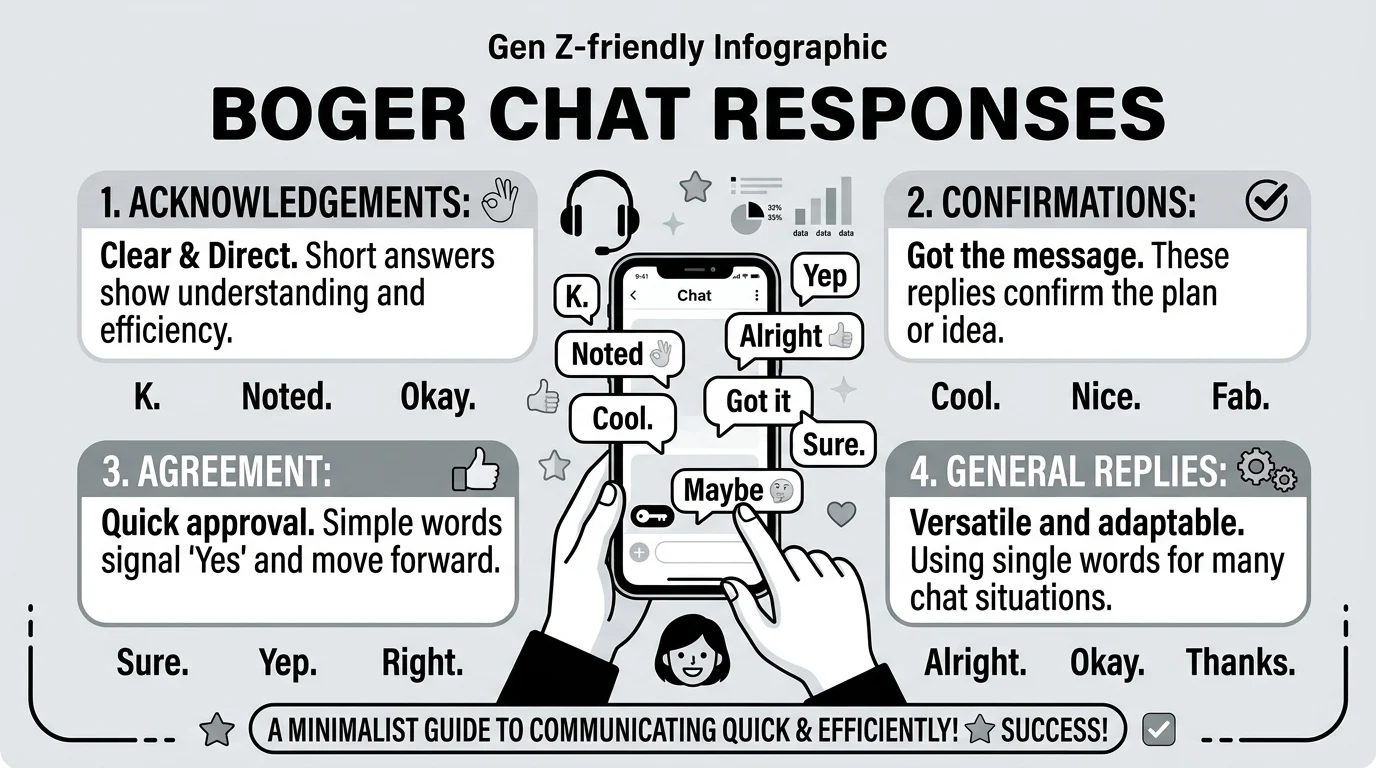
Short on time? Try: “K,” “Cool,” “Noted,” “Alright,” or “If you say so.”These dry responses keep the chat brief and clear without starting drama.
Ever sent a text and got back a single “K” that made you question everything? Dry responses are those short, low-energy replies that get the job done without extra fluff. They can feel cold, but they can also be useful when you’re busy, annoyed, or just not in the mood to chat.
Knowing when to use dry responses matters because the wrong one can kill a vibe. The right one saves time and sets a clear boundary. This guide gives you 150+ dry responses for every situation, from polite and professional to funny and deadpan.
Minimalist Dry Responses
- K.
- Example: When you have nothing else to add.
- Meaning: The shortest possible acknowledgment.
- Cool.
- Example: When someone shares news you don’t care much about.
- Meaning: Neutral and brief.
- Noted.
- Example: When you need to confirm you saw a message.
- Meaning: Professional and final.
- Alright.
- Example: When agreeing without enthusiasm.
- Meaning: Simple and low-effort.
- Fine.
- Example: When you accept a plan you’re not excited about.
- Meaning: Dry agreement.
- Okay.
- Example: When you want to end a thread quickly.
- Meaning: Basic acknowledgment.
- Sure.
- Example: When you’re saying yes without energy.
- Meaning: Minimal agreement.
- Got it.
- Example: When confirming you understood instructions.
- Meaning: Efficient and clear.
- Right.
- Example: When someone states something obvious.
- Meaning: Dry acknowledgment.
- Yeah.
- Example: When you want to reply without effort.
- Meaning: Short and neutral.
- Mhm.
- Example: When you’re half-listening.
- Meaning: Low-energy confirmation.
- If you say so.
- Example: When you disagree but don’t want to argue.
- Meaning: Dry dismissal.
Blunt Dry Responses
- That’s not happening.
- Example: When someone suggests a bad idea.
- Meaning: Direct refusal.
- No thanks.
- Example: When you don’t want to join something.
- Meaning: Polite but firm.
- I’d rather not.
- Example: When you’re invited to something you dislike.
- Meaning: Clear boundary.
- Not interested.
- Example: When someone pitches something.
- Meaning: Honest and short.
- Can’t help.
- Example: When someone asks for a favor you can’t do.
- Meaning: Final answer.
- That’s on you.
- Example: When someone makes a mistake.
- Meaning: Assigns responsibility without emotion.
- Doesn’t matter.
- Example: When someone asks for your preference.
- Meaning: Indifferent.
- Waste of time.
- Example: When someone suggests something pointless.
- Meaning: Blunt assessment.
- I don’t care.
- Example: When asked for an opinion you don’t have.
- Meaning: Direct and cold.
- Figure it out.
- Example: When someone asks you to solve their problem.
- Meaning: Pushes responsibility back.
- Not my problem.
- Example: When someone complains about something outside your control.
- Meaning: Clear disengagement.
- You do you.
- Example: When you disagree with someone’s choice.
- Meaning: Dry acceptance without support.
Sarcastic Dry Responses
- Oh, great.
- Example: When something annoying happens.
- Meaning: Fake enthusiasm.
- Fantastic.
- Example: When plans fall apart.
- Meaning: Sarcastic disappointment.
- Love that for you.
- Example: When someone brags about something small.
- Meaning: Dry mockery.
- Wow, incredible.
- Example: When someone states the obvious.
- Meaning: Heavy sarcasm.
- Color me impressed.
- Example: When someone does something basic.
- Meaning: Ironic praise.
- What a surprise.
- Example: When something predictable happens.
- Meaning: Dry sarcasm.
- Shocking.
- Example: When someone shares obvious news.
- Meaning: Fake surprise.
- Good for you.
- Example: When someone shares news you don’t care about.
- Meaning: Dismissive and dry.
- Must be nice.
- Example: When someone complains about a minor issue.
- Meaning: Sarcastic envy.
- If that makes you happy.
- Example: When someone makes a questionable choice.
- Meaning: Dry tolerance.
- You’re a genius, clearly.
- Example: When someone makes a bad decision.
- Meaning: Sarcastic compliment.
- Well done, really.
- Example: When someone messes up.
- Meaning: Ironic praise.
Polite Dry Responses
- Thanks for letting me know.
- Example: When you receive an update.
- Meaning: Professional and brief.
- I appreciate the message.
- Example: When you want to be kind without being warm.
- Meaning: Neutral gratitude.
- I’ll keep that in mind.
- Example: When someone gives advice you won’t use.
- Meaning: Polite deflection.
- Understood.
- Example: When confirming you read something.
- Meaning: Formal and clear.
- Will do.
- Example: When someone asks you to do something.
- Meaning: Brief compliance.
- Sounds reasonable.
- Example: When someone suggests a plan you can accept.
- Meaning: Neutral agreement.
- I see.
- Example: When someone explains something you don’t need explained.
- Meaning: Dry acknowledgment.
- Fair point.
- Example: When you disagree but accept their logic.
- Meaning: Calm and dry.
- I’ll follow up as needed.
- Example: When you’re ending a work chat.
- Meaning: Professional closure.
- Thanks, but I’ll pass.
- Example: When declining an invitation.
- Meaning: Polite refusal.
- No worries.
- Example: When someone apologizes.
- Meaning: Brief forgiveness.
- All good.
- Example: When someone checks in.
- Meaning: Calm and low-energy.
Professional Dry Responses
- Noted, thanks.
- Example: When your boss gives you a task.
- Meaning: Professional acknowledgment.
- Will review and respond.
- Example: When you receive a document.
- Meaning: Clear next step.
- That works.
- Example: When confirming a meeting time.
- Meaning: Brief agreement.
- Please proceed.
- Example: When approving a request.
- Meaning: Direct permission.
- Confirmed.
- Example: When finalizing plans.
- Meaning: Short and official.
- I’m aligned.
- Example: When agreeing with a team decision.
- Meaning: Professional support.
- Let’s move forward.
- Example: When ending a debate.
- Meaning: Decisive and dry.
- I’ll take care of it.
- Example: When assigned a task.
- Meaning: Reliable and brief.
- Please advise.
- Example: When you need instructions.
- Meaning: Formal request.
- Understood, no action needed.
- Example: When someone shares an FYI.
- Meaning: Clear and final.
- Thanks for the update.
- Example: When a colleague shares news.
- Meaning: Neutral acknowledgment.
- I have no concerns.
- Example: When asked for feedback.
- Meaning: Dry approval.
Flirty Dry Responses
- You’re trouble.
- Example: When someone teases you.
- Meaning: Playful but brief.
- Careful.
- Example: When someone flirts too hard.
- Meaning: Flirty warning.
- Bold.
- Example: When someone sends a flirty text.
- Meaning: Dry but interested.
- Interesting.
- Example: When someone says something unexpected.
- Meaning: Keeps them guessing.
- Noted.
- Example: When someone compliments you.
- Meaning: Flirty and mysterious.
- Keep going.
- Example: When someone is sharing a story.
- Meaning: Shows interest without enthusiasm.
- You wish.
- Example: When someone makes a playful claim.
- Meaning: Flirty challenge.
- Maybe.
- Example: When someone asks you out.
- Meaning: Leaves them wanting more.
- We’ll see.
- Example: When someone suggests plans.
- Meaning: Flirty and noncommittal.
- Don’t push it.
- Example: When someone is being cheeky.
- Meaning: Playful boundary.
- Hm.
- Example: When someone sends a flirty line.
- Meaning: Mysterious and dry.
- If you’re lucky.
- Example: When someone asks for a favor.
- Meaning: Flirty and teasing.
Funny Dry Responses
- And I care because?
- Example: When someone shares pointless news.
- Meaning: Dry humor.
- Good for you, I guess.
- Example: When someone brags.
- Meaning: Funny dismissal.
- I’ll alert the media.
- Example: When someone shares something trivial.
- Meaning: Sarcastic humor.
- Wow, slow down.
- Example: When someone is overexcited.
- Meaning: Dry and funny.
- Take a breath.
- Example: When someone sends five texts in a row.
- Meaning: Humorous and dry.
- Noted and ignored.
- Example: When someone gives unwanted advice.
- Meaning: Funny rejection.
- I’ll get right on that.
- Example: When asked to do something you won’t do.
- Meaning: Sarcastic compliance.
- Sure, in another life.
- Example: When someone asks for a big favor.
- Meaning: Dry joke.
- You’re really something.
- Example: When someone says something silly.
- Meaning: Funny and dry.
- Tell me more, actually don’t.
- Example: When someone starts a boring story.
- Meaning: Humorous shutdown.
- I was just thinking about nothing, you?
- Example: When someone asks what you’re doing.
- Meaning: Dry and funny.
- My excitement is unmeasurable.
- Example: When someone shares boring news.
- Meaning: Sarcastic humor.
Confident Dry Responses
- I know.
- Example: When someone tells you something you already know.
- Meaning: Dry confidence.
- Figured.
- Example: When someone states the obvious.
- Meaning: Self-assured.
- Already on it.
- Example: When asked to do something.
- Meaning: Shows initiative.
- Done.
- Example: When finishing a task.
- Meaning: Brief and confident.
- Of course.
- Example: When something goes as expected.
- Meaning: Self-assured.
- Naturally.
- Example: When someone compliments you.
- Meaning: Dry confidence.
- I’m aware.
- Example: When someone points out something obvious.
- Meaning: Confident and short.
- That’s the point.
- Example: When someone questions your choices.
- Meaning: Firm and dry.
- I’ll handle it.
- Example: When a problem comes up.
- Meaning: Confident reassurance.
- Watch me.
- Example: When someone doubts you.
- Meaning: Bold and brief.
- No need to explain.
- Example: When someone overexplains.
- Meaning: Confident understanding.
- I already did.
- Example: When someone asks if you completed a task.
- Meaning: Dry and efficient.
Chill Dry Responses
- All good.
- Example: When someone checks on you.
- Meaning: Calm and neutral.
- No rush.
- Example: When someone is late.
- Meaning: Low-pressure.
- Whatever works.
- Example: When making plans.
- Meaning: Easy-going and dry.
- I’m easy.
- Example: When choosing a place to eat.
- Meaning: Flexible and calm.
- Just let me know.
- Example: When waiting for details.
- Meaning: Patient and dry.
- Fine by me.
- Example: When agreeing to a plan.
- Meaning: Simple agreement.
- I’m around.
- Example: When someone asks if you’re free.
- Meaning: Available and low-energy.
- Nothing much.
- Example: When asked what you’re up to.
- Meaning: Casual and brief.
- Same here.
- Example: When someone shares their plans.
- Meaning: Dry agreement.
- Got it, thanks.
- Example: When receiving info.
- Meaning: Efficient.
- Cool, later.
- Example: When ending a chat.
- Meaning: Casual and quick.
- Works for me.
- Example: When confirming plans.
- Meaning: Neutral and easy.
Dismissive Dry Responses
- Whatever.
- Example: When you don’t care about the topic.
- Meaning: Clear dismissal.
- If you say so.
- Example: When someone insists on something.
- Meaning: Dry acceptance.
- Not my concern.
- Example: When someone shares drama.
- Meaning: Firm boundary.
- Moving on.
- Example: When you want to change the subject.
- Meaning: Ends the topic.
- Doesn’t matter.
- Example: When someone asks for your opinion.
- Meaning: Indifferent.
- Skip it.
- Example: When someone suggests something unnecessary.
- Meaning: Dry rejection.
- Not interested.
- Example: When someone pitches an idea.
- Meaning: Clear no.
- Leave it.
- Example: When someone keeps bringing up an issue.
- Meaning: Final and dry.
- Not now.
- Example: When someone asks for a favor.
- Meaning: Firm delay.
- Can’t say I care.
- Example: When someone shares gossip.
- Meaning: Honest and cold.
- Irrelevant.
- Example: When someone makes a weak point.
- Meaning: Dry dismissal.
- Drop it.
- Example: When an argument is pointless.
- Meaning: Clear boundary.
Deadpan Dry Responses
- Okay.
- Example: When you have no reaction.
- Meaning: Flat and neutral.
- Right.
- Example: When someone states the obvious.
- Meaning: Deadpan acknowledgment.
- Sure.
- Example: When agreeing without energy.
- Meaning: Minimal and flat.
- Good.
- Example: When something goes as planned.
- Meaning: Brief and emotionless.
- Interesting.
- Example: When you have no strong opinion.
- Meaning: Flat and dry.
- Noted.
- Example: When you need to acknowledge something.
- Meaning: Formal deadpan.
- Fine.
- Example: When accepting a situation.
- Meaning: Emotionless agreement.
- Alright.
- Example: When ending a conversation.
- Meaning: Flat closure.
- I see.
- Example: When someone explains something.
- Meaning: Neutral and dry.
- Makes sense.
- Example: When you understand but don’t care.
- Meaning: Flat acknowledgment.
- Fair.
- Example: When someone makes a valid point.
- Meaning: Brief and emotionless.
- Got it.
- Example: When confirming receipt.
- Meaning: Deadpan and clear.
One-Word Dry Responses
- K.
- Example: When you want to reply with zero effort.
- Meaning: Shortest acknowledgment.
- Cool.
- Example: When something is fine but not exciting.
- Meaning: Neutral and brief.
- Sure.
- Example: When agreeing without enthusiasm.
- Meaning: Minimal yes.
- Fine.
- Example: When accepting a plan.
- Meaning: Dry and short.
- Okay.
- Example: When you have nothing else to say.
- Meaning: Basic and flat.
- Noted.
- Example: When confirming you saw a message.
- Meaning: Professional and short.
- Right.
- Example: When someone makes a point.
- Meaning: Dry acknowledgment.
- Yeah.
- Example: When you want to end a thread.
- Meaning: Low-effort agreement.
- Nope.
- Example: When declining something.
- Meaning: Short refusal.
- Maybe.
- Example: When you’re unsure.
- Meaning: Noncommittal and brief.
- Alright.
- Example: When wrapping up.
- Meaning: Simple closure.
- Mhm.
- Example: When you’re half-listening.
- Meaning: Minimal confirmation.
Ironic Dry Responses
- Oh, how wonderful.
- Example: When something goes wrong.
- Meaning: Fake enthusiasm.
- Just my luck.
- Example: When a plan falls apart.
- Meaning: Ironic acceptance.
- Perfect timing.
- Example: When something inconvenient happens.
- Meaning: Sarcastic observation.
- Couldn’t be better.
- Example: When you’re stressed but pretending.
- Meaning: Ironic positivity.
- What a treat.
- Example: When you have to do something boring.
- Meaning: Dry sarcasm.
- Thrilling.
- Example: When someone shares dull news.
- Meaning: Ironic excitement.
- Dream come true.
- Example: When something annoying happens.
- Meaning: Heavy sarcasm.
- Lucky me.
- Example: When you get extra work.
- Meaning: Ironic gratitude.
- Well, that’s great.
- Example: When plans get canceled.
- Meaning: Dry disappointment.
- As if.
- Example: When someone makes an unrealistic suggestion.
- Meaning: Ironic rejection.
- Sure, why not.
- Example: When you agree reluctantly.
- Meaning: Ironic acceptance.
- Can’t wait.
- Example: When you’re dreading something.
- Meaning: Sarcastic anticipation.
Emoji-Only Dry Responses
- 👍
- Example: When you want to acknowledge without words.
- Meaning: Minimal approval.
- 🙂
- Example: When you’re being polite but distant.
- Meaning: Dry smile.
- 👌
- Example: When confirming plans.
- Meaning: Short agreement.
- 🤷
- Example: When you don’t have an opinion.
- Meaning: Indifferent.
- 😐
- Example: When you have no reaction.
- Meaning: Flat and neutral.
- 💀
- Example: When something is funny but you’re dry.
- Meaning: Dark humor.
- 🫠
- Example: When you’re overwhelmed but keeping it brief.
- Meaning: Dry meltdown.
- 👀
- Example: When you’re watching drama unfold.
- Meaning: Curious but silent.
- ✅
- Example: When confirming a task is done.
- Meaning: Efficient.
- 🤝
- Example: When agreeing to terms.
- Meaning: Dry partnership.
- 🙃
- Example: When you’re annoyed but pretending.
- Meaning: Ironic calm.
- 💤
- Example: When the conversation is boring.
- Meaning: Dry disengagement.
Text-Message Ready Dry Responses
- K, sounds good.
- Example: When confirming plans quickly.
- Meaning: Brief and clear.
- Cool, later.
- Example: When ending a chat.
- Meaning: Casual closure.
- Noted, thanks.
- Example: When acknowledging a work message.
- Meaning: Professional and short.
- Alright, works for me.
- Example: When agreeing to a time.
- Meaning: Simple and dry.
- Sure, no problem.
- Example: When someone asks a small favor.
- Meaning: Polite and brief.
- Fine by me.
- Example: When choosing an option.
- Meaning: Neutral agreement.
- Got it, will do.
- Example: When assigned a task.
- Meaning: Efficient compliance.
- Okay, keep me posted.
- Example: When waiting for updates.
- Meaning: Dry but responsible.
- Yeah, I’m around.
- Example: When someone asks if you’re free.
- Meaning: Low-energy availability.
- Whatever works.
- Example: When making flexible plans.
- Meaning: Easy and dry.
- If you say so.
- Example: When you disagree but don’t argue.
- Meaning: Dry acceptance.
- That’s fine.
- Example: When something is acceptable but not exciting.
- Meaning: Neutral and short.
FAQs
What does it mean when someone gives dry responses?
Dry responses are short, low-energy replies that lack emotion. They usually mean the person is busy, annoyed, or just not in the mood to chat.
Can dry responses be flirty?
Yes, when used playfully. A short “You’re trouble” or “Maybe” can feel mysterious and flirty if the vibe is right.
How do I use dry responses professionally?
Stick to “Noted,” “Understood,” or “Will do.” Keep it clear and skip slang or emojis unless your workplace is casual.
What if I don’t actually mean the dry response?
You can soften it with a follow-up like “Just busy right now, talk later.” Dry doesn’t have to mean rude.
Is humor okay with dry responses?
Yes, if the other person knows you well. Deadpan humor and irony work great with friends, but avoid it with strangers or in serious moments.
Conclusion
Dry responses can save you time, set boundaries, and even be funny when used right. Just remember that tone matters. A short “K” can feel cold, but a “Noted, thanks” feels professional. Match your reply to the person and the moment.
Try a few from this list and see what fits your style. Save this guide for those busy days when you need a quick reply. Share it with a friend who always overthinks texts. Keep it short, keep it smart, and keep the conversation moving.
