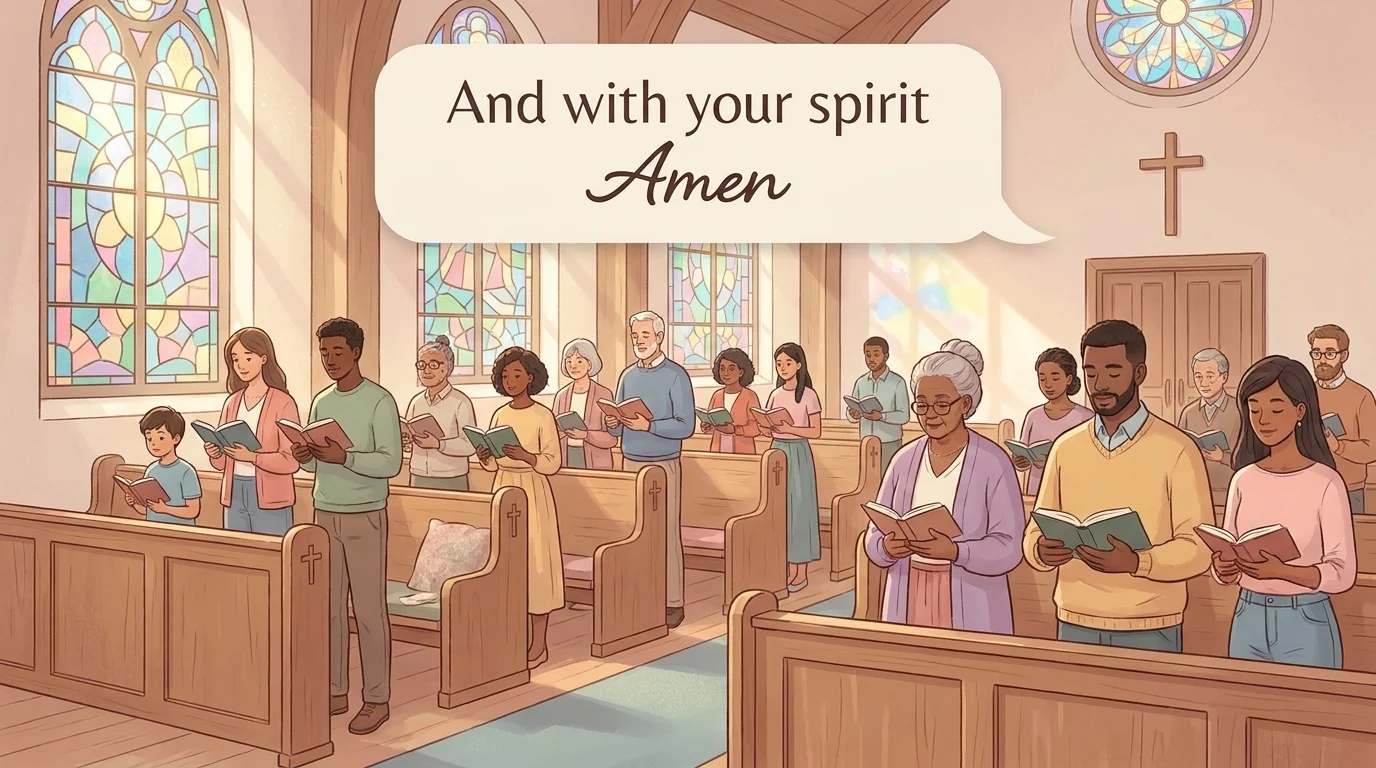
The most common Catholic Mass responses include “And with your spirit,” “Lord, have mercy,” “Thanks be to God,” “Amen,” and “Peace be with you.” These are the go-to phrases you’ll hear and say throughout the liturgy.
Ever walked into a Catholic Mass and felt like everyone around you was speaking a secret language? You’re nodding along, mouthing words, hoping nobody notices you’re totally lost. Been there. The struggle is real, and honestly, it happens to the best of us.
Catholic mass responses are those familiar call-and-response phrases woven throughout the liturgy. They connect you to centuries of tradition and to everyone else in the pews. Knowing them transforms you from awkward visitor to confident participant.
Whether you’re a returning Catholic, a curious newcomer, or someone preparing for a wedding or baptism, having these responses ready makes all the difference. No more lip-syncing or panicked glances at the person next to you. Let’s get you fluent in mass responses so you can focus on what actually matters.
Classic and Congregational Responses
- “And with your spirit.”
Example: The priest says “The Lord be with you,” and you respond with this.
Meaning: Acknowledges the priest’s spiritual role and unites the congregation. - “Lord, have mercy.”
Example: Said during the Penitential Act when asking for forgiveness.
Meaning: A humble plea for God’s compassion and grace. - “Glory to God in the highest.”
Example: Sung or recited during the Gloria on Sundays outside Lent.
Meaning: Praises God and echoes the angels’ announcement of Jesus’ birth. - “Holy, Holy, Holy Lord God of hosts.”
Example: The congregation proclaims this before the Eucharistic Prayer.
Meaning: Joins the heavenly chorus in worship and reverence. - “Christ has died, Christ is risen, Christ will come again.”
Example: The memorial acclamation after the consecration.
Meaning: Declares the core mystery of the faith in three powerful phrases. - “Lamb of God, you take away the sins of the world.”
Example: Said while the priest breaks the bread before Communion.
Meaning: Recognizes Jesus as the sacrificial lamb who brings salvation. - “Lord, I am not worthy that you should enter under my roof.”
Example: Said right before receiving Communion.
Meaning: Expresses humility and faith before the Eucharist. - “The Lord be with you.”
Example: The priest greets the congregation, and you respond in kind.
Meaning: A reciprocal blessing and acknowledgment of God’s presence. - “Thanks be to God.”
Example: Said after the first and second readings at Mass.
Meaning: Gratitude for hearing God’s Word proclaimed. - “We believe in one God.”
Example: Recited together during the Nicene Creed.
Meaning: A unified declaration of faith shared by the whole Church. - “Peace be with you.”
Example: Exchanged with neighbors during the Sign of Peace.
Meaning: A wish for Christ’s peace to fill someone’s heart. - “Amen.”
Example: Said at the end of prayers and when receiving Communion.
Meaning: A firm affirmation of belief and agreement.
Funny and Relatable Responses
- “Wait, are we on the response with the long version or short version?”
Example: Whispered to a friend during the Creed when memory fails.
Meaning: A lighthearted way to admit you’re lost but trying. - “I definitely just said the wrong thing loud enough for everyone to hear.”
Example: After accidentally responding too early during Mass.
Meaning: Owns the awkward moment with a little self-deprecating humor. - “That moment when you nail every response and feel unstoppable.”
Example: After Mass, joking with your family about your liturgical skills.
Meaning: Celebrates small wins in your faith journey. - “My auto-response is ‘And also with you’ because I grew up in the 90s.”
Example: Catching yourself using the old translation instead of the new one.
Meaning: A nostalgic nod to those who learned the responses before 2011. - “Pretty sure I’m the only one who didn’t know we were kneeling.”
Example: Whispering to your neighbor as you scramble to kneel.
Meaning: Breaks the ice when you’re unsure of the flow. - “If you need me, I’ll be the one mouthing every response and hoping for the best.”
Example: Texting a friend before Mass who’s new to the faith.
Meaning: Makes a nervous newcomer feel less alone. - “Who else mentally rehearses the responses like a script?”
Example: Joking with friends after Mass about prepping beforehand.
Meaning: Relatable for anyone who likes to be prepared. - “The Sign of Peace handshake is the most extroverted part of my week.”
Example: Said to your introverted friend after the exchange of peace.
Meaning: Adds humor for those who find that moment a bit much. - “At this point, my muscle memory for the Our Father is unmatched.”
Example: Bragging in a fun way to your sibling after Mass.
Meaning: Shows you’ve grown up in the Church and know the prayers by heart. - “Trying to respond while juggling a toddler and a hymnal is an extreme sport.”
Example: Said to another parent during the Sign of Peace.
Meaning: Connects with parents navigating Mass with little ones. - “I went to Mass and all I got was this overwhelming sense of peace and confusion.”
Example: Posted on social media after visiting a new parish.
Meaning: Captures the mix of emotions when you’re learning the ropes. - “Me: ‘And with your spirit.’ Also me: forgets every response after Communion.”
Example: A self-aware joke shared in a group chat after Mass.
Meaning: Shows even regulars can have brain blips.
Confident and Fluent Responses
- “And with your spirit.”
Example: Said with total confidence when greeting the priest.
Meaning: Shows you know the Mass and are fully engaged. - “Amen.”
Example: Received Communion and said this clearly and firmly.
Meaning: Demonstrates that you understand the weight of the moment. - “Thanks be to God.”
Example: After the readings, you respond without hesitation.
Meaning: Signals comfort with the liturgy and active participation. - “Holy, Holy, Holy.”
Example: Singing or saying this with the whole congregation.
Meaning: You’re in sync with the Church’s worship. - “We proclaim your Death, O Lord, and profess your Resurrection.”
Example: You recite the memorial acclamation from memory.
Meaning: Shows solid knowledge of the Eucharistic Prayer responses. - “Lord, I am not worthy.”
Example: Said quietly and reverently before Communion.
Meaning: Exhibits humility and understanding of the sacrament. - “Peace be with you.”
Example: You extend your hand to those around you with genuine warmth.
Meaning: Displays confidence and community spirit. - “The Lord be with you.”
Example: The priest says it, and you respond smoothly.
Meaning: You’re fully present and tracking with the Mass. - “I believe in one God.”
Example: You start the Creed strongly and lead by example.
Meaning: Reflects a firm, personal faith shared publicly. - “Lord, have mercy.”
Example: Said during the Penitential Act without missing a beat.
Meaning: Indicates familiarity with the liturgy and its rhythms. - “Lamb of God.”
Example: Said while the bread is broken, eyes focused.
Meaning: Shows you understand the symbolism and significance. - “Glory to God in the highest.”
Example: Sung with gusto during Sunday Mass.
Meaning: Reflects joyful participation in the Church’s prayer.
Polite and Respectful Responses
- “And with your spirit.”
Example: Said softly and respectfully during the opening greeting.
Meaning: Honors the priest and the sacred space you’re in. - “Thanks be to God.”
Example: After hearing Scripture, you respond with gratitude.
Meaning: Acknowledges the gift of God’s Word. - “Amen.”
Example: Said when receiving a blessing or concluding prayers.
Meaning: Affirms your belief and respect for the prayer. - “Peace be with you.”
Example: Offered to your neighbor with a gentle smile.
Meaning: Extends peace in a warm but respectful manner. - “Lord, have mercy.”
Example: Prayed quietly during the Penitential Act.
Meaning: Shows reverence for the sacrament of reconciliation. - “Lord, I am not worthy.”
Example: Said before Communion with hands folded.
Meaning: Demonstrates humility and spiritual respect. - “The Lord be with you.”
Example: Responded to the priest’s greeting with a nod.
Meaning: Shows polite engagement with the Mass. - “Holy, Holy, Holy.”
Example: Said with the congregation, maintaining a calm demeanor.
Meaning: Participates respectfully in the community’s prayer. - “We believe in one God.”
Example: Recited together without rushing through it.
Meaning: Honors the shared nature of the Creed. - “Christ has died, Christ is risen.”
Example: Proclaimed clearly and thoughtfully.
Meaning: Reflects respect for the mystery being celebrated. - “Lamb of God.”
Example: Said with a reflective tone before Communion.
Meaning: Shows reverence for the Eucharist. - “Glory to God.”
Example: Sung or said with a peaceful, prayerful tone.
Meaning: Offers glory to God with a respectful heart.
Anxious and First-Timer Responses
- “I think I know this one… maybe?”
Example: Whispered to a friend during the Creed.
Meaning: Admits uncertainty but shows willingness to try. - “Can someone please start so I can follow along?”
Example: Thought to yourself during a quiet moment at Mass.
Meaning: Captures the feeling of not wanting to mess up. - “Just going to mouth the words and hope it looks right.”
Example: Said to yourself when you forget the response.
Meaning: Highlights the universal fear of standing out. - “The response is on the screen, right? Right?”
Example: Frantically scanning the church for help.
Meaning: Shows the panic of a first-timer. - “I smiled and nodded. That counts as a response, right?”
Example: After a prayer where you had no idea what to say.
Meaning: Owns the awkwardness of not knowing the words. - “Lord, have mercy on my memory.”
Example: Joked quietly to yourself during the Penitential Act.
Meaning: A playful way to ease your own nerves. - “I’ll just repeat what the person next to me says.”
Example: Your strategy for getting through Mass.
Meaning: A common trick for visitors and newcomers. - “Is it ‘And also with you’ or ‘And with your spirit’?”
Example: Asked a friend before Mass when you’re really not sure.
Meaning: Shows you care enough to get it right. - “I was doing fine until we got to the Creed.”
Example: Chatting with your friend after Mass.
Meaning: Relates the experience of losing track halfway through. - “I don’t want to be loud, but I also don’t want to be silent.”
Example: Thought during a response you barely know.
Meaning: Captures the anxiety of finding the right volume. - “I accidentally said ‘Amen’ when I wasn’t supposed to.”
Example: Whispered to a friend after Mass.
Meaning: A relatable mistake any beginner might make. - “At least I stood and sat at the right times. Progress.”
Example: Celebrated to yourself after making it through Mass.
Meaning: Finds humor in the small victories.
Warm and Community Responses
- “Peace be with you.”
Example: Said warmly when shaking hands with your neighbor.
Meaning: Spreads Christ’s peace with genuine care. - “And with your spirit.”
Example: Said in a friendly tone during the opening.
Meaning: Unites you with the priest in a warm exchange. - “Good morning, everyone!”
Example: Said to fellow parishioners before Mass begins.
Meaning: Fosters a welcoming atmosphere. - “Thanks be to God.”
Example: Said together with the whole congregation after the readings.
Meaning: Shares gratitude with your faith community. - “So nice to see you here.”
Example: Said to a friend you didn’t expect at Mass.
Meaning: Builds connections within your parish. - “We believe in one God.”
Example: Proclaimed alongside the entire congregation.
Meaning: Reinforces the shared nature of the faith. - “Holy, Holy, Holy.”
Example: Sung with enthusiasm with everyone around you.
Meaning: Joins the community in joyful worship. - “Amen.”
Example: Said together with conviction when receiving Communion.
Meaning: Expresses your personal and communal faith. - “Lamb of God.”
Example: Prayed in unison with the congregation.
Meaning: Lifts the moment together with others. - “Christ has died, Christ is risen.”
Example: Said with the whole church, voices blending.
Meaning: Reflects the unity of the parish. - “Lord, have mercy.”
Example: Prayed together during the Penitential Act.
Meaning: Shows communal humility and a spirit of togetherness. - “Glory to God in the highest.”
Example: Sung as one voice on Sunday mornings.
Meaning: Creates a sense of belonging and shared joy.
Playful and Lighthearted Responses
- “And with your spirit (even if my spirit is still waking up).”
Example: Joked quietly to your sibling at the 7 AM Mass.
Meaning: Adds a little humor to a groggy morning. - “Lord, have mercy on my Sunday morning decisions.”
Example: Half-joking when you roll into Mass late.
Meaning: Keeps things light when you’re feeling a bit chaotic. - “Holy, Holy, Holy… that solo was amazing.”
Example: Whispered to a friend after the music.
Meaning: Appreciates the parish’s talents. - “Thanks be to God for coffee after Mass.”
Example: Said to your family after the final blessing.
Meaning: A cheeky nod to the post-Mass social hour. - “Peace be with you, and also please pass the donuts.”
Example: Said after Mass at the parish hall.
Meaning: Brings a little fun to fellowship time. - “Amen and amen.”
Example: Said with a smile when you’re extra moved by the homily.
Meaning: Expresses joyful agreement. - “I’ll be honest, my favorite response is the one that ends Mass.”
Example: Laughed about with friends after church.
Meaning: Playfully admits the best part is brunch. - “We believe in one God, and also in one good homily.”
Example: A light joke shared in the parking lot.
Meaning: Shows you’re engaged but not afraid to be relatable. - “Lord, I am not worthy… of this amazing choir.”
Example: Said to your neighbor after the recessional.
Meaning: Appreciates the beauty of the liturgy. - “Christ has died, Christ is risen, Christ will come again… and so will my coffee.”
Example: A playful thought during morning Mass.
Meaning: Shows you’re present but human. - “Glory to God in the highest, and a special shoutout to the readers today.”
Example: Said to a friend after Mass about the lector.
Meaning: Appreciates the community’s contributions. - “The Lord be with you, and also with my ability to stay awake.”
Example: Whispered to a friend during a long homily.
Meaning: Adds a touch of humor to a relatable struggle.
Thoughtful and Reflective Responses
- “Lord, have mercy.”
Example: Prayed slowly and thoughtfully during the Penitential Act.
Meaning: Reflects a sincere heart seeking forgiveness. - “Amen.”
Example: Said with quiet conviction after receiving Communion.
Meaning: A deeply personal affirmation of faith. - “Christ has died, Christ is risen, Christ will come again.”
Example: Proclaimed with eyes closed, absorbing the words.
Meaning: Meditates on the mystery of salvation. - “And with your spirit.”
Example: Said with calm attentiveness during the opening.
Meaning: Centers yourself in the sacred space. - “Lord, I am not worthy.”
Example: Said with deep reverence before approaching the altar.
Meaning: Reflects humility and self-awareness. - “Peace be with you.”
Example: Said with a genuine desire for others’ well-being.
Meaning: Offers a real prayer for the person you greet. - “Holy, Holy, Holy.”
Example: Sung with a quiet, reflective heart.
Meaning: Joins in the heavenly worship with a contemplative spirit. - “We believe in one God.”
Example: Recited slowly, letting each word sink in.
Meaning: Renews your personal commitment to the faith. - “Lamb of God.”
Example: Said quietly while preparing your heart for Communion.
Meaning: Reflects on Christ’s sacrifice with gratitude. - “Glory to God in the highest.”
Example: Said with a peaceful spirit during the Gloria.
Meaning: Offers up joyful praise from a sincere heart. - “Thanks be to God.”
Example: Said after hearing a meaningful passage from Scripture.
Meaning: Expresses heartfelt thanks for God’s Word. - “The Lord be with you.”
Example: Responded to the priest with quiet attentiveness.
Meaning: Acknowledges God’s presence in the moment.
Joyful and Celebratory Responses
- “Glory to God in the highest!”
Example: Sung loudly on a joyful Sunday morning.
Meaning: Expresses exuberant praise. - “Amen!”
Example: Said with a big smile after the homily.
Meaning: Celebrates the Word you just heard. - “Christ has died, Christ is risen, Christ will come again!”
Example: Proclaimed with energy during the Easter season.
Meaning: Celebrates the hope of the Resurrection. - “Holy, Holy, Holy!”
Example: Sung with full joy at a joyful Mass.
Meaning: Lifts your voice in celebration. - “Thanks be to God!”
Example: Said with enthusiasm after a beautiful reading.
Meaning: Celebrates the gift of Scripture. - “Peace be with you!”
Example: Said with a warm handshake and a smile.
Meaning: Shares joy with everyone around you. - “And with your spirit!”
Example: Responded joyfully to the priest’s greeting.
Meaning: Expresses happiness to be present. - “We believe in one God!”
Example: Recited with boldness during the Creed.
Meaning: Celebrates your faith publicly. - “Lord, have mercy!”
Example: Prayed with a light heart during the Penitential Act.
Meaning: Trusts in God’s goodness with a joyful spirit. - “Lord, I am not worthy!”
Example: Said with awe and gratitude before Communion.
Meaning: Marvels at the gift of the Eucharist. - “Lamb of God!”
Example: Prayed with joy and anticipation.
Meaning: Anticipates the grace of receiving Communion. - “The Lord be with you!”
Example: Responded with enthusiasm to the opening.
Meaning: Celebrates the start of a sacred gathering.
Simple and Straightforward Responses
- “And with your spirit.”
Example: Said clearly and simply.
Meaning: The straightforward response to the greeting. - “Amen.”
Example: Said at the end of a prayer.
Meaning: A simple but powerful affirmation. - “Thanks be to God.”
Example: Said after the readings.
Meaning: A direct expression of gratitude. - “Lord, have mercy.”
Example: Said during the Penitential Act.
Meaning: A basic plea for mercy. - “Holy, Holy, Holy.”
Example: Said with the congregation before the Eucharistic Prayer.
Meaning: A simple but profound act of worship. - “We believe in one God.”
Example: Said clearly at the start of the Creed.
Meaning: A plain declaration of faith. - “Peace be with you.”
Example: Said to the person next to you.
Meaning: A simple wish for peace. - “Christ has died, Christ is risen, Christ will come again.”
Example: Said in a clear, steady voice.
Meaning: The straightforward mystery of faith. - “Lord, I am not worthy.”
Example: Said simply and humbly before Communion.
Meaning: A plain and honest expression of humility. - “The Lord be with you.”
Example: Said in response to the priest.
Meaning: A simple and direct greeting. - “Lamb of God.”
Example: Said clearly before receiving Communion.
Meaning: The direct acknowledgment of Christ’s sacrifice. - “Glory to God in the highest.”
Example: Said in a simple, prayerful tone.
Meaning: A clear and straightforward act of praise.
Powerful and Affirming Responses
- “Amen.”
Example: Said with a strong, steady voice after a prayer.
Meaning: A powerful affirmation of belief. - “Christ has died, Christ is risen, Christ will come again!”
Example: Proclaimed boldly during the memorial acclamation.
Meaning: A powerful statement of faith. - “We believe in one God!”
Example: Recited with strength and conviction.
Meaning: A bold declaration of faith. - “Lord, I am not worthy!”
Example: Said with humility but clarity.
Meaning: A powerful act of surrender and trust. - “Peace be with you!”
Example: Said with intention and warmth.
Meaning: A strong wish for peace and goodwill. - “And with your spirit!”
Example: Responded firmly to the priest’s greeting.
Meaning: A confident acknowledgment of the spiritual bond. - “Holy, Holy, Holy!”
Example: Sung with full voice and conviction.
Meaning: A powerful act of praise. - “Thanks be to God!”
Example: Said with heartfelt gratitude after the readings.
Meaning: A strong expression of thanks. - “Lord, have mercy!”
Example: Prayed with sincerity and boldness.
Meaning: A powerful plea for grace. - “Glory to God in the highest!”
Example: Sung with strength and joy.
Meaning: A powerful hymn of praise. - “The Lord be with you!”
Example: Responded with confidence and clarity.
Meaning: A strong acknowledgment of God’s presence. - “Lamb of God!”
Example: Prayed with heartfelt devotion.
Meaning: A powerful acknowledgment of Christ’s sacrifice.
FAQs
What does “catholic mass responses” mean?
It refers to the specific phrases the congregation says during Mass in response to the priest or as part of the liturgy.
Can these responses be used in a flirty way?
Not really. They’re sacred and meant for worship, so keep them for their intended purpose.
Are there formal or professional contexts for these responses?
These responses are specifically for Mass. Outside of that, they don’t have formal or professional use.
What if I don’t mean what I’m saying?
The responses are prayers. If you’re uncertain, focus on being present and reflective rather than just reciting.
Is it okay to use humor with mass responses?
In your own time or casually with friends, sure. But during Mass, keep the tone reverent.
Conclusion
Catholic mass responses don’t have to feel like a mystery. Whether you’re new, returning, or a lifelong parishioner, these phrases connect you to something bigger than yourself. The key is showing up, trying your best, and growing in confidence with each Mass.
You’ve got this. Now go ahead and save this list, share it with a friend who’s been nervous about going to Mass, and drop it in your group chat. Someone out there needs a little reassurance that they’re not the only one who forgot the Creed halfway through. You’re doing great, and God loves you for every awkward attempt.
