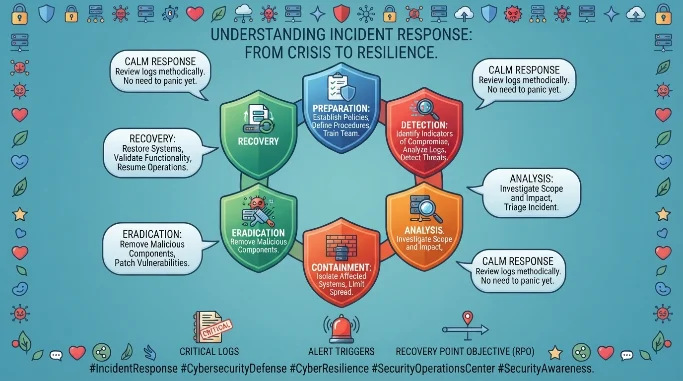
Incident response methodology is a structured framework for preparing, detecting, containing, eradicating, recovering, and learning from security incidents.Top alternatives include NIST SP 800-61, SANS six-step process, PICERL model, ISO 27035, and MITRE ATT&CK mapping.
Professional Responses
- We are following our incident response methodology from triage to closure.
- Example: Use this when a manager asks for a quick status on an active security event.
- Meaning: It signals a disciplined process is guiding the response.
- The team is aligned on the current phase and next actions.
- Example: Use during a bridge call when multiple departments need reassurance.
- Meaning: It shows coordination and clear ownership.
- We have documented the timeline and preserved relevant evidence.
- Example: Use when compliance or legal asks about record keeping during a breach.
- Meaning: It proves the response is auditable and careful.
- Containment is underway while we confirm the full scope.
- Example: Use when executives want to know if the threat is still spreading.
- Meaning: It balances urgency with accuracy.
- Our priority is restoring safe operations without skipping validation steps.
- Example: Use when recovery pressure builds and teams want to move fast.
- Meaning: It keeps speed from creating new risk.
- We are communicating through the established incident channel only.
- Example: Use when side conversations start causing confusion.
- Meaning: It keeps information centralized and reliable.
- The next update will include impact, root cause progress, and estimated recovery.
- Example: Use when stakeholders expect a formal status report.
- Meaning: It sets clear expectations for the next briefing.
- All actions are mapped to our playbook and approval matrix.
- Example: Use when someone questions why a step needs sign off.
- Meaning: It shows governance is being respected.
- We are separating confirmed facts from working assumptions.
- Example: Use when early reports contain rumors or incomplete data.
- Meaning: It prevents speculation from driving decisions.
- The incident commander is coordinating handoffs between teams.
- Example: Use when multiple groups need to know who is in charge.
- Meaning: It clarifies leadership during a complex event.
- We will conduct a post incident review after stability is confirmed.
- Example: Use when someone asks about lessons learned before recovery ends.
- Meaning: It shows the process includes improvement.
- Our response remains proportional to the severity and business impact.
- Example: Use when stakeholders debate how much resource to assign.
- Meaning: It keeps effort matched to actual risk.
Calm And Composed Responses
- We have a plan, and we are working through it step by step.
- Example: Use when the room feels tense during a live security incident.
- Meaning: It lowers anxiety by reinforcing structure.
- Let us slow down for ten seconds and confirm what we actually know.
- Example: Use when alerts are firing faster than the team can process them.
- Meaning: It replaces panic with clarity.
- The situation is serious, but it is not beyond our process.
- Example: Use when leadership needs a steady voice during a breach.
- Meaning: It acknowledges risk without fueling fear.
- We are containing first, then we will investigate deeper.
- Example: Use when analysts want to chase every clue immediately.
- Meaning: It keeps priorities in the right order.
- No one is blaming anyone. We are solving the problem together.
- Example: Use when mistakes surface during a high pressure response.
- Meaning: It protects team focus and morale.
- We can handle this in phases, so let us not rush every decision at once.
- Example: Use when the incident scope is still expanding.
- Meaning: It breaks a huge problem into manageable parts.
- The evidence is being preserved, and the timeline is being updated.
- Example: Use when someone worries that details will be lost.
- Meaning: It reassures the team that facts are safe.
- We will communicate what we know, what we do not know, and what comes next.
- Example: Use during regular status updates to avoid confusion.
- Meaning: It creates transparency without overload.
- Our recovery steps will be validated before full service is restored.
- Example: Use when business teams push to reopen systems quickly.
- Meaning: It prevents a second incident.
- Let us keep the channel clear and save side questions for later.
- Example: Use when the main incident bridge gets noisy.
- Meaning: It protects focus during critical moments.
- We are tracking every action so the post incident review is accurate.
- Example: Use when the team is moving quickly and details could be missed.
- Meaning: It ensures accountability and learning.
- This is manageable if we stick to the methodology and trust the process.
- Example: Use when the team needs a confidence boost mid response.
- Meaning: It reinforces calm discipline.
Urgent And Direct Responses
- Contain the affected system now, then confirm scope.
- Example: Use when malware is actively spreading across endpoints.
- Meaning: It prioritizes immediate damage control.
- Cut external access and preserve logs before rebooting anything.
- Example: Use when a server shows signs of compromise.
- Meaning: It protects critical evidence and limits exposure.
- We need the incident commander on the bridge in five minutes.
- Example: Use when a high severity alert requires immediate leadership.
- Meaning: It speeds up decision making.
- Do not delete anything. Isolate and document first.
- Example: Use when a junior analyst wants to clean up quickly.
- Meaning: It prevents accidental evidence loss.
- Notify legal and compliance now, not after recovery.
- Example: Use when customer data may be involved.
- Meaning: It meets obligations early.
- Switch to the backup communication channel immediately.
- Example: Use when the primary chat platform is compromised or unstable.
- Meaning: It keeps coordination secure.
- We are declaring a severity one incident and activating the full playbook.
- Example: Use when business operations are critically affected.
- Meaning: It triggers the highest level of response.
- Pause all non essential changes until the incident is contained.
- Example: Use when multiple teams are making system changes at once.
- Meaning: It reduces confusion and new risk.
- Get me the last known good backup and its integrity status.
- Example: Use when recovery planning begins for a ransomware event.
- Meaning: It prepares the fastest safe restore path.
- Every action needs a timestamp and an owner.
- Example: Use during fast moving response work.
- Meaning: It creates accountability and a clean timeline.
- If you see lateral movement, report it immediately.
- Example: Use when the attacker may still be inside the network.
- Meaning: It keeps everyone alert to spreading threats.
- We are moving to eradication only after containment is confirmed.
- Example: Use when teams want to remove malware too early.
- Meaning: It follows the methodology in the correct order.
Analytical And Technical Responses
- The initial vector appears to be a phishing email with a malicious attachment.
- Example: Use when analysts have traced the first point of entry.
- Meaning: It states a likely cause based on evidence.
- We are comparing endpoint logs with network traffic to confirm lateral movement.
- Example: Use when the scope may include multiple systems.
- Meaning: It shows correlation across data sources.
- The hash matches a known malware family, but we are validating behavior.
- Example: Use when threat intelligence gives a preliminary lead.
- Meaning: It avoids jumping to conclusions.
- Process tree analysis shows suspicious parent child relationships.
- Example: Use when investigating unusual execution on a host.
- Meaning: It highlights technical indicators of compromise.
- We are reviewing authentication logs for impossible travel or brute force patterns.
- Example: Use when account takeover is suspected.
- Meaning: It focuses the investigation on identity signals.
- The affected asset had unpatched software linked to a known vulnerability.
- Example: Use when root cause analysis points to missing updates.
- Meaning: It identifies a technical weakness to fix.
- Memory capture is complete and ready for deeper forensic review.
- Example: Use when volatile data must be preserved before shutdown.
- Meaning: It secures evidence that would otherwise disappear.
- We are mapping observed tactics to the MITRE ATT&CK framework.
- Example: Use when the team wants a common language for attacker behavior.
- Meaning: It organizes findings into a recognized model.
- The backup restore point is clean based on hash and malware scans.
- Example: Use when recovery teams need confidence before restoring.
- Meaning: It validates a safe recovery source.
- Eradication will include credential rotation and patch deployment.
- Example: Use when the attacker may have stolen passwords.
- Meaning: It removes persistence and closes the entry point.
- We are monitoring for re infection after containment.
- Example: Use when the attacker could still have hidden access.
- Meaning: It confirms the threat is truly gone.
- The root cause is still under review, but the evidence points to one entry point.
- Example: Use when stakeholders want answers before analysis is complete.
- Meaning: It shares progress without overstating certainty.
Leadership And Executive Responses
- We are managing the incident with a clear methodology and defined owners.
- Example: Use when the board asks how the company is handling a breach.
- Meaning: It projects control and accountability.
- Business impact is being assessed alongside technical containment.
- Example: Use when executives need to understand operational risk.
- Meaning: It connects security work to business outcomes.
- Customer data exposure is not confirmed, and we are validating now.
- Example: Use when rumors about data loss reach leadership.
- Meaning: It avoids panic while staying honest.
- The next executive update will be in thirty minutes.
- Example: Use when leadership wants a predictable communication rhythm.
- Meaning: It sets a reliable schedule.
- We are prioritizing critical services for recovery first.
- Example: Use when multiple systems are affected and resources are limited.
- Meaning: It aligns recovery with business priorities.
- Legal, compliance, and communications are already engaged.
- Example: Use when the incident may have regulatory or public impact.
- Meaning: It shows cross functional readiness.
- We are not making external statements until facts are verified.
- Example: Use when media or customers pressure the company for answers.
- Meaning: It protects credibility and reduces legal risk.
- The incident commander has full authority to coordinate all teams.
- Example: Use when departments need clarity on decision rights.
- Meaning: It removes bottlenecks during response.
- We will provide a post incident report with lessons learned and action items.
- Example: Use when leadership wants long term assurance.
- Meaning: It commits to improvement after recovery.
- Resource requests are being tracked and will be justified by impact.
- Example: Use when additional budget or staff is needed.
- Meaning: It keeps spending tied to risk.
- Our recovery time objective remains the target unless new findings change it.
- Example: Use when business continuity plans are discussed.
- Meaning: It gives a measurable recovery goal.
- We are balancing speed, safety, and regulatory duties at every step.
- Example: Use when executives debate trade offs during a crisis.
- Meaning: It shows mature decision making.
Customer-Facing Responses
- We are aware of the issue and our team is actively working on it.
- Example: Use when customers report service problems linked to a security event.
- Meaning: It acknowledges the issue without oversharing.
- Your data security is our top priority, and we are following a strict response process.
- Example: Use in a public statement or support reply during a breach.
- Meaning: It reassures customers that the matter is handled seriously.
- We will share updates as soon as verified information is available.
- Example: Use when customers demand immediate details.
- Meaning: It sets expectations without speculation.
- Some services may be limited while we protect the environment.
- Example: Use when containment requires temporary downtime.
- Meaning: It explains disruption in a simple way.
- We recommend changing your password as a precaution.
- Example: Use when account credentials may have been affected.
- Meaning: It gives a clear protective action.
- We are working with experts to investigate and resolve this quickly.
- Example: Use in a customer email about a security incident.
- Meaning: It builds confidence in the response.
- No action is required from you at this time.
- Example: Use when the incident does not affect customer accounts.
- Meaning: It prevents unnecessary worry.
- We take this situation seriously and apologize for the inconvenience.
- Example: Use when service disruption affects customers.
- Meaning: It shows empathy and accountability.
- Our support team is ready to help with any account concerns.
- Example: Use when customers need guidance after a security notice.
- Meaning: It provides a clear path for assistance.
- We will never ask for your password or payment details over chat.
- Example: Use when phishing attempts follow a public incident.
- Meaning: It protects customers from secondary scams.
- A detailed notice will be shared once the investigation is complete.
- Example: Use when legal review delays full disclosure.
- Meaning: It promises transparency within proper limits.
- Thank you for your patience while we prioritize safety and recovery.
- Example: Use when customers experience delays during response.
- Meaning: It appreciates their understanding.
Team Morale Responses
- You are doing important work. Keep going, one step at a time.
- Example: Use when the response team has been working for hours.
- Meaning: It boosts energy during a long incident.
- Take a five minute break if you need it. We need clear heads.
- Example: Use when fatigue starts causing mistakes.
- Meaning: It values health and focus over constant grinding.
- No one expects perfection. We expect communication and effort.
- Example: Use when a teammate worries about making the wrong call.
- Meaning: It reduces pressure and encourages honesty.
- We will debrief together, not blame each other.
- Example: Use when the team is tense about post incident review.
- Meaning: It creates a safe learning culture.
- Your analysis helped narrow the scope. That was a big win.
- Example: Use when an analyst finds a key clue.
- Meaning: It recognizes individual contribution.
- We are all on the same team, even when we disagree on tactics.
- Example: Use when two groups debate the best containment step.
- Meaning: It keeps collaboration strong.
- Document what you can and hand off what you must. Rest is part of response.
- Example: Use during shift changes in a 24 hour incident.
- Meaning: It normalizes healthy handoffs.
- This is hard, but we have handled hard before.
- Example: Use when the team feels overwhelmed by scope.
- Meaning: It builds confidence from past experience.
- Ask for help early. That is a strength, not a weakness.
- Example: Use when someone is stuck on a technical problem.
- Meaning: It encourages teamwork over pride.
- Your calm updates are keeping everyone grounded.
- Example: Use when a teammate communicates clearly under pressure.
- Meaning: It reinforces positive behavior.
- We will celebrate the recovery, but first we finish the process.
- Example: Use when the team wants to relax before closure.
- Meaning: It keeps motivation focused on completion.
- Thank you for showing up and giving your best.
- Example: Use at the end of a long response shift.
- Meaning: It shows appreciation for effort.
Compliance And Legal Responses
- We are preserving all logs and records according to retention policy.
- Example: Use when legal asks about evidence handling during an incident.
- Meaning: It shows compliance with documentation duties.
- The incident has been logged with the required regulatory timeline in mind.
- Example: Use when a breach may trigger notification laws.
- Meaning: It confirms awareness of legal deadlines.
- Only authorized personnel are accessing incident evidence.
- Example: Use when chain of custody is a concern.
- Meaning: It protects integrity and confidentiality.
- We are not speculating on cause in written communications.
- Example: Use when drafting internal updates that may be discoverable.
- Meaning: It reduces legal risk.
- Legal review is required before any external notification.
- Example: Use when customer or media statements are being prepared.
- Meaning: It ensures proper approval.
- Data classification is being confirmed before impact is shared.
- Example: Use when it is unclear what type of data was exposed.
- Meaning: It prevents inaccurate disclosure.
- We are documenting every decision and its rationale.
- Example: Use during a high stakes incident with regulatory interest.
- Meaning: It creates a defensible record.
- The privacy team is assessing whether personal data was involved.
- Example: Use when a database compromise is suspected.
- Meaning: It brings in the right expertise.
- Retention holds are in place for all relevant systems.
- Example: Use when routine deletion could erase important evidence.
- Meaning: It stops accidental loss of records.
- We will follow the notification matrix once facts are confirmed.
- Example: Use when multiple regulators or partners may need alerts.
- Meaning: It standardizes who gets told and when.
- Third party contracts may require breach notification to partners.
- Example: Use when a vendor or client is affected.
- Meaning: It flags contractual obligations.
- The final report will separate confirmed findings from recommendations.
- Example: Use when compliance wants a clear post incident document.
- Meaning: It keeps facts and advice distinct.
Post-Incident Review Responses
- Let us review the timeline and identify where detection could improve.
- Example: Use in the first post incident meeting.
- Meaning: It focuses on learning, not blame.
- What worked well in our incident response methodology?
- Example: Use to reinforce successful practices.
- Meaning: It captures strengths to repeat.
- Where did communication break down, and how do we fix it?
- Example: Use when handoffs caused delays.
- Meaning: It targets process improvement.
- We need action items with owners and deadlines.
- Example: Use when the review produces recommendations.
- Meaning: It turns lessons into real change.
- The root cause is clear, but the contributing factors matter too.
- Example: Use when multiple weaknesses enabled the incident.
- Meaning: It avoids oversimplifying the problem.
- Our detection time was longer than expected. Let us investigate why.
- Example: Use when monitoring missed early signs.
- Meaning: It improves future response speed.
- Containment worked, but recovery took too long.
- Example: Use when restoration exceeded targets.
- Meaning: It highlights recovery planning gaps.
- We should update the playbook based on what we learned.
- Example: Use after a new attack pattern is handled.
- Meaning: It keeps the methodology current.
- Training needs are clear from this incident.
- Example: Use when the team lacked a specific skill.
- Meaning: It links review to capability building.
- Let us document the final impact and share it with stakeholders.
- Example: Use when the review is ready for leadership.
- Meaning: It closes the loop with transparency.
- We will track every action item to completion.
- Example: Use to ensure recommendations are not forgotten.
- Meaning: It builds accountability.
- This review makes our next response stronger.
- Example: Use at the end of the post incident meeting.
- Meaning: It frames learning as progress.
Communication And Status Update Responses
- Here is the current status: contained, monitored, and recovering.
- Example: Use in a scheduled incident update.
- Meaning: It gives a fast snapshot of progress.
- What we know: one system affected. What we do not know: full scope.
- Example: Use when stakeholders need honesty about uncertainty.
- Meaning: It separates facts from open questions.
- Next update in thirty minutes or sooner if conditions change.
- Example: Use to set a predictable communication rhythm.
- Meaning: It reduces repeated questions.
- All teams should use the incident bridge for coordination.
- Example: Use when multiple chat threads are causing confusion.
- Meaning: It centralizes communication.
- We are moving from containment to eradication.
- Example: Use when the threat is no longer spreading.
- Meaning: It announces a phase change.
- Recovery is starting for priority services.
- Example: Use when restoration work begins.
- Meaning: It tells everyone what to expect next.
- Please avoid sharing unverified details outside the response team.
- Example: Use when rumors could reach customers or media.
- Meaning: It protects accuracy and trust.
- The incident commander will provide the next briefing.
- Example: Use when leadership wants a single source of truth.
- Meaning: It clarifies who speaks officially.
- We need a roll call of all active workstreams.
- Example: Use during a large incident with many teams.
- Meaning: It ensures no task is missed.
- If your task is complete, document it and hand off cleanly.
- Example: Use during shift changes.
- Meaning: It keeps continuity strong.
- We are extending the response shift by two hours.
- Example: Use when recovery takes longer than planned.
- Meaning: It manages expectations and resources.
- Thank you for the clear updates. Keep them coming.
- Example: Use to reinforce good communication habits.
- Meaning: It encourages transparency.
Confident And Decisive Responses
- We have the right team, the right process, and the right focus.
- Example: Use when leadership needs assurance during a severe incident.
- Meaning: It projects competence and control.
- I am making the call to isolate the network segment now.
- Example: Use when a decision cannot wait for consensus.
- Meaning: It shows decisive leadership.
- We will recover from this, and we will come back stronger.
- Example: Use when the team needs a confidence boost.
- Meaning: It builds hope without ignoring reality.
- Our methodology gives us a clear path. Let us follow it.
- Example: Use when the team debates the next step.
- Meaning: It anchors decisions in process.
- I stand behind this response plan.
- Example: Use when presenting the plan to executives.
- Meaning: It shows ownership and conviction.
- We are not guessing. We are validating and acting.
- Example: Use when stakeholders question the approach.
- Meaning: It emphasizes evidence based action.
- This incident will not define us. Our response will.
- Example: Use in a team huddle during a long event.
- Meaning: It inspires resilience.
- We will meet the recovery target by prioritizing critical systems.
- Example: Use when timelines are tight.
- Meaning: It shows focus and determination.
- I trust this team to execute under pressure.
- Example: Use when leading a response shift.
- Meaning: It builds morale and confidence.
- We are prepared for the next phase.
- Example: Use when moving from containment to recovery.
- Meaning: It signals readiness.
- No hesitation. We know what needs to be done.
- Example: Use when the plan is clear and action is needed.
- Meaning: It drives momentum.
- We will communicate clearly and act decisively.
- Example: Use at the start of an incident briefing.
- Meaning: It sets the tone for the response.
Collaborative And Helpful Responses
- How can I support your part of the response?
- Example: Use when another team is overloaded.
- Meaning: It offers help without assuming.
- Let us combine our findings and compare notes.
- Example: Use when two teams have related evidence.
- Meaning: It encourages shared analysis.
- I can take the documentation so you can focus on containment.
- Example: Use when a teammate is deep in technical work.
- Meaning: It divides tasks efficiently.
- Do you need a second pair of eyes on that log?
- Example: Use when an analyst is stuck on a clue.
- Meaning: It offers support without pressure.
- We should sync every fifteen minutes to avoid overlap.
- Example: Use during a fast moving response.
- Meaning: It keeps work coordinated.
- Your expertise is needed on the recovery call.
- Example: Use when a specialist must join a critical discussion.
- Meaning: It values their contribution.
- I will update the shared timeline with your notes.
- Example: Use when multiple people are documenting actions.
- Meaning: It keeps records unified.
- Let us escalate together if we need more resources.
- Example: Use when the team lacks capacity.
- Meaning: It shows unity in asking for help.
- I appreciate your clear handoff. It made the next step easier.
- Example: Use after a shift change.
- Meaning: It reinforces good teamwork.
- We can solve this faster by sharing what we each see.
- Example: Use when teams have partial visibility.
- Meaning: It promotes transparency.
- I will handle the stakeholder update so you can keep working.
- Example: Use when a technical lead is needed at the keyboard.
- Meaning: It protects focus time.
- Thank you for jumping in. We are stronger together.
- Example: Use when a colleague joins the response effort.
- Meaning: It builds a supportive culture.
Creative And Problem-Solving Responses
- What if we isolate the service instead of the whole server?
- Example: Use when containment needs a less disruptive option.
- Meaning: It invites creative risk reduction.
- Let us map the attack path backwards from the evidence.
- Example: Use when the entry point is unclear.
- Meaning: It offers a fresh investigative angle.
- Could the backup be restored to a clean segment first?
- Example: Use when recovery speed and safety both matter.
- Meaning: It suggests a controlled restore.
- We can use a canary system to test for re infection.
- Example: Use when the team wants early warning after recovery.
- Meaning: It adds a creative monitoring layer.
- What if we rotate credentials in stages to avoid downtime?
- Example: Use when eradication may disrupt users.
- Meaning: It balances security and availability.
- Let us build a quick timeline from three different log sources.
- Example: Use when one source is incomplete.
- Meaning: It combines data for better insight.
- Could we redirect the attacker to a monitored environment?
- Example: Use when observation may reveal more tactics.
- Meaning: It turns containment into intelligence gathering.
- We can script the containment step to reduce human error.
- Example: Use when the same action must run on many systems.
- Meaning: It improves speed and consistency.
- What is the simplest safe action that buys us the most time?
- Example: Use when the team is overwhelmed.
- Meaning: It prioritizes high impact moves.
- Let us test the recovery plan in a sandbox before full deployment.
- Example: Use when restoring critical systems.
- Meaning: It reduces the chance of failure.
- Could a temporary workaround keep the business running safely?
- Example: Use when full recovery will take hours.
- Meaning: It balances continuity with security.
- We will iterate on the playbook after this incident.
- Example: Use when the current process has gaps.
- Meaning: It treats methodology as evolving.
Sarcastic But Safe Responses
- Oh good, another alert. My coffee and I are thrilled.
- Example: Use in a trusted team chat during a long shift.
- Meaning: It uses light sarcasm to release tension.
- Sure, let us just reboot everything and hope for the best.
- Example: Use when someone suggests a shortcut that ignores process.
- Meaning: It gently mocks unsafe ideas.
- Because nothing says security like ignoring the logs.
- Example: Use when a step is skipped during investigation.
- Meaning: It highlights the value of evidence.
- Wow, the attacker really chose violence today.
- Example: Use in a private team channel after a tough detection.
- Meaning: It vents frustration with humor.
- I love how the timeline keeps getting longer.
- Example: Use when new evidence expands the incident scope.
- Meaning: It acknowledges the chaos with dry wit.
- Let me just consult my magic eight ball for root cause.
- Example: Use when someone wants answers before analysis is done.
- Meaning: It playfully resists speculation.
- Great, the printer is also down. Very on brand for today.
- Example: Use when unrelated issues pile up during response.
- Meaning: It finds humor in a stressful moment.
- Sure, we can skip documentation. What could possibly go wrong?
- Example: Use when someone dismisses record keeping.
- Meaning: It sarcastically defends process.
- I am sure the attacker will politely wait while we finish lunch.
- Example: Use when response work interrupts breaks.
- Meaning: It jokes about the relentless nature of incidents.
- Another meeting? Perfect, because we were not busy containing a breach.
- Example: Use when unnecessary meetings are scheduled mid incident.
- Meaning: It protects focus with humor.
- Yes, let us blame the intern. That always solves it.
- Example: Use when someone jumps to blame instead of investigating.
- Meaning: It calls out unhelpful finger pointing.
- I cannot wait to write this timeline in my memoir.
- Example: Use after a particularly long incident.
- Meaning: It turns exhaustion into shared humor.
Funny But Appropriate Responses
- The attacker picked the wrong team to annoy today.
- Example: Use in a team chat when morale needs a lift.
- Meaning: It builds confidence with playful energy.
- Our incident response methodology is basically caffeine with a checklist.
- Example: Use during a long but manageable incident.
- Meaning: It jokes about the team’s dedication.
- I have seen scarier things in my spam folder.
- Example: Use when the threat turns out to be low severity.
- Meaning: It lightens the mood after a false alarm.
- Plot twist: the real vulnerability was our sleep schedule.
- Example: Use after an overnight response.
- Meaning: It humorously acknowledges fatigue.
- We contained it so fast the attacker probably needs a hug.
- Example: Use when containment goes smoothly.
- Meaning: It celebrates a win with humor.
- My browser history is cleaner than this network right now.
- Example: Use in a private team joke during cleanup.
- Meaning: It teases the messy state of systems.
- If incident response were a sport, we would be in overtime.
- Example: Use when the response runs longer than expected.
- Meaning: It frames hard work as a shared challenge.
- The logs are telling a story, and it is not a bedtime one.
- Example: Use when evidence reveals a serious attack.
- Meaning: It adds dark humor to a tense moment.
- We are not panicking. We are aggressively caffeinating.
- Example: Use when the team is stressed but focused.
- Meaning: It normalizes stress without losing control.
- I would high five you, but I am still typing this timeline.
- Example: Use when a teammate does great work.
- Meaning: It appreciates effort in a funny way.
- The only thing spreading faster than the malware is our group chat.
- Example: Use when communication is busy but effective.
- Meaning: It jokes about the pace of coordination.
- Good news: we are learning. Bad news: we are learning at 2 a.m.
- Example: Use after a late night post incident review.
- Meaning: It balances humor with dedication.
FAQs
What is incident response methodology?
It is a structured process for handling security incidents from preparation to lessons learned.
Is incident response methodology only for cyber attacks?
No, it can apply to any disruptive incident, but it is most common in cybersecurity.
How do I explain incident response methodology to executives?
Call it a repeatable playbook that reduces damage, restores service, and improves future response.
What if we do not follow every step perfectly?
That is normal. The goal is to improve over time and document what happened.
Is humor okay during an incident response?
Light humor can relieve stress in trusted teams, but keep it professional around stakeholders.
Conclusion
Incident response methodology turns chaos into a clear path forward. When alerts fire and pressure rises, the right words keep teams calm, focused, and coordinated. Whether you are briefing executives, supporting customers, or reviewing lessons learned, every message shapes trust.
Use these lines as your go to playbook for security situations. Save this list, share it with your team, and practice the phrases before the next incident hits. You have got the process, the talent, and the words. Now go handle it like the prepared professional you are.
