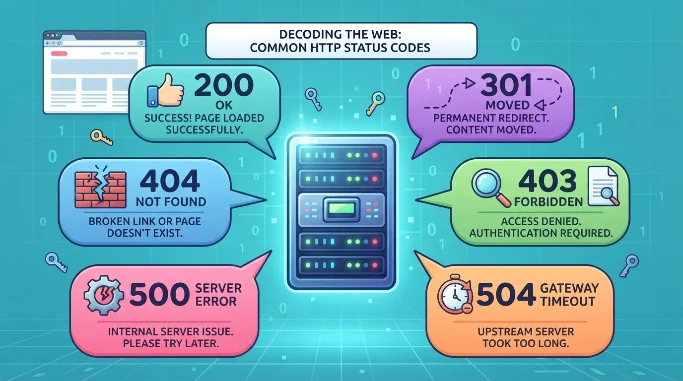
An HTTP response code is a three-digit number a server sends back to tell your browser or app what happened with a request. It is the internet’s way of saying success, redirect, mistake, or server issue without using full sentences.
Top alternatives: status code, response status, HTTP status, server code, request result.
Ever clicked a link and got a 404? That little number is an HTTP response code doing all the talking. It tells your browser if the page loaded, moved, or broke.
Whether you are a developer debugging an API, a blogger checking SEO, or just curious why a site says 500, knowing HTTP response codes helps you fix issues faster. They are tiny signals with big meaning. A 200 feels like a high five. A 403 feels like a locked door. A 503 feels like the server went for a coffee break. The right reply to an HTTP response code can save a project, calm a client, or make your team laugh during a long deploy. So here are ready-to-use lines for every mood, tone, and situation.
Funny Responses
- 404: Page not found, but my patience is also missing. Example: Use when a link breaks during a group chat. Meaning: Jokes about broken links and low patience.
- 200 OK, but my brain is still loading. Example: Use when you fix a bug but feel dazed. Meaning: Mixes success code with mental lag.
- 500 Internal Server Error, also known as Monday mood. Example: Share on a rough workday. Meaning: Compares server errors to human stress.
- 301 Moved Permanently, like my motivation after lunch. Example: Use when you change plans last minute. Meaning: Uses redirect code as a funny excuse.
- 403 Forbidden: You shall not pass, and neither shall my code. Example: Use when access is denied. Meaning: Adds humor to permission issues.
- 429 Too Many Requests, said every tired developer to their inbox. Example: Share when overwhelmed by messages. Meaning: Relates rate limits to daily overload.
- 204 No Content, just like my reply to “How is the project going?” Example: Use when you have nothing to report. Meaning: Pokes fun at empty updates.
- 502 Bad Gateway, my brain trying to remember where I put my keys. Example: Use when you feel scatterbrained. Meaning: Connects gateway errors to everyday confusion.
- 401 Unauthorized: My coffee has not approved this task yet. Example: Share before your morning coffee. Meaning: Blames caffeine for lack of access.
- 304 Not Modified: Same bug, same excuse, same energy. Example: Use when an old issue returns. Meaning: Jokes about repeated problems.
- 503 Service Unavailable: I am on a snack break. Example: Use when you need a pause. Meaning: Turns server downtime into a human break.
- HTTP response code 418: I am a teapot, and I refuse to explain further. Example: Share when you want a silly tech joke. Meaning: Celebrates the classic joke status code.
Professional Responses
- A 200 OK response confirms the request was successful and the server returned the expected data. Example: Use in API documentation. Meaning: States the standard success meaning.
- A 201 Created status indicates a new resource was successfully added. Example: Use when documenting POST endpoints. Meaning: Explains creation success.
- A 204 No Content response means the request worked but there is no body to return. Example: Use when describing DELETE operations. Meaning: Clarifies empty success.
- A 301 Moved Permanently code tells clients to update their bookmarks and links. Example: Use in SEO reports. Meaning: Explains permanent redirects.
- A 302 Found status is a temporary redirect and should not be cached long term. Example: Use in technical guides. Meaning: Distinguishes temporary redirects.
- A 400 Bad Request means the client sent something the server cannot process. Example: Use when debugging form submissions. Meaning: Points to client input errors.
- A 401 Unauthorized response requires authentication before access is granted. Example: Use in security documentation. Meaning: Explains login requirements.
- A 403 Forbidden code means the server understood the request but refuses to authorize it. Example: Use when discussing permissions. Meaning: Clarifies access denial.
- A 404 Not Found status means the requested resource does not exist on the server. Example: Use in website audits. Meaning: Explains missing pages.
- A 429 Too Many Requests response asks the client to slow down. Example: Use in API rate limit docs. Meaning: Explains throttling.
- A 500 Internal Server Error means something went wrong on the server side. Example: Use in incident reports. Meaning: Flags server faults.
- A 503 Service Unavailable often means maintenance or overload, so retry later. Example: Use in status updates. Meaning: Suggests temporary downtime.
Flirty Responses
- I must be a 301, because I keep moving toward you. Example: Use when flirting with a developer. Meaning: Turns redirect code into romantic pursuit.
- You are the 200 OK my heart has been waiting for. Example: Send to a crush after a good chat. Meaning: Uses success code as affection.
- I got a 404 when I looked for someone as amazing as you. Example: Use in a playful text. Meaning: Compliments them with a missing page joke.
- My love for you is not 304, because it changes every day, in a good way. Example: Share with a partner who gets tech. Meaning: Plays with not modified code.
- You have full access. No 403 here. Example: Use when welcoming someone close. Meaning: Flips forbidden code into openness.
- I would wait through a 503 just to see you online again. Example: Send during a busy week. Meaning: Shows patience for them.
- Your smile gives me a 201 Created, because it makes something new in my chest. Example: Use as a sweet tech pickup line. Meaning: Connects created code to feelings.
- I am not 401, because you are the only one authorized in my heart. Example: Use in a flirty DM. Meaning: Uses auth code for romance.
- You are my favorite status code, and yes, that is a high compliment. Example: Share with a tech lover. Meaning: Elevates them above all codes.
- I would press refresh all day for a 200 from you. Example: Use when texting a crush. Meaning: Shows eagerness for connection.
- My heart sends a 302 to you every time, temporary but repeated. Example: Use in playful banter. Meaning: Suggests recurring attraction.
- You had me at 200 OK. Example: Send after they reply. Meaning: Simple flirty tech line.
Sarcastic Responses
- Oh, a 500 error. Perfect. I love when the server also gives up on life. Example: Use when a site crashes. Meaning: Sarcastically reacts to server failure.
- A 404? Great. The page is missing, just like my will to keep debugging. Example: Share during a long fix. Meaning: Mocks frustration with missing pages.
- 403 Forbidden. Cool. I did not want to see that page anyway. Example: Use when access is denied. Meaning: Pretends not to care.
- 429 Too Many Requests. Sorry for using your service, I guess. Example: Use when rate limited. Meaning: Sarcastically apologizes for normal use.
- 301 Moved Permanently. So is my patience. Example: Share when links keep changing. Meaning: Jokes about redirect fatigue.
- 204 No Content. Finally, a status code that matches my brain. Example: Use when you are drained. Meaning: Self-deprecating humor.
- 401 Unauthorized. Yes, because I definitely have the credentials for this chaos. Example: Use when locked out. Meaning: Sarcastically questions access rules.
- 502 Bad Gateway. My gateway to productivity is also bad today. Example: Share on a slow day. Meaning: Connects server error to personal slump.
- 503 Service Unavailable. Same, server. Same. Example: Use when you are tired. Meaning: Relates to downtime.
- 304 Not Modified. Like my code after three hours of staring. Example: Share when stuck. Meaning: Jokes about lack of progress.
- 400 Bad Request. You mean my request to have a normal day? Example: Use after chaos. Meaning: Turns client error into personal complaint.
- 418 I am a teapot. At least one of us knows what it is. Example: Use for silly tech humor. Meaning: Sarcastically admires the joke code.
Confident Responses
- 200 OK. That is exactly what I expected. Example: Use after a clean API test. Meaning: Shows certainty in success.
- I send 201 when I create results, not excuses. Example: Use in a team update. Meaning: Projects confidence and productivity.
- 404 does not scare me. I will find the right endpoint. Example: Use when debugging. Meaning: Shows determination.
- 301? I already updated the link before you asked. Example: Use in SEO chat. Meaning: Displays proactive knowledge.
- 401 and 403 are just reminders to bring the right credentials. Example: Use when teaching security. Meaning: Frames errors as simple steps.
- 429 means I am working fast. I will pace it. Example: Use when rate limited. Meaning: Turns throttle into a flex.
- 500 errors are puzzles, and I solve puzzles. Example: Use during incident response. Meaning: Shows calm confidence.
- 503 cannot stop me. I will retry with strategy. Example: Use when service is down. Meaning: Shows resilience.
- I know my status codes like I know my goals. Example: Use in an interview. Meaning: Highlights expertise.
- A 204 is still a win. No content, no problem. Example: Use when a task completes quietly. Meaning: Celebrates all success.
- I turn 400s into 200s with better input. Example: Use when fixing client errors. Meaning: Shows problem solving.
- Every HTTP response code is feedback, and I use feedback to win. Example: Use in a team meeting. Meaning: Frames codes as growth tools.
Chill and Casual Responses
- 200? Nice, we are good. Example: Use after checking a site. Meaning: Simple positive reaction.
- 404? Just refresh and try another link. Example: Use when a page breaks. Meaning: Keeps it low stress.
- 500? Server nap. We wait. Example: Share during downtime. Meaning: Casual approach to errors.
- 301 is just a redirect. No big deal. Example: Use when a URL changes. Meaning: Normalizes redirects.
- 403? Okay, we will ask for access later. Example: Use when locked out. Meaning: Avoids drama.
- 429? Slow down, take a breath. Example: Use when rate limited. Meaning: Calm response to limits.
- 204 means done. Easy. Example: Use after a quiet success. Meaning: Acknowledges completion.
- 401? Log in and move on. Example: Use when asked for credentials. Meaning: Keeps it practical.
- 502? Just a gateway hiccup. Example: Share when a proxy fails. Meaning: Downplays temporary issues.
- 503? Try again in a bit. Example: Use during maintenance. Meaning: Suggests patience.
- 304? Same as before, still fine. Example: Use when nothing changed. Meaning: Accepts cached content.
- 418? Ha, teapot. Classic. Example: Share with friends. Meaning: Enjoys the joke code casually.
Emotional Responses
- A 404 feels like reaching for a memory that is no longer there. Example: Use when an old page disappears. Meaning: Connects missing pages to loss.
- 500 errors hit hard when you have done everything right. Example: Share after a failed launch. Meaning: Expresses frustration and hurt.
- 403 feels personal, even when it is just permissions. Example: Use when access is denied. Meaning: Shows emotional reaction to rejection.
- 401 reminds me that trust must be earned and verified. Example: Use when discussing security. Meaning: Adds emotional depth to auth.
- 429 feels like the world saying you are too much. Example: Share when overwhelmed. Meaning: Connects rate limits to feeling overloaded.
- 503 feels like being left on read by a server. Example: Use during downtime. Meaning: Uses modern loneliness metaphor.
- 301 is bittersweet, because moving forward means leaving something behind. Example: Use when a site changes. Meaning: Finds emotion in redirects.
- 204 feels empty, even when it means success. Example: Use after a quiet win. Meaning: Acknowledges mixed feelings.
- 502 feels like a broken bridge when you need connection most. Example: Share during outages. Meaning: Connects gateway errors to isolation.
- 400 feels like being misunderstood in a conversation. Example: Use when input fails. Meaning: Relates bad requests to human miscommunication.
- 304 can feel stuck, like nothing is changing. Example: Use when progress stalls. Meaning: Connects cache code to stagnation.
- 200 feels like a warm hug from the internet. Example: Share after a smooth load. Meaning: Celebrates success emotionally.
Clever Responses
- HTTP response codes are the internet’s traffic lights: green, yellow, red, and sometimes teapot. Example: Use when explaining codes to beginners. Meaning: Uses a simple analogy.
- A 200 is a handshake. A 404 is a missing person poster. Example: Share in a tech class. Meaning: Compares codes to real interactions.
- 301 is a forwarding address. 302 is a vacation notice. Example: Use in SEO training. Meaning: Distinguishes redirect types cleverly.
- 401 asks who you are. 403 says I know, and no. Example: Use in security talks. Meaning: Clarifies auth versus permission.
- 429 is the bouncer saying one at a time. Example: Use when explaining rate limits. Meaning: Makes throttling memorable.
- 500 is the kitchen catching fire. 503 is the restaurant closing early. Example: Share in incident reviews. Meaning: Uses restaurant metaphor.
- 502 is the waiter forgetting which table ordered what. Example: Use when explaining bad gateway. Meaning: Makes proxy errors relatable.
- 204 is a text that says “done” with no extra drama. Example: Use in API docs. Meaning: Frames no content as clean.
- 304 is a rerun you have already seen. Example: Share when caching works. Meaning: Explains not modified.
- 400 is autocorrect betraying you. Example: Use when debugging forms. Meaning: Connects bad request to input error.
- 418 is the internet’s inside joke. Example: Use with fellow developers. Meaning: Highlights the teapot code.
- Every code tells a story. You just have to read the number. Example: Use in a presentation. Meaning: Encourages code literacy.
Sweet Responses
- 200 OK is such a sweet relief. Example: Use after a page loads. Meaning: Appreciates success.
- Thank you to every 301 that sends me to the right place. Example: Share when a redirect helps. Meaning: Shows gratitude for good UX.
- 204 may be empty, but it still did its job. Respect. Example: Use after a clean delete. Meaning: Honors quiet success.
- A 304 saves bandwidth, and that is thoughtful. Example: Use when caching works. Meaning: Appreciates efficiency.
- 401 is just a gentle reminder to log in. Example: Use when prompted for credentials. Meaning: Frames auth kindly.
- 403 is a boundary, and boundaries are healthy. Example: Share when access is denied. Meaning: Puts positive spin on permission.
- 404 means we can build something better there. Example: Use when a page is missing. Meaning: Finds opportunity in loss.
- 429 says take a break, and we all need that. Example: Use when rate limited. Meaning: Turns limit into self-care.
- 500 means someone is working hard behind the scenes. Be patient. Example: Share during outage. Meaning: Shows empathy for server teams.
- 502 is just a temporary mix-up. It will reconnect. Example: Use when gateway fails. Meaning: Offers reassurance.
- 503 means the server needs a moment. We can wait. Example: Use during maintenance. Meaning: Encourages patience.
- 418 is silly, and silly is sweet sometimes. Example: Share with friends. Meaning: Enjoys harmless humor.
Creative Responses
- Think of HTTP response codes as emojis for servers. Example: Use when teaching kids or newbies. Meaning: Makes codes friendly and visual.
- A 200 is a green check. A 404 is a shrug. A 500 is a fire emoji. Example: Share in a slide deck. Meaning: Uses symbols to explain codes.
- 301 is a moving truck. 302 is a detour sign. Example: Use in a blog post. Meaning: Visualizes redirects.
- 401 is a locked door with a keypad. 403 is a locked door with no keypad. Example: Use in security training. Meaning: Clarifies access differences.
- 429 is a traffic jam caused by you. Example: Use when explaining rate limits. Meaning: Adds humor and clarity.
- 500 is a chef dropping the whole cake. Example: Share during server errors. Meaning: Creates a vivid failure image.
- 502 is a phone call with bad signal. Example: Use when explaining bad gateway. Meaning: Relates proxy error to communication.
- 204 is a silent victory dance. Example: Use in API docs. Meaning: Celebrates no content success.
- 304 is a saved screenshot you reuse. Example: Share when caching works. Meaning: Explains cached responses.
- 400 is a recipe with missing ingredients. Example: Use when debugging bad requests. Meaning: Shows why input matters.
- 418 is a secret handshake for web nerds. Example: Use with developer friends. Meaning: Highlights community joke.
- Every HTTP response code is a plot twist in the request story. Example: Use in a workshop. Meaning: Makes learning codes fun.
Polite Responses
- Thank you for the 200. I appreciate the successful response. Example: Use in a formal API note. Meaning: Shows gratitude for success.
- Excuse me, 404, could you point me to the right page? Example: Use when a link breaks. Meaning: Keeps frustration polite.
- I understand the 403. I will request proper access. Example: Use when denied entry. Meaning: Respects boundaries.
- No worries about the 503. I will try again later. Example: Use during downtime. Meaning: Shows patience and manners.
- Thanks for the 301. I will update my bookmarks. Example: Use after a redirect. Meaning: Acknowledges helpful change.
- I see the 401. I will log in and retry. Example: Use when asked for credentials. Meaning: Responds calmly to auth.
- Apologies for the 429. I will slow down my requests. Example: Use when rate limited. Meaning: Shows respect for limits.
- I appreciate the 204. Clear and simple. Example: Use after a silent success. Meaning: Thanks the system for clarity.
- The 500 is noted. Please let me know when it is resolved. Example: Use in a support ticket. Meaning: Communicates politely during errors.
- Thank you for the 304. Saving data is always good. Example: Use when cache works. Meaning: Shows appreciation for efficiency.
- I understand the 400. I will check my input. Example: Use when form fails. Meaning: Accepts responsibility politely.
- The 418 made me smile. Thank you for the fun. Example: Use with tech friends. Meaning: Polite appreciation of humor.
Dramatic Responses
- The 404 hit me like a plot twist I never saw coming. Example: Use when a favorite page disappears. Meaning: Adds drama to missing content.
- A 500 error? The whole server just fainted. Example: Share during an outage. Meaning: Exaggerates server failure.
- 403 Forbidden. The door slammed in my face. Example: Use when access is denied. Meaning: Dramatizes rejection.
- 401 Unauthorized. I have been denied entry to the castle. Example: Use when asked to log in. Meaning: Makes auth feel epic.
- 429 Too Many Requests. The universe is telling me to chill. Example: Share when rate limited. Meaning: Adds dramatic self-reflection.
- 301 Moved Permanently. My whole world has shifted. Example: Use when a site changes URLs. Meaning: Makes redirects emotional.
- 204 No Content. The silence is deafening. Example: Use after a quiet response. Meaning: Dramatizes empty success.
- 502 Bad Gateway. The bridge has collapsed. Example: Share during proxy errors. Meaning: Creates a dramatic image.
- 503 Service Unavailable. The server has left the building. Example: Use during maintenance. Meaning: Exaggerates downtime.
- 304 Not Modified. We are stuck in a time loop. Example: Use when nothing changes. Meaning: Dramatizes caching.
- 400 Bad Request. My words were twisted by the digital gods. Example: Use when input fails. Meaning: Makes errors theatrical.
- 418 I am a teapot. The final boss of status codes. Example: Share for fun. Meaning: Treats joke code as epic.
Cute Responses
- 200 OK is like a little digital smile. Example: Use when a page loads. Meaning: Makes success feel adorable.
- 404 is just the internet playing hide and seek. Example: Use when a link breaks. Meaning: Turns missing page into a game.
- 301 is the internet saying “this way, friend.” Example: Share after a redirect. Meaning: Makes redirects friendly.
- 403 is a gentle “not yet” from the server. Example: Use when access is denied. Meaning: Softens rejection.
- 401 is the server asking for your secret password. Example: Use when logging in. Meaning: Makes auth playful.
- 429 is the server saying “breathe, cutie.” Example: Share when rate limited. Meaning: Turns limit into care.
- 204 is a quiet high five. Example: Use after a silent success. Meaning: Celebrates without noise.
- 502 is a tiny hiccup in the connection. Example: Use during gateway errors. Meaning: Makes error feel small.
- 503 is the server taking a nap. Example: Share during downtime. Meaning: Makes outage cute.
- 304 is the internet saying “you have seen this, remember?” Example: Use when cache works. Meaning: Makes caching sweet.
- 400 is the server saying “try again, sweetie.” Example: Use when input fails. Meaning: Softens client error.
- 418 is the internet’s adorable inside joke. Example: Share with friends. Meaning: Makes teapot code lovable.
Brutal Responses
- 404? Find a real link. Example: Use when a page is missing. Meaning: Blunt response to broken URLs.
- 500? Your server is a mess. Example: Share during an outage. Meaning: Directly calls out server failure.
- 403? You never had access. Example: Use when denied. Meaning: Cuts through permission drama.
- 401? Log in or log off. Example: Use when auth fails. Meaning: Gives a no-nonsense fix.
- 429? You are doing too much. Example: Share when rate limited. Meaning: Bluntly addresses overuse.
- 301? Update your links already. Example: Use when redirects pile up. Meaning: Pushes for action.
- 204? Say something useful. Example: Use after empty response. Meaning: Demands more content.
- 502? Your gateway is trash. Example: Share during proxy errors. Meaning: Directly criticizes gateway.
- 503? Fix your uptime. Example: Use during downtime. Meaning: Calls for reliability.
- 304? Nothing new, as usual. Example: Use when cache repeats. Meaning: Shows boredom with no change.
- 400? Your input is the problem. Example: Use when form fails. Meaning: Points blame at client.
- 418? Grow up. Example: Share with developer friends. Meaning: Playfully dismisses the joke code.
Developer Responses
- Check the status code before you check the logs. Example: Use when debugging an API. Meaning: Teaches efficient troubleshooting.
- 200 means success, so log the response and move on. Example: Use in code review. Meaning: Gives practical advice.
- 201 means created, so return the new resource ID. Example: Use when building REST APIs. Meaning: Explains proper response.
- 204 means no content, so do not return a body. Example: Use in API design. Meaning: Clarifies standard practice.
- 301 is permanent, so update your canonical URLs. Example: Use in SEO development. Meaning: Connects redirects to SEO.
- 302 is temporary, so do not hardcode it. Example: Use in frontend routing. Meaning: Warns against permanent assumptions.
- 400 means bad request, so validate input first. Example: Use when building forms. Meaning: Points to client validation.
- 401 means unauthenticated, so check the token. Example: Use when API calls fail. Meaning: Directs to auth fix.
- 403 means forbidden, so check permissions. Example: Use when access is denied. Meaning: Directs to authorization fix.
- 404 means not found, so confirm the route. Example: Use when endpoints fail. Meaning: Suggests checking URL.
- 429 means rate limited, so add backoff. Example: Use when calling third-party APIs. Meaning: Recommends retry strategy.
- 500 means server error, so check the stack trace. Example: Use during incident response. Meaning: Points to server-side debugging.
FAQs
What does HTTP response code mean?
It is a three-digit number from a server that tells the client what happened with a request.
Can HTTP response codes be flirty?
In texts and social posts, yes. A 200 or 301 can become a playful line. In work, keep it professional.
How do I use HTTP response codes in a formal setting?
Name the code, explain its meaning, and suggest the next step. Example: A 404 means the page is missing, so update the link.
What if I do not actually mean the code I send?
Do not fake it in production. In jokes, keep it clear that you are being playful.
Is humor appropriate with HTTP response codes?
Yes, especially with developer friends or social media. Just read the room and avoid jokes during serious outages.
Conclusion
HTTP response codes do not have to be dry or confusing. They are tiny stories about what just happened online. A 200 can make your day. A 404 can send you hunting. A 500 can test your patience.
But with the right reply, you can turn any code into a moment of connection, clarity, or comedy. Use these lines in texts, team chats, docs, and social posts. Save this list for your next debug session. Share it with someone who lives in the terminal. And next time a server talks back, you will know exactly what to say.
